
Toffee vs Fudge: How Ingredients and Heat Set Them Apart
Toffee is a hard, caramelized candy cooked to the hard crack stage, while fudge is a soft, creamy confection cooked to the soft ball stage. That single gap in cooking temperature, roughly 60 to 70 degrees, is the reason one snaps between your teeth and the other melts against your tongue.
Toffee hits 295 to 310°F, while fudge stops at 235 to 240°F. Beyond heat, the dairy question settles most of the rest: fudge leans on milk or cream, toffee generally does not.
- Milk or cream: standard in fudge, typically absent in toffee
- Chocolate: usually mixed into fudge, usually applied as a coating on toffee
- First bite: fudge yields instantly; toffee resists, then shatters
Key Takeaways
The core difference between toffee and fudge comes down to cooking temperature and dairy content, which together determine whether you get a hard, glassy snap or a soft, creamy bite.
| Point | Details |
|---|---|
| Temperature gap | Toffee cooks to 295 to 310°F (hard crack); fudge cooks to 235 to 240°F (soft ball). |
| Dairy makes the difference | Fudge relies on milk or cream; toffee typically omits it for a cleaner caramelized snap. |
| Technique diverges after heat | Fudge is beaten to crystallize; toffee is left undisturbed to stay glassy and brittle. |
| Storage follows moisture | Toffee keeps well at room temperature; fudge often needs an airtight container or fridge. |
| Dudley’s Toffee example | Dudley’s Toffee’s handcrafted English almond toffee shows how a dairy-free, hard-crack recipe produces a long-lasting, giftable candy. |
Table of Contents
- What Ingredients Separate Toffee From Fudge?
- What Temperatures Define Fudge and Toffee?
- How Does Technique Create Such Different Textures?
- Why Does Toffee Snap While Fudge Melts?
- What Are the Most Popular Toffee and Fudge Varieties?
- How Should You Store Toffee vs Fudge?
- What Are Basic Ratios for Each at Home?
- Choosing Between Toffee and Fudge for Your Occasion
- Try Handcrafted English Almond Toffee From Dudley’s Toffee
- Sources
- FAQ
What Ingredients Separate Toffee From Fudge?
Fudge starts with sugar, butter, and milk, cream, or sweetened condensed milk, cooked together until the mixture thickens enough to set into a dense, fine grained block. Chocolate is usually stirred directly into that base rather than added afterward, which is why a bite of chocolate fudge tastes chocolatey all the way through. Mix-ins like walnuts, pecans, or mini marshmallows fold in during the final cooling stage.
Toffee keeps the ingredient list shorter. Sugar (white or brown, depending on the style), butter, and often a pinch of salt or splash of vanilla go into the pot, and that’s largely it. Chocolate comes later, poured or spread over the toffee after it sets rather than blended into the candy itself, which is why a good English almond toffee gives you a clean caramelized snap first and a chocolate finish second.
- Adding cream to a toffee recipe pushes it closer to caramel territory
- Swapping brown sugar for white deepens toffee’s molasses notes
- A touch of flour in fudge can prevent graininess but changes the final chew
Pro Tip: Butter quality matters more in toffee than in almost any other candy. Because there are so few ingredients, a real, high-fat butter carries the flavor. Cheap butter with a higher water content can throw off the cook time and leave you with a greasy, separated batch.
What Temperatures Define Fudge and Toffee?
Candy makers talk about sugar stages because water content, not sugar amount, is what actually changes as the pot heats up. As a sugar syrup climbs past 212°F, water boils off and the syrup concentrates. Each stage corresponds to how hard the sugar will set once it cools.
Fudge is pulled at the soft ball stage, 235 to 240°F, where a drop of syrup in cold water forms a pliable ball that flattens under pressure. Toffee cooks well past that, into the hard crack stage at 295 to 310°F, where the same test produces brittle threads that snap clean. Milk components in the mix change the chemistry further: dairy proteins and sugars caramelize at lower heat, contributing to fudge’s golden color and rounder flavor, while toffee’s higher, dairy-free cook produces a darker, more intensely caramelized result.
- Soft ball (fudge): 235 to 240°F
- Hard crack (toffee): 295 to 310°F
- A thermometer variance of just 3 to 5 degrees can mean the difference between a perfect batch and a ruined one
A cheap thermometer is the single biggest risk factor here. Clip-on candy thermometers can run several degrees off from the actual pot temperature, so calibrating in boiling water before you start is worth the two minutes it takes.
How Does Technique Create Such Different Textures?
The method matters as much as the ingredients. Fudge is beaten as it cools, which is the entire secret to its texture: agitation forces the sugar to crystallize into thousands of microscopic crystals, giving fudge its dense, creamy grain. Toffee does the opposite. It’s cooked with minimal stirring and no beating at all, because the goal is to avoid crystallization entirely and end up with a glassy, amorphous structure once it hardens.
- Fudge: heat to 235 to 240°F, cool undisturbed to about 110°F, then beat until the glossy syrup turns matte and thick, and pour before it sets in the pot.
- Toffee: heat to 295 to 310°F while stirring gently and constantly to prevent scorching, then pour immediately onto a lined sheet, top with chopped nuts or a chocolate layer, and let it set undisturbed.
Hot sugar burns are no joke at either stage, but toffee’s higher temperature makes it especially dangerous. Keep kids and pets clear of the stove, use a long-handled spoon, and never test a hot syrup with a bare finger.
Pro Tip: If fudge turns grainy, you likely stirred it too soon after the boil. Gently remelt it with a splash of cream and let it cool fully before beating again. Sticky, unset toffee usually means it never reached hard crack. Return it to the heat, bring it back to temperature, and re-pour.
Why Does Toffee Snap While Fudge Melts?
Bite into toffee and you get resistance first, then a clean crack, then a long chew if a chocolate coating is involved. That glassy snap comes directly from the amorphous sugar structure toffee’s cooking method is built to create. Fudge does the opposite: it gives way almost instantly, releasing flavor and sweetness the moment it hits your tongue, because its fine, beaten sugar crystals dissolve fast.
- Toffee: brittle, glassy, slow to dissolve, built for crunch
- Fudge: dense, creamy, fast to dissolve, built for immediate richness
- Cause: crystalline structure (fudge) versus amorphous glass (toffee), set by cook temperature and agitation
What Are the Most Popular Toffee and Fudge Varieties?
Toffee shows up most often as English almond toffee, butter toffee, chocolate-coated toffee, and salted versions that play sweetness against a mineral edge. Fudge branches out further: chocolate, peanut butter, rocky road, maple, vanilla, and white fudge are all common, since the base recipe is a forgiving canvas for mix-ins.
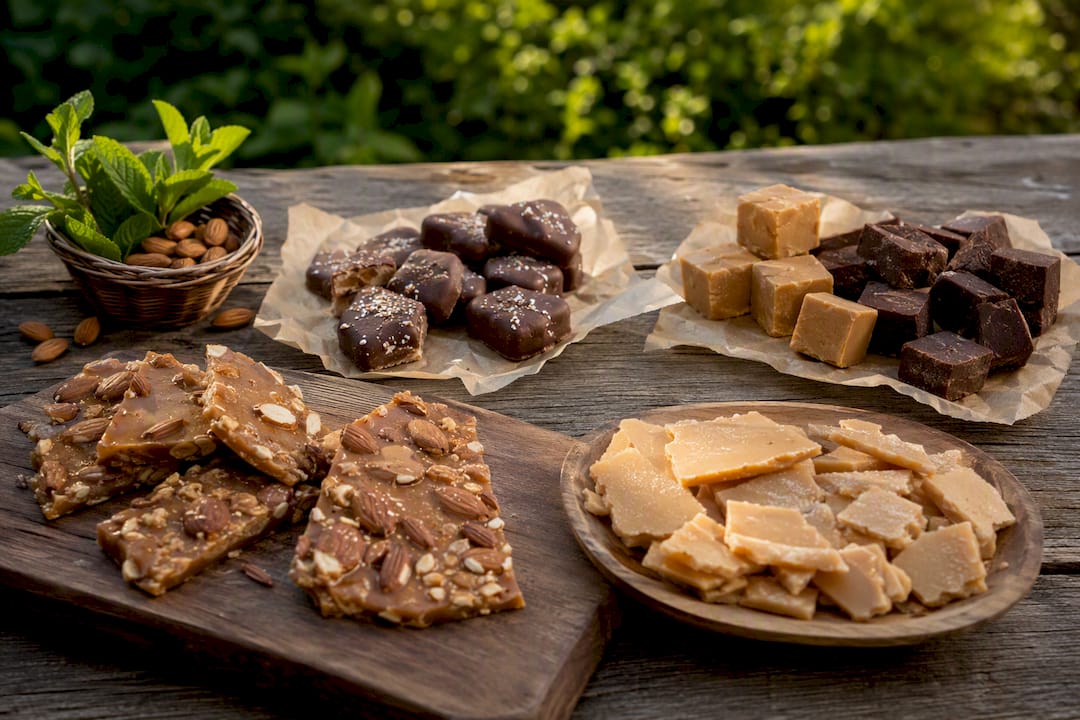
Naming gets murky fast. Butterscotch, caramel, and toffee are often confused, but pastry experts generally place toffee at the hardest, most caramelized end of that spectrum, with butterscotch and caramel occupying softer, lower-temperature territory. Toffee’s chocolate typically arrives as a topping layer, while fudge folds chocolate into the body of the candy itself.
How Should You Store Toffee vs Fudge?
Moisture content dictates storage, and it’s the reason these two candies age so differently. Fudge’s dairy content makes it prone to drying out or picking up refrigerator odors, so it typically needs an airtight container and sometimes refrigeration for longer storage. Toffee’s low moisture and lack of dairy let it hold up at room temperature far longer, provided it’s kept away from humidity, which softens that glassy snap over time.
- Store both in airtight containers, with wax paper between layers to prevent sticking
- Keep toffee dry: humidity is its main enemy, not heat
- Judge freshness by texture: fudge should stay soft and fragrant, toffee should still crack cleanly
- Serve toffee as a standalone gift or crushed topping; serve fudge cut into squares or folded into other desserts
What Are Basic Ratios for Each at Home?
You don’t need a full recipe to understand the proportions at play. Fudge generally runs close to a 2:1:1 ratio of sugar to dairy to fat, cooked to 235 to 240°F and then cooled to about 110°F before beating begins. Toffee runs closer to 2:1 sugar to butter, sometimes with a tablespoon or two of water to help the sugar dissolve evenly at the start, cooked to 295 to 310°F and poured immediately.
- Fudge: combine sugar, butter, and dairy; cook to soft ball (235 to 240°F); cool undisturbed to 110°F; beat until thick and matte; pour into a lined pan.
- Toffee: combine sugar, butter, and a splash of water; cook to hard crack (295 to 310°F) with gentle stirring; pour onto a lined sheet; top and let set.
Both ratios scale easily for a small test batch, which is worth doing before committing a full pound of butter to a recipe you’ve never tried. A reliable candy thermometer is non-negotiable for either one. Guessing by sight is how most home batches end up either grainy or gummy.
Choosing Between Toffee and Fudge for Your Occasion
If you want something you can mail, gift, or leave out on a counter for a week, toffee is the better call. Its low moisture and long shelf life make it a natural fit for holiday boxes and corporate gifting. Fudge is the answer when you want soft, immediate indulgence tonight, not a candy meant to travel. Dudley’s Toffee makes its case for the giftable side of that choice with small-batch English almond toffee, hand-finished in milk or dark chocolate.
Try Handcrafted English Almond Toffee From Dudley’s Toffee
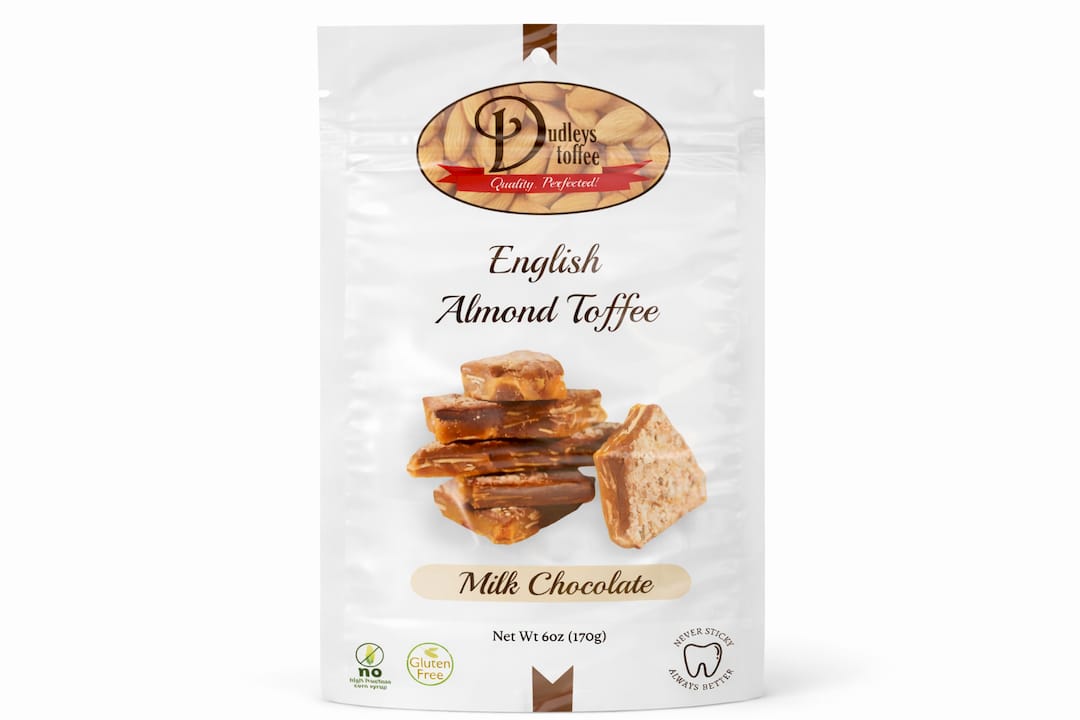
Dudley’s Toffee gives you the giftable shelf life this article just walked through, without asking you to master a candy thermometer yourself. Every batch is handcrafted in small runs in Indiana, using real butter and no high fructose corn syrup, so the toffee snap stays clean and the almond flavor comes through in every piece.
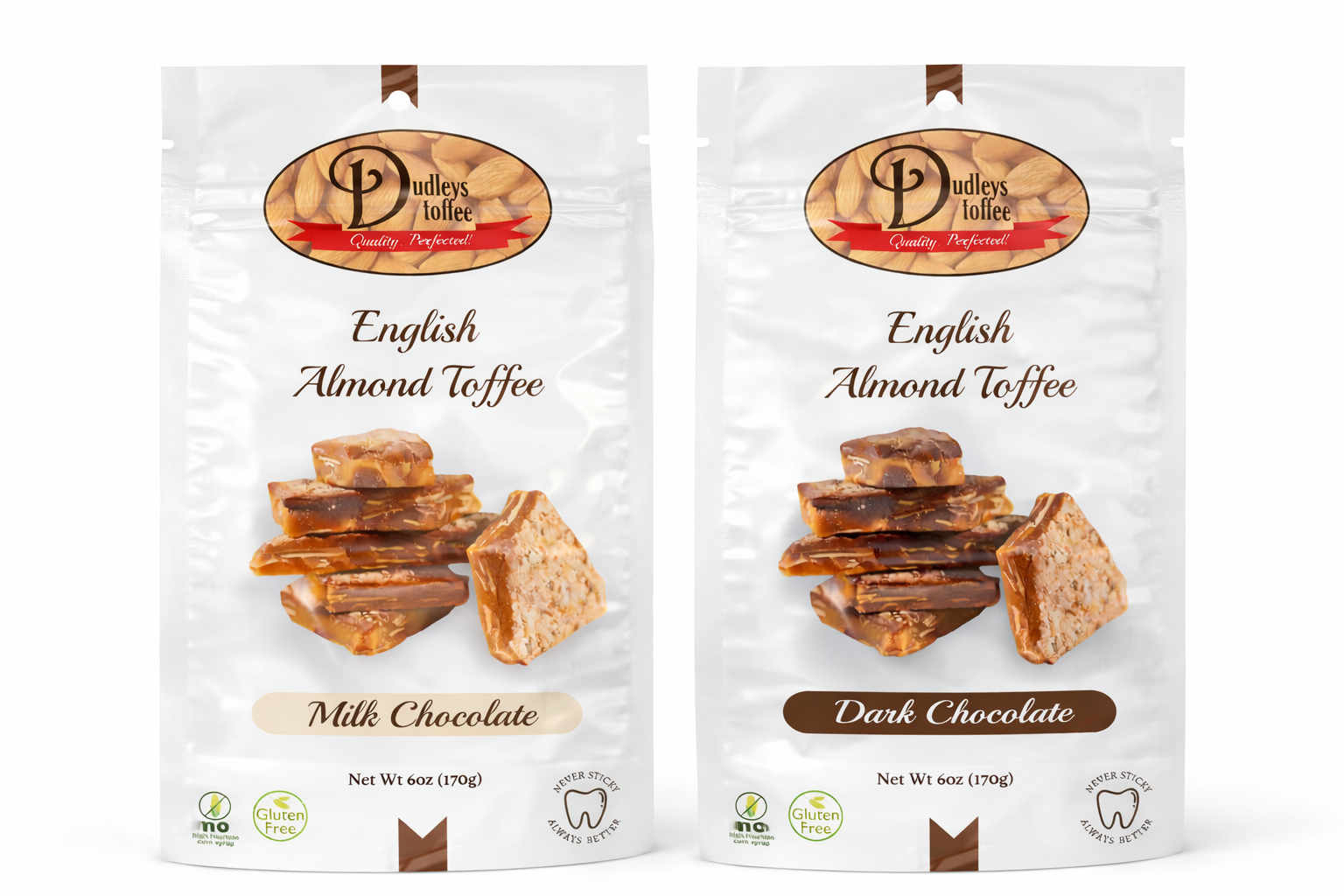
The lineup covers both chocolate styles discussed above: the Milk Chocolate English Almond Toffee for a classic, mellow finish, and the Dark Chocolate English Toffee for a richer contrast against the caramelized base. Organizations planning a fundraiser can also order the Milk Chocolate English Toffee Fundraiser pack or the matching Dark Chocolate English Toffee Fundraiser pack, both built for bulk gifting and easy resale. For a side-by-side taste of both, Dudley’s English Almond Toffee in Milk or Dark Chocolate is gluten-free and ready to ship. Pick your chocolate and place an order today.
Sources
- English toffee temperatures for flavor and texture
- Difference between Fudge and Toffee
- Fudge vs Toffee
- Caramel, fudge and toffee | Springer Link
- I Asked 3 Experts Why Caramel, Butterscotch, and Toffee … — Serious Eats
FAQ
Is Butterscotch Just Toffee?
Not quite. Butterscotch is typically cooked to a lower temperature than toffee, landing in the soft crack range, which gives it a softer, chewier bite than toffee’s harder, glassier snap.
Is Toffee a British Thing?
Toffee has deep roots in British confectionery, and English almond toffee specifically draws on that tradition, though American makers, including Dudley’s Toffee, produce their own handcrafted versions today.
What Do the British Call Fudge?
The British call it fudge too. The name and the basic sugar, butter, and milk recipe are shared across both countries, with regional differences mostly in flavor add-ins.
Is Toffee Basically Caramel?
They’re related but distinct. Caramel is generally cooked to a lower temperature than toffee, and experts place toffee at the hardest, most caramelized end of that spectrum, giving it a firmer, more brittle texture than caramel’s soft chew.
Recommended
Share