
Almond Toffee Candy: A Gourmet Lover's Guide
Almond toffee candy is a buttery, crunchy confection made by cooking butter and sugar to the hard-crack stage, then folding in roasted almonds and finishing with a layer of rich chocolate. Known in the confectionery world as English toffee with almonds, this treat earns its gourmet reputation through precise technique and premium ingredients. Dudley’s Toffee, a family-owned Indiana company, handcrafts small-batch almond toffee using no high fructose corn syrup and gluten-free ingredients, available in both milk and dark chocolate. Whether you want to make it at home, find the perfect gift, or simply understand what separates good toffee from great toffee, this guide covers all of it.
What is almond toffee candy and how is it made?
Almond toffee starts with four core ingredients: unsalted butter, granulated sugar, roasted almonds, and chocolate. The hard-crack stage at 300°F is the defining moment in the process. At that temperature, the sugar and butter transform into a brittle, glass-like candy base with a deep caramel flavor. Without reaching that threshold, the toffee turns out soft and sticky instead of snapping cleanly when broken.
The process follows a clear sequence that rewards patience and attention.
- Melt the butter slowly. Use a heavy-bottom saucepan over medium heat. A sturdy heavy-bottom pan distributes heat evenly and prevents scorching at the base.
- Add sugar and stir to combine. Standard recipes call for 1 cup unsalted butter and 1 cup granulated sugar. Stir only until the sugar dissolves, then stop.
- Cook to temperature. Clip a candy thermometer to the side of the pan. Watch for the mixture to reach 300°F. Do not walk away during this stage.
- Stir in almonds. Add 1.5 cups of roasted almonds and fold them in quickly. The mixture will be extremely hot, so work with care.
- Pour onto a prepared pan. Spread the mixture onto a parchment-lined baking sheet in an even layer. Work fast because the toffee sets quickly.
- Top with chocolate. Scatter chocolate chips or chopped chocolate over the hot toffee. Wait two minutes, then spread the melted chocolate evenly across the surface.
- Add a finishing touch. Sprinkle chopped almonds or coarse sea salt over the chocolate before it sets.
- Cool completely. Let the toffee rest at room temperature until the chocolate hardens, then break it into pieces.
Pro Tip: Add a splash of vanilla extract off the heat, just before pouring the toffee onto the pan. Vanilla enhances caramel notes and rounds out the flavor without competing with the chocolate or nuts.
Temperature control is the single most important skill in toffee making. A candy thermometer is not optional. Guessing by color alone leads to inconsistent results, and even a 10-degree difference changes the final texture significantly.
What flavor variations work best in almond toffee?
The base recipe is a starting point, not a ceiling. Homemade almond toffee recipes offer real flexibility for customization, letting you tailor sweetness, chocolate type, and nut texture to your preference.
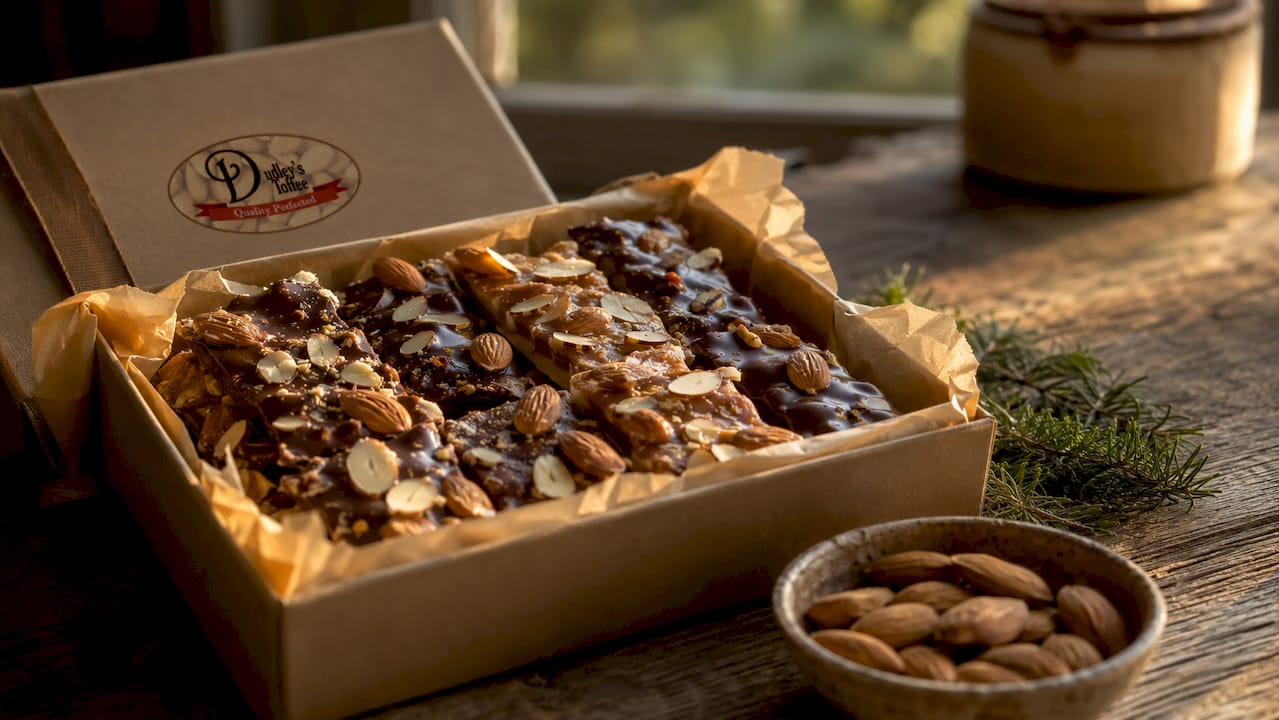
Chocolate choices and their effects
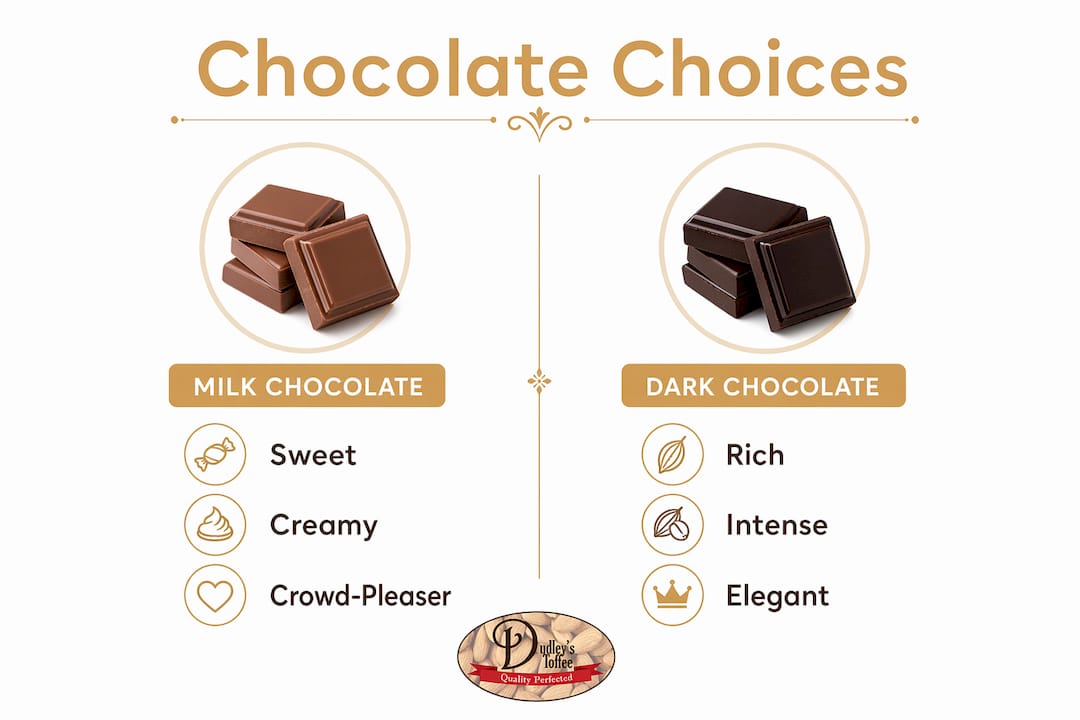
Milk chocolate and dark chocolate create very different experiences on top of the same toffee base. Milk chocolate adds sweeter creaminess while dark chocolate contributes bittersweet depth that balances the sugar in the toffee. Neither is wrong. The choice depends on who you are making it for and what flavor profile you want to land.
Almond forms and textures
- Whole roasted almonds create bold crunch and visible texture throughout each piece.
- Sliced almonds distribute more evenly and produce a thinner, more delicate crunch.
- Chopped almonds offer a middle ground, adding texture without dominating the bite.
- Flaked almonds work well as a topping, adding a light, toasted finish over the chocolate layer.
Flavor additions worth trying
- A pinch of coarse sea salt over the chocolate layer sharpens every other flavor in the candy.
- Brown sugar in place of white granulated sugar adds a molasses note and slightly softer texture.
- A small amount of vanilla extract deepens the caramel character without adding sweetness.
| Variation | Flavor Effect | Best For |
|---|---|---|
| Milk chocolate topping | Sweet, creamy, crowd-pleasing | Gifts, kids, general audiences |
| Dark chocolate topping | Bittersweet, rich, complex | Gourmet enthusiasts, adults |
| Sea salt finish | Sharpens sweetness, adds contrast | Elevated gifting, specialty palates |
| Brown sugar base | Warm, molasses-forward, slightly softer | Home baking, rustic flavor profiles |
| Sliced almond topping | Delicate crunch, refined appearance | Presentation-focused batches |
Dudley’s Toffee offers both milk and dark chocolate varieties for exactly this reason. Different occasions and different people call for different flavor experiences, and having both options available makes gifting far easier.
How do you gift almond toffee candy for special occasions?
Almond toffee makes a genuinely thoughtful gift because it signals care and quality in a way that generic candy does not. The key is knowing what to look for in a premium product and how to present it well.
Quality markers that matter
- Small-batch handcrafting means each piece gets real attention during production, not assembly-line speed.
- No high fructose corn syrup signals that the maker prioritized real ingredients over cheap sweeteners.
- Gluten-free formulation makes the candy accessible to a wider range of recipients.
- Local or regional manufacturing often reflects a commitment to quality control that large-scale operations cannot match.
Dudley’s Toffee meets all of these standards, handcrafting its English almond toffee in Indiana using premium ingredients in both milk and dark chocolate varieties.
Occasions that call for almond toffee
Almond toffee fits naturally into a wide range of gifting moments. Holiday gift boxes in november and december are the most obvious use, but corporate gifting programs, fundraiser sales, and personal celebrations like birthdays and anniversaries are equally strong fits. A well-packaged box of handcrafted toffee communicates appreciation without feeling impersonal.
Pro Tip: Pair a milk chocolate toffee bar with a dark chocolate option in the same gift box. The contrast gives the recipient a complete tasting experience and makes the gift feel more considered.
Storage and shelf life for gift recipients
Almond toffee stores well in an airtight container at room temperature or in the refrigerator for several weeks. That shelf life makes it practical for shipping and for recipients who want to savor it over time rather than finishing it in one sitting. Always include a simple storage note with any toffee gift so the recipient knows how to keep it at its best.
What are the most common mistakes in making almond toffee candy?
Most failed batches of almond toffee trace back to one of three problems: wrong temperature, wrong stirring technique, or wrong equipment. Understanding each one prevents the frustration of a batch that separates, crystallizes, or turns out chewy instead of crisp.
- Not monitoring temperature accurately. The most common home-maker mistake is pulling the toffee off the heat too early or too late. Soft toffee that sticks to your teeth means the mixture never reached 300°F. Burnt, bitter toffee means it went past that point. A reliable candy thermometer eliminates both problems.
- Stirring too aggressively. Vigorous stirring after the sugar dissolves encourages crystallization. The sugar molecules lock together and the mixture turns grainy rather than smooth. Stir gently and only when necessary.
- Butter separation. If the butter pools on top of the sugar mixture, the emulsion has broken. This usually happens from temperature spikes or inconsistent heat. Reduce the heat and stir slowly to bring it back together. Prevention is easier than the fix, so keep the heat steady from the start.
- Rushing the caramelization phase. Patience during caramelization produces the ideal golden-brown color and deep flavor that defines quality almond toffee. Cranking the heat to speed things up causes uneven cooking and a flat, one-dimensional taste.
- Using the wrong pan. A thin-bottomed saucepan creates hot spots that burn the sugar before the rest of the mixture catches up. A heavy-bottom pan is not a luxury. It is the right tool for the job.
The good news is that every one of these mistakes is avoidable with the right equipment and a steady hand. Understanding toffee texture differences before you start gives you a clearer picture of what you are aiming for and why each step matters.
Key Takeaways
Premium almond toffee candy requires cooking butter and sugar to exactly 300°F, using quality roasted almonds, and finishing with real chocolate for a satisfying crunch and rich flavor.
| Point | Details |
|---|---|
| Temperature is non-negotiable | Cook to the hard-crack stage at 300°F using a candy thermometer for consistent texture. |
| Chocolate choice shapes flavor | Milk chocolate adds sweetness; dark chocolate adds bittersweet depth and complexity. |
| Quality markers define premium toffee | Look for small-batch production, no high fructose corn syrup, and gluten-free ingredients. |
| Common mistakes are preventable | Steady heat, gentle stirring, and a heavy-bottom pan eliminate most failed batches. |
| Almond toffee gifts well | Airtight storage preserves crunch for weeks, making it practical for shipping and gifting. |
What almond toffee has taught us about craft and patience
After years of making and tasting handcrafted toffee, the lesson that stays with us is simple: the candy does not lie. You can feel the difference between a batch made with care and one made in a hurry. The snap is cleaner. The flavor is deeper. The chocolate sits flush against the toffee instead of peeling away at the edges.
What surprises most people is how few ingredients it takes to get there. Butter, sugar, almonds, and chocolate. That’s the whole list. The craft is entirely in the execution, and execution requires patience more than skill. Impatience is the ingredient that ruins more batches than anything else.
We have seen home candy makers produce genuinely beautiful almond toffee on their first try, simply because they trusted the thermometer and kept the heat steady. We have also seen experienced cooks produce grainy, separated messes because they rushed the caramelization phase. The candy rewards the patient and punishes the impatient, every single time.
That is why we believe so strongly in the small-batch approach at Dudley’s Toffee. When you make candy in small quantities, you stay present. You watch the color change. You smell the caramel developing. You know exactly when to pull the pan. Scale that process up too fast, and you lose the attention that makes the difference between good toffee and great toffee.
For home candy lovers, our honest advice is to embrace the learning curve. Your second batch will be better than your first. Your fifth batch will be better than your second. And somewhere along the way, you will understand exactly why people who love this candy love it so deeply.
— Dudley’s Toffee
Handcrafted almond toffee candy from Dudley’s Toffee
Dudley’s Toffee brings the same care and precision described throughout this guide to every small batch made in Indiana. The toffee is gluten-free, contains no high fructose corn syrup, and comes in both milk chocolate and dark chocolate varieties, so you can choose the flavor profile that fits your taste or your recipient’s preference.
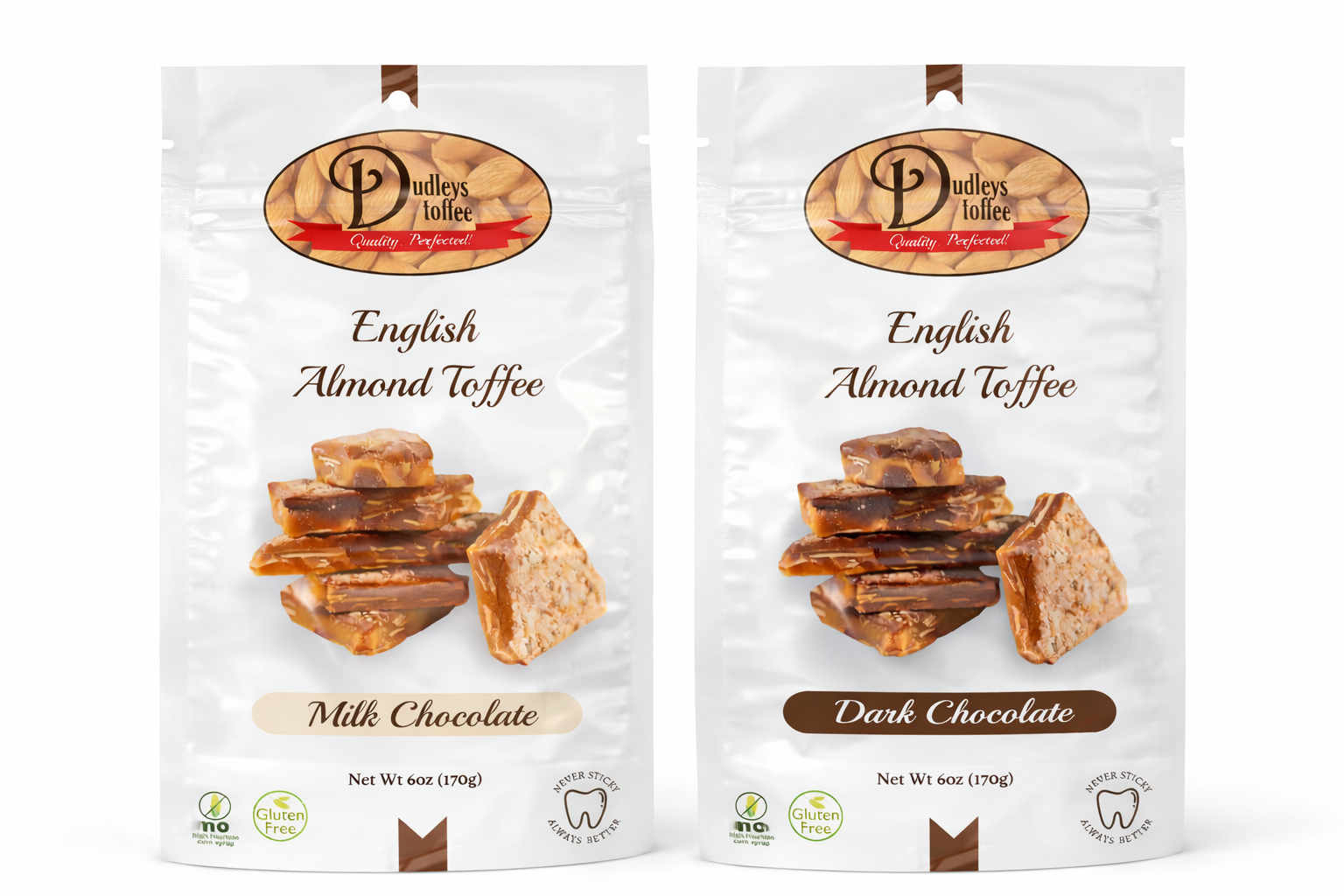
Dudley’s ships nationwide, making it easy to send a premium gift to anyone on your list. The toffee works beautifully for holiday boxes, corporate thank-you gifts, and fundraiser programs. If you are ready to taste what small-batch, handcrafted English almond toffee actually feels like, the full collection is available online with convenient direct shipping to your door.
FAQ
What temperature does almond toffee need to reach?
Almond toffee must reach the hard-crack stage at approximately 300°F. This temperature produces the brittle, snapping texture that defines classic toffee.
What is the difference between almond toffee and English toffee?
Almond toffee contains roasted almonds and a chocolate finish, while English toffee traditionally contains no nuts and relies on a pure buttery, brittle base. Almond toffee is essentially English toffee with added texture and flavor from the nuts.
How long does almond toffee candy stay fresh?
Almond toffee keeps well for several weeks when stored in an airtight container at room temperature or in the refrigerator. Proper storage preserves both the crunch and the chocolate finish.
Can you customize homemade almond toffee recipes?
Yes. You can adjust sweetness with brown sugar, swap chocolate types, vary almond forms from whole to sliced, and add sea salt or vanilla to create a flavor profile that suits your preference.
Is Dudley’s Toffee gluten-free?
Dudley’s Toffee is gluten-free and contains no high fructose corn syrup, making it a premium option for candy lovers with dietary considerations or anyone seeking a cleaner ingredient list.
Recommended
Share