

Brown Butter Toffee Cookies: A Home Baker's Guide
Brown butter toffee cookies are soft, chewy cookies defined by the nutty richness of browned butter and studded with caramelized toffee pieces that melt into gooey, buttery pockets during baking. The technique of browning butter, known formally as beurre noisette, transforms a standard ingredient into something with deep, toasted complexity that regular melted butter simply cannot replicate. Combined with high-quality toffee bits and a few precise baking techniques, these cookies deliver bakery-level results from your home oven. This guide covers every stage, from browning the butter correctly to chilling the dough and finishing with flaky sea salt, so you can bake a batch that genuinely impresses.
How does browning butter elevate cookie flavor and texture?
Browning butter is the single most important step in this recipe. The process converts plain unsalted butter into a flavor-dense liquid with toasted, caramelized aromas that no other technique can match.
The browning process, step by step
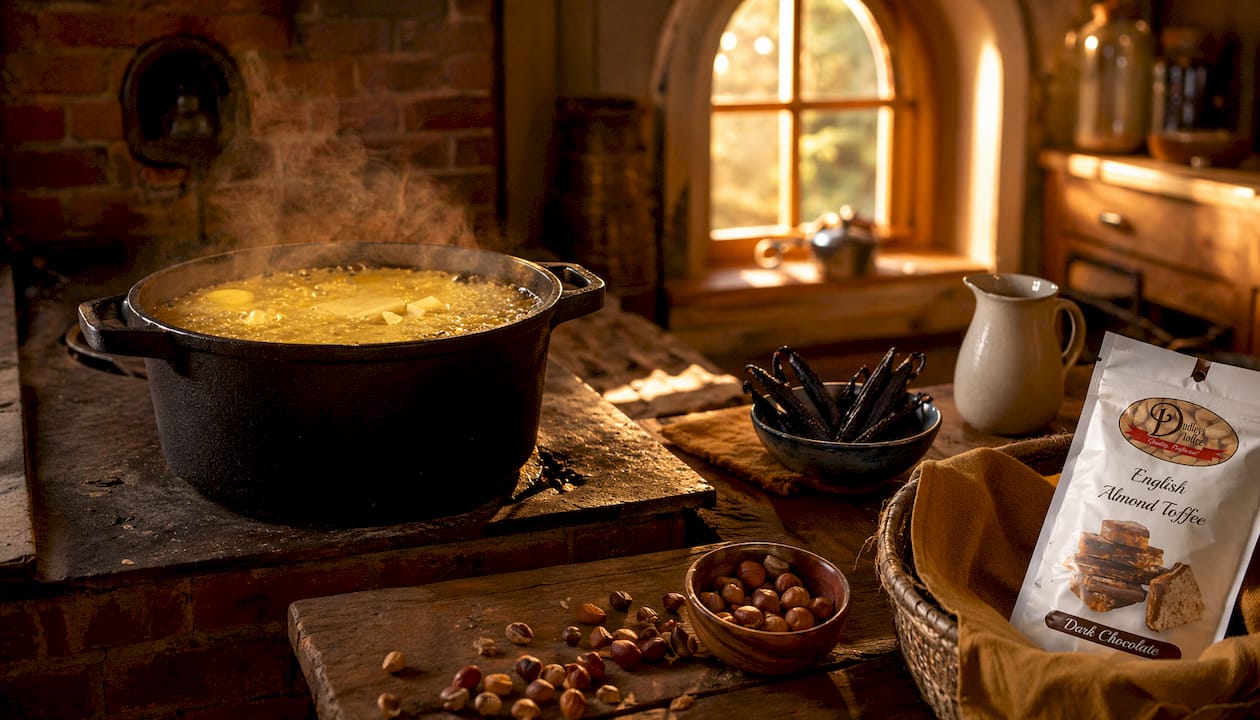
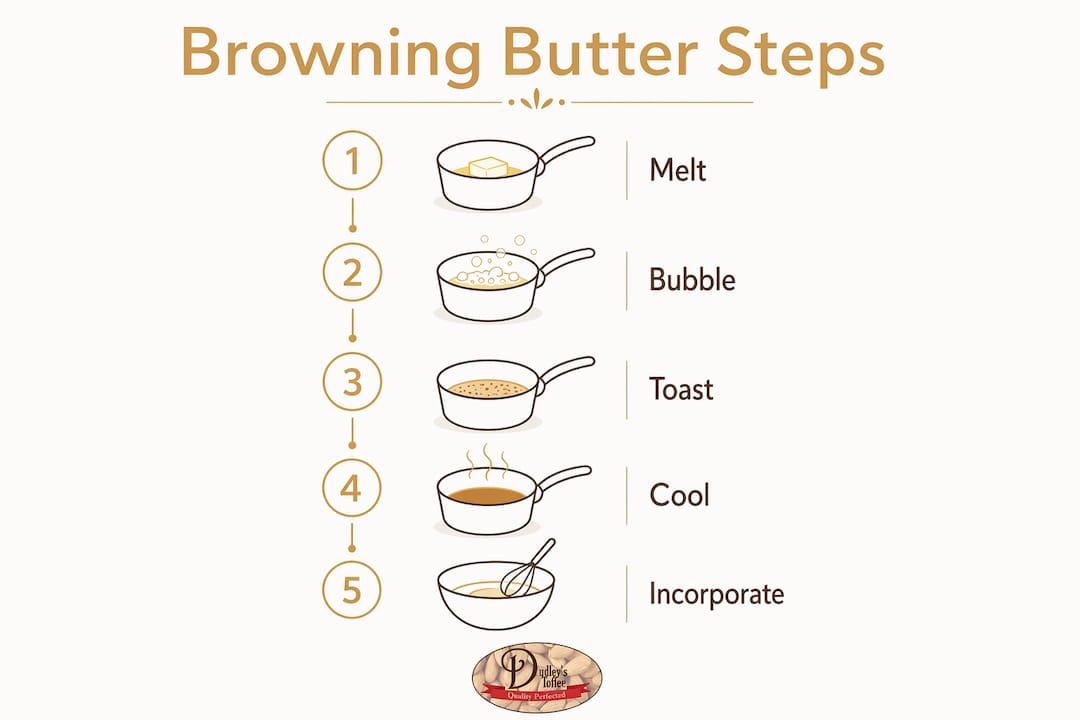
Place your butter in a light-colored saucepan over medium heat. A light pan lets you see the color change clearly. The butter melts, then foams, then the foam subsides as water evaporates. At that point, the milk solids begin to toast and turn amber. Browning butter takes about 5–8 minutes over medium heat until the liquid turns amber and smells like roasted hazelnuts. That aroma is your most reliable signal that the butter is ready.
What the browning actually does
The Maillard reaction and caramelization of milk solids create toasted milk solids with deep, nutty complexity that regular melted butter cannot produce. This flavor difference shows up clearly in the finished cookie. The browned butter also has less water than standard melted butter, which means the dough spreads less and the edges crisp up while the center stays chewy.
Common pitfalls to avoid
- Burning the butter. The window between perfect amber and scorched is narrow. Pull the pan off heat the moment you smell hazelnuts and see deep golden color.
- Adding eggs too soon. Adding eggs to hot brown butter causes them to cook instantly and ruins the emulsion. Let the butter cool 15–25 minutes until it thickens slightly before mixing.
- Skipping the pan scrapings. Every toasted bit stuck to the bottom of the pan is concentrated flavor. Scrape it all into your mixing bowl.
Pro Tip: Pour the browned butter into a wide, shallow bowl to speed up cooling. Stir it occasionally and test the temperature by touching the bowl’s side. When it feels warm but not hot, it is ready for eggs.
What is the best way to incorporate toffee for ideal texture and flavor?
Toffee is not just a mix-in. It actively changes the texture and flavor of every bite. Choosing the right toffee and handling it correctly determines whether you get caramel pockets or a greasy, melted mess.
Store-bought versus high-quality toffee
Store-bought toffee bits are convenient, but many contain additives that cause them to melt completely into the dough during baking. Using high-quality firm toffee candy prevents this and preserves distinct texture contrast in the finished cookie. Firm, handcrafted toffee holds its shape better and delivers richer caramel flavor. When you chop your own toffee from a quality block, you control the piece size, which directly affects how the cookie eats.
How toffee behaves in the oven
Toffee bits soften and partially caramelize during baking, creating soft, gooey pockets rather than staying crisply crunchy. This transformation is intentional and desirable. The caramelized sugar from the toffee blends with the browned butter notes to create a layered sweetness that plain chocolate chips cannot achieve on their own.
Handling tips for best results
- Chop toffee into pieces roughly the size of a chocolate chip. Larger chunks create dramatic pockets; smaller pieces distribute flavor more evenly.
- Fold toffee bits in last to avoid breakage and premature melting, preserving caramel pockets throughout the cookie.
- Chill the dough after folding in the toffee. Cold dough holds the pieces in place and prevents them from sinking to the bottom during baking.
- Finish each baked cookie with a pinch of flaky sea salt. Flaky sea salt added immediately after baking enhances caramel notes and balances the sweetness of toffee bits. That mineral contrast keeps the cookies from tasting one-dimensional.
Pro Tip: For a genuinely gourmet result, use premium handcrafted toffee like Dudley’s Toffee English almond toffee. Its buttery, melt-in-your-mouth texture and clean ingredient list translate beautifully into baked goods.
What baking techniques ensure perfect chewy centers and crisp edges?
Technique separates a good cookie from a great one. The steps below address temperature, timing, chilling, and portioning, all of which work together to produce the chewy, golden result you are after.
-
Brown and cool the butter first. Before you measure any other ingredient, brown your butter and let it cool. This is not optional. The cooling step protects the egg emulsion and sets up the dough’s final texture.
-
Chill the dough. Chilling dough from 1 to 24 hours is required for bakery-style flavor development and prevents excessive cookie spread. The cold rest hydrates the flour fully and re-solidifies the fats, which concentrates the nutty browned butter flavor. A minimum of 30 minutes works in a pinch, but overnight chilling produces noticeably better cookies.
-
Portion consistently. Use a cookie scoop to portion dough into equal balls, roughly 2 tablespoons each. Consistent size means consistent baking time. Uneven portions lead to some cookies overbaking while others stay raw in the center.
-
Space the dough properly. Place dough balls at least 2 inches apart on a parchment-lined baking sheet. Toffee melts and spreads during baking, and crowded cookies merge at the edges.
-
Bake at the right temperature and time. Baking temperatures range from 350°F to 375°F, with bake times averaging 10–14 minutes depending on cookie size. A higher temperature produces crispier edges faster; 350°F gives a more even bake with a softer center.
-
Pull them early. Professional bakers remove cookies from the oven when edges are golden but centers still look soft. Cookies continue setting on the pan for about 10 minutes after removal. If the center looks fully set in the oven, the cookie will be overdone once it cools.
-
Cool on the pan. Resist moving cookies to a rack immediately. Let them rest on the hot baking sheet for the full 10 minutes. That residual heat finishes the center without drying out the edges.
How to troubleshoot and enhance your toffee cookie results
Even experienced bakers run into problems with this recipe. Most issues trace back to a small number of fixable mistakes.
-
Greasy dough. This usually means the butter was still too warm when you added the eggs. The fat and eggs did not emulsify properly. Next time, wait until the butter feels warm but not hot before mixing. If the dough already looks greasy, chill it for at least an hour before baking. Cold temperatures help the fat re-solidify and the dough come together.
-
Burnt butter. If the butter smells sharp or bitter, start over. Burnt butter adds an acrid note that no amount of sugar or toffee can mask. Keep the heat at medium and stay at the stove the entire time.
-
Toffee disappearing into the dough. Low-quality toffee bits with high additive content melt away completely. Switch to a firmer, higher-quality toffee and fold it in gently at the end. Understanding how toffee changes texture during baking helps set realistic expectations and guides better ingredient choices.
-
Flat, crispy cookies. Flat cookies almost always mean the dough was too warm going into the oven. Chill longer. Flour hydration during chilling strengthens dough structure and enables controlled spreading during baking, which is critical to cookie shape and texture.
-
Adding chocolate chips. Toffee chocolate chip cookies are a natural extension of this recipe. Add a half cup of semi-sweet or dark chocolate chips alongside the toffee for a richer, more complex cookie. The chocolate melts into ribbons that complement the caramel notes beautifully.
For storage, keep baked cookies in an airtight container at room temperature for up to five days. To refresh a cookie, warm it in a 300°F oven for 3–4 minutes. The toffee softens again and the center returns to its original chewy texture.
Key Takeaways
Brown butter toffee cookies succeed because of three compounding techniques: properly browned and cooled butter, high-quality toffee folded in gently, and chilled dough baked at the right temperature.
| Point | Details |
|---|---|
| Brown butter correctly | Cook over medium heat for 5–8 minutes until amber, then cool 15–25 minutes before adding eggs. |
| Choose quality toffee | Firm, additive-free toffee holds its shape and creates distinct caramel pockets instead of melting away. |
| Chill the dough | Rest dough for at least 1 hour, up to 24 hours, to develop flavor and control spread. |
| Underbake intentionally | Pull cookies when centers look soft; they finish setting on the hot pan for about 10 minutes. |
| Finish with flaky sea salt | A pinch of sea salt right after baking balances sweetness and sharpens the caramel flavor. |
What browning butter taught us about patience in baking
At Dudley’s Toffee, we spend a lot of time thinking about what makes toffee extraordinary, and the answer almost always comes back to process. Browning butter is a perfect example. It takes maybe eight minutes, but those eight minutes change everything about the cookie. The first time you smell that hazelnut aroma coming off the pan, you understand why shortcuts do not work here.
The lesson we keep coming back to is that chilling the dough is not optional, even when you are impatient. We have baked batches straight from the bowl and batches chilled overnight. The overnight batch wins every time, without exception. The flavor deepens, the texture tightens, and the toffee pieces stay exactly where you put them.
We also believe strongly that the quality of your toffee inclusion matters as much as any technique. A handcrafted toffee made with real butter and no fillers behaves differently in the oven than a mass-produced alternative. It melts cleanly, caramelizes beautifully, and leaves a flavor that lingers. When bakers ask us what single change would most improve their cookies, we tell them to upgrade their toffee. The rest of the recipe stays the same, and the result is noticeably better.
Baking these cookies is genuinely satisfying. You are working with real ingredients, real chemistry, and a process that rewards attention. Give the butter the time it needs. Give the dough the cold rest it deserves. The result is a cookie that tastes like it came from a serious bakery, made entirely in your own kitchen.
— Dudley’s Toffee
Gourmet toffee worth baking with, from Dudley’s Toffee
Dudley’s Toffee is a family-owned Indiana company that handcrafts English almond toffee in small batches using premium ingredients, no high fructose corn syrup, and no gluten. Every piece is made to melt in your mouth, not stick to your teeth, which also makes it ideal for chopping into cookie dough.
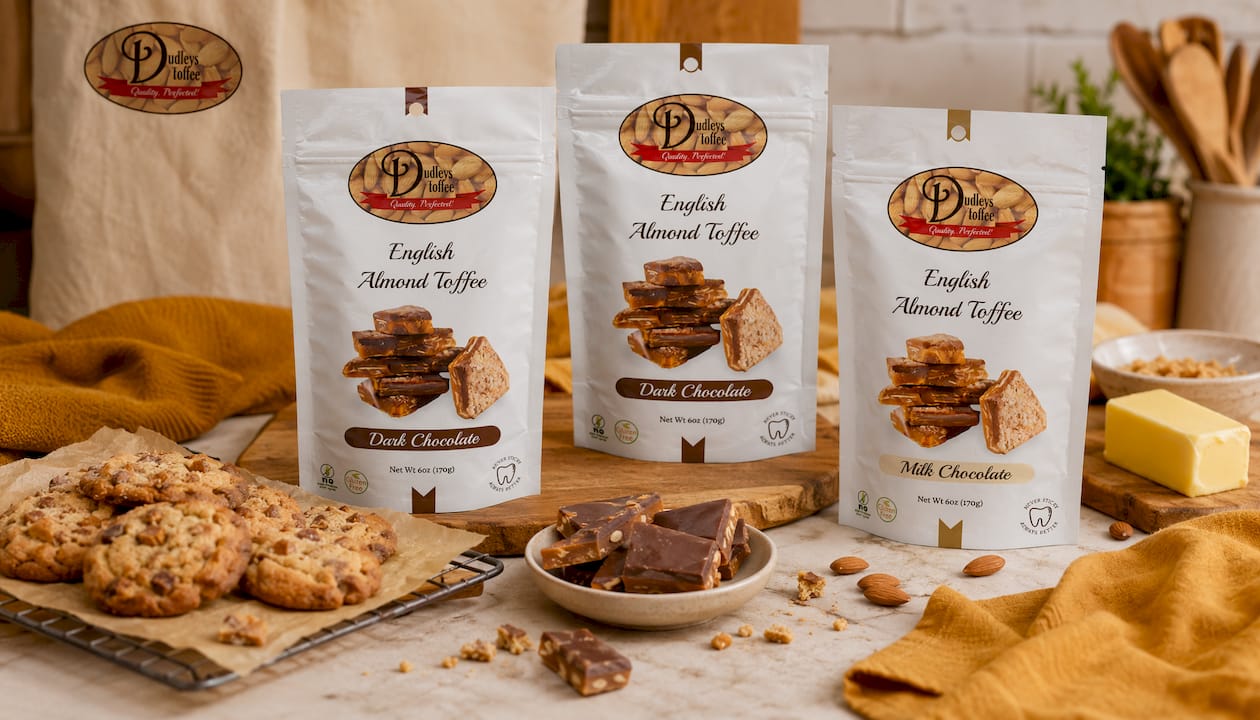
Dudley’s Toffee is available in milk chocolate and dark chocolate English almond toffee varieties, both ready to ship nationwide. Whether you are baking a batch of toffee cookies for the holidays, gifting a tin to someone who appreciates real craftsmanship, or stocking up for a fundraiser, Dudley’s Toffee delivers the quality that makes every bite memorable. Visit the Dudley’s Toffee online store to shop the full collection and find the variety that fits your baking plans.
FAQ
What makes brown butter different from regular melted butter?
Brown butter has been cooked until its milk solids toast and caramelize, producing a nutty, complex flavor that plain melted butter lacks entirely. That flavor difference carries directly into the finished cookie.
How long should I chill brown butter toffee cookie dough?
Chill the dough for at least 1 hour, though 24 hours produces the best flavor and texture. The cold rest hydrates the flour, concentrates the browned butter flavor, and prevents the cookies from spreading too thin.
Can I use store-bought toffee bits in this recipe?
Store-bought toffee bits work, but many contain additives that cause them to melt completely into the dough. High-quality firm toffee, chopped from a solid piece, holds its shape better and delivers richer caramel flavor.
At what temperature should I bake these cookies?
Bake at 350°F to 375°F for 10–14 minutes, depending on cookie size. Pull the cookies when the edges are golden and the centers still look slightly underdone, then let them finish setting on the pan for 10 minutes.
Why do my cookies come out flat and greasy?
Flat, greasy cookies usually mean the browned butter was too warm when the eggs were added, breaking the emulsion. Cool the butter for 15–25 minutes before mixing, and chill the finished dough before baking to restore structure.