
Toffee Bits for Baking: Your Complete Home Baker's Guide
Toffee bits for baking are small, crunchy pieces of butter and sugar cooked to the hard-crack stage, then broken into irregular shards that melt into caramel pockets inside baked goods. They deliver a dual texture that most mix-ins simply cannot match: a crisp outer shell with a chewy caramel center. Home bakers use them in cookies, brownies, blondies, muffins, and as toppings for ice cream and pancakes. Handcrafted options like Dudley’s Toffee, made in small batches in Indiana without gluten or high fructose corn syrup, take that flavor even further with premium ingredients and time-honored technique.
What are toffee bits for baking and how are they made?
Toffee bits are the baking world’s most underrated mix-in. Most bakers reach for chocolate chips by habit, but toffee bits bring something chocolate chips cannot: a caramelized, buttery crunch that deepens as it bakes. Understanding how they are made helps you choose and use them with confidence.
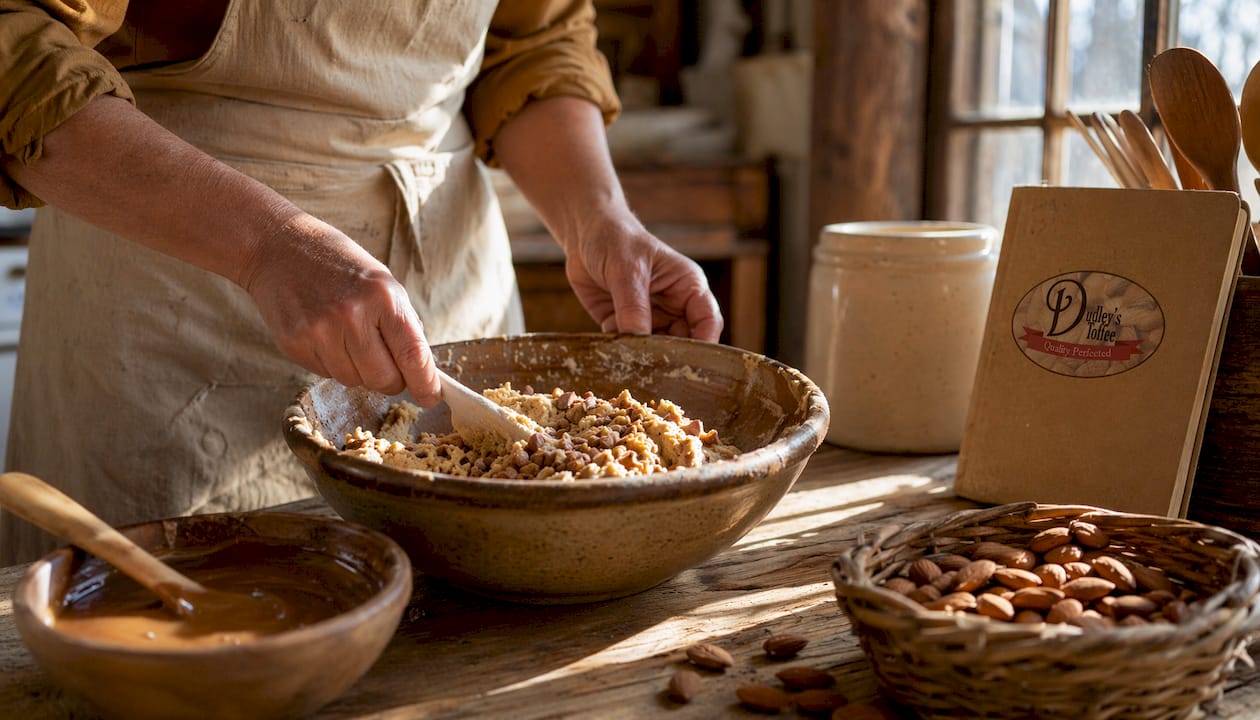
The process starts with just three ingredients. A standard batch uses 1 stick (113g) of unsalted butter, 1 cup (200g) of granulated sugar, and ½ tsp of salt. That simplicity is the point. Quality toffee depends entirely on technique, not a long ingredient list.
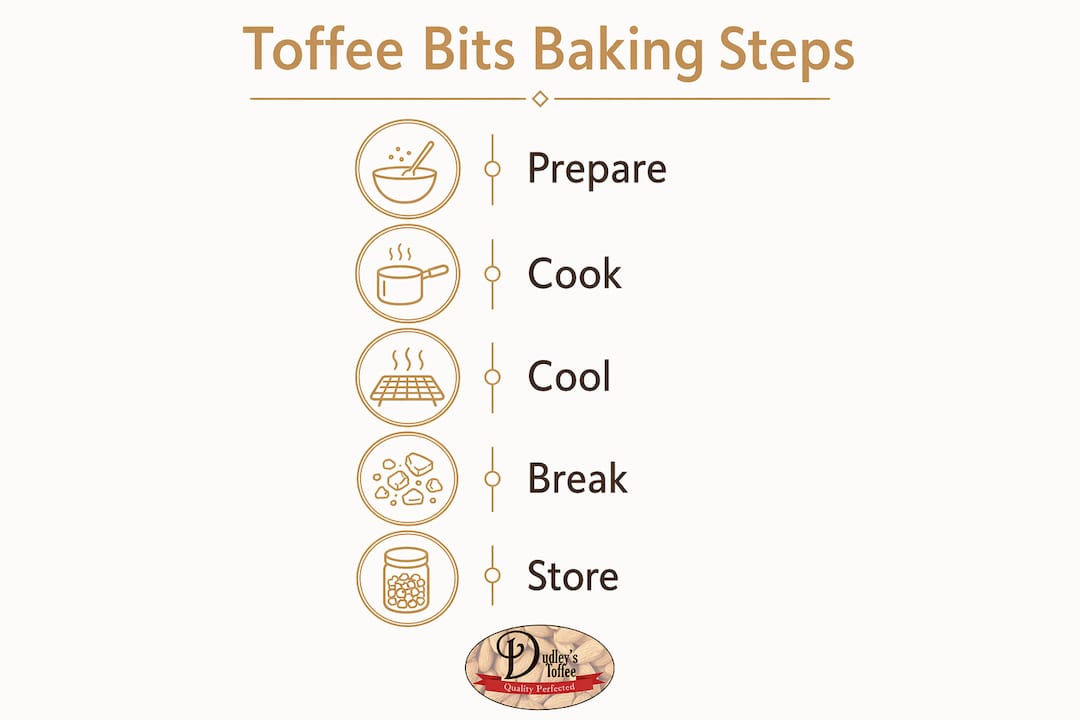
Here is how to make homemade toffee bits from scratch:
- Melt the butter in a heavy-bottomed saucepan over medium heat. A thin pan distributes heat unevenly and causes scorching.
- Add the sugar and salt, stirring constantly until the mixture is fully combined.
- Cook to the hard-crack stage, between 305°F and 330°F. A candy thermometer is not optional here. Temperatures above 340°F produce a bitter, burnt flavor that ruins the batch.
- Pour onto a parchment-lined baking sheet and spread thin. Work quickly because the mixture sets fast.
- Cool completely, then break or chop into small bits. Uniform pieces are not the goal. Irregular shards create better texture contrast in baked goods.
The whole process takes about 15 minutes. That speed surprises most home bakers who assume candy-making is complicated.
Pro Tip: Use a heavy-bottomed stainless steel or enameled cast iron pan. Thin pans create hot spots that push the sugar past 340°F before your thermometer registers it.
Homemade toffee bits give you full control over thickness, size, and flavor intensity. Store-bought options offer convenience, but the texture is often more uniform and less interesting. For bakers who want the best possible result, making your own is worth the 15 minutes.
What are the best ways to use toffee bits in baking recipes?
Toffee bits work in almost any baked good that benefits from caramel flavor and textural contrast. The key is knowing how much to use and when to add them.
Recipes that shine with toffee bits:
- Cookies: The classic application. Fold in ¾ to 1 cup of toffee bits per batch as the last step before portioning. Bake at 350°F for 8–12 minutes.
- Brownies and blondies: Stir bits into the batter just before pouring into the pan. They sink slightly and create caramel pockets throughout.
- Muffins: Add ½ cup to the batter and press a few extra bits on top before baking for a crunchy crown.
- Pancakes: Scatter bits onto the wet side of each pancake just after pouring the batter. They caramelize against the griddle and create crispy edges.
- Ice cream toppings: Sprinkle over a scoop right before serving. The cold temperature keeps them crunchy longer than room-temperature desserts do.
- Cakes: Press bits into frosting as a garnish, or fold them into a cream cheese filling for a layered texture effect.
The folding technique matters. Add toffee bits last, after all other mix-ins, and fold with a rubber spatula using no more than 8–10 strokes. Overmixing breaks the bits into dust and eliminates the texture contrast you are working toward.
Browned butter is the single best flavor pairing for toffee bits in cookie dough. The nutty, toasted notes in browned butter amplify the caramel flavor in the bits, creating a unified richness that regular melted butter cannot achieve. Swap standard melted butter for browned butter in any cookie recipe and the difference is immediate.
Pro Tip: Press a small handful of toffee bits onto the surface of each cookie just before baking. Finishing with a pinch of flaky sea salt balances the sweetness and makes the buttery notes pop.
Toffee bits also work as a garnish after baking. Pressing them onto warm frosting or a freshly glazed cake gives a decorative, bakery-style finish without any extra effort.
How to choose and store the best toffee bits for baking
Quality toffee bits share three characteristics: a clean snap when broken, a rich buttery flavor without bitterness, and a short ingredient list free of artificial additives. Bits that taste slightly burnt or leave a waxy coating are made with inferior fat sources or overcooked sugar.
What to look for when buying toffee bits:
- Gluten-free certification: Many home bakers and their guests have gluten sensitivities. Choosing certified gluten-free bits removes that concern entirely.
- No high fructose corn syrup: Bits made with real cane sugar caramelize more evenly and taste cleaner than those made with corn syrup substitutes.
- Small-batch production: Mass-produced bits often sacrifice texture for shelf stability. Handcrafted options like Dudley’s Toffee are made in small batches in Indiana, using premium ingredients that produce a softer, more buttery result.
- Chocolate coating variety: Milk chocolate toffee bits pair well with lighter doughs like blondies and sugar cookies. Dark chocolate bits work better in rich brownies and espresso-flavored recipes.
Storage guidelines:
- Store in an airtight container in a cool, dry place. Properly stored toffee bits last up to 1 month at room temperature.
- Freeze for up to 3 months in a sealed freezer bag. Press out all air before sealing to prevent moisture damage.
- Thaw at room temperature before baking. Do not microwave to speed thawing. Rapid heat causes the sugar to sweat and the bits to clump.
- Keep bits away from strong-smelling foods in the freezer. Toffee absorbs odors easily through its sugar structure.
Moisture is the enemy of toffee bits. Even brief exposure to humidity causes the sugar to become sticky and the bits to fuse together. A silica gel packet inside the storage container extends freshness noticeably in humid climates.
What common mistakes to avoid when baking with toffee bits?
Most baking failures with toffee bits trace back to a handful of predictable errors. Avoiding them protects both your ingredients and your results.
The most common mistakes:
- Skipping the dough chill: Chilling dough for at least 30 minutes before baking slows the melting of toffee bits in the oven. Unchilled dough spreads too fast, and the bits dissolve into the cookie rather than holding their shape.
- Substituting toffee sauce for toffee bits: These two ingredients are not interchangeable. Toffee bits are hard-crack candy pieces that hold structure during baking. Toffee sauce is soft and pourable. Using sauce where bits are called for produces a wet, sticky texture instead of a crunchy one.
- Overbaking: Toffee bits continue to melt after the pan leaves the oven. Pull cookies and bars 1–2 minutes before they look fully done. Residual heat finishes the job without turning the bits into a liquid puddle.
- Overmixing the dough: Aggressive mixing breaks toffee bits into fine crumbs. Those crumbs dissolve completely during baking and contribute no texture. Fold bits in gently and stop as soon as they are distributed.
- Using a thin baking pan: Thin sheet pans conduct heat unevenly and cause the bottoms of cookies to overbrown before the centers set. A heavy, light-colored aluminum pan produces the most consistent results.
Pro Tip: If your toffee bits are melting too aggressively during baking, freeze them for 20 minutes before folding into the dough. Cold bits hold their shape longer in the oven and create a more defined crunch in the finished product.
One overlooked mistake is adding toffee bits too early in the mixing process. They belong at the very end, after flour is fully incorporated. Adding them with the flour causes them to get coated in dry ingredients, which weakens their caramel flavor.
Homemade vs. store-bought toffee bits: which is better for baking?
The right choice depends on your priorities. Both options produce excellent results when used correctly, but they serve different bakers in different situations.
| Factor | Homemade toffee bits | Store-bought toffee bits |
|---|---|---|
| Ingredient control | Full control over butter quality, sugar type, and salt level | Ingredients fixed by manufacturer |
| Texture | Irregular, rustic shards with varied crunch | Uniform size, consistent melt behavior |
| Flavor depth | Richer, more complex when made with quality butter | Reliable and consistent batch to batch |
| Time required | About 15 minutes plus cooling time | Ready to use immediately |
| Shelf life | Up to 1 month at room temperature, 3 months frozen | Longer shelf life due to commercial packaging |
| Best for | Special occasion baking, flavor experimentation | Everyday baking, large-batch production |
Homemade bits win on flavor when you use high-quality unsalted butter and cook the sugar carefully. The irregular shapes also create more interesting texture variation in cookies and brownies. The tradeoff is time and the need for a candy thermometer.
Store-bought bits win on convenience and consistency. For bakers who make large quantities or need a reliable result every time, a quality commercial option removes one variable from the process. Look for options made without high fructose corn syrup and with a short ingredient list. Dudley’s Toffee handcrafted English almond toffee, available in milk chocolate and dark chocolate varieties, offers the artisan quality of homemade with the convenience of a ready-to-use product. For a deeper look at how toffee types differ in flavor and texture, the gourmet toffee flavor guide from Dudley’s Toffee is worth reading before your next baking session.
Key Takeaways
Toffee bits for baking deliver their best results when you control temperature during production, fold them in last, chill your dough, and pair them with browned butter for maximum caramel depth.
| Point | Details |
|---|---|
| Hard-crack stage is non-negotiable | Cook toffee to 305°F–330°F; above 340°F produces bitter, unusable candy. |
| Fold bits in last | Add toffee bits after all other mix-ins to preserve their crunch and shape. |
| Chill dough before baking | At least 30 minutes of chilling slows melting and improves cookie shape retention. |
| Browned butter amplifies flavor | Pairing browned butter with toffee bits creates a unified, richer caramel profile. |
| Storage protects texture | Airtight containers at room temperature last 1 month; freezing extends life to 3 months. |
What baking with toffee bits has taught us at Dudley’s Toffee
The most common mistake we see home bakers make is treating toffee bits like chocolate chips. They are not the same ingredient. Chocolate chips are designed to hold their shape in the oven. Toffee bits are designed to partially melt, spread slightly, and create caramel pockets. That behavior is the whole point. Fighting it by overtaking or using too high a temperature produces disappointing results.
We have also noticed that bakers underestimate how much the quality of the butter matters. Toffee is essentially butter and sugar. When you start with a rich, high-fat butter, the finished bits carry a depth of flavor that no amount of technique can replicate with a lower-quality fat. This is why small-batch, handcrafted production makes a real difference. You taste every ingredient.
The browned butter pairing is not a trend. It is a technique grounded in flavor chemistry. Both browned butter and toffee bits share the same Maillard reaction compounds. Combining them in a single dough creates a flavor that feels more complex than the sum of its parts. We encourage every baker who has not tried it to make that swap on their next batch of cookies.
Finally, do not be afraid to experiment. Toffee bits work in places most recipes never suggest: stirred into waffle batter, folded into whipped cream, or pressed into the top of a warm skillet brownie. The texture differences in toffee are worth understanding before you start, because knowing how your bits will behave helps you place them where they will shine.
— Dudley’s Toffee
Dudley’s Toffee: handcrafted quality for your baking kitchen
Dudley’s Toffee is a family-owned Indiana company that makes English almond toffee in small batches using premium ingredients and a time-honored recipe. Every batch is gluten-free, contains no high fructose corn syrup, and is available in both milk and dark chocolate varieties.
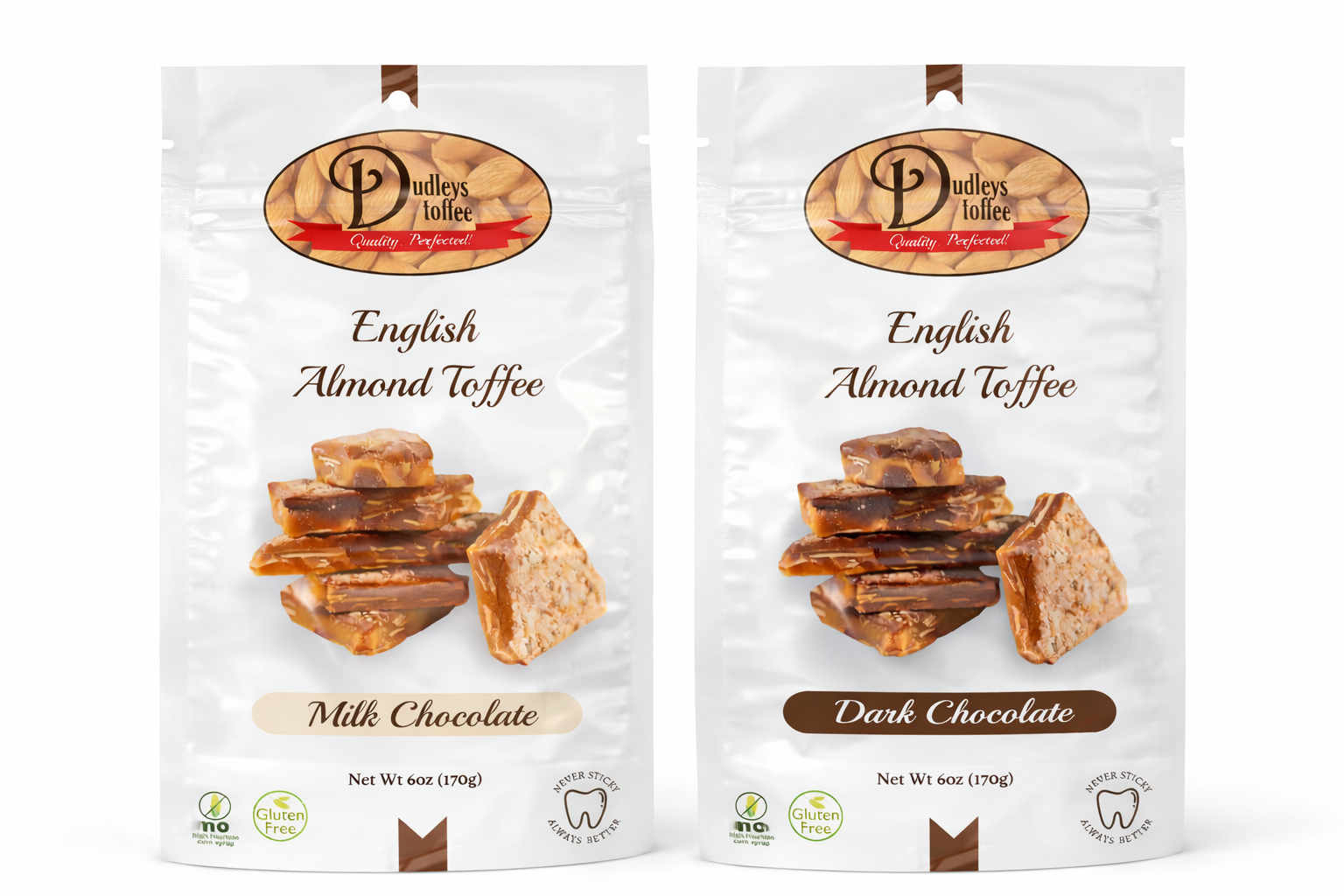
Whether you are looking for a ready-to-use toffee ingredient for your next baking project or a premium treat to share, Dudley’s Toffee delivers the handcrafted quality that store shelves rarely offer. The softer, buttery texture melts beautifully into cookie dough and brownie batter without the waxy residue of mass-produced alternatives. Shop the milk chocolate English almond toffee or the dark chocolate variety and taste the difference that small-batch craftsmanship makes in your kitchen.
FAQ
What are toffee bits made of?
Toffee bits are made from unsalted butter, granulated sugar, and salt cooked to the hard-crack stage between 305°F and 330°F, then cooled and broken into small pieces. Some varieties include a chocolate coating.
Can I substitute toffee sauce for toffee bits in a recipe?
No. Toffee bits and toffee sauce are not interchangeable. Bits are solid, crunchy candy pieces that hold structure during baking, while sauce is soft and pourable and will make your batter wet and sticky.
How long do toffee bits last?
Stored in an airtight container in a cool, dry place, toffee bits last up to 1 month. Freezing in a sealed bag extends shelf life to 3 months. Thaw at room temperature before using.
Why do my toffee bits melt completely during baking?
The most likely causes are skipping the dough chill and overbaking. Chill your dough for at least 30 minutes before baking, and pull your cookies from the oven 1–2 minutes before they look fully set.
Are toffee bits gluten-free?
Traditional toffee bits made from butter, sugar, and salt are naturally gluten-free. Always check the label on store-bought options for cross-contamination warnings. Dudley’s Toffee is certified gluten-free and made without high fructose corn syrup.
Recommended
Share