
Toffee Texture Differences Explained for Candy Lovers
Toffee texture is defined by two variables: cooking temperature and ingredient ratios. These two factors work together to determine whether your toffee snaps like glass, melts like butter, or chews like taffy. Understanding toffee texture differences explained through the lens of sugar chemistry gives candy enthusiasts a real advantage, whether you are tasting, buying, or making toffee at home. Dudley’s Toffee, a family-owned Indiana confectionery, has built its signature recipe around mastering exactly this balance, producing a softer, buttery toffee that melts cleanly without sticking to your teeth.
How does cooking temperature control toffee texture?
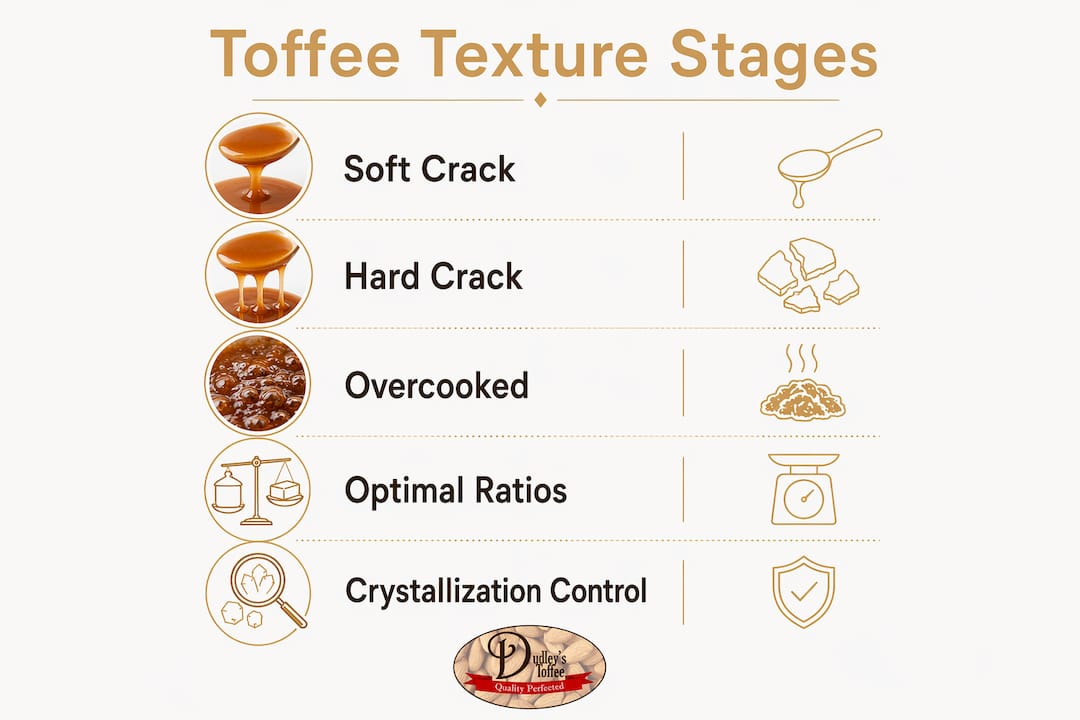
Temperature is the single most powerful variable in toffee making. The hard crack stage at 300°F–310°F reduces moisture below 3%, forming a brittle, glass-like, non-crystalline structure. That near-total moisture removal is what gives classic English toffee its satisfying snap.
Cook below that threshold, between 270°F and 290°F, and you get the soft crack stage. Higher moisture retention keeps the sugar matrix pliable, producing a chewy, bendable texture. This is the science behind soft vs hard toffee: the difference is not a matter of preference in the recipe so much as a matter of degrees on the thermometer.
Overcooking carries its own penalty. Push past 320°F and the sugars begin to burn, producing bitter, dark toffee with a harsh aftertaste. The window for perfect brittle toffee is genuinely narrow, roughly 10°F wide, which is why professional confectioners treat temperature control as non-negotiable.
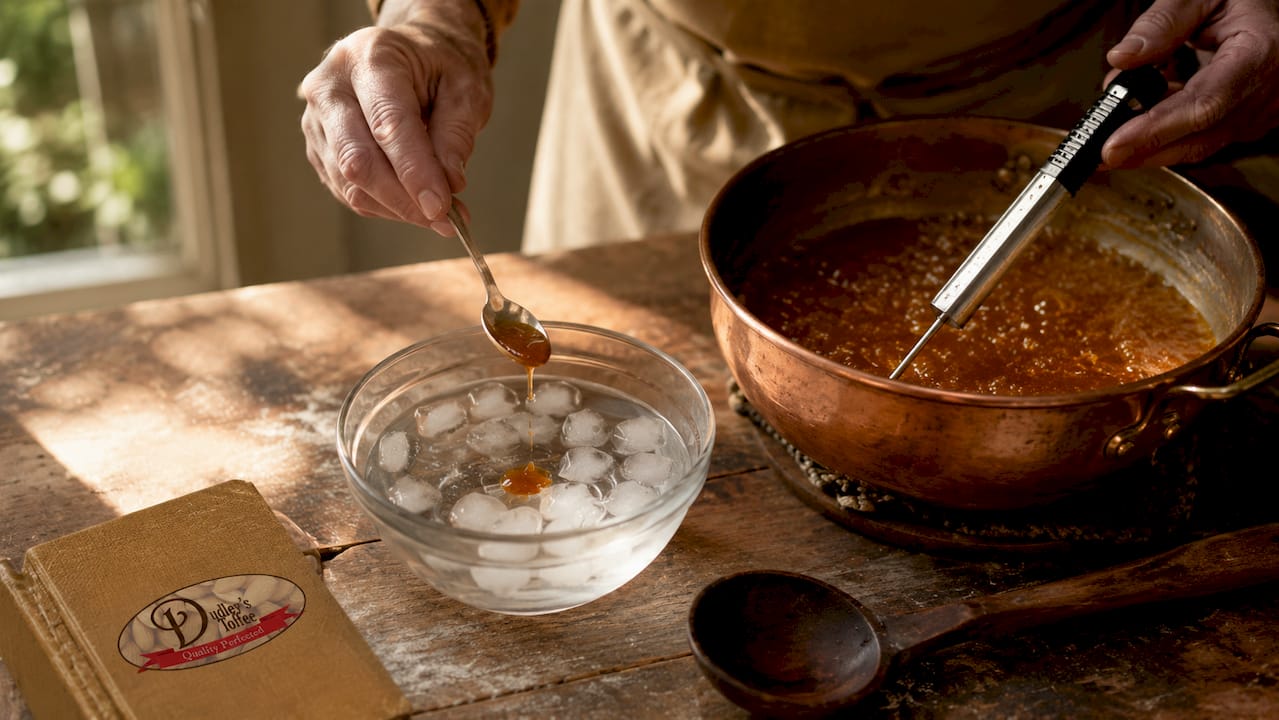
Cold-water testing provides a reliable backup to thermometer readings. Drop a small amount of hot syrup into cold water: if it forms brittle threads that snap cleanly, you have reached hard crack. Beginners frequently confuse the hard ball stage with hard crack without this physical check, which leads to toffee that is chewy rather than crisp.
Pro Tip: Always use a calibrated candy thermometer AND the cold-water test together. At high altitudes, water boils at lower temperatures, which shifts every sugar stage downward. Relying on thermometer readings alone at altitude produces consistently undercooked toffee.
The numbered stages of sugar cooking matter here:
- Thread stage (230°F–235°F): Thin, breakable threads. No structural use in toffee.
- Soft ball stage (235°F–240°F): Pliable ball. Used for fudge and fondant.
- Hard ball stage (250°F–265°F): Firm ball. Used for caramels and nougat.
- Soft crack stage (270°F–290°F): Flexible threads. Produces chewy toffee.
- Hard crack stage (300°F–310°F): Brittle threads. Produces classic snappy toffee.
How do ingredient ratios shape toffee mouthfeel?
Ingredient ratios determine the texture experience just as much as temperature does. English toffee’s higher sugar-to-butter ratio produces a firm, brittle snap, while butter toffee’s increased butterfat yields a smoother, creamier texture. The fat does not just add flavor; it physically coats the palate and modulates how the candy dissolves.
European-style butter, which carries a higher fat content than standard American butter, enhances both snap and richness. The extra fat creates a more uniform emulsion during cooking, which translates to a cleaner break and a richer finish. Dudley’s Toffee uses premium butter specifically because fat quality shapes the final mouthfeel in ways that no flavoring can replicate.
Brown sugar and molasses introduce another layer of complexity. Both contain trace minerals and additional moisture, which soften the final texture slightly and add caramel-like depth. Recipes using exclusively white granulated sugar tend to produce a cleaner, more neutral snap, while brown sugar recipes lean toward a deeper, more complex chew.
Crystallization inhibitors play a critical structural role. Corn syrup and cream of tartar prevent sugar molecules from organizing into crystals during cooking. Without them, the sugar matrix can shift from amorphous to crystalline, producing a grainy, sandy texture instead of a smooth, glassy one. Toffee is a non-crystalline candy by design, and that amorphous structure is what makes the snap possible.
Pro Tip: If your recipe calls for corn syrup and you skip it to “keep things simple,” expect graininess. The inhibitor is not optional. It is structural.
Key ingredient effects at a glance:
- Higher sugar-to-butter ratio: Firmer, more brittle snap
- Higher butterfat content: Creamier mouthfeel, less aggressive snap
- Brown sugar or molasses: Softer texture, deeper flavor
- Corn syrup or cream of tartar: Prevents graininess, preserves glassy structure
- European-style butter: Enhanced richness and more uniform emulsion
What are the most common toffee texture mistakes?
Graininess is the most frequent texture defect in homemade toffee. Uncontrolled sugar crystallization causes this sandy, gritty result. A single sugar crystal on the side of the pot can trigger a chain reaction that turns the entire batch grainy within seconds. Wiping pot sides with a wet pastry brush during cooking removes stray crystals before they cause damage.
Butter separation, known in confectionery as “oiling out,” is the second most common failure. When butter breaks from the sugar syrup, you see a greasy, pooled layer on top of the batch. Oiling out prevents a uniform brittle structure and can sometimes be corrected by gently adding a small amount of water and applying steady low heat, though many batches require discarding. Steady stirring and consistent heat prevent separation from occurring in the first place.
Humidity is a silent texture killer. Humidity above roughly 50–60% relative humidity causes finished toffee to absorb moisture from the air, softening brittle textures and increasing stickiness. Experienced confectioners avoid making toffee on rainy days and store finished product in airtight containers with desiccant packets.
Pro Tip: Store toffee in a sealed tin or airtight bag with a food-safe silica gel packet. This single step extends crispness for weeks and prevents the sticky, fudge-like texture that frustrates so many home candy makers.
Common mistakes and their direct causes:
- Grainy texture: Sugar crystallization from undissolved crystals or skipped inhibitors
- Sticky, soft toffee: Undercooked batch or high-humidity storage
- Fudge-like consistency: Cooking stopped at soft crack instead of hard crack
- Oily surface: Butter separation from uneven heat or too-rapid temperature increase
- Bitter flavor with hard texture: Overcooking past 320°F
How to make different toffee textures: soft chewy to hard brittle
Controlling toffee texture comes down to three levers: target temperature, fat ratio, and inhibitor use. Adjusting any one of these shifts the final result along the spectrum from soft and chewy to hard and brittle.
For soft, chewy toffee, cook to the soft crack stage (270°F–290°F) and increase the butter proportion relative to sugar. The higher moisture content and fat level keep the candy pliable. Adding a small amount of cream or molasses amplifies the chew. This style resembles a dense, rich caramel more than a classic English toffee, though toffee reaches higher temperatures than caramel even in its softer forms.
For hard, brittle toffee, cook to the full hard crack stage (300°F–310°F) and use a higher sugar-to-butter ratio. Add baking soda at the end of cooking if you want a slightly aerated, lighter snap. The baking soda reacts with the hot sugar to create tiny bubbles, producing a texture that is crisp but less dense than a pure sugar-butter slab.
American toffee and English toffee differ in characteristic ways. American-style toffee tends to be harder and more brittle, often cooked to the upper end of the hard crack range. English toffee, like the handcrafted variety made by Dudley’s Toffee, targets a softer point within the hard crack range, producing a candy that snaps cleanly but melts quickly on the tongue rather than shattering into shards.
The cold-water test remains the most practical real-time check for texture control, especially when working without a precision thermometer. Brittle threads that snap confirm hard crack; threads that bend without breaking confirm soft crack.
| Texture type | Target temperature | Butter ratio | Texture result |
|---|---|---|---|
| Soft and chewy | 270°F–290°F | High | Pliable, bendable, dense |
| Medium snap | 290°F–300°F | Moderate | Firm but not fully brittle |
| Classic brittle | 300°F–310°F | Lower | Glass-like snap, clean break |
| Aerated brittle | 300°F–310°F + baking soda | Lower | Light, crisp, slightly foamy |
Steps to control texture consistently:
- Use a calibrated candy thermometer and confirm with the cold-water test.
- Choose your butter ratio based on the target texture before you start cooking.
- Add corn syrup or cream of tartar to prevent crystallization.
- Wipe pot sides with a wet pastry brush throughout cooking.
- Pour onto a marble slab or parchment immediately at the target temperature.
- Store in an airtight container away from humidity within one hour of cooling.
Key Takeaways
Toffee texture is determined by cooking temperature, butterfat ratio, and crystallization control, with hard crack stage at 300°F–310°F producing the classic brittle snap and soft crack stage producing chewier results.
| Point | Details |
|---|---|
| Temperature drives texture | Hard crack (300°F–310°F) creates brittle snap; soft crack (270°F–290°F) creates chew. |
| Fat ratio shapes mouthfeel | Higher butterfat yields creamier texture; higher sugar ratio yields firmer snap. |
| Inhibitors prevent graininess | Corn syrup or cream of tartar keeps sugar amorphous and texture smooth. |
| Humidity softens finished toffee | Store in airtight containers with desiccant to preserve crispness. |
| Cold-water test confirms stage | Brittle threads in cold water confirm hard crack, independent of thermometer accuracy. |
What years of small-batch toffee making taught us about texture
Texture is where toffee either earns its reputation or loses it. After years of handcrafting small-batch English almond toffee at Dudley’s Toffee, the lesson that stands out most is this: the science is not complicated, but the execution demands patience. Most texture failures we have seen, in our own kitchen and in the questions we receive from customers, trace back to one of two things. Either the cook pulled the batch too early, or the finished candy was stored carelessly.
The humidity factor surprises people. Indiana summers are humid, and we have learned to be selective about production days. A batch made on a 75% humidity afternoon behaves differently than the same recipe made on a dry winter morning. The candy absorbs ambient moisture faster than most people expect, and what starts as a perfect snap can turn sticky within hours if left uncovered.
The other insight that took time to fully appreciate is the role of butter quality. Premium butter is not a luxury in toffee making. It is structural. The fat content and freshness of the butter directly affect emulsification during cooking, which in turn affects whether the batch holds together or oils out. We use the same premium butter in every small batch because consistency in ingredients is the only way to get consistency in texture.
The most satisfying part of understanding toffee texture characteristics is that the knowledge transfers directly to your palate. Once you know what hard crack feels like and what butterfat does to mouthfeel, you taste toffee differently. You notice the snap, the melt rate, the finish. That awareness is what separates a candy enthusiast from someone who just eats candy.
— Dudley’s Toffee
Taste the craft behind every piece of Dudley’s Toffee
Dudley’s Toffee is a family-owned Indiana company that puts every principle in this article into practice with each small batch it makes. The signature recipe targets a softer point within the hard crack range, producing a toffee that snaps cleanly and melts on the tongue without sticking to your teeth.
Both the dark chocolate English toffee and the milk chocolate English almond toffee are made with premium butter, real almonds, and no high fructose corn syrup. They are gluten-free and available for direct purchase, wholesale, and gifting. If you want to experience the texture balance this article describes rather than just read about it, Dudley’s Toffee ships nationwide. Explore the full range at dudleystoffee.com and taste what precision and tradition produce together.
FAQ
What temperature makes toffee hard and brittle?
Toffee reaches a hard, brittle texture at the hard crack stage, between 300°F and 310°F, where moisture drops below 3% and the sugar forms a glass-like amorphous structure.
Why does my toffee turn out grainy instead of smooth?
Graininess results from uncontrolled sugar crystallization. Adding corn syrup or cream of tartar and wiping pot sides with a wet pastry brush during cooking prevents crystals from forming and spreading through the batch.
What is the difference between soft and hard toffee?
Soft toffee is cooked to the soft crack stage (270°F–290°F), retaining more moisture for a chewy, pliable texture. Hard toffee is cooked to the hard crack stage (300°F–310°F), removing nearly all moisture to create a firm, snappy candy.
Why does toffee get sticky after a few days?
Toffee absorbs moisture from the air when humidity exceeds roughly 50–60%, which softens the brittle structure and increases stickiness. Storing toffee in an airtight container with a desiccant packet prevents this.
What makes English toffee different from butter toffee in texture?
English toffee uses a higher sugar-to-butter ratio, producing a firmer, more brittle snap. Butter toffee increases the butterfat proportion, which yields a creamier, smoother mouthfeel and a less aggressive break.