

Which Toffee to Gift: English vs American, Hit 295–310°F
English toffee is a butter-and-sugar confection cooked hard for a clean, glassy snap, while American toffee (often called buttercrunch) leans on corn syrup, vanilla, and mixed-in nuts for a chewier, more forgiving bite. If you want that sharp crack against your teeth, English style wins. If you want a softer, more buttery melt with less risk of a ruined batch, American style is the safer bet, and either way, a candy thermometer reading between 295°F and 310°F is what actually decides the outcome, not guesswork.
TL;DR:
- American toffee with corn syrup is more forgiving to temperature variances and produces a softer, chewy texture than the crisp, glassy English style that relies solely on butter and sugar.
- A thermometer reading between 295°F and 310°F is crucial for achieving the desired toffee hardness, with higher temperatures risking burning and lower temperatures causing chewiness.
- English toffee’s firm crack results from caramelized sugar cooked without stabilizers, while American toffee’s softer consistency benefits from corn syrup’s ability to control crystallization.
- The choice between styles depends on taste preference, skill level, and presentation, with American toffee being easier for beginners and English offering a more elegant, brittle finish.
- High-quality English toffee like Dudley’s is handcrafted, gluten-free, and made without high fructose corn syrup, offering a softer profile even in a traditionally hard-crack product.
Table of Contents
- English Toffee vs American Toffee: A Side-by-Side Look
- What Ingredients Actually Cause the Texture Difference?
- What Temperature Gives You the Right Toffee Texture?
- Where Did the Names “Toffee” and “Buttercrunch” Come From?
- How Do You Choose Which Toffee Style to Make or Buy?
- How Dudley’s Toffee Makes a Softer English Almond Toffee
- Which Toffee Style Should You Actually Try First?
- Ready to Taste the Difference for Yourself?
- Sources
- FAQ
English Toffee vs American Toffee: A Side-by-Side Look
The two styles start from the same place, sugar and fat cooked to a caramelized state, and end up in very different places on your tongue. English toffee sticks close to its roots: butter, sugar, sometimes a splash of water, cooked without corn syrup or other stabilizers, which gives it that firm, almost architectural snap. American toffee usually brings in corn syrup and vanilla, plus nuts folded right into the candy base rather than just scattered on top.
Here’s the shorthand version:
- Ingredients: English relies on butter and sugar alone; American typically adds corn syrup and vanilla.
- Texture: English shatters with a crisp, glass-like break; American has a slightly tender, almost chewy give.
- Nuts and chocolate: English often mixes almonds into the batch before a chocolate coating; American frequently presses nuts into a chocolate-topped bar.
- Presentation: English shows up in gift boxes and confectionery tins; American shows up as packaged snack bars or holiday tins at the grocery store.
- Skill level: American is more forgiving for a first attempt; English rewards precision and a good thermometer.
Neither one is objectively “better.” They’re built for different moments. Sharp-snap toffee reads elegant in a gift box. Tender, nut-studded buttercrunch reads comforting on a snack table. Knowing which one you’re craving, or which one your gift recipient would love, is really the whole decision.
What Ingredients Actually Cause the Texture Difference?
Corn syrup is the real workhorse in American-style recipes. It’s an invert sugar that interferes with crystallization, which is exactly why American toffee tolerates a slightly wider temperature margin and comes out softer instead of glass-brittle. English toffee skips that safety net entirely, using nothing but butter, sugar, and heat control to reach a hard, clean set.
Sugar type matters too. White sugar produces a lighter amber color and a cleaner caramel flavor, while a partial swap to brown sugar deepens the color and adds a faint molasses note that shows up more in American-style batches. Butter is non-negotiable in both styles, but it’s doing more work in English toffee, since there’s no corn syrup to fall back on if the fat separates.
Nuts and chocolate follow two paths. Some cooks fold almonds or pecans directly into the hot mixture before it sets. Others press nuts into a layer of melted chocolate spread over the cooled toffee. Both are valid, and the choice mostly comes down to whether you want nuts in every bite or nuts as a textural topping.
- Butter and sugar only, cooked hot: English style, crisp snap.
- Corn syrup, vanilla, mixed nuts: American style, tender crunch.
- Chocolate can coat either style; the ingredient list underneath is what actually separates them.
Pro Tip: Once your sugar mixture hits a low boil, resist the urge to stir. Stirring introduces air and undissolved sugar crystals, which is the fastest route to a grainy, crystallized batch instead of a smooth one.
What Temperature Gives You the Right Toffee Texture?
Hard-crack stage, between 295°F and 310°F, is the single number that determines whether your toffee snaps cleanly or turns into a sticky mess. Below that range, you get a chewy, almost taffy-like result. Push past 310°F and you risk scorching the sugar into a bitter, burnt flavor.
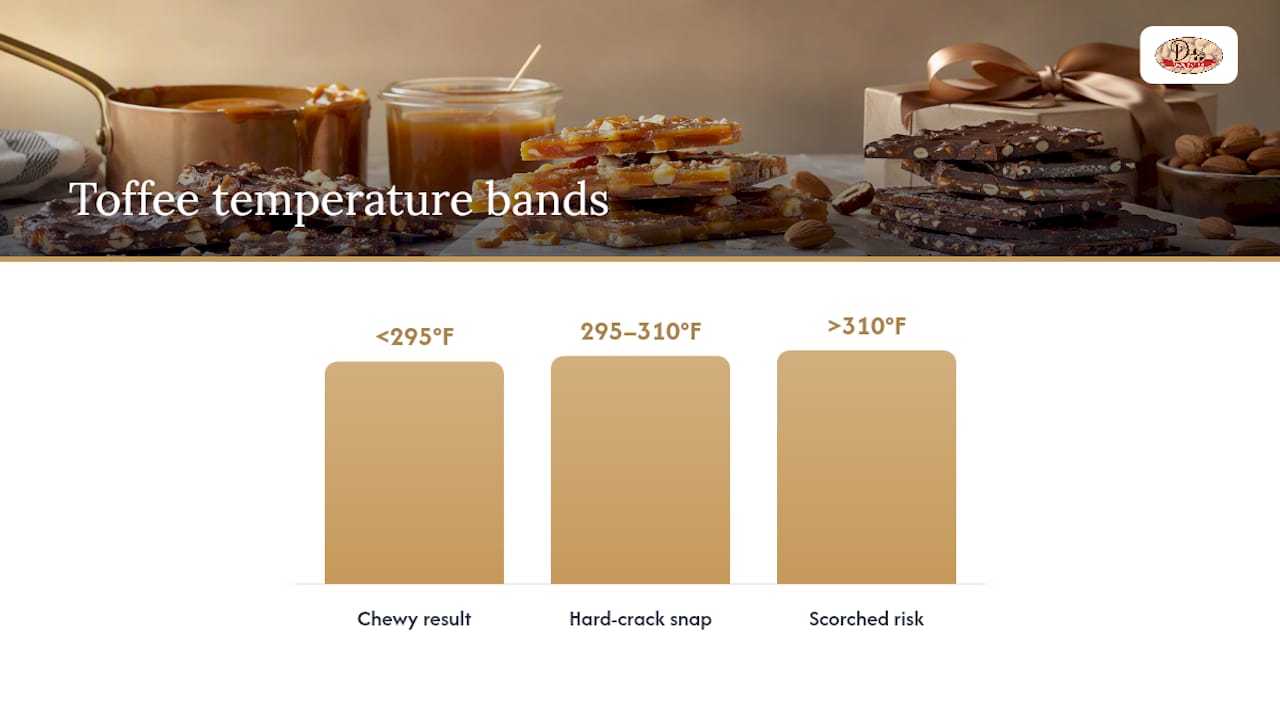
English toffee demands tighter control because it has nothing to fall back on if you misjudge the heat. American toffee’s corn syrup gives you a little more room to breathe, which is why it’s the more common starting recipe for first-time candy makers.
Here’s the sequence that actually works:
- Use a heavy-bottomed saucepan so heat spreads evenly instead of scorching one hot spot.
- Melt butter and sugar together over medium heat, stirring only until combined.
- Stop stirring once the mixture reaches a steady boil, and let the thermometer do the rest of the work.
- Pull the pan the moment it hits your target temperature, since sugar keeps climbing in residual heat.
- Pour onto a lined, flat surface immediately, then add nuts or a chocolate layer while it’s still warm.
Splitting, where the butter separates from the sugar, is the most common failure, and it usually comes from uneven heat or a pan that’s too thin. A heavy-bottomed pan and moderate, steady heat fixes most of it before it starts. Grainy toffee, meanwhile, almost always traces back to stirring too much or too early.
Where Did the Names “Toffee” and “Buttercrunch” Come From?
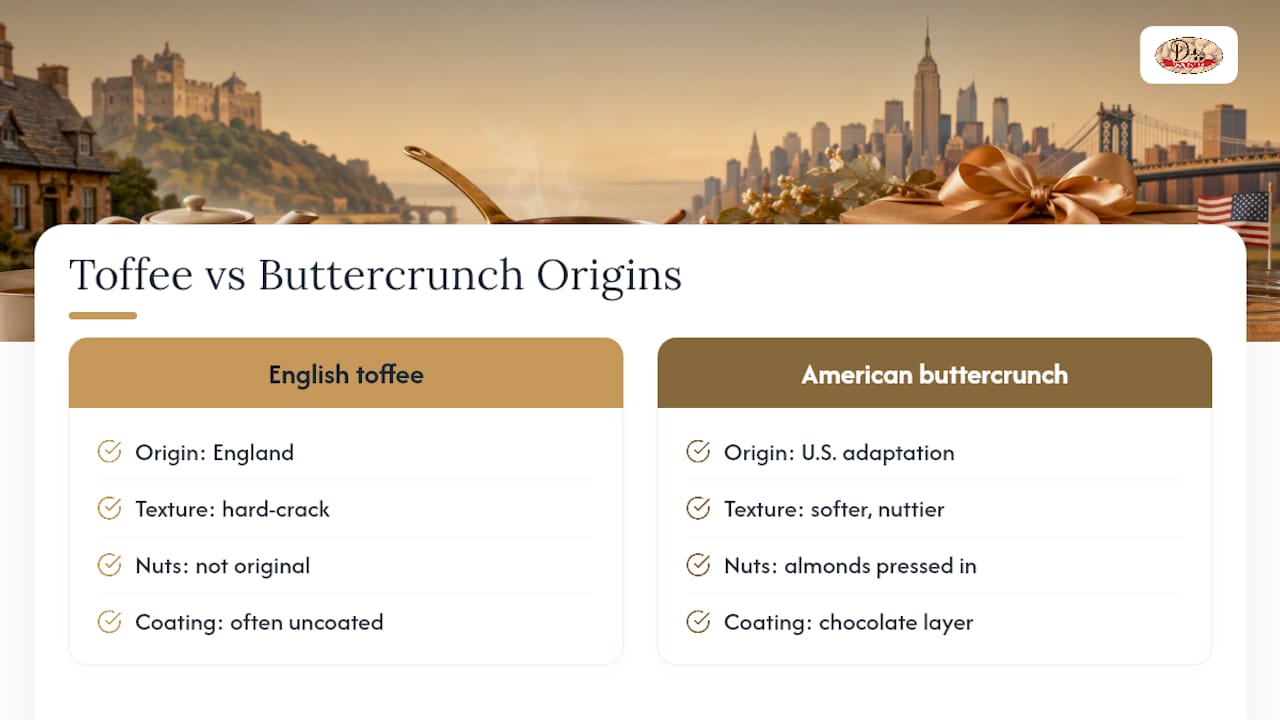
Toffee’s roots trace back to England, where candy makers caramelized sugar and butter and cooked it to hard-crack long before American confectioners got involved. When the style crossed the Atlantic, it picked up local habits: almonds pressed into the candy, a chocolate coating layered over the top, and a new name, buttercrunch, for the softer, nuttier result.
That history is exactly why grocery shelves get confusing. Many U.S. retailers still label chocolate-coated, nutty buttercrunch as “English toffee”, even when the recipe underneath leans American. The lines aren’t rigid, and plenty of recipes borrow from both traditions, which is worth remembering the next time a package claims to be one thing but tastes like the other.
How Do You Choose Which Toffee Style to Make or Buy?
Start with what you actually want in your mouth. If a sharp, glassy snap is the whole point, English style is your answer, and you’ll want a reliable thermometer more than any fancy ingredient. If you’re after a softer bite with nuts and chocolate built in, lean American.
Run through this quick checklist before you commit:
- Taste preference: Crisp and clean (English) or rich and tender (American)?
- Skill comfort: New to candy making? Corn syrup recipes are more forgiving of small temperature swings.
- Presentation needs: Gifting calls for the polished look of English-style bark; casual snacking suits American bars.
- Label clues: “Buttercrunch” almost always signals corn syrup and nuts folded in; a shorter ingredient list often points to a butter-and-sugar-only recipe.
Reading the ingredient panel tells you more than the product name does. A recipe or label listing corn syrup near the top is American at heart, no matter what the packaging calls it.
How Dudley’s Toffee Makes a Softer English Almond Toffee
This approach to English almond toffee leans into a softer, buttery profile on purpose. Every batch is handcrafted in small quantities, allowing hands-on control for quality. Instead of chasing the driest, most brittle snap, our recipe is built to melt in your mouth rather than stick to your teeth.
The toffee is gluten free and made without high fructose corn syrup, using real butter, real almonds, and quality chocolate. If you’re curious about the mechanics behind that texture, our own breakdown of toffee texture differences and our non-sticky, hard-crack troubleshooting guide go deeper into the small-batch methods behind it.
Which Toffee Style Should You Actually Try First?
If you’re chasing that classic confectionery snap, go English and invest in a good thermometer. If chocolate, nuts, and an easier learning curve matter more, buttercrunch is your friend. Honestly, the best answer is trying both, and a softer, handcrafted English almond toffee is a low-risk way to taste that style done well before you fire up your own stovetop.
— Dudley’s Toffee
Ready to Taste the Difference for Yourself?
Making hard-crack English toffee at home rewards patience and a steady thermometer, but not everyone wants to babysit a candy pan on a weeknight. This product offers a softer, buttery English almond toffee profile without common risks such as splitting, graininess, or scorched sugar.
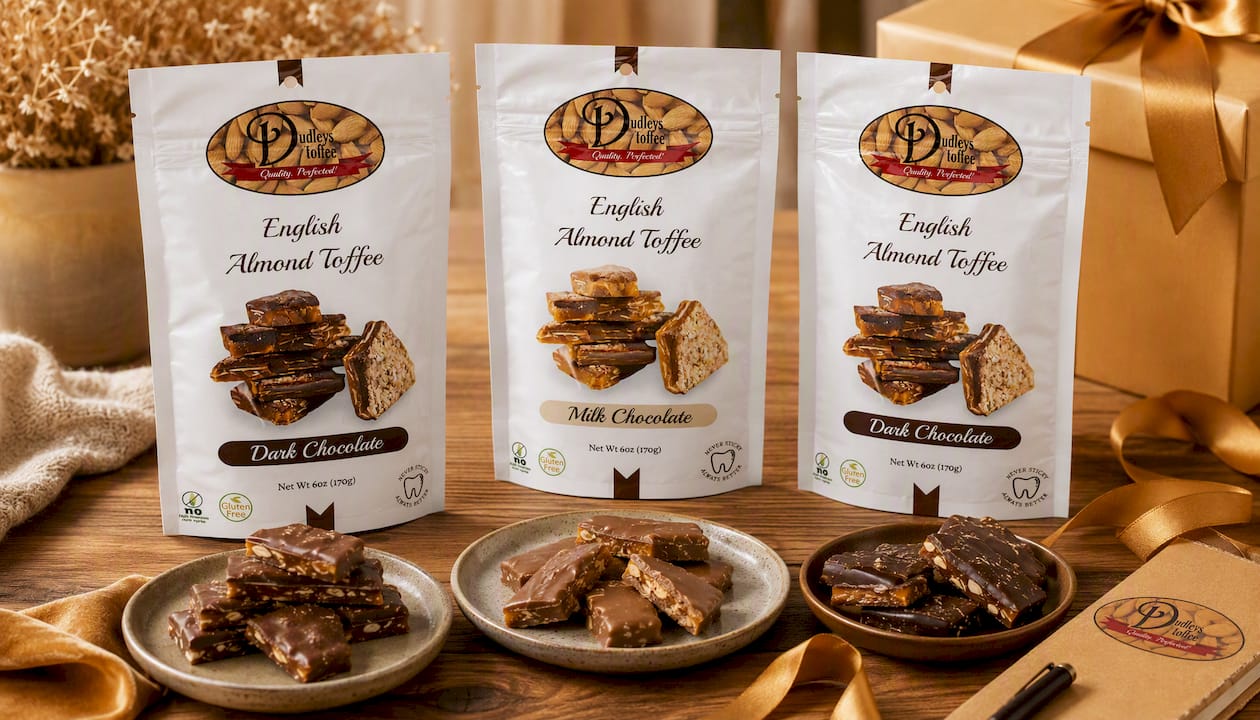
Available varieties include dark chocolate and milk chocolate English almond toffee, suitable for gift boxes and holiday trays. There are options designed specifically for bulk orders and group sales, ideal for fundraisers. The toffee is handcrafted, gluten free, and made without high fructose corn syrup. Browse the full Dudley’s English Almond Toffee lineup, and if you’re ordering during warmer months, add the Optional Cold Pack for Warm Weather Shipping at checkout to keep your toffee from softening in transit.
Sources
- Candy making stages — Exploratorium
- The Difference Between American And English Toffee Explained — Chowhound
- Toffee — Wikipedia
- Best Homemade Toffee Recipe (4 Ingredients) — The Kitchn
FAQ
What Is the Best Toffee in the World?
There’s no single official ranking, since “best” comes down to personal taste between a crisp English snap and a tender American buttercrunch. Handcrafted, small-batch toffee made with real butter and no high fructose corn syrup, like Dudley’s Toffee’s English almond toffee, consistently wins over mass-produced versions on flavor and texture.
What Do Americans Call Toffee?
Americans use “toffee” and “buttercrunch” somewhat interchangeably, though buttercrunch specifically refers to the corn-syrup, nut-studded style common in U.S. grocery aisles. Many retailers also sell chocolate-coated, almond-topped candy under the label “English toffee,” even when the recipe leans American.
What Is Poor Man’s Toffee?
“Poor man’s toffee” typically refers to simple, stovetop toffee made from basic pantry staples like sugar, butter, and sometimes saltine crackers or graham crackers as a base, rather than a formal candy-making process. It’s a homestyle shortcut rather than a distinct culinary category with fixed ingredients.
Is English Toffee Like Butterscotch?
English toffee and butterscotch share the same starting point, butter and sugar cooked together, but they’re cooked to different stages. Toffee is caramelized sugar and butter cooked to hard-crack stage between 295°F and 310°F (146°C to 154°C), while butterscotch is typically stopped earlier at the softer crack stage, giving it a chewier, less brittle finish.