

English Toffee for Home Cooks: Temps, Fixes, and Where to Buy
English toffee is a candy made from butter and white sugar cooked to the hard-crack stage between 300°F and 310°F, then usually finished with a layer of chocolate and chopped nuts. The high cooking temperature is what gives it a brittle, glass-like snap rather than a chewy bite. Recipes and names shift by region, but the core method stays remarkably consistent.
TL;DR:
- Maintaining proper temperature control between 300°F and 310°F is crucial; slight deviations can result in sticky, chewy, or burnt toffee.
- Using a heavy-bottomed pan and a reliable digital thermometer improves consistency and prevents scorching or undercooking.
- Humidity levels below 60% are essential during cooking and storage, as excess moisture causes toffee to become tacky or fail to set properly.
- Variations in ingredients, such as brown sugar for butterscotch or less butter for brittle, significantly alter texture and flavor.
- Proper storage in an airtight container at room temperature preserves the crispy texture for up to two weeks, avoiding refrigeration that causes moisture buildup.
Table of Contents
- What Is English Toffee Made Of? Ingredients and the Science Behind the Snap
- How Is English Toffee Made? A Home Cook’s Method and the Controls That Matter
- Is English Toffee the Same as Butterscotch or Brittle?
- Popular English Toffee Variations and How to Store Them
- Why Did My Toffee Turn Out Sticky or Burnt? Troubleshooting Tips
- Dudley’s Toffee’s Take on What Makes Great English Toffee
- Where to Buy Handcrafted English Toffee for Gifting or Fundraising
- Sources
- FAQ
What Is English Toffee Made Of? Ingredients and the Science Behind the Snap
At its core, English toffee is just two ingredients doing all the work: butter and white granulated sugar, sometimes with a splash of water to help the sugar dissolve evenly at the start. There’s no flour, no corn syrup in the classic version, and no shortcuts. The ratio matters more than people expect. Traditional recipes lean butter-heavy, which is what separates it from thinner, brittle-style candies.
Temperature is the real engine behind the texture. Sugar and butter cooked to the hard-crack stage between 300°F and 310°F lose almost all their moisture, and that moisture loss is exactly what creates the crisp, shattering bite people associate with good toffee. Stop too early and you get something sticky and chewy. Push past that window and the sugars scorch, leaving a bitter, burnt edge that no amount of chocolate can hide.
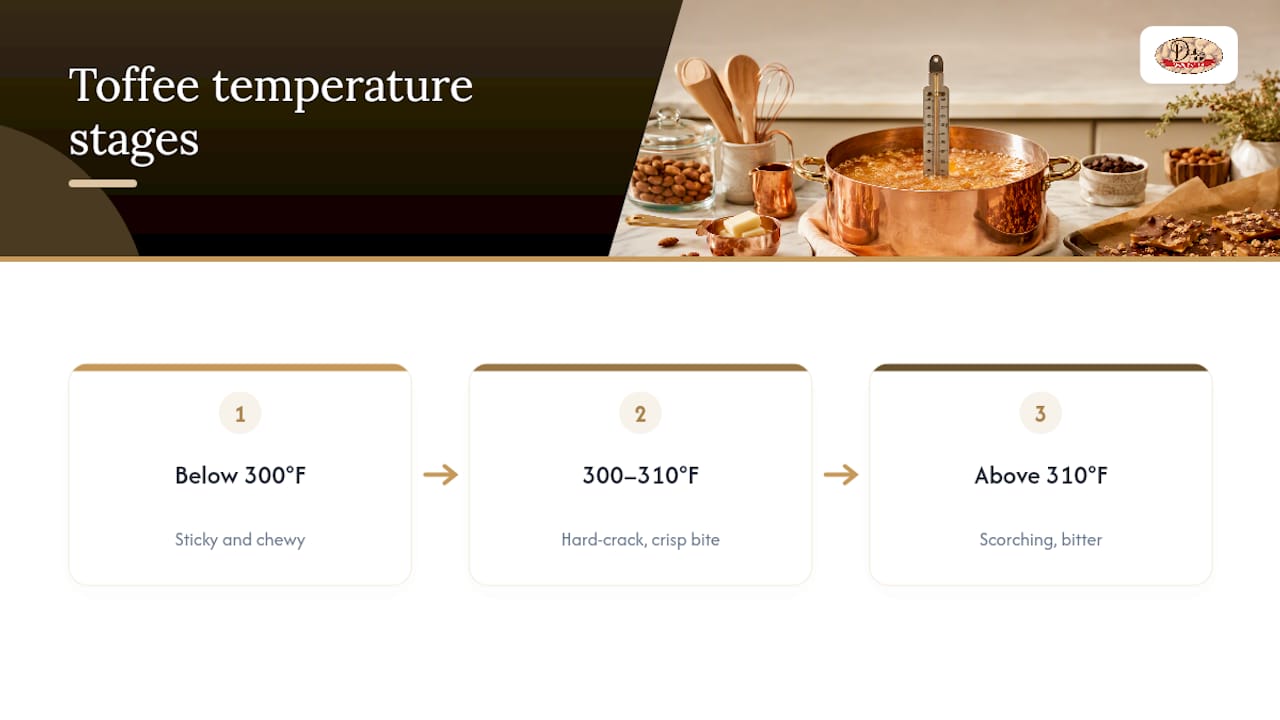
The flavor itself comes from a slow caramelization of milk solids in the butter, which builds that deep, toasted, faintly nutty richness long before any actual nuts get involved. Most makers finish the cooled sheet with melted chocolate and a scatter of almonds or pecans, adding contrast without masking the buttery base.
How Is English Toffee Made? A Home Cook’s Method and the Controls That Matter
Making toffee at home is simple in concept and unforgiving in execution. The process runs in a straight line: melt butter, stir in sugar, cook to hard crack, pour, cool, then finish with chocolate and nuts if you want them. The entire process usually takes under 20 minutes of active cooking, but that short window is where every mistake happens.
Here’s the basic sequence most home cooks follow:
- Melt butter in a heavy-bottomed saucepan over medium heat.
- Stir in white sugar (and water, if the recipe calls for it) until fully dissolved.
- Cook without stirring too much, watching the temperature climb toward hard crack.
- Pull the pan the moment a digital candy thermometer reads 300°F to 310°F.
- Pour immediately onto a parchment-lined baking sheet and let it spread on its own.
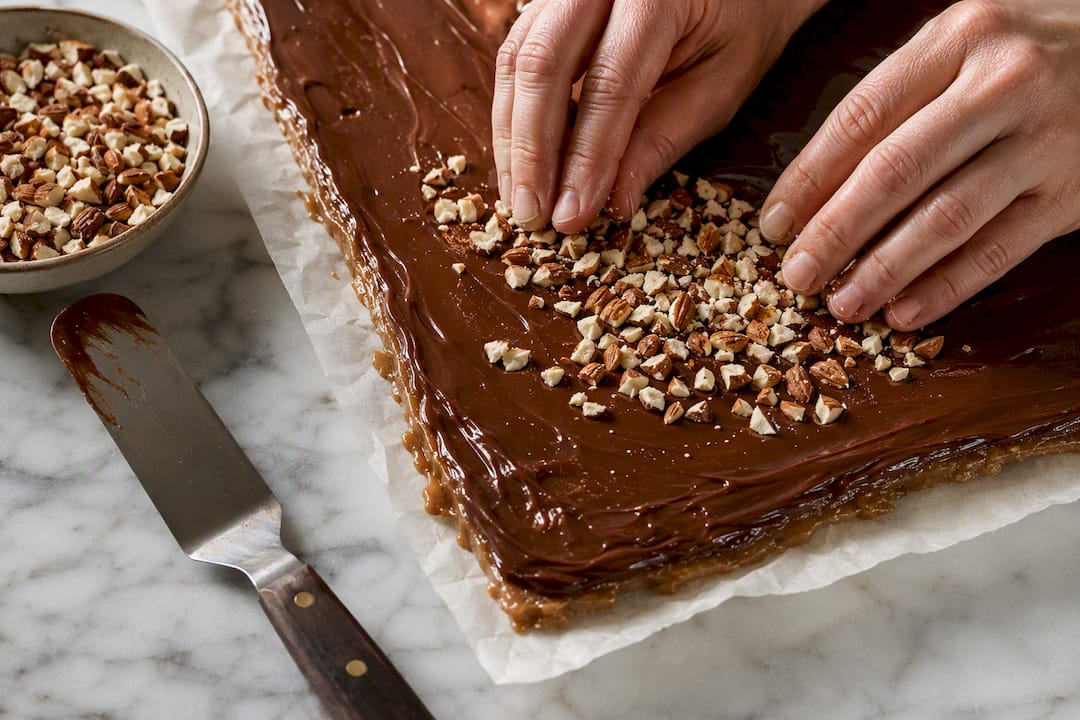
- Cool slightly, then top with melted chocolate and toasted nuts while it’s still warm enough to hold them.
A heavy-bottomed pan prevents scorching by spreading heat more evenly than a thin one, and real butter (not margarine) is non-negotiable if you want that clean, rich flavor. Toasting your nuts beforehand also makes a noticeable difference in the final bite, since raw nuts can taste flat against caramelized sugar.
Timing and color are unreliable guides here. Two batches can look identical at the five-minute mark and end up wildly different by the eight-minute mark, which is why temperature control matters more than the clock. A cheap candy thermometer solves more toffee disasters than any technique tip. For a deeper look at nailing that hard-crack, non-sticky result, read through the specific temperature checkpoints before your next batch.
Pro Tip: Warm your chocolate slightly before spreading it, and press your nuts into the chocolate while it’s still soft rather than waiting for it to firm up. Nuts pressed into warm chocolate adhere permanently; nuts sprinkled on cooled chocolate tend to roll right off.
Is English Toffee the Same as Butterscotch or Brittle?
No, and the differences come down to sugar type, fat ratio, and final cooking temperature, not just naming convention. Here’s how they break apart:
- Butterscotch typically uses brown or dark sugar and is cooked to a lower temperature, giving it a softer, chewier bite and a deeper molasses note.
- English toffee uses white granulated sugar cooked hotter, producing that clean, buttery snap rather than a chew.
- Brittle often relies on corn syrup instead of a high butter ratio, and it tends to run harder and less buttery than toffee, with a more glassy, less rich structure.
- American butter crunch is essentially a close cousin of English toffee, sharing the same base method with minor variations in thickness or finish.
Naming gets messier once you cross the Atlantic. In parts of the UK, the same candy Americans call English toffee shows up labeled as butter crunch, and commercial candy bars have long adapted this format into coated, mass-produced versions. If you’re trying to figure out exactly what you’re eating (or baking), the texture differences between toffee and brittle usually tell you more than the label on the bag.
Popular English Toffee Variations and How to Store Them
Once you’ve got the base recipe down, most of the variation happens at the finishing stage rather than in the cooking process itself. Almond toffee is the most classic route, but pecans show up often, and some makers split the difference with a milk chocolate layer on one side and and dark chocolate on the other for gifting variety.
A few things worth knowing before you serve or store a batch:
- Milk chocolate leans sweeter and milder; dark chocolate brings more bitterness to balance the buttery base.
- Chewy versions exist but sacrifice the classic snap, so they’re really a different candy wearing the same name.
- Broken into pieces, toffee makes an easy gift or dessert-table addition for holidays, and it holds up well in small gift bags or tins.
Storage is where a lot of good toffee gets ruined after the fact. Keep it in an airtight container at room temperature, away from humidity, and it should hold its snap for a couple of weeks. Skip the refrigerator. Cold, damp air pulls moisture into the sugar and turns a crisp piece tacky almost overnight. For more detail on keeping a batch fresh longer, the storage guide on shelf life and humidity covers the specifics worth following.
Why Did My Toffee Turn Out Sticky or Burnt? Troubleshooting Tips
Two failures show up again and again, and both trace back to temperature. Sticky, chewy toffee almost always means the batch was pulled too early or made on a humid day, since undissolved moisture keeps the sugar from setting properly. Burnt, bitter toffee means the opposite problem: the pan sat on the heat past the hard-crack window and the sugars scorched.
Fixing either issue starts in the same place:
- Recalibrate your thermometer in boiling water. It should read 212°F at sea level; if it doesn’t, your readings are off across the board.
- If a batch feels soft after cooling, it likely didn’t reach true hard crack. Reheating rarely saves it cleanly, so treat it as a lesson for the next attempt.
- Cook on dry cookware and pour onto a clean, nonporous surface like a parchment-lined sheet, never a damp counter.
- Check the weather. Confectionery makers generally recommend cooking candy when relative humidity sits below about 60%, since sugar pulls moisture from the air surprisingly fast.
Pro Tip: Toast your nuts before adding them, and press them into warm chocolate rather than cooled chocolate so they lock in place instead of sliding off the finished bar.
Humidity sensitivity isn’t a minor footnote. It’s one of the most common reasons a home cook nails a recipe in winter and struggles with the exact same steps in July.
Dudley’s Toffee’s Take on What Makes Great English Toffee
We’ve built our approach around one idea: English toffee should melt in your mouth, not fight your teeth. Our small-batch, Indiana-made process uses real butter, toasted almonds, and a chocolate finish to get that softer, buttery result. Every batch is gluten-free with no high fructose corn syrup, available in both milk chocolate and dark chocolate for gifting, snacking, or fundraising occasions.
— Dudley’s Toffee
Where to Buy Handcrafted English Toffee for Gifting or Fundraising
If reading through the science and troubleshooting has you craving a piece of toffee rather than a lesson in candy thermometers, Dudley’s Toffee handles the hard-crack precision for you. Our small-batch process is handcrafted in Indiana, gluten-free, and made without high fructose corn syrup, so you get that classic buttery snap without babysitting a stove.
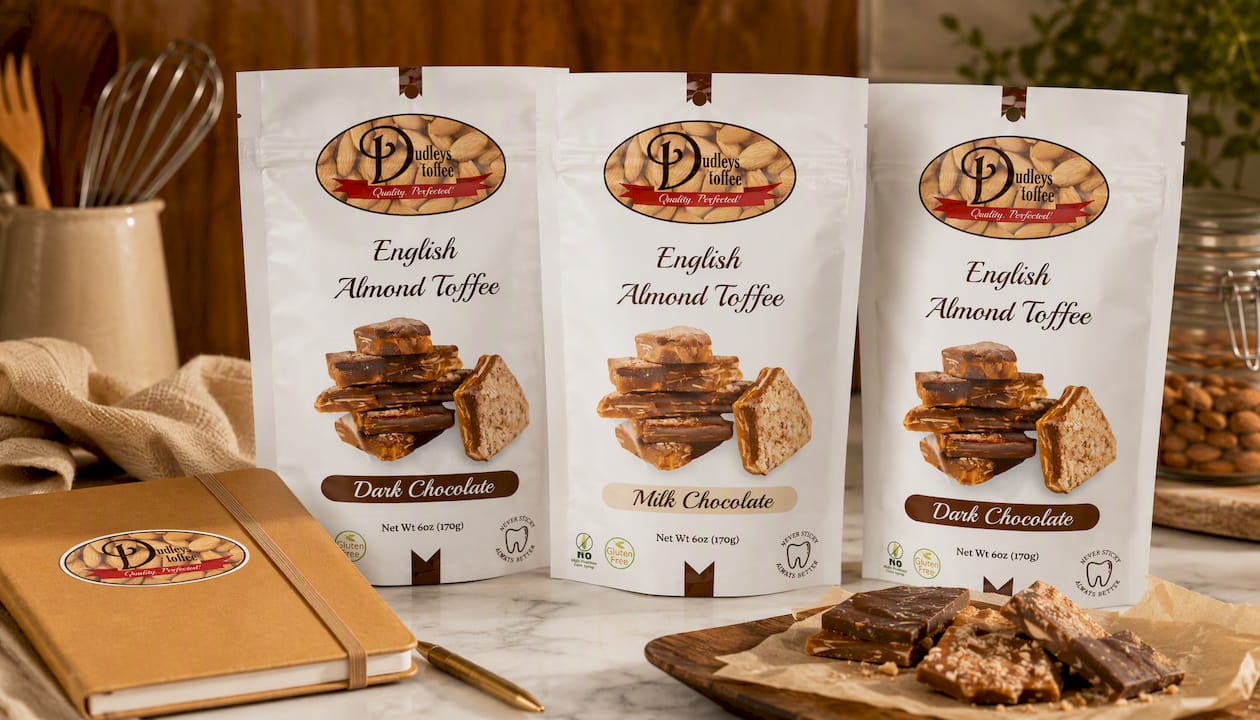
For everyday indulgence or gifting, the Dark Chocolate English Toffee ships in a 6oz package with cold-pack shipping available for warmer months, so the texture holds up in transit. Groups and organizations running a fundraiser have two solid options: the Dark Chocolate English Toffee fundraiser pack and the Milk Chocolate English Toffee fundraiser pack, both built for bulk and group sales. If you’re planning a holiday spread or a gift table this season, the holiday prep tips for busy home cooks pair well with a tin of toffee set out for guests. Visit our online store to place an order or explore bulk and wholesale options for your next event.
Sources
The Wikipedia entry on toffee covers the general definition and hard-crack range. Life with the Crust Cut Off details thermometer use and temperature precision. The Nibble explains humidity’s effect on candy texture, and Simply Recipes outlines classic finishing techniques.
- Toffee — Wikipedia
- Classic English Toffee — Life with the Crust Cut Off
- Toffee information — The Nibble
FAQ
What Is the Difference Between Toffee and English Toffee?
“Toffee” is the broad category of butter and sugar candy cooked to hard crack, while English toffee specifically refers to the white-sugar, high-butter version finished with chocolate and nuts for a clean, snappy bite.
Is English Toffee Like Butterscotch?
Not quite. Butterscotch uses brown or dark sugar and a lower cooking temperature for a softer, chewier texture, while English toffee is cooked hotter with white sugar for a brittle snap.
What Flavor Is English Toffee?
English toffee tastes rich and buttery with a toasted, caramelized depth from the butter itself, often balanced by a chocolate coating and toasted almonds or pecans on top.
What Do Americans Call Toffee?
Americans generally use “toffee” and “English toffee” interchangeably for the buttery, hard-crack candy, though the same treat sometimes appears under the name “butter crunch,” especially in commercial or UK contexts.
Recommended
Share