
300°F Hard Crack: Small Batch Non Sticky Toffee for Home Cooks
The most reliable way to get non-sticky toffee is to cook the sugar and butter to the hard-crack stage, around 300°F, and pull the pan the moment it hits that mark. Use a heavy-bottomed saucepan, resist stirring once the mixture boils, and cool the candy flat on parchment paper. Small tweaks, like a pinch of baking soda or a chocolate finish, still land you a crisp, non-sticky bite instead of a candy that clings to your teeth.
TL;DR:
- Cooking the sugar and butter mixture to exactly 300°F and stopping immediately prevents the toffee from becoming sticky or grainy.
- Using a heavy-bottomed pan and avoiding stirring after boiling are key to ensuring a uniform, non-crystalline, brittle texture.
- Cooling the toffee on parchment paper in a dry, room-temperature environment maintains crispness and extends shelf life.
- Any premature removal from the heat or exposure to humidity can cause stickiness, requiring re-melting and slightly higher cooking temperature to fix.
- Small-batch, handcrafted toffee like Dudley’s emphasizes precise temperature control and slow cooking, resulting in a softer, more buttered texture than brittle styles.
Table of Contents
- What Makes a Toffee Recipe Non Sticky?
- The Full Non-Sticky Toffee Recipe, Step by Step
- Why Does Toffee Get Sticky in the First Place?
- Fixing Grainy, Sticky, or Burnt Toffee
- Keeping Toffee Crisp From Kitchen to Gift Box
- Why Dudley’s Toffee Gets the Texture Right Every Batch
- A Baker’s Note on Getting It Right
- Skip the Thermometer: Ready-Made Non-Sticky Toffee
- Sources
- FAQ
What Makes a Toffee Recipe Non Sticky?
Before you touch a burner, gather the right tools and ingredients. Toffee is a simple candy at heart, but precision separates a clean, snappy bite from a gummy mess.
Ingredients (makes about 1 pound):
- 1 cup unsalted butter (2 sticks)
- 1 cup granulated sugar
- 2 tablespoons water
- 1/4 teaspoon salt
- 1 cup chocolate chips (milk or dark)
- 1/2 cup chopped almonds or pecans, optional
Equipment checklist:
- Heavy-bottomed 3 to 4 quart saucepan
- Candy thermometer, clipped to the pan
- Parchment-lined baking sheet
- Heatproof spatula for the initial melt only
Cook the mixture to 300°F for the hard-crack stage, where a drop of syrup in cold water snaps rather than bends. Total cook time typically runs a moderate length once the butter and sugar combine, depending on your stove and pan thickness.
The Full Non-Sticky Toffee Recipe, Step by Step
Pro Tip: Melt the butter and sugar over medium heat, not high. A slower start gives the sugar time to dissolve evenly instead of scorching around the edges before the center catches up.
Line a baking sheet with parchment paper and set it next to your stove before starting, as you won’t have time to look for supplies once the sugar begins heating. 2. Combine the butter, sugar, water, and salt in your heavy-bottomed saucepan over medium heat. Stir gently just until the butter melts and the sugar dissolves into a uniform, cloudy liquid. 3. Once the mixture reaches a steady boil, stop stirring. Avoid agitating the mixture once it boils, since constant motion encourages sugar crystals to form, which is one of the main reasons toffee turns grainy or sticky. If the pan seems to be cooking unevenly, swirl it gently by the handle instead of stirring with a spoon. 4. Clip on your candy thermometer and watch it climb. The mixture will move from a soft-crack stage, around 270°F, up to hard-crack at 300°F. That final 30-degree stretch happens fast, so stay close. 5. Pull the pan the instant it hits 300°F and pour immediately onto your parchment-lined sheet. Tilt the pan to spread it into an even layer roughly a quarter-inch thick. 6. Scatter the chocolate chips over the hot toffee right away. Applying chocolate immediately after pouring lets the residual heat melt the chips so you can spread them into a smooth layer with an offset spatula. 7. Sprinkle chopped nuts over the melted chocolate if using, then transfer the sheet to the refrigerator for 30 to 45 minutes to set. 8. Break the cooled slab into pieces by hand or with the back of a knife.
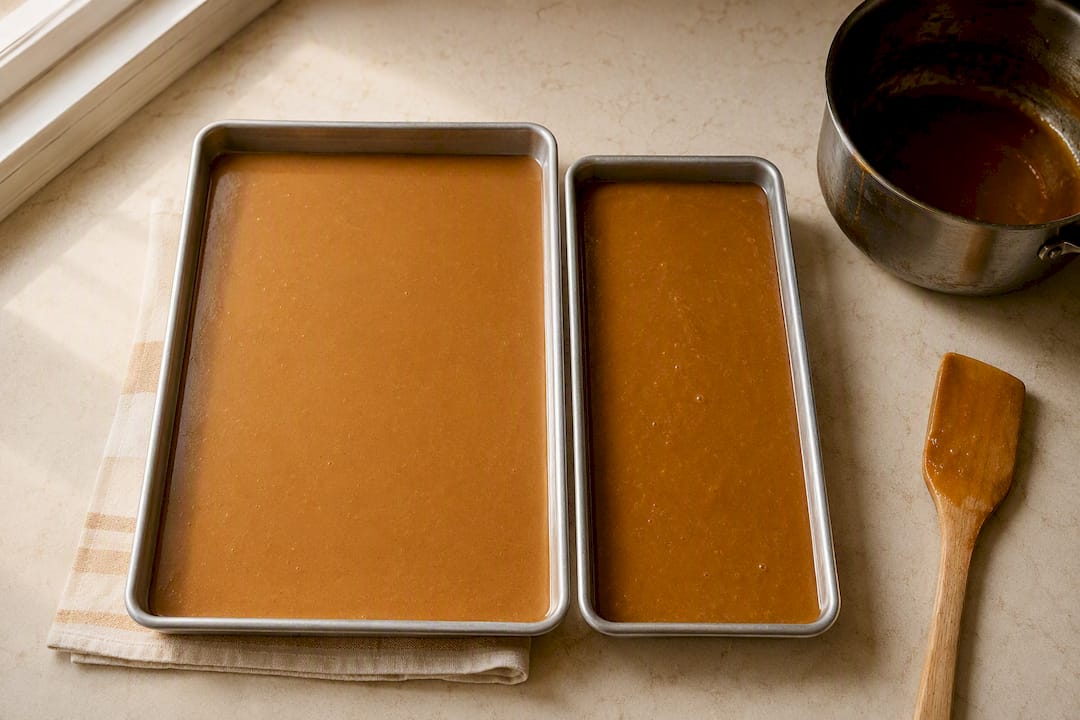
For smaller batches, scaling down ingredients and using appropriately sized cookware helps ensure even cooking. When scaling up, it is preferable to spread the mixture over a larger surface rather than increasing the depth, to maintain consistent cooking. A deeper pour holds onto moisture longer during cooling, which can leave you with a softer, stickier result than the same recipe poured thin.
Why Does Toffee Get Sticky in the First Place?
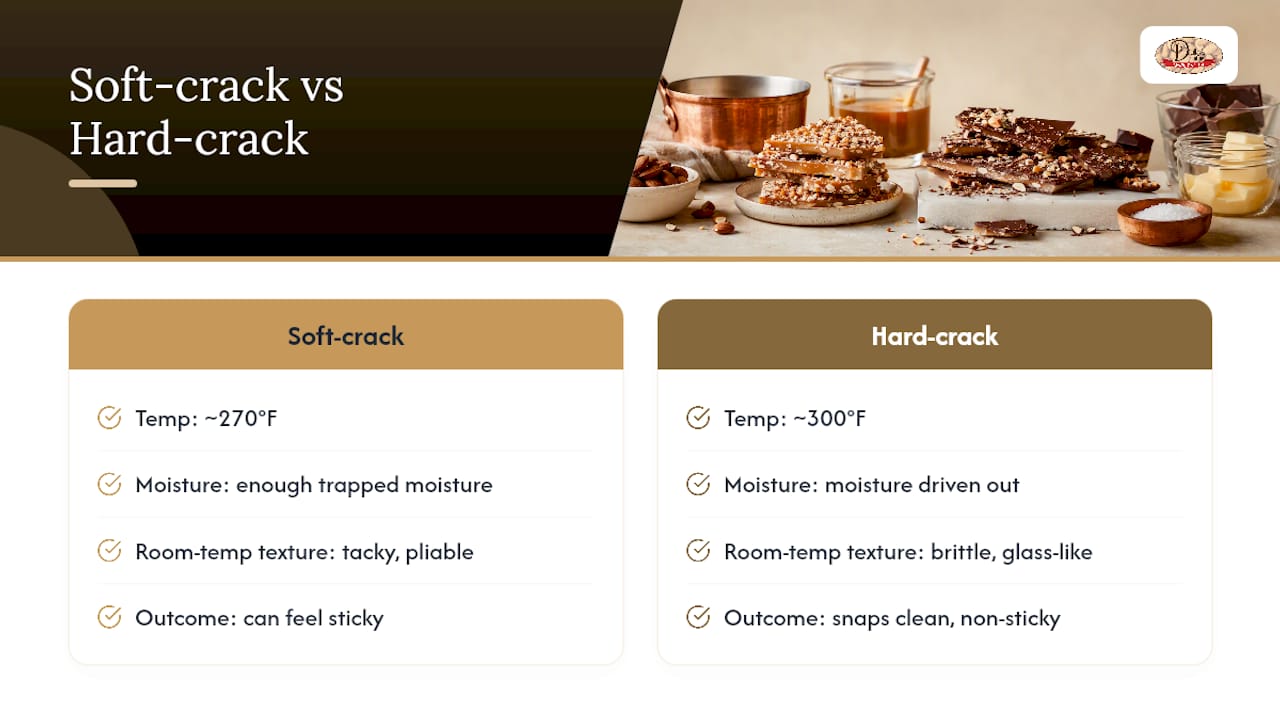
Sticky toffee usually comes down to one of two things: stopping short of hard-crack, or letting sugar crystals form during the boil. Soft-crack, around 270°F, still has enough moisture trapped in the sugar structure to feel tacky at room temperature. Hard-crack drives that moisture out, leaving a brittle, glass-like structure that snaps clean.
Crystallization is the other culprit. Stirring sugar syrup once it starts boiling introduces disturbances that let sugar molecules bond into grainy clusters instead of staying in a smooth, dissolved state. That grainy texture often gets mistaken for stickiness, though the fix, a heavy pan and a calm hand, is the same either way. Worth noting: if you searched for “sticky toffee” expecting a British pudding with date cake and toffee sauce, that is an entirely different dessert. This guide covers candy toffee, the snappy kind you break into pieces.
Fixing Grainy, Sticky, or Burnt Toffee
Pro Tip: Keep a bowl of ice water next to the stove during your first few batches. A quick drop test tells you exactly where you are in the cook, no guessing required.
- Grainy toffee: Usually caused by stirring after the boil started or a sugar crystal that fell in from the pan’s edge. Re-melt gently over low heat and strain through a fine sieve before repouring; starting over is sometimes faster than salvaging a bad crystallization.
- Sticky after cooling: Often means the batch stopped short of hard-crack, or it absorbed humidity from the air. Re-melting and cooking a few degrees higher usually solves it going forward.
- Butter separating or “weeping”: Happens when heat climbs too fast for the emulsion to hold. Lower your burner setting and whisk briefly at the very start, before the boil, to keep butter and sugar bonded.
- Burnt or bitter taste: Comes from a thin pan or heat set too high near the end. A heavy-bottomed pan spreads heat evenly and buys you a few extra seconds of reaction time before scorching starts.
Keeping Toffee Crisp From Kitchen to Gift Box
Toffee’s biggest enemy after cooking is humidity, not time. Store finished pieces between layers of parchment paper in an airtight container at room temperature, away from the stove or dishwasher steam. A cool, dry pantry works better than a humid kitchen counter for keeping candy crisp for weeks rather than days.
- Layer pieces with parchment, never wax paper, which can stick to chocolate in warm rooms.
- Keep storage temperature below 70°F when possible; refrigeration works for short-term freshness but can introduce condensation if not sealed tightly.
- For gifting or shipping, use insulated packaging and a cold pack in warm months to prevent the chocolate layer from softening in transit.
- Serve toffee alongside coffee or a glass of milk, which balances the rich butter and chocolate without competing with the crunch.
Why Dudley’s Toffee Gets the Texture Right Every Batch
We built our recipe around one goal: toffee that melts in your mouth instead of pulling at your teeth. Dudley’s Toffee is is handcrafted in small batches in Indiana, and that small-batch approach lets us watch the thermometer closely on every single pour rather than rushing a commercial-scale kettle. Our signature texture lands softer and more buttery than traditional brittle-hard English toffee, without ever crossing into sticky territory.
Every batch is gluten-free and made without high fructose corn syrup, finished with milk or dark chocolate depending on your preference. If you want to understand more about how texture varies across candy styles, our breakdown of toffee versus brittle and our guide to texture differences in toffee go deeper than most recipe blogs bother to.
A Baker’s Note on Getting It Right
We have poured more batches than we can count, and the lesson that never changes is patience near the top of the temperature range. Pull too early and you get soft, sticky candy. Wait a beat too long and it turns brittle and bitter. Our small-batch process exists because that window matters, and if you would rather skip the thermometer altogether, we have already done the work for you.
— Dudley’s Toffee
Skip the Thermometer: Ready-Made Non-Sticky Toffee
If reading through hard-crack temperatures and crystallization fixes has you thinking a candy thermometer is not for you, Dudley’s Toffee gives you the same melt-in-your-mouth result without the stovetop guesswork. Every batch is handcrafted in small runs right here in Indiana, gluten-free, and made without high fructose corn syrup, so you get the payoff of careful technique without the risk of a scorched pan.
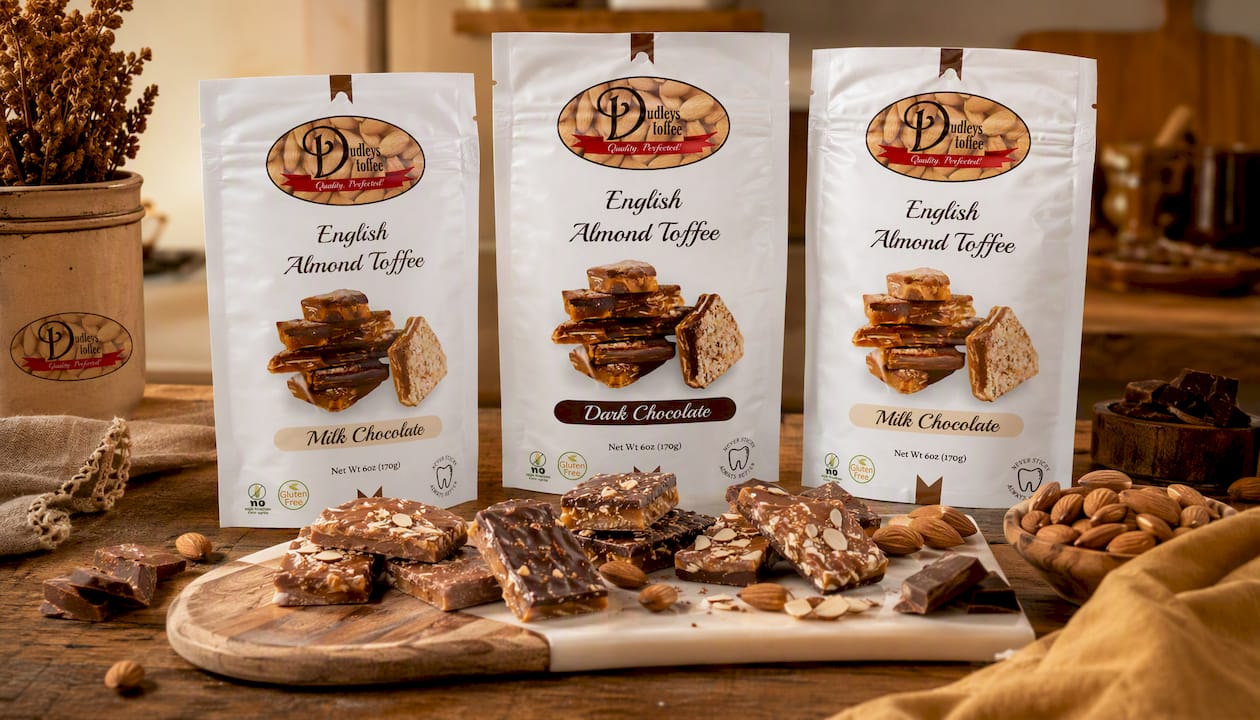
Our Milk Chocolate English Almond Toffee brings a nut-forward crunch to that signature soft, buttery texture, ideal for anyone who wants a bit more bite alongside the melt-in-your-mouth finish. Prefer deeper chocolate notes? Our Dark Chocolate English Toffee pairs rich cocoa with the same non-sticky standard. And if you are organizing a school event, church group, or team fundraiser, our Milk Chocolate English Toffee fundraiser boxes are built specifically for group sales, six ounces of handcrafted toffee that supporters actually look forward to buying again.
All three ship directly from our Indiana kitchen. Order online today and taste the difference small-batch technique makes.
Sources
The hard-crack temperature guidance from Allrecipes covers thermometer basics and batch sizing. The New York Times Cooking toffee recipe details pan choice and stirring technique. Betty Crocker’s four-ingredient toffee guide explains chocolate topping timing.
- Best Toffee Ever - Super Easy Recipe (AllRecipes)
- Toffee (New York Times Cooking)
- 4 Ingredient Toffee Recipe | Betty Crocker
FAQ
How do you make toffee not sticky?
Cook the sugar and butter mixture to the hard-crack stage, about 300°F, using a candy thermometer, then avoid stirring once it starts boiling. Cooling the finished candy on parchment in a cool, dry environment helps maintain a crisp texture.
What is poor man’s toffee?
Poor man’s toffee usually refers to a simplified version made with just butter, brown sugar, and crackers or saltines as a base, baked briefly and topped with chocolate. It is a shortcut candy rather than traditional stovetop English toffee, but it follows the same core rule: enough heat to set the sugar firm.
What are some variations of toffee?
Common variations include almond toffee, dark chocolate toffee, and lighter toffee made with a touch of baking soda for a less dense crunch. Dudley’s Toffee offers milk and dark chocolate versions along with an almond variety, each built on the same non-sticky, small-batch foundation.
How do you make soft toffee?
Soft toffee generally stops at the soft-crack stage, around 270°F, rather than pushing to full hard-crack, which yields a chewier bite instead of a brittle snap. Keep in mind that stopping too early can tip toward stickiness, so soft-toffee recipes rely on precise temperature control rather than guesswork.
Recommended
Share