

How to Store Toffee and Keep It Fresh Longer
Store toffee in an airtight container in a cool, dry place, with parchment paper between layers, and freeze it for long-term storage. Those three habits protect the crunch, flavor, and buttery richness that make toffee worth eating in the first place.
The short version:
- Short-term (1–3 weeks): Room temperature in an airtight container, away from heat and humidity
- Medium-term (up to 2 months): Cool, dry pantry storage in a quality airtight tin or glass jar
- Long-term (up to 3 months): Double-wrapped in the freezer, thawed slowly in the fridge first
One rule applies to every method: let toffee cool completely before you package it. Sealing warm toffee traps steam, and that moisture is the fastest way to turn a crisp, snappy candy into a sticky, grainy disappointment.
Key Takeaways
Proper toffee storage comes down to three non-negotiables: cool completely before sealing, keep airtight and dry, and freeze with double protection for anything beyond a few weeks.
| Point | Details |
|---|---|
| Cool before packaging | Always let toffee reach room temperature before sealing to prevent condensation inside the container. |
| Airtight and dry | Use a metal tin, glass jar with gasket, or zip-top bag; add a silica packet in humid climates. |
| Parchment between layers | Separate every layer with parchment or wax paper to prevent pieces from fusing or sticking. |
| Freeze for long-term storage | Double-wrap, remove air, label, and thaw in the fridge first; quality holds for up to 3 months. |
| Dudley’s Toffee | Handcrafted in Indiana, gluten-free, no high fructose corn syrup — available in milk and dark chocolate at dudleystoffee.store. |
Table of Contents
- 1. Why moisture and butterfat are toffee’s two biggest enemies
- 2. How to store toffee at room temperature
- 3. When and how to refrigerate toffee safely
- 4. How to freeze toffee without ruining the texture
- 5. Realistic shelf life and signs that toffee has gone bad
- 6. Packaging, gifting, and shipping toffee the right way
- A maker’s perspective on storing handcrafted toffee
- Dudley’s Toffee: handcrafted and ready to ship to you
- Sources
- FAQ
1. Why moisture and butterfat are toffee’s two biggest enemies
Toffee fails in storage for two reasons: moisture absorption and butterfat oxidation. Understanding both makes every storage decision obvious.
Sugar is hygroscopic, meaning it pulls water from the surrounding air. Once humidity reaches the surface of toffee, the sugar crystals begin to dissolve, leaving a sticky, tacky coating. In a humid kitchen, this can happen within hours of leaving toffee uncovered. Humidity is the most common cause of sticky toffee, and most confectionery guides treat airtight, dry storage as non-negotiable for this reason.
Butterfat oxidation is slower but equally damaging. Toffee is a dairy-rich confection with a high butter content, and that fat gradually reacts with oxygen to produce off-flavors — a stale, rancid note that no amount of chocolate coating can hide. Toffee with a high butter content can keep for a moderate time under ideal cool, dry, airtight conditions, but that window shrinks fast when storage is careless.
Pro Tip: Let toffee cool fully on the pan before breaking it into pieces. Packaging warm toffee creates condensation inside the container, which triggers both problems at once.
- Humidity dissolves surface sugar crystals, causing stickiness
- Oxygen exposure causes butterfat to go rancid over time
- Heat accelerates both processes, especially for chocolate-coated pieces
2. How to store toffee at room temperature
Room-temperature storage is the right choice for most home cooks and candy lovers. Done correctly, it preserves the satisfying snap and rich flavor of handcrafted toffee for a few weeks without any special equipment.
Step-by-step:
- Cool toffee completely on the pan (at least 30 minutes, longer for thick pieces)
- Break into pieces rather than cutting; breaking reduces exposed edges that absorb moisture faster
- Lay a single layer in your container, then place a sheet of parchment or wax paper on top before adding another layer
- Seal with an airtight lid — a metal tin with a tight-fitting lid, a glass jar with a rubber gasket, or a high-quality zip-top bag with the air pressed out
- Store in a cool, dark pantry away from the stove, dishwasher, or any heat source
Wrap toffee pieces in waxed or parchment paper and keep them in an airtight container in very dry conditions. Metal tins are particularly useful because they block light and hold their seal well. Glass jars work beautifully for display gifting but require a reliable gasket lid.
Chocolate-enrobed toffee has a slight advantage here. The chocolate layer acts as a physical seal against air and humidity, which is one reason chocolate-covered toffee often stays fresh a bit longer than plain varieties at room temperature.
Pro Tip: In a humid climate, tuck a food-safe silica gel moisture-absorbing packet inside the container. It pulls ambient humidity away from the candy without affecting flavor.
3. When and how to refrigerate toffee safely
Refrigeration is generally not the best choice for toffee storage. The cold environment creates a new problem: condensation. When a cold container moves into a warm room, moisture forms on every surface, including the toffee itself, and that moisture triggers the same stickiness you were trying to prevent.
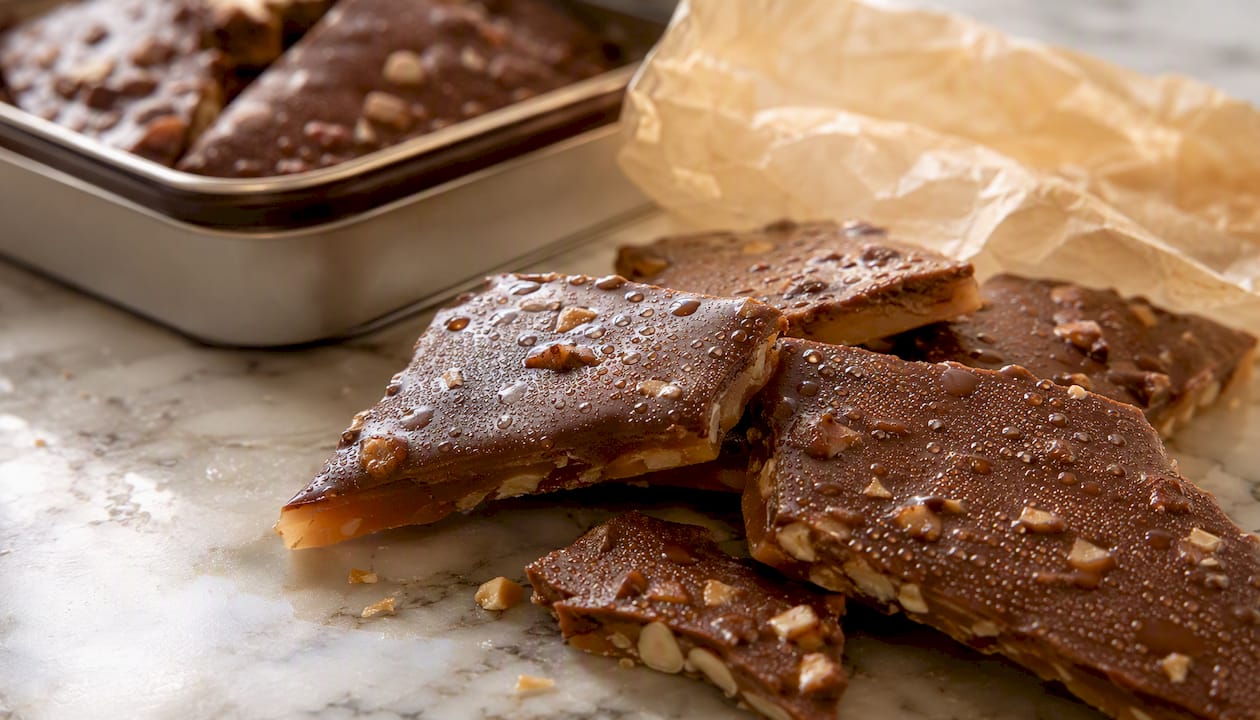
Avoid refrigerating toffee unless humidity is extreme or the recipe contains perishable fillings. A very soft, butter-rich toffee in a hot, humid summer kitchen is one situation where the fridge makes sense. So is a toffee with a cream or fresh dairy filling, though those are uncommon in classic English almond toffee recipes.
If you must refrigerate:
- Double-seal the toffee in an airtight container before it goes in
- Keep the container sealed and cold until you are ready to serve
- Move the sealed container to the countertop and let it reach room temperature completely before opening the lid
- Opening a cold container in a warm room pulls humid air inside; waiting prevents that
The key is patience. A container that warms up with the lid closed traps no new moisture. Open it too early and you undo the protection.
4. How to freeze toffee without ruining the texture
Freezing is the best long-term option for toffee, and it works reliably when you follow the right sequence. Freeze with double protection, remove air, label with a date, and thaw in the refrigerator before bringing to room temperature to avoid condensation, following the guidance at Eat Healthy 365.
Freezing steps:
- Cool toffee completely and break into pieces
- Wrap individual pieces or small portions in parchment paper
- Place wrapped pieces in a heavy-duty freezer bag or airtight freezer container
- Remove as much air as possible before sealing; vacuum sealing is ideal for large batches
- Label with the date and contents
- Freeze flat so pieces don’t press together
Thawing steps:
- Transfer the sealed container from the freezer to the refrigerator for several hours
- Move the still-sealed container to the countertop and let it reach room temperature
- Open only after the container feels close to ambient temperature
Freezing works well for long-term storage when air is removed and labeling is used, but ingredient mix matters. Toffee with nuts may show slight texture changes after freezing because nuts absorb moisture differently than the candy base. Chocolate coatings can develop a faint bloom after thawing, which affects appearance but not flavor.
Quick troubleshooting:
- Ice crystals inside the bag mean air got in; double-wrap next time
- Freezer burn on edges indicates the bag wasn’t fully sealed
- Sticky surface after thawing usually means the container was opened before it fully warmed up
5. Realistic shelf life and signs that toffee has gone bad
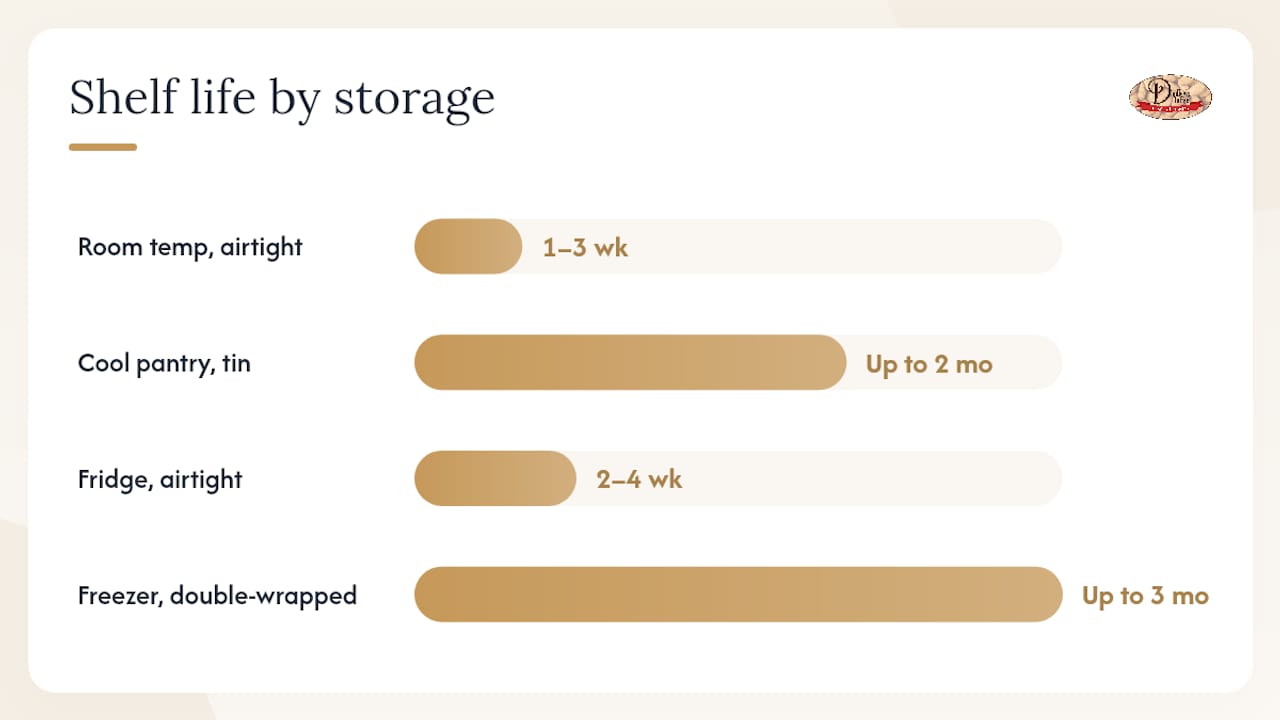
Toffee shelf life varies by recipe, coating, and storage conditions. These ranges reflect typical results under proper storage.
| Storage method | Expected shelf life | Main risk |
|---|---|---|
| Room temperature (airtight) | 1–3 weeks | Moisture, stickiness |
| Cool pantry, quality tin | Up to 2 months | Butterfat oxidation |
| Refrigerator (airtight) | 2–4 weeks | Condensation, texture loss |
| Freezer (double-wrapped) | Up to 3 months | Freezer burn, chocolate bloom |
Store homemade toffee in an airtight container at room temperature for about 1–2 weeks. Freezing can preserve quality for around 3 months if wrapped properly, according to AllRecipes. Store-bought toffee with preservatives often carries a longer printed shelf life, sometimes several months unopened, but quality after opening follows the same rules as homemade.
Quality note: Many home guides and confectionery sources recommend up to 3 months in the freezer for best quality, with some sources noting toffee can remain safe beyond that window while losing texture and flavor.
Signs of spoilage or quality loss:
- Sticky or tacky surface (moisture damage)
- Grainy texture when you bite in (sugar recrystallization)
- Rancid or stale buttery smell (butterfat oxidation)
- Visible condensation or white sugar bloom on the surface
Toffee rarely becomes unsafe to eat in the traditional sense, but once the texture and flavor degrade, the experience is gone. Trust your nose and your teeth.
6. Packaging, gifting, and shipping toffee the right way
Packaging toffee for a gift or shipping it across the country requires the same principles as home storage, plus a few extra layers of protection. The goal is to keep pieces intact, dry, and temperature-stable from your kitchen to the recipient’s hands.
- Wrap individual pieces in parchment or wax paper before placing them in a container
- Use rigid boxes or tins rather than soft bags to prevent breakage in transit
- Separate layers with parchment so pieces don’t fuse together under pressure
- For warm-weather shipping, freeze the toffee first, then pack with cold packs in an insulated mailer
- Choose next-day or two-day shipping during warm months; avoid scheduling delivery over a weekend when packages sit in warm trucks or on porches
- Label packages as fragile and perishable when appropriate
For holiday orders and gift packaging, the freeze-then-ship method is particularly reliable. Toffee that ships frozen with a cold pack arrives solid and begins its room-temperature life fresh, rather than having already spent days at ambient temperature in transit.
Pro Tip: For bulk or gift shop orders, vacuum sealing individual portions before freezing minimizes freezer burn and keeps each piece gift-ready when thawed.
A maker’s perspective on storing handcrafted toffee
At Dudley’s Toffee, every batch of handcrafted English almond toffee is cooled fully on the pan before it’s broken by hand and packed. That step isn’t optional — it’s the difference between toffee that stays crisp for weeks and toffee that turns soft within days. The small-batch process means each piece gets individual attention, whether it’s going into a 6oz bag of Milk Chocolate English Almond Toffee or a dark chocolate variety. Because the recipe is gluten-free and contains no high fructose corn syrup, the ingredient profile is clean and the butter content is real, which is exactly why proper airtight storage matters so much. Butterfat is what gives handcrafted toffee its depth of flavor, and protecting it from oxygen and humidity is how that flavor stays true from the first piece to the last.
Dudley’s Toffee: handcrafted and ready to ship to you
Knowing how to store toffee well is most rewarding when the toffee itself is worth protecting. Dudley’s Toffee is made in small batches in Indiana, using premium ingredients with no high fructose corn syrup and no gluten, available in both milk and dark chocolate.
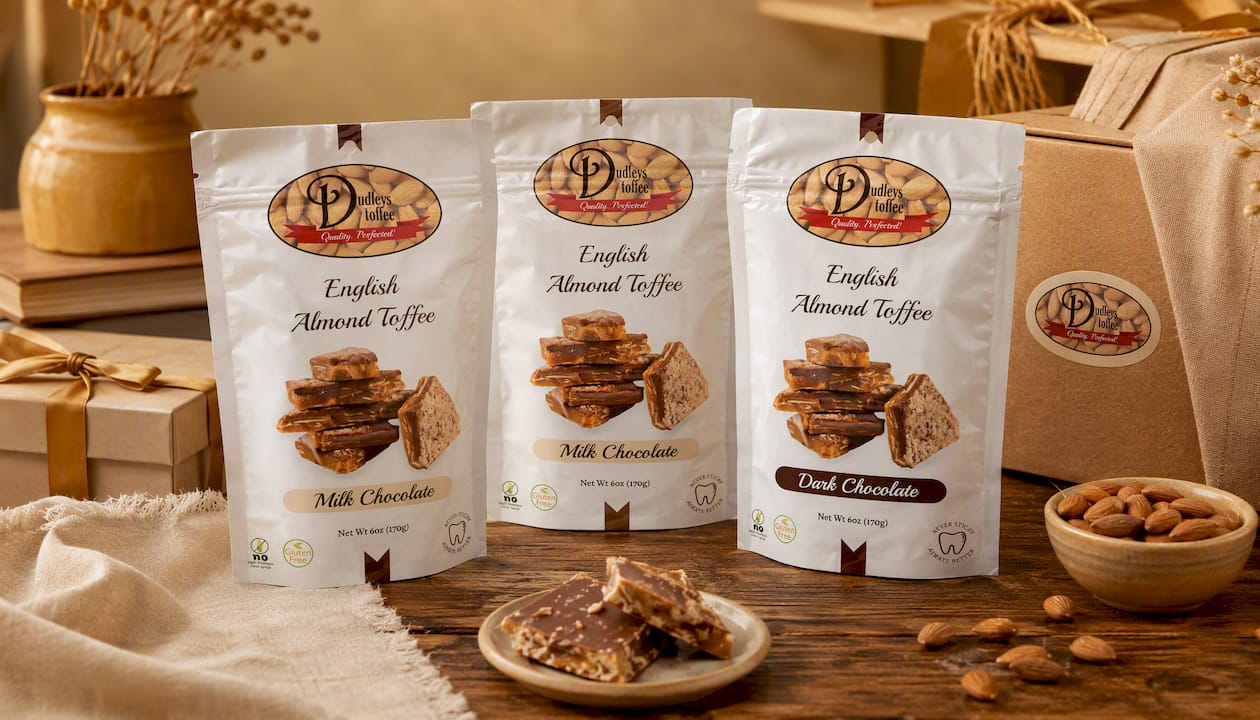
Whether you’re stocking up for the holidays, ordering for a fundraiser, or treating yourself to something genuinely handcrafted, there’s a SKU for every occasion:
- Milk Chocolate English Toffee (6oz) — Fundraiser
- Milk Chocolate English Almond Toffee (6oz)
- Dark Chocolate English Toffee (6oz)
- Dudley’s English Almond Toffee 6oz — Milk or Dark Chocolate
Shop directly at Dudleystoffee and have fresh, gift-ready toffee shipped right to your door.
Sources
The storage and shelf-life guidance in this article draws from the following confectionery and recipe authorities:
- How to make toffee | Good Food
- The Nibble: How To Store Toffee
- How to Make Toffee: Easy Homemade Toffee Recipe
- What Is the Shelf Life of Toffee? A Complete Guide
- Best Toffee Ever - Super Easy Recipe
- Can You Freeze Toffee – What is the Shelf Life for Homemade Toffee In The Freezer?
FAQ
Does toffee need to be refrigerated?
No. Refrigeration is generally discouraged because moving cold toffee into a warm room causes condensation that makes the surface sticky. Reserve the fridge for very humid climates or toffee with perishable fillings, and always keep the container sealed until it reaches room temperature.
What is the shelf life of toffee?
Homemade toffee stored in an airtight container at room temperature typically stays fresh for 1–3 weeks. Under ideal cool, dry conditions in a quality tin, high-butter toffee can keep for up to two months. Frozen and properly double-wrapped, quality holds for about 3 months.
How long does homemade toffee keep?
Most homemade toffee keeps for 1–2 weeks at room temperature in an airtight container, and up to 3 months in the freezer when double-wrapped and stored with air removed.
How do you get toffee to set hard?
Cook the sugar mixture to the hard-crack stage on a candy thermometer, then pour onto a prepared pan and let it cool completely undisturbed at room temperature. Humidity in the kitchen can prevent a full hard set, so choose a dry day when possible.
Recommended
Share