
Serve Toffee Right: Pairing Ideas with 1 oz Portions and Texture Tips
Toffee plays best with bitter roasts and acidic fruits, along with creamy desserts and salty contrasts that keep the sweetness in check. Espresso, tawny port or bourbon, vanilla ice cream, and sharp cheddar all work because each one leans against toffee’s buttery, caramelized sugar instead of piling more sweetness on top. The categories below break these instant matches into beverage, dessert, and savory ideas you can build on at home.
TL;DR:
- Toffee pairs best with drinks that have bitterness, acidity, or oakiness, such as dark roast coffee, tawny port, or bourbon, to cut through its sweetness.
- Keep toffee slightly below room temperature when served with hot beverages to enhance its buttery, soft texture and flavor contrast.
- In desserts, toffee should be added close to serving time to preserve its crunch, whether as a topping, mix-in, or sauce, avoiding early incorporation that softens it.
- Salty or tangy foods like sharp cheeses, tart apples, and citrus balance toffee’s caramelized, toasted flavor, especially with salted or nutty varieties.
- Dudley’s small-batch, soft, buttery toffee is ideal for pairing with robust coffee, dark chocolate, and aged cheeses, thanks to its melt-in-mouth texture and deep flavor profile.
Table of Contents
- What Drinks Pair Well With Toffee?
- How Should You Use Toffee In Desserts?
- What Savory Foods Go Well With Toffee?
- Does Milk Or Dark Chocolate Toffee Pair Differently?
- How Do You Build A Toffee Tasting Plate?
- Why Dudley’s Toffee Fits These Pairings
- Why Does Toffee’s Flavor Profile Make It So Pairable?
- Quick Ways To Use Toffee Beyond The Candy Dish
- A Maker’s Take On Toffee Experiments
- Ready To Shop Toffee For Every Pairing
- Sources
- FAQ
What Drinks Pair Well With Toffee?
The best drinks with toffee bring bitterness, acidity, or oak, because those qualities cut through the caramelized sugar instead of competing with it. That’s the flavor logic behind nearly every classic toffee pairing: a bitter roast balances buttery sweetness, while a wine or spirit with vanilla and oak notes echoes the toffee itself.
Coffee is the most reliable partner. A medium or dark roast espresso balances milk chocolate toffee nicely, while a lighter drip coffee lets dark chocolate toffee’s bitterness come through without turning the cup cloying. Toffee’s dominant flavor notes of caramel, butter, and toasted sugar map closely onto roasted coffee compounds, which is why the two rarely clash.
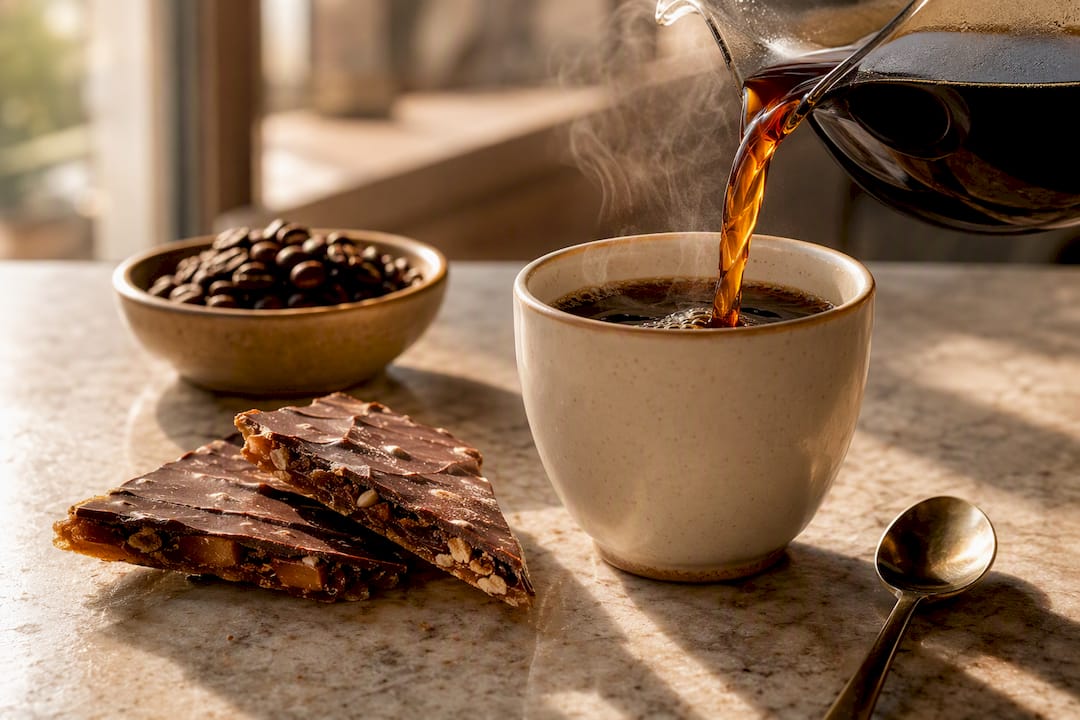
Tea offers more range than most people expect. Spiced black teas or chai bring warmth that plays well against toffee’s sweetness, and a well-brewed matcha’s earthiness gives dark chocolate toffee something to push against rather than blend into.
Wine and spirits reward a little research. Tawny port and late-harvest dessert wines mirror toffee’s caramel notes almost exactly, while a crisp Chardonnay offers acidity that resets the palate between bites.
- Espresso or dark roast drip coffee with dark chocolate toffee
- Chai or spiced black tea with milk chocolate toffee
- Tawny port or bourbon for an after-dinner pairing
- Porter or brown ale for a casual, low-key match
Pro Tip: Serve toffee slightly below room temperature next to hot coffee or tea. The temperature contrast makes the toffee’s soft, buttery texture even more noticeable.
How Should You Use Toffee In Desserts?
Toffee dessert pairings work best when you preserve some crunch or chew rather than melting the whole piece into a batter. Toffee’s buttery snap is part of its appeal, and folding it in too early can leave it soft and lost in the mix.
- Ice cream topping. Scatter chopped toffee over vanilla or coffee ice cream right before serving so it keeps its bite against the cold, smooth base.
- Cheesecake crust or crumble. Crush toffee into a graham cracker crust, or sprinkle it over the top after baking for a crunchy finish.
- Brownies and blondies. Fold coarsely chopped toffee into batter during the last minute of mixing, so pieces stay distinct instead of dissolving into the sugar.
- Quick toffee sauce. Melt equal parts butter and brown sugar with a splash of cream, about a 1:1:1 ratio, then stir in toffee bits at the end for drizzling over cake or ice cream.
Baking tip: add toffee as a topping whenever a recipe involves high heat or a wet batter for longer than a few minutes. Folding it in early risks losing the crunch that makes it worth using in the first place.
What Savory Foods Go Well With Toffee?
Toffee’s unexpected pairings often outshine the predictable dessert combinations, especially on a cheese board or a chef-driven plated dessert. Sharp cheddar, aged Gouda, and creamy Brie all provide salt and tang that toffee’s caramel sweetness needs to feel balanced rather than one-note.
Gourmet dessertmakers increasingly reach for savory and earthy accents like miso or tahini, stirred in small amounts into caramel or ganache to temper sweetness without erasing it. A little goes a long way. Chili, smoked pepper, or a bar of Mexican chocolate can add warmth and complexity if you want to push toffee into spicier territory.
- Sharp cheddar or aged Gouda with a few toffee shards
- A pinch of miso worked into toffee sauce for umami depth
- Tart apple slices or citrus zest to cut the richness
- Roasted sweet potato with crumbled toffee for a fall-inspired side
Pro Tip: Start with a very small amount of miso per caramel base. You can always add more, but too much turns the flavor salty instead of complex.
Does Milk Or Dark Chocolate Toffee Pair Differently?
Toffee flavor combinations change quite a bit depending on whether you’re working with milk chocolate, dark chocolate, almond, or a salted variety, so it helps to match the beverage or dessert to what’s actually on your plate.
Milk chocolate and classic almond toffee lean sweeter and creamier, so they do best with lighter coffee roasts, chai, and other creamy desserts like vanilla ice cream or cheesecake. Dark chocolate toffee carries more bitterness on its own, which makes it a natural match for darker roasts, stouts, and red dessert wines, along with bitter chocolate desserts that won’t get lost next to it. Salted or nut-forward toffees benefit from a dry sparkling wine, an herb-forward cheese, or a squeeze of citrus, since acidity and dryness both play well against salt.
- Milk chocolate or almond toffee: lighter roasts, chai, cheesecake, vanilla ice cream
- Dark chocolate toffee: dark roast coffee, stout, tawny port, bitter chocolate desserts
- Salted toffee: dry sparkling wine, herb cheeses, citrus fruit
As a rule of thumb, the sweeter the toffee, the more acidity or salt you want on the other side of the pairing.
How Do You Build A Toffee Tasting Plate?
A toffee dessert pairing plate comes together fastest with a simple four-step method rather than guesswork.
- Pick two or three pairings from the categories above, one beverage and one or two food items.
- Balance textures, pairing something crunchy (toffee, nuts) with something creamy (cheese, ice cream).
- Add a palate cleanser, like a slice of tart apple or a sip of sparkling water, between tastings.
- Keep portions small, about one ounce of toffee per pairing, so the flavors stay distinct instead of overwhelming the palate.
Serve coffee and tea in warmed cups, wine in a stemmed glass to preserve aroma, and ice cream in a chilled bowl so it doesn’t melt before the toffee crunch matters. Store toffee in a cool, dry spot away from humidity, since moisture is what turns a crisp piece soft before you get to serve it.
Pro Tip: Make your toffee sauce or crumble topping a day ahead. The flavor settles overnight, and you’ll spend tasting time enjoying the plate instead of prepping it.
Why Dudley’s Toffee Fits These Pairings
Handcrafted, small-batch English almond toffee behaves differently on the palate than mass-produced candy, and that matters when you’re building a pairing plate. Dudley’s Toffee is made in Indiana in small batches, with a soft, buttery texture that melts rather than sticking to your teeth, and every batch is gluten-free with no high fructose corn syrup.
That texture makes a real difference at the table. A softer toffee shard sits better against cold ice cream or a warm espresso than a harder, mass-market bar, because it doesn’t fight the other component for attention.
- Dark chocolate toffee for espresso, tawny port, or bittersweet dessert pairings
- Milk chocolate toffee for chai, cheesecake, or creamy ice cream pairings
- Both varieties available for gifting and event favors, including wholesale and fundraising orders
For a deeper look at flavor notes across the lineup, Dudley’s Toffee’s own gourmet flavor guide covers texture and taste in more detail.
Why Does Toffee’s Flavor Profile Make It So Pairable?
Toffee earns its place on a pairing plate because of three qualities working together: buttery richness, deep caramelization, and toasted sugar notes that read almost like a light roast coffee. Unlike caramel or butterscotch, toffee is cooked at a slightly higher temperature, which drives off more moisture and concentrates those toasted, nutty flavors. That’s part of why toffee pairs so naturally with roasted coffee, dark chocolate, and nuts. The chemistry lines up.
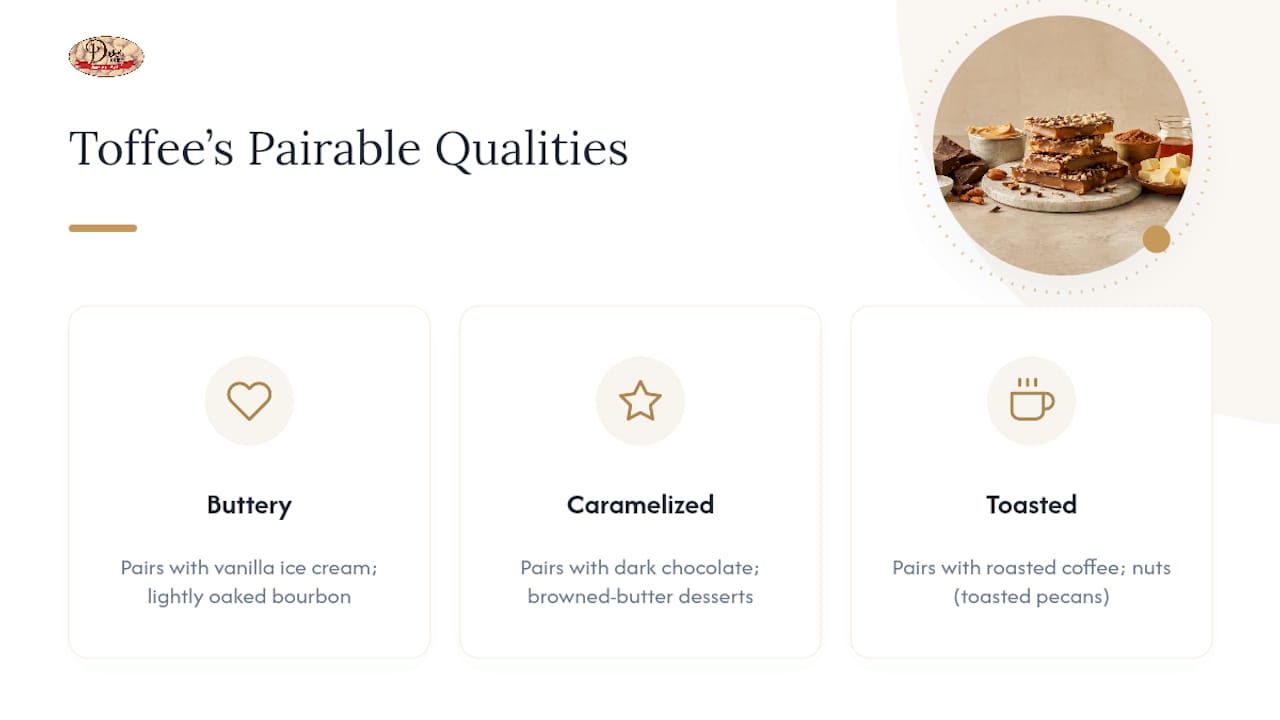
Vanilla shows up as a secondary note in most toffee recipes, whether from the butter itself or added extract, and it’s the reason toffee works so well alongside vanilla ice cream or a lightly oaked bourbon. Almonds add a nutty backbone that pairs naturally with other roasted or toasted flavors, from coffee to toasted pecans on a cheese board.
This is also why toffee resists one-note sweetness in a way that plain caramel candy sometimes doesn’t. The Maillard reaction that browns the sugar and butter during cooking creates dozens of aromatic compounds beyond simple sweetness, including roasted, nutty, and slightly bitter notes. That complexity gives you more to work with when building a pairing, because you’re not just matching sweet with sweet. You’re matching a toasted, buttery flavor with something that shares at least one of those notes: roasted coffee, browned butter in a dessert, or the nuttiness in a wine.
Quick Ways To Use Toffee Beyond The Candy Dish
Toffee doesn’t have to sit in a bowl to earn its place at the table. A few small-effort ideas turn it into a topping, a mix-in, or a finishing touch across several dishes.
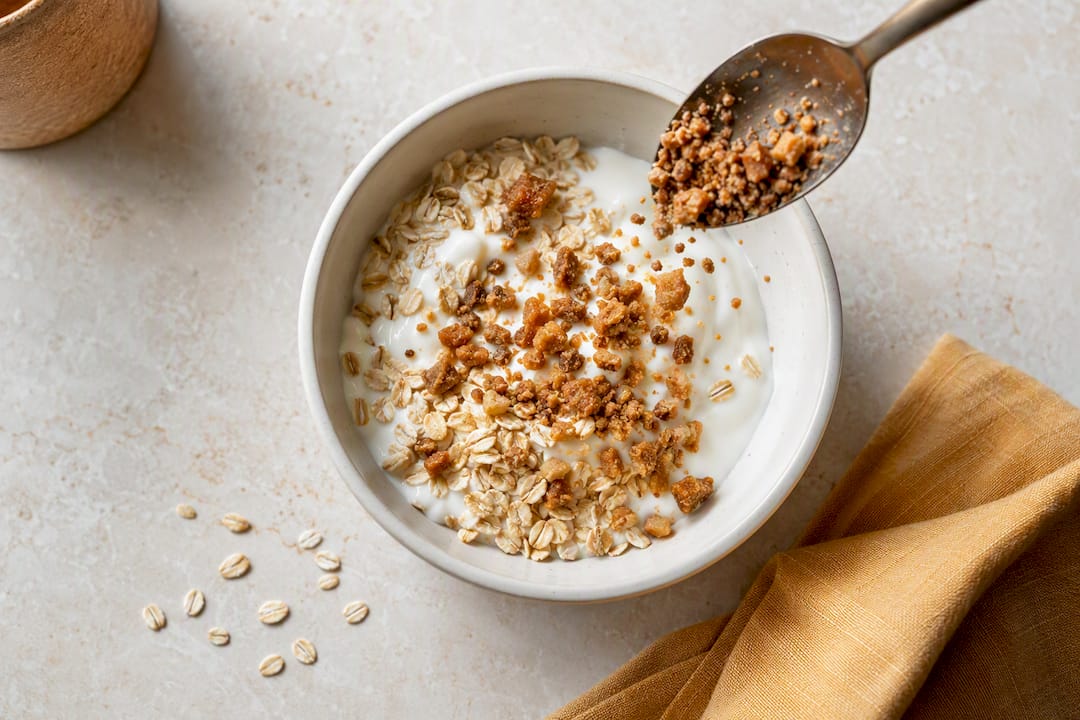
As a topping, chopped toffee works over oatmeal, yogurt parfaits, or a simple pound cake slice, adding crunch without any cooking involved. As a mix-in, fold small pieces into pancake or waffle batter right before cooking, or stir them into softened butter for a toffee compound butter that melts beautifully over warm biscuits or cornbread.
For a sauce, melt toffee pieces with a splash of heavy cream over low heat until smooth, then use it as a drizzle for cheesecake, apple slices, or a bowl of popcorn for a sweet-salty snack. As a garnish, crushed toffee dust adds visual texture and a hit of caramel flavor sprinkled over a finished plate, whether that’s a slice of pie or a scoop of gelato.
None of these require a special occasion. A jar of toffee pieces in the pantry turns an ordinary breakfast or dessert into something worth a second helping, and it’s one of the easiest ways to stretch a single bag of toffee across several different uses during the week.
A Maker’s Take On Toffee Experiments
We think the best toffee pairings come from a little seasonal curiosity. Try a miso-toffee caramel drizzled over roasted pears this fall, or swap in chai-spiced coffee alongside milk chocolate toffee once the weather cools. The rules above (balance sweetness with bitterness, acidity, or salt) hold up no matter what you’re experimenting with. We’d love to hear what combinations you land on.
— Dudley’s Toffee
Ready To Shop Toffee For Every Pairing
Dudley’s Toffee gives you a texture advantage most gourmet candy can’t match: a soft, buttery bite that melts instead of cracking your teeth, which matters when you’re pairing it against hot coffee, cold ice cream, or a sharp wedge of cheddar. Every batch is handcrafted in Indiana, gluten-free, and made without high fructose corn syrup, in both milk and dark chocolate.
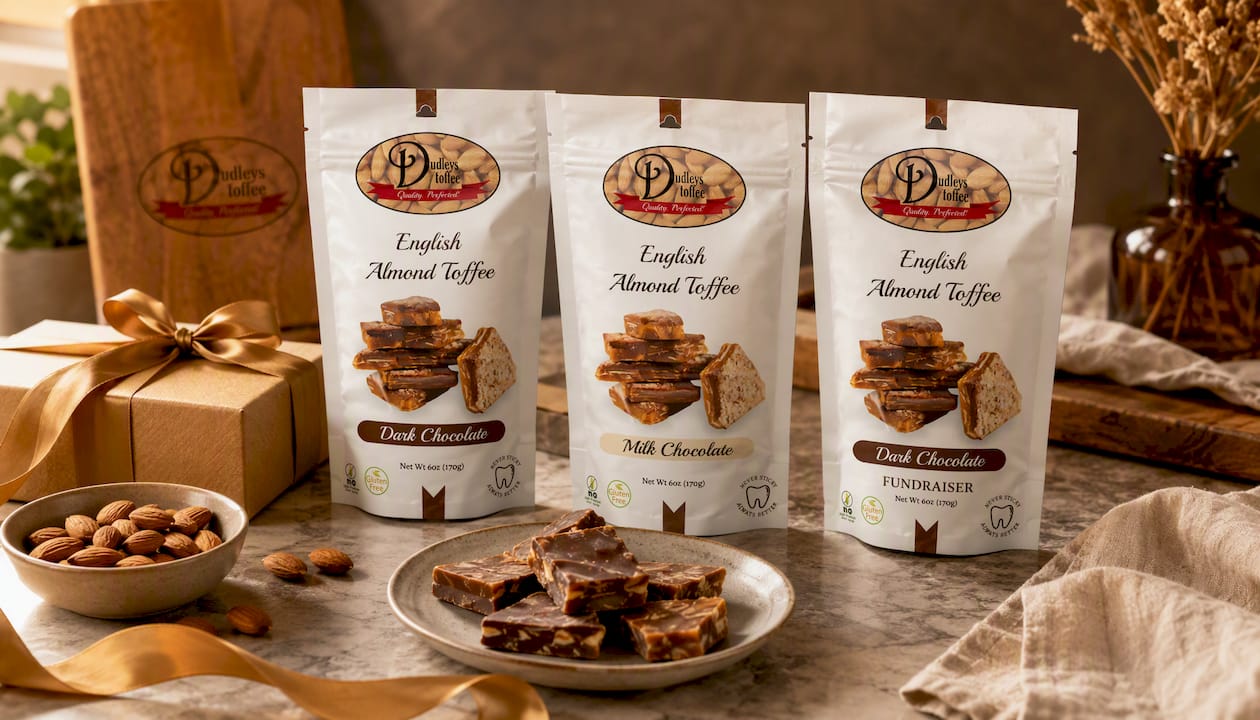
For dark roast coffee, tawny port, or bittersweet dessert pairings, the Dark Chocolate English Toffee (6oz) is the SKU to reach for, thanks to its slightly bitter edge that balances rich, roasted flavors. Hosting a fundraiser or stocking a gift table for a large group? The Dark Chocolate English Toffee (6oz) FUNDRAISER pack and the Milk Chocolate English Toffee (6oz) FUNDRAISER pack are both built for bulk orders, with the same small-batch texture in every bag. Cold pack shipping keeps every order fresh in transit, and wholesale pricing is available for retailers and gift shops. Shop the full lineup at Dudley’s Toffee and find the SKU that fits your next pairing plate or gifting order.
Sources
For more on toffee’s flavor chemistry, Flavonomics’ pairing analysis breaks down its dominant notes in depth. Dudley’s Toffee’s own guide to chocolate-covered toffee expands on texture and coating differences worth knowing before you pair.
- Toffee Recipes & Perfect Flavour Pairings | Flavonomics
- Unique Toffee Flavours for Gourmet Desserts | AMAR BIO ORGANICS
- Difference between toffee, caramel and butterscotch | WebstaurantStore
FAQ
What does toffee pair well with?
Toffee pairs well with bitter or roasted drinks like coffee and stout, creamy desserts like vanilla ice cream, and salty or tangy foods like sharp cheddar and tart apples.
What flavor pairs well with toffee?
Vanilla, roasted coffee, dark chocolate, and toasted nuts all pair naturally with toffee because they share its caramelized, toasted flavor notes.
What flavors pair well with caramel?
Caramel pairs with many of the same flavors as toffee, including coffee, chocolate, and sea salt, though toffee’s higher cooking temperature gives it a deeper, more toasted edge that stands up better to bitter or smoky pairings.
What are some good flavor combinations for toffee desserts?
Toffee with espresso, toffee with tart apple, and toffee with a touch of miso in caramel sauce are all reliable combinations that balance sweetness with bitterness, acidity, or umami.
Which Dudley’s Toffee variety works best for pairing with coffee?
Dark chocolate toffee generally pairs better with darker coffee roasts, while milk chocolate toffee suits lighter roasts and chai better, thanks to its sweeter, creamier profile.
Recommended
Share