
Soft Chewy Candy: A Complete Guide for Sweet Lovers
Soft chewy candy is defined as a category of confectionery that balances a tender, yielding texture with a pleasurable, lasting chew. Unlike hard candies that dissolve quickly or brittle toffees that snap, soft chewy sweets hold their shape while giving way gently under bite pressure. This quality comes from specific production methods, including moisture-retaining ingredients and controlled aeration techniques. Blue raspberry, peach, and cherry rank as the top three flavor favorites in the US market, and the category spans everything from fruit chews to caramel-style bites. Whether you are shopping for personal enjoyment or searching for a thoughtful gift, understanding what separates a great soft chewy candy from an average one makes every choice more satisfying.
What flavor profiles define the soft chewy candy category?
Blue raspberry, peach, and cherry are the top three favorite flavors for soft, chewy-style candies in the US as of 2026. These three flavors consistently lead both sales charts and consumer preference surveys, which tells you something important: candy lovers gravitate toward bright, fruit-forward profiles that pair naturally with a soft, yielding texture.
The soft chewy candy category is broader than most people realize. It includes several distinct subcategories, each with its own texture signature:
- Fruit chews: Dense, slightly elastic, and intensely flavored. These rely on a combination of sugar, corn syrup, and fruit puree to create a firm but pliable bite.
- Caramel chews: Richer and more buttery, with a slower, deeper chew. Caramel-style candies get their texture from cooked sugar and dairy fat.
- Marshmallow-style candies: Light, airy, and pillowy. These use aeration during production to create a soft bite that feels almost cloud-like.
- Gummy candy: Elastic and bouncy, built on a gelatin or pectin base that gives the candy its characteristic spring.
Premium soft candy textures balance the “squish” of marshmallows with the “bounce” of traditional fruit gums, with terms like “pillowy” and “melt-in-your-mouth” indicating the softer end of the spectrum. This texture range matters because candy lovers have genuinely different preferences. Some want resistance and chew; others want a candy that practically dissolves on contact.
Trending flavors in 2026 lean toward nostalgic profiles with a modern twist. Watermelon, mango, and strawberry cream are gaining ground alongside the classic trio. Sour coatings on otherwise soft candies have also grown in popularity, adding a sharp contrast to the gentle chew underneath.
How to select the best soft chewy candy for your needs
Choosing the right soft chewy candy starts with understanding your own texture preference. Gummy-based candies use gelatin or pectin to create an elastic chew, while marshmallow-style candies rely on aeration to produce pillowy softness. Knowing which end of that spectrum you prefer narrows your options immediately.
Ingredient awareness matters
The gelling agent in a soft candy shapes everything about how it feels and who can eat it. Gelatin produces a classic gummy texture but is derived from animal collagen, making it unsuitable for vegetarians and some halal diets. Pectin, derived from fruit, creates a comparable texture and works for a much wider range of dietary needs. Always check the ingredient list before buying, especially when purchasing for a group.
Packaging format affects freshness and value
Soft chewy candy pricing ranges from $0.50 to $1.50 per ounce depending on packaging, from bulk bags to individually wrapped variety packs. That price gap reflects real differences in freshness, convenience, and shelf life. Bulk bags offer better value per ounce but expose more candy to air each time you open the bag. Individually wrapped pieces cost more but stay fresher longer and are far easier to share or gift.
Pro Tip: When buying soft chewy candy as a gift, choose individually wrapped varieties. They look more intentional, travel better, and give the recipient the pleasure of unwrapping each piece.
Here are the key quality signals to look for before you buy:
- Softness on arrival: Fresh soft candy should yield slightly when pressed through the packaging. Stiff or hard candy has likely dried out.
- Clear ingredient list: Fewer artificial additives generally indicate a higher-quality product.
- Sealed packaging: Airtight seals protect texture and flavor from humidity.
- Reputable source: Specialty candy shops and artisan producers tend to turn over inventory faster than discount retailers, meaning fresher product.
- Flavor variety: Variety packs let you sample multiple profiles before committing to a larger quantity.
Understanding candy texture differences helps you match the right product to the right moment, whether that is a movie night treat or a carefully chosen gift box.
What are the best practices for storing soft chewy candy?
Proper storage is the single most overlooked factor in maintaining soft chewy candy quality. Most candy lovers focus entirely on flavor and texture at purchase, then store their sweets carelessly and wonder why the candy hardens or turns sticky within days.
Storage at 65–70°F in airtight containers preserves optimal softness and prevents hardening or excessive stickiness. That temperature range matters because heat accelerates moisture loss, which causes hardening, while cold temperatures can introduce condensation that makes candy sticky and clumped.
Follow these steps to keep your soft chewy sweets at their best:
- Transfer to an airtight container immediately after opening the original packaging. Resealable bags work, but rigid containers with tight lids are better.
- Store away from direct sunlight. UV exposure degrades both color and flavor compounds in soft candies.
- Keep away from strong-smelling foods. Soft candies absorb odors readily, and a bag stored near onions or coffee will taste like it.
- Avoid the refrigerator unless the package specifically recommends it. Refrigerators introduce humidity fluctuations that damage texture.
- Check texture before serving. A quick press test tells you whether the candy has maintained its softness or needs to be replaced.
Individually wrapped candies maintain freshness and texture significantly longer than bulk loose candies. This makes individually wrapped formats the clear choice for gifting, party favors, and any situation where the candy will sit out for an extended period.
Pro Tip: For holiday gift boxes or candy bowls, fill them no more than two to three days before the event. Soft chewy candies are at their best when freshly opened, and even well-stored candy loses some of its tender texture over time.
Candy meant for gifting deserves the same care as the gift itself. A gourmet candy gift that arrives in perfect condition makes a far stronger impression than one that has hardened in transit.
How do dietary considerations affect soft chewy candy choices?
Dietary needs shape candy selection more than most people expect. The gelling agent alone determines whether a soft chewy candy is suitable for vegetarians, vegans, halal consumers, or anyone avoiding animal products.
Gelatin-free, fruit pectin-based chewy candies cater to halal and vegetarian consumers without compromising texture. Food science has advanced to the point where pectin-based gummies are nearly indistinguishable from gelatin-based ones in softness and chew. This is genuinely good news for anyone who has had to skip the candy bowl at a party.
Key dietary factors to check before buying:
- Gelling agent: Look for “pectin” on the label for vegetarian and halal-friendly options. “Gelatin” indicates an animal-derived product.
- Gluten status: Most soft chewy candies are naturally gluten-free, but shared manufacturing facilities can introduce cross-contact. Look for a certified gluten-free label if this matters for your household.
- Allergens: Tree nuts, dairy, and soy appear in some caramel-style and chocolate-coated soft candies. Read the full label, not just the front of the package.
- Artificial dyes: Some consumers avoid synthetic colorants like Red 40 or Yellow 5. Natural fruit and vegetable-based colorings are increasingly available.
Standard serving sizes for popular soft chewy snacks contain approximately 80–110 calories. That range makes portion control straightforward for mindful candy lovers who want to enjoy a treat without losing track of intake.
| Dietary Need | What to Look For | What to Avoid |
|---|---|---|
| Vegetarian | Pectin as gelling agent | Gelatin |
| Halal | Halal-certified label, pectin | Non-certified gelatin |
| Gluten-free | Certified gluten-free seal | Shared-facility products |
| Low allergen | Simple ingredient list | Dairy, soy, tree nut additions |
| Mindful indulgence | 80–110 calorie serving sizes | Oversized portions without labels |
Vegetarian and halal-friendly soft candies are expanding rapidly due to food science innovations that replace gelatin with plant-based pectin. This trend is accelerating in 2026, and most specialty candy retailers now carry clearly labeled options for every dietary preference. The gluten-free candy category has seen particularly strong growth as families look for treats that work for everyone at the table.
Key Takeaways
Soft chewy candy is defined by texture first, and the right storage, ingredient awareness, and flavor selection determine whether the experience is truly satisfying.
| Point | Details |
|---|---|
| Texture drives the category | Gummy-style candies use gelatin or pectin; marshmallow-style candies use aeration for a pillowy bite. |
| Top flavors lead for a reason | Blue raspberry, peach, and cherry consistently top US sales because they pair naturally with soft textures. |
| Storage protects quality | Keep soft candies at 65–70°F in airtight containers to prevent hardening or stickiness. |
| Ingredient labels matter | Check for pectin vs. gelatin to match dietary needs; look for certified gluten-free seals when needed. |
| Packaging affects freshness | Individually wrapped candies stay fresher longer and are the better choice for gifting and sharing. |
A candy lover’s honest take on texture and gifting
Texture is the conversation that the candy industry does not have loudly enough. Most marketing focuses on flavor, and flavor matters, but the reason certain soft chewy sweets become favorites while others get forgotten in a drawer comes down almost entirely to how they feel. A candy that is slightly too firm loses its appeal fast. One that is too soft turns into a sticky mess. The ones people reach for again and again sit right in the middle: tender enough to yield immediately, with just enough resistance to make the chew satisfying.
At Dudley’s Toffee, we think about texture constantly. Our handcrafted English almond toffee is made in small batches specifically because batch size affects texture. Larger production runs introduce variables that change how the sugar sets, how the butter integrates, and ultimately how the finished candy feels. Small-batch production gives us control that mass manufacturing simply cannot replicate.
The gifting angle is where texture really earns its place. A soft, buttery toffee that melts cleanly without sticking to teeth is a gift people remember. It does not require explanation or apology. It just delivers. That is the standard we hold ourselves to, and it is the same standard worth applying when choosing any soft chewy candy for someone you care about. Choose something made with real ingredients, stored well, and packaged with care. The recipient will notice.
— Dudley’s Toffee
Handcrafted gourmet candy worth gifting from Dudley’s Toffee
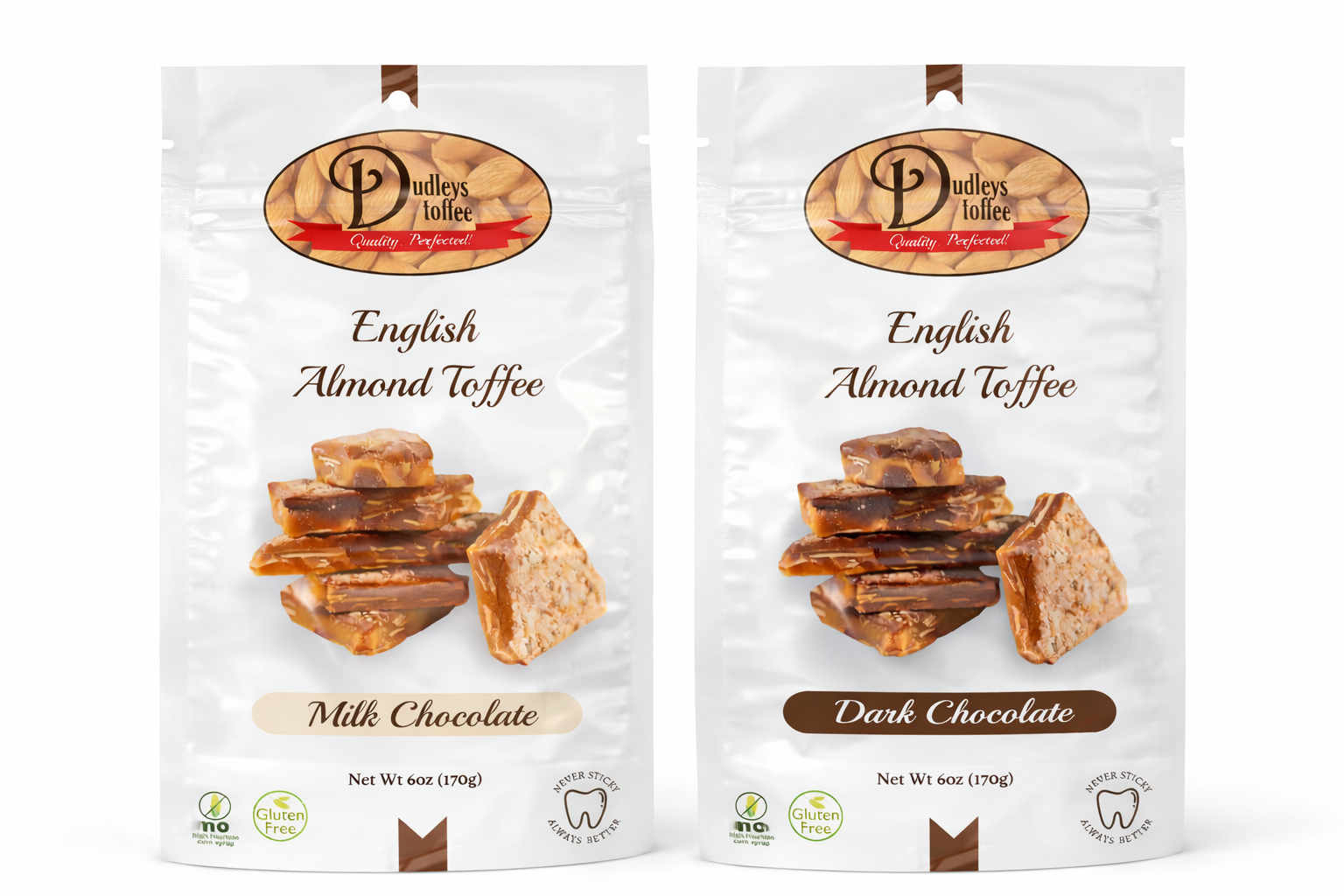
Dudley’s Toffee handcrafts English almond toffee in small batches from our Indiana kitchen, using premium ingredients and no high fructose corn syrup. Every piece is gluten-free and available in both milk chocolate and dark chocolate English toffee varieties. Our signature recipe produces a softer, buttery toffee that melts in your mouth rather than sticking to your teeth. Whether you are treating yourself, building a gift box for the holidays, or sourcing a memorable corporate gift, Dudley’s Toffee delivers the kind of quality that stands out. Shop our full collection at dudleystoffee.store and find the perfect handcrafted treat for any occasion.
FAQ
What makes soft chewy candy different from hard candy?
Soft chewy candy uses moisture-retaining ingredients and aeration techniques to maintain a tender, pliable texture, while hard candy is cooked to a higher temperature that removes most moisture and creates a brittle structure.
What are the most popular soft chewy candy flavors in the US?
Blue raspberry, peach, and cherry are the top three flavors for soft chewy-style candies in the US as of 2026, consistently leading both sales and consumer preference surveys.
How should I store soft chewy candy to keep it fresh?
Store soft chewy candy in an airtight container at 65–70°F, away from direct sunlight and strong odors. Individually wrapped candies stay fresh significantly longer than loose bulk candy.
Is soft chewy candy suitable for vegetarians and halal diets?
It depends on the gelling agent. Candies made with fruit pectin instead of gelatin are suitable for vegetarians and halal consumers. Always check the ingredient label for confirmation.
How many calories are in a typical serving of soft chewy candy?
Most standard servings of popular soft chewy snacks contain approximately 80–110 calories, making portion control straightforward for mindful candy lovers.
Recommended
Share