Small-Batch Candy Production: A Complete Maker's Guide
Small-batch candy production is the hands-on craft of making limited quantities of confectionery that prioritize ingredient quality, artisan control, and nuanced flavor over mass uniformity. To understand small-batch candy production is to recognize that every decision, from sugar sourcing to cooking temperature, shapes the final product in ways no automated line can replicate. Artisans working at this scale use sensory cues, real-time adjustments, and strict recipe discipline to produce candy with texture and flavor complexity that mass production cannot match. Dudleystoffee, a family-owned Indiana company, is a living example of what this craft looks like at its best.
What equipment and ingredients are essential for small-batch candy production?
The right tools are not optional in small-scale confectionery. They are the difference between a batch that sets perfectly and one that burns or fails to crystallize.
Core equipment
Every serious small-batch candy kitchen needs these items:
- Heavy-bottomed saucepan: Distributes heat evenly and prevents scorching at the base of the pan.
- Calibrated candy thermometer: Reads sugar temperature accurately across all cooking stages. A digital probe thermometer is more reliable than a dial model.
- Silicone spatula and wooden spoon: Used at specific stages to stir or avoid stirring, depending on the candy type.
- Marble slab or silicone molds: Marble pulls heat away from candy quickly for controlled cooling. Molds shape individual pieces consistently.
- Parchment paper and a baking sheet: Used for pouring and cooling poured candies like toffee or brittle.
Equipment choices should reflect where you plan to be in 12–24 months, not just where you are today. Undersized pans or unreliable thermometers create bottlenecks that slow production and hurt quality.
Ingredient selection
Ingredient quality defines the ceiling of your candy’s flavor. Use pure cane sugar rather than beet sugar blends, real butter with a high fat content, and fresh nuts or flavorings with no added oils. Avoid ingredients with long additive lists. The fewer the ingredients, the more each one shows up in the final taste.
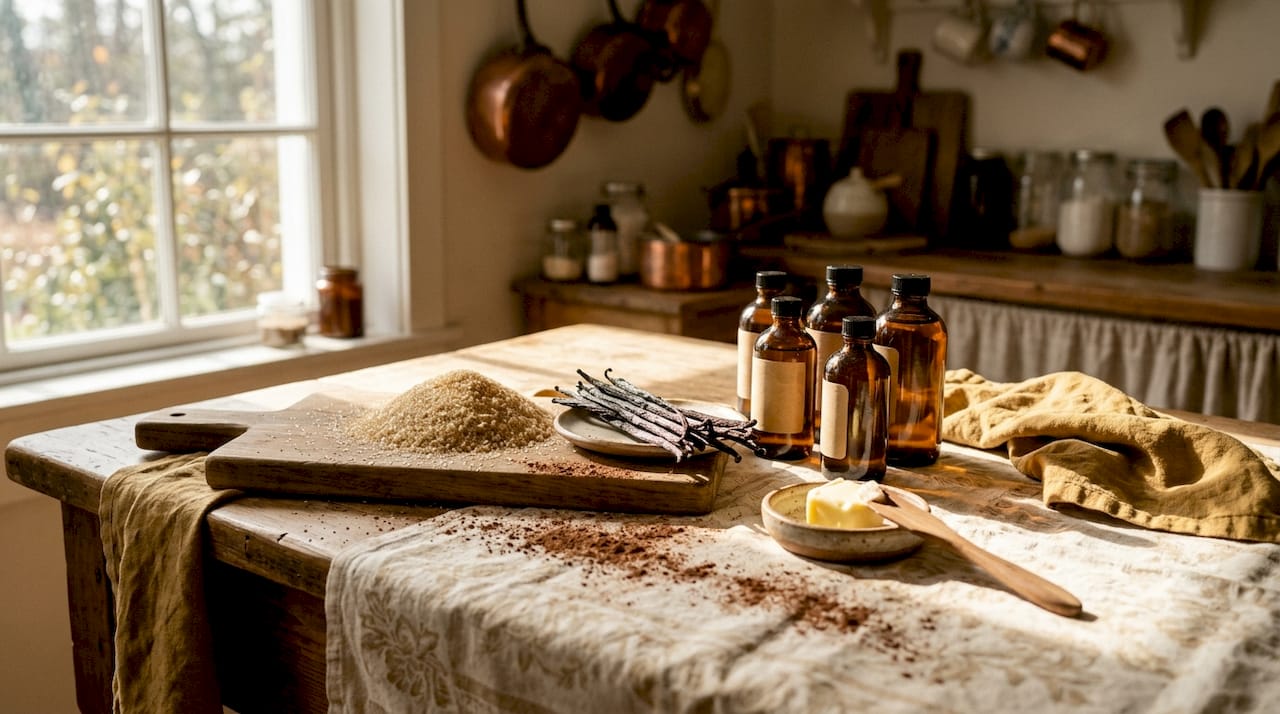
Pro Tip: Work in a room with humidity below 50% RH. Sugar is hygroscopic, meaning it pulls moisture from the air, which softens hard candies and causes surface bloom on chocolate-coated pieces.
| Equipment or Ingredient | Role | Key Spec |
|---|---|---|
| Heavy-bottomed saucepan | Even heat distribution | 3–4 quart capacity for standard batches |
| Candy thermometer | Temperature accuracy | Reads 100°F–400°F range |
| Marble slab | Rapid, even cooling | Room temperature surface |
| Pure cane sugar | Clean sweetness, reliable crystallization | No additives or blends |
| Real butter | Flavor and texture | 80%+ butterfat content |
| Fresh almonds or nuts | Flavor and crunch | No added oils or coatings |
How do you execute the small-batch candy making process step by step?
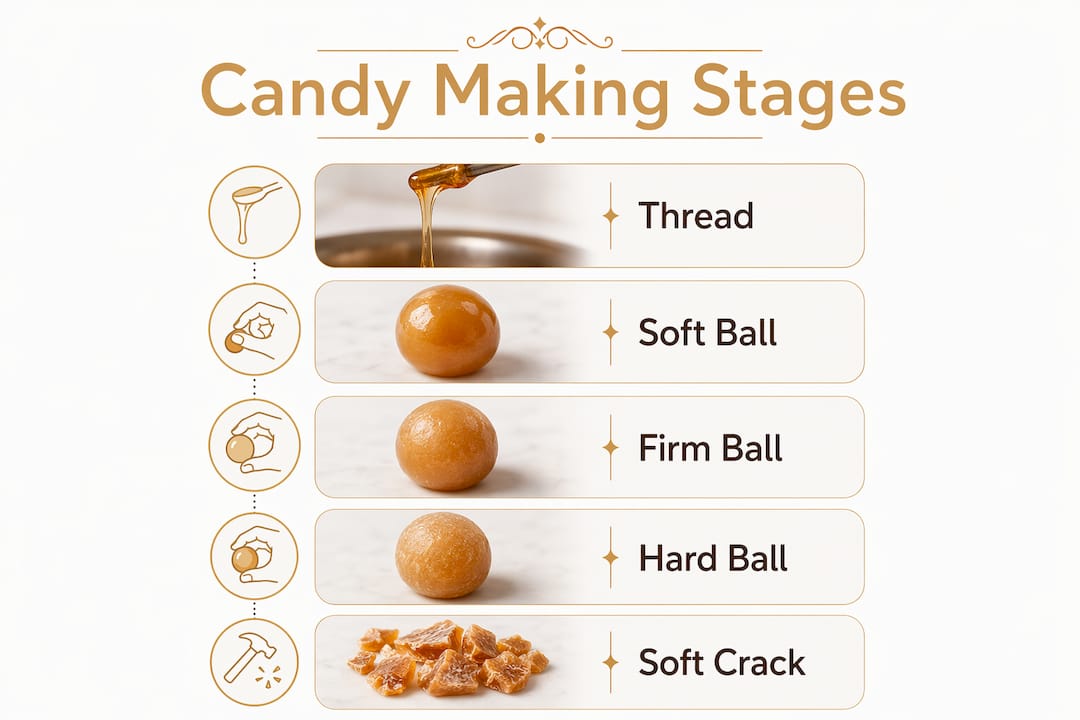
Candy making follows a precise sequence of temperature stages, each producing a different texture. Skipping or rushing a stage produces a failed batch. Precise temperature control and minimal stirring at key stages create the desired crystal sizes that determine whether you get smooth fudge or hard candy.
The cooking stages
- Thread stage (230°F–235°F): Sugar syrup spins a thin thread when dropped in cold water. Used for syrups and glazes.
- Soft ball stage (235°F–240°F): Syrup forms a soft, pliable ball in cold water. Used for fudge and fondant.
- Firm ball stage (245°F–250°F): Ball holds its shape but is still pliable. Used for caramels.
- Hard ball stage (250°F–265°F): Ball is hard and holds its shape firmly. Used for nougat and marshmallows.
- Soft crack stage (270°F–290°F): Syrup separates into threads that are flexible but not brittle. Used for taffy and butterscotch.
- Hard crack stage (300°F–310°F): Syrup forms brittle threads. Used for toffee, brittles, and lollipops.
Each stage represents a different sugar concentration and water content. Moving too fast through a stage by applying too much heat produces scorching. Moving too slow by pulling heat too early leaves candy soft and sticky.
| Stage | Temperature Range | Texture Result |
|---|---|---|
| Soft ball | 235°F–240°F | Soft, creamy fudge |
| Firm ball | 245°F–250°F | Chewy caramel |
| Hard ball | 250°F–265°F | Firm nougat |
| Soft crack | 270°F–290°F | Flexible taffy |
| Hard crack | 300°F–310°F | Brittle toffee or candy |
Stirring and flavoring
Stirring at the wrong moment causes sugar to crystallize prematurely, producing a grainy texture. For most hard candies and toffees, stir only while dissolving the sugar, then stop and do not stir again until the candy reaches the target temperature. Add flavorings, extracts, and butter only after removing the pan from heat. This preserves volatile flavor compounds that evaporate at high temperatures.
Doubling candy recipes without industrial equipment results in uneven heat and failed crystallization. Once scorching or improper crystallization occurs, the batch cannot be salvaged. Stick to the original recipe size every time.
Pro Tip: Use a cold water test alongside your thermometer. Drop a small amount of syrup into a glass of cold water and feel the texture with your fingers. This sensory check catches thermometer drift and confirms your stage before you commit.
What distinguishes small-batch candy from mass-produced candy in quality and flavor?
Small-batch candy is not simply a smaller version of mass-produced candy. The production philosophy, ingredient sourcing, and quality controls are fundamentally different.
Small-batch production emphasizes human judgment to manage ingredient variability rather than forcing uniformity. A skilled artisan reads the color of a caramelizing sugar, smells the shift from buttery to burnt, and adjusts heat in real time. An automated line cannot do this.
“Freshness in small-batch candy is intentional, focusing on a vibrant sensory experience rather than shelf-life extension via preservatives.”
Small-batch candies’ freshness is a deliberate tradeoff to achieve superior sensory experiences without heavy artificial preservatives. This enhances texture and flavor complexity intended for immediate consumption. Mass-produced candy, by contrast, relies on preservatives, stabilizers, and artificial flavors to extend shelf life across long distribution chains.
Small-batch vs. mass-produced: key differences
- Ingredients: Small-batch makers use real butter, pure sugars, and fresh inclusions. Mass production often substitutes lower-cost alternatives.
- Preservatives: Small-batch candy uses few or no artificial preservatives. Mass-produced candy requires them for shelf stability.
- Flavor complexity: Artisan candy develops layered flavors through careful cooking and quality ingredients. Mass-produced candy delivers consistent but flat flavor profiles.
- Texture: Hand-controlled cooling and tempering produce varied, nuanced textures. Automated lines produce uniform but often less interesting results.
- Transparency: Small-batch candy makers prioritize provenance and transparency, allowing consumers to verify ingredient origins and supporting ethical sourcing. Mass producers rarely offer this level of traceability.
- Shelf life: Small-batch candy is fresher but has a shorter window. Mass-produced candy lasts longer but sacrifices sensory quality.
Dudleystoffee’s handcrafted English almond toffee is a direct example of this philosophy. No high fructose corn syrup, no artificial fillers, and a buttery texture that reflects the quality of every ingredient used.
How do you troubleshoot common problems in small-batch candy production?
Even experienced candy makers encounter batch failures. The key is recognizing the cause quickly and adjusting before the next batch.
Common problems and fixes
- Grainy or sandy texture: Caused by premature crystallization. Prevent it by keeping the pan sides clean with a wet pastry brush during cooking and avoiding stirring after the sugar dissolves.
- Sticky or soft candy: Usually means the batch did not reach the correct temperature. Verify your thermometer is calibrated and recook if the candy is still liquid.
- Sugar bloom on chocolate coating: Humidity above 50% RH causes sugar bloom or seizing, spoiling candy appearance and texture. Avoid production on humid days and store finished candy in airtight containers.
- Burnt flavor: Heat was too high or the batch cooked too long past the target stage. Use a heavy-bottomed pan and watch the thermometer closely in the final 10°F before the target.
- Uneven texture across the batch: Caused by uneven heat distribution. Stir gently at the start to dissolve sugar evenly, then let the batch cook undisturbed.
Altitude and weather adjustments
Reduce recipe temperature by 2°F for every 1,000 feet in elevation to prevent burning and ensure proper crystallization. At higher altitudes, water boils at a lower temperature, which means sugar concentrations change faster. Failing to adjust produces candy that is either overcooked or never reaches the right stage.
Pro Tip: Keep a batch log. Record the date, humidity level, altitude, thermometer reading, and result for every batch. Patterns emerge quickly, and you will identify your most reliable production conditions within a few weeks.
Key Takeaways
Small-batch candy production succeeds when temperature precision, ingredient quality, and environmental control work together in every batch.
| Point | Details |
|---|---|
| Temperature stages are non-negotiable | Each candy type requires a specific temperature range; missing it produces the wrong texture. |
| Recipe size must stay fixed | Doubling a batch without industrial equipment causes uneven heat and crystallization failure. |
| Humidity is a production variable | Keep humidity below 50% RH to prevent sugar bloom, seizing, and soft candy. |
| Ingredient quality sets the flavor ceiling | Real butter, pure sugar, and fresh inclusions produce complexity that substitutes cannot match. |
| Altitude requires temperature adjustment | Reduce target temperature by 2°F per 1,000 feet of elevation for consistent results. |
What I’ve learned from years of watching small-batch candy come together
The part that surprises most people about small-batch candy making is how much of it happens through your senses rather than your timer. You learn to read the color of a caramel as it darkens, to catch the exact moment the butter smell shifts from rich to sharp, and to feel the difference between a syrup that is ready and one that needs another minute. No recipe fully captures that knowledge. You build it batch by batch.
The other thing I have come to believe strongly is that small-batch production is not a compromise. It is a choice. Small-batch production is chosen for its flexibility and its ability to manage high-quality, variable ingredients in ways that large-scale automation cannot. When you work with real butter, fresh nuts, and pure sugar, those ingredients behave differently depending on the season, the supplier, and the weather. A skilled artisan adjusts. A machine averages.
The biggest mistake I see new makers make is treating a failed batch as a sign they should quit. Every failed batch teaches you something a successful one cannot. A grainy fudge tells you exactly where your stirring went wrong. A burnt toffee tells you your thermometer needs calibration or your burner runs hot. The feedback is immediate and honest. That is actually one of the great advantages of working at small scale. You learn faster because the consequences are smaller and the lessons are clearer.
Artisan candy makers are reshaping consumer expectations, stressing provenance, transparency, and ethical sourcing. That shift matters beyond the candy itself. When consumers start asking where their ingredients come from and how their food was made, small-batch producers are the ones with real answers.
— Brantley
Dudleystoffee: small-batch craft you can taste
Dudleystoffee was built on exactly the principles covered in this guide. Every batch of their handcrafted English almond toffee is made in small quantities using premium ingredients, with no high fructose corn syrup and no artificial fillers. The result is a buttery, melt-in-your-mouth toffee that reflects the care put into every step of the process.
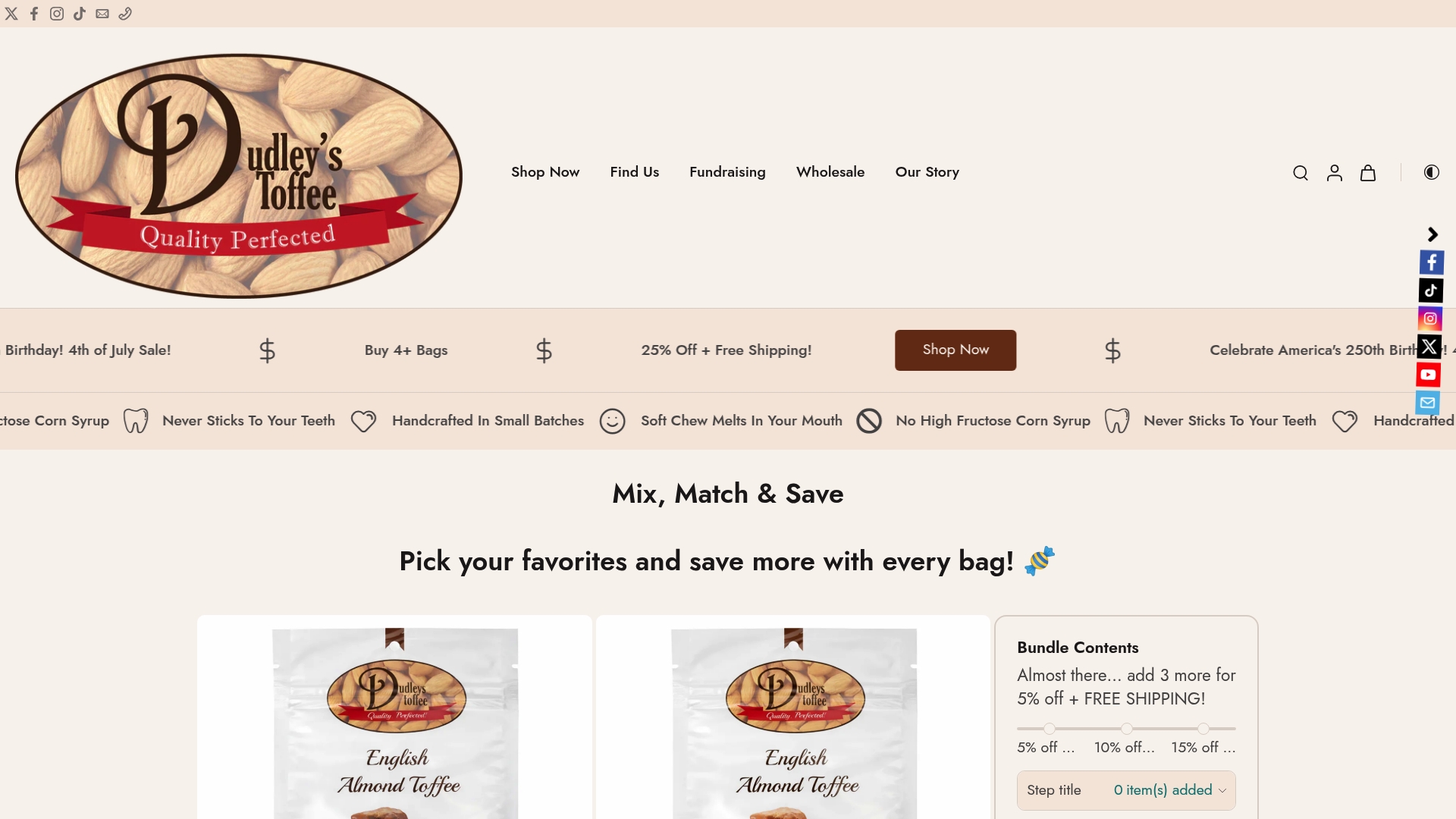
Dudleystoffee offers both milk chocolate and dark chocolate English toffee, both gluten-free and crafted for gifting, fundraising, and everyday enjoyment. To learn more about the family story and the values behind every batch, visit the Our Story page and see what small-batch commitment looks like in practice.
FAQ
What does small-batch mean in candy making?
Small-batch candy making refers to producing limited quantities of confectionery by hand, with close attention to ingredient quality and temperature control at every stage. The goal is flavor complexity and freshness rather than volume or uniformity.
What temperature stages do candy makers use?
The main stages are thread (230°F–235°F), soft ball (235°F–240°F), firm ball (245°F–250°F), hard ball (250°F–265°F), soft crack (270°F–290°F), and hard crack (300°F–310°F). Each stage produces a different texture and is suited to a specific candy type.
Why can’t you double a small-batch candy recipe?
Doubling a candy recipe without industrial equipment causes uneven heat distribution, which prevents the batch from reaching the correct temperature stage consistently. Once crystallization fails or scorching occurs, the batch cannot be corrected.
How does humidity affect small-batch candy?
Humidity above 50% RH causes sugar bloom and seizing, which ruins the texture and appearance of finished candy. Production should happen on dry days, and finished candy should be stored in airtight containers.
How is small-batch candy different from mass-produced candy?
Small-batch candy uses real, traceable ingredients with few or no preservatives, producing richer flavor and fresher texture. Mass-produced candy prioritizes shelf life and uniformity, often using artificial additives and lower-cost ingredient substitutes.