
Even Dairy Free Toffee Needs a Milk Label Check
Traditional toffee is not dairy free, because the classic recipe is built on butter, and often cream or milk. Some store-bought and homemade versions skip dairy entirely, but cross-contact and labeling decide whether they are safe for you. If you have a milk allergy, read the ingredient list and any advisory statement every time, even on a product you have bought before.
TL;DR:
- U.S. packaged food labels must name milk in the ingredient list or a Contains statement; check for whey, casein, lactose, milk solids, and butterfat.
- Dark chocolate labeled dairy free has sometimes contained milk from shared equipment, so people with severe allergies should request manufacturing details from the maker.
- Homemade recipes can replace butter with vegan butter or refined coconut oil, use soy or oat milk or water, and yield a different snap or chew.
Table of Contents
- What goes into toffee, and why dairy is so common
- Hidden names for milk on an ingredient list
- How to read a toffee label using FDA allergen rules
- Dark chocolate and “dairy-free” claims: why cross-contact matters
- Dairy-free and vegan toffee: store-bought picks and homemade swaps
- A quick shopper checklist for avoiding dairy in toffee
- Our approach to ingredients and labeling
- Where to buy handcrafted toffee with ingredient details in plain view
- FAQ
- Sources
What goes into toffee, and why dairy is so common
Toffee starts as a simple cooked candy: sugar and butter, sometimes with cream or milk. Good Food explains that the mixture is heated to somewhere between the “soft crack” and “hard crack” stages so it sets. Heating dairy and sugar together also triggers the Maillard reaction, which gives toffee its toasty, caramelized flavor.

That is why butter is so hard to leave out. It supplies fat for a smooth bite and browned flavor. Many standard American toffee recipes call for butter and sugar and rely on a candy thermometer to hit the right stage.
Here is what usually shows up:
- Butter: a common fat in classic recipes.
- Cream or milk: added in some recipes for a softer, richer chew.
- Sugar: the backbone, cooked until it sets.
- Nuts and chocolate: optional extras, but milk chocolate adds dairy of its own.
The dairy claim comes from the base recipe, not the toppings. A plain almond toffee still starts with butter.
Hidden names for milk on an ingredient list
Milk does not always appear as the word “milk.” Manufacturers use several ingredients that come from it, and each one means the product contains milk. Watch for:
Milk-derived ingredients can appear under names such as whey, casein, lactose, milk solids, and butterfat. Check the label and contact the manufacturer if you are unsure whether an ingredient contains milk.
If you see one of these ingredients, check the label for the required milk disclosure and contact the manufacturer if anything is unclear. Scan for parentheses too, such as “whey (milk),” and look for a “Contains” line near the ingredient list. Both are there to help you spot milk quickly.
How to read a toffee label using FDA allergen rules
In the United States, federal law requires packaged foods to declare major allergens, including milk, in simple language. Manufacturers do it either in the ingredient list or in a “Contains” statement such as “Contains: Milk.” The FDA also notes that an allergen’s food source must appear at least once on the label, for example “whey (milk).” Its guidance on reading the label recommends reading the entire ingredient list and contacting the manufacturer when you are unsure.
Here is a simple routine for packaged toffee:
- Read the full ingredient list for butter, cream, milk, whey, casein or any other milk derivative.
- Find the “Contains” statement and check whether milk is named.
- Read any advisory wording about shared equipment or facilities, such as “may contain milk.”
- If anything is unclear, contact the maker before you eat it.
The FDA warns that “dairy-free” claims on dark chocolate do not guarantee safety for people with severe milk allergies, because milk can reach products through shared processing equipment.
For severe allergies, a claim on the front of the package is a starting point, never the final answer.
Dark chocolate and “dairy-free” claims: why cross-contact matters
Dark chocolate may seem like a safe swap, but check its ingredients and allergen information. The FDA consumer update shows why that assumption can fail: some dark chocolates labeled dairy-free still contained milk, because they were made on equipment shared with milk chocolate. The FDA also tracks recalls where products carried undeclared milk after a production or packaging breakdown, such as this allergy alert on a chocolate candy.
Statements that reduce your uncertainty include:
- Made on dedicated dairy-free equipment.
- Phrases like “manufactured without milk.”
- A maker who publishes allergen testing or a clear allergen policy.
- A vegan certification on the chocolate itself.
Pro Tip: If milk allergy is serious in your household, email the maker and ask whether the toffee and its chocolate coating share equipment with milk products, and keep the reply on file.
Dairy-free and vegan toffee: store-bought picks and homemade swaps
Vegan or dairy-free products may suit some shoppers, but check the ingredients and advisory statements. For severe milk allergies, contact the maker to ask about shared equipment. Our own guide on telling whether toffee is vegetarian and making it vegan walks through the swaps in more detail.
If you would rather make it at home, use this checklist:
- Fat: vegan butter or refined coconut oil in place of butter.
- Liquid: soy or oat milk, or skip the milk and use water.
- Temperature: follow the recipe’s instructions closely.
- Flavor: a pinch of salt and real vanilla make up for the missing browned-butter notes.
Plant-based versions work in other toffee treats too. BBC Food’s vegan sticky toffee pudding swaps in soy or oat milk and a vegan spread, and the answer to whether sticky toffee pudding can go vegan is yes. Expect dairy-free toffee to snap or chew a little differently. The texture may differ from traditional toffee, so follow the recipe’s cooling instructions.
A quick shopper checklist for avoiding dairy in toffee
Keep this short list on your phone for store shelves and online product pages:
- Check the ingredient list for milk and its hidden names.
- Read the “Contains” statement.
- Read advisory statements about shared equipment.
- Look for a vegan or dairy-free certification.
- Choose makers who publish full ingredient lists, or contact them directly.
If your allergy is severe, skip any product that offers no clear manufacturing assurance. A missing answer is a no.
Pro Tip: Check the ingredient list and contact the maker if you need more information about a product.
If you are checking other allergens alongside dairy, our piece on reading “may contain” statements for nuts uses the same label-reading habits.
Our approach to ingredients and labeling
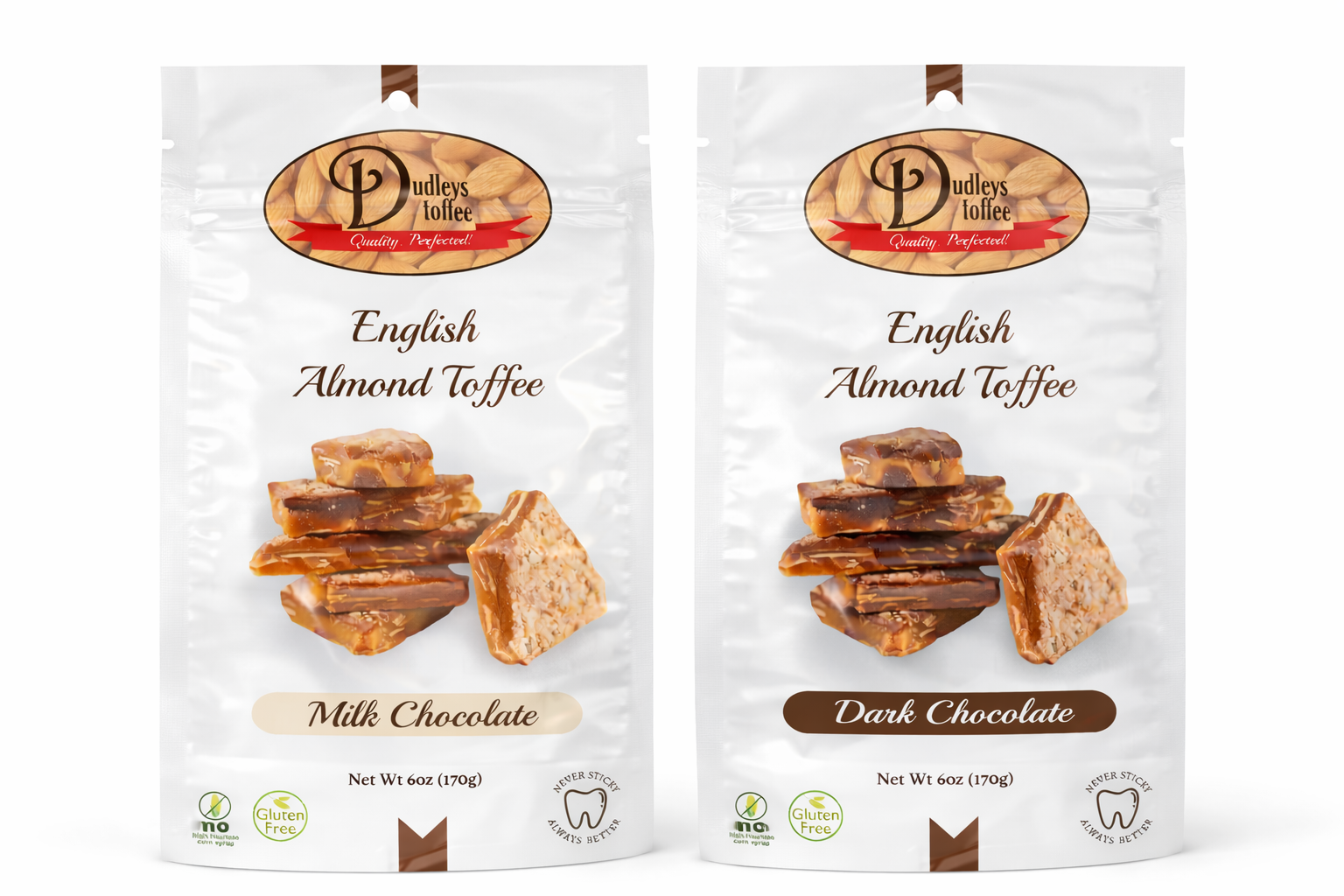
We handcraft our English almond toffee in small batches in Indiana, and our milk chocolate variety contains milk. It is gluten free and made without high fructose corn syrup. Because we know label questions matter, we invite you to read each product’s ingredient list or contact us for allergen details before you order.
— Dudley’s Toffee
Where to buy handcrafted toffee with ingredient details in plain view
If dairy is not a concern for you, we would love to send you a bag. Dudley’s English Almond Toffee comes in milk and dark chocolate, is gluten free, and is made without high fructose corn syrup. Check the product information before you buy. We also offer bulk cases and fundraising packs, plus an optional cold pack for warm-weather shipping. Browse our shop, pick your favorite, and let us know if you have questions about what goes into each batch.
This article is general information, not a substitute for advice from a qualified doctor. Consult a qualified healthcare professional about your own circumstances before acting on anything here.
FAQ
Does toffee contain dairy?
Yes, traditional toffee contains dairy because it is made with butter, and sometimes cream or milk. Plant-based versions exist, but you need to confirm the ingredients and any shared-equipment warnings.
Can sticky toffee pudding be made vegan?
Yes. Swapping in soy or oat milk and a vegan butter spread keeps the texture and sauce close to the original, as in this vegan sticky toffee recipe.
Does all toffee have nuts in it?
No. Nuts are an optional addition, and plain toffee is simply cooked sugar and butter. If you have a nut allergy, check the label’s “Contains” and advisory statements before you buy.
Does “dairy-free” on a label mean milk-free?
Not always for severe allergies. The FDA notes that shared equipment can introduce milk, so look for manufacturing assurances and contact the maker when in doubt.
Sources
- Allergic to Milk? Some Dark Chocolate Labeled as Dairy-Free May Still Contain Milk | FDA
- Toffee Recipe
Recommended
Share