
Toffee: Tell If It's Vegetarian and Make Vegan in 20–30 Minutes
Traditional toffee is typically vegetarian, since its base of sugar and butter contains no meat, gelatin, or animal rennet. It’s not automatically vegan, though, because butter is a dairy product and many toffees are coated in milk chocolate. Store-bought versions sometimes sneak in gelatin, whey, or bone-char-refined sugar, so a quick label check matters more than you’d think. Below, you’ll find exactly what to look for and how to make your own batch either way.
TL;DR:
- Most traditional toffee is vegetarian but not vegan, as it contains dairy like butter and often dairy-based coatings or chocolate.
- Reading ingredient labels carefully reveals hidden animal-derived additives such as gelatin, shellac, whey, casein, or fish-derived clarifiers that may appear in store-bought options.
- Making vegan toffee at home requires plant-based butter and dairy-free chocolate, with typical recipes taking about 20 to 30 minutes to prepare and cool.
- Using a candy thermometer and a heavy-bottomed pan ensures consistent results, preventing issues like separation, graininess, or burning during the process.
- Dudley’s Toffee offers gluten-free, vegetarian-friendly options in small batches with transparent ingredients, suitable for gifts, fundraisers, or group orders.
Table of Contents
- What Is Toffee, and How Does It Differ From Brittle or Caramel?
- Is Traditional or Store-Bought Toffee Vegetarian or Vegan?
- How Do You Check Packaged Toffee for Vegetarian or Vegan Status?
- How to Make Vegetarian or Vegan Toffee at Home
- Troubleshooting and the Equipment That Actually Matters
- What Dudley’s Toffee Offers Vegetarian Shoppers
- Buying and Gifting Toffee for Vegetarian Guests
- Get Dudley’s Vegetarian-Friendly Toffee Delivered
- Sources
- FAQ
What Is Toffee, and How Does It Differ From Brittle or Caramel?
Toffee is sugar and butter, cooked together until the mixture caramelizes into a firm, snappable candy. That’s the whole formula at its core, though most recipes add vanilla, salt, and often chopped nuts or a chocolate coating. The butter is what gives toffee its rich, rounded flavor and that signature melt, and it’s also the reason toffee sits in a different dietary category than a candy made purely from sugar syrup.
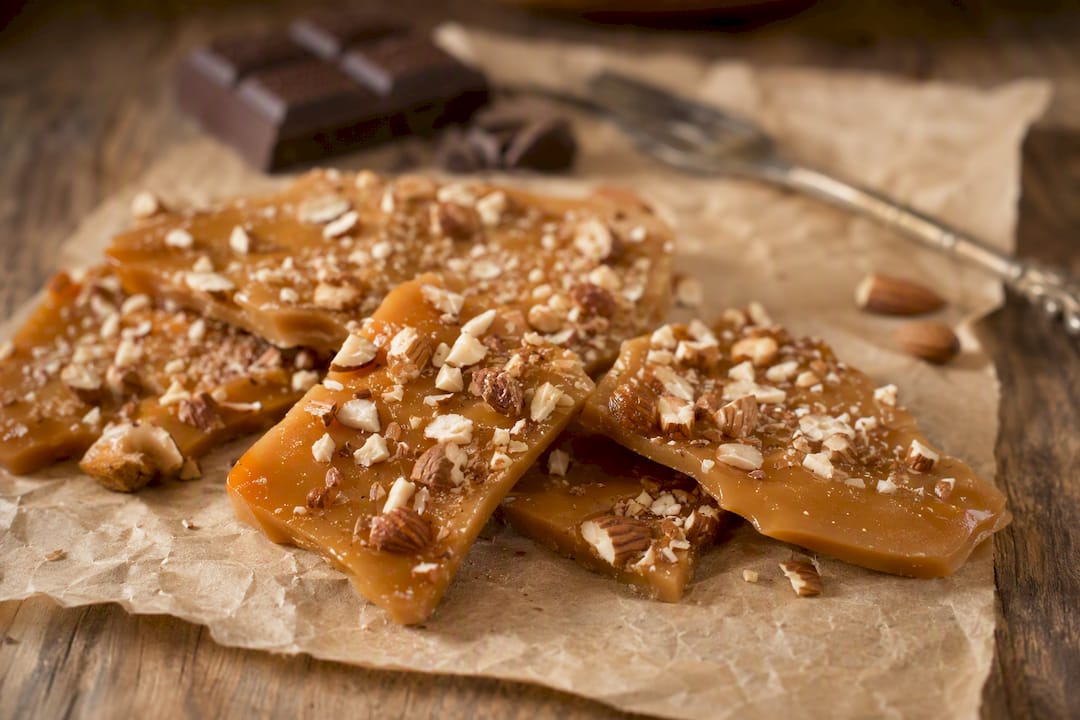
Temperature is what separates a chewy toffee from a shattering one. Recipes typically push the sugar and butter mixture to the hard-crack stage, which is where the sugar has cooked long enough to set into a firm, glassy texture once cooled. Dudley’s Toffee uses a gentler process that yields a softer, buttery bite designed to melt rather than crack against your teeth, but the underlying chemistry, sugar plus fat cooked to a precise point, is the same.
People mix up toffee, brittle, and caramel constantly, and the confusion matters for anyone checking ingredients:
- Toffee: sugar and butter, cooked to hard crack, producing a dense, buttery candy.
- Brittle: a higher sugar-to-butter ratio, cooked even hotter, giving a thinner, glassier snap (peanut brittle is the classic example).
- Caramel: usually includes cream or milk to stay soft and chewy rather than hardening, which makes it dairy-heavy by design.
If you want a deeper breakdown of texture and technique, this toffee versus brittle comparison walks through exactly where the two candies split.
Is Traditional or Store-Bought Toffee Vegetarian or Vegan?
Most traditional toffee is vegetarian but not vegan, and the distinction comes down to what “vegetarian” actually excludes. A lacto-ovo vegetarian diet allows dairy and eggs but rules out meat, poultry, fish, and animal-derived additives like gelatin. Butter fits comfortably within that framework. A vegan diet, on the other hand, excludes all animal products, including butter, milk, and eggs, which puts classic toffee outside vegan territory the moment butter enters the pot.
Milk chocolate coatings push plain toffee further from vegan status, since milk chocolate contains milk solids and often milk fat on top of the butter already in the candy. Dark chocolate narrows the gap somewhat, but many dark chocolate bars still contain milk or are processed on equipment shared with dairy products, so “dark” doesn’t automatically mean dairy-free.
Where things get trickier is commercial candy production, which sometimes introduces ingredients that surprise even careful shoppers. Watch for:
- Gelatin, an animal-derived thickener sometimes used in candy coatings or fillings.
- Isinglass, a fish-derived clarifying agent occasionally used in glazes.
- Shellac (listed as confectioner’s glaze), which comes from the lac beetle.
- Whey and casein, both milk derivatives that show up in flavoring or coating blends.
- Animal-derived glycerin, used as a moisture-retaining agent in some processed candies.
On average, home cooks and vegan bloggers agree that reading past the first three ingredients on a toffee bag is where the real answers show up — that’s usually where coatings, stabilizers, and glazing agents get listed, according to candy labeling analysis from Chomp. A short ingredient list is often your best sign that a toffee is straightforward and easy to classify.
How Do You Check Packaged Toffee for Vegetarian or Vegan Status?
A few minutes with the ingredient panel tells you almost everything you need to know. Here’s the order that actually works:
- Read the full ingredient list first, not just the front-of-package claims. Flag any mention of milk, whey, casein, gelatin, shellac, isinglass, or albumin.
- Check the chocolate coating specifically. “Milk chocolate” almost always contains dairy, while “dairy-free dark chocolate” is the phrase you want if you’re avoiding milk entirely. Also scan for a “contains milk” allergen warning, which manufacturers are required to disclose separately from the ingredient list.
- Look for third-party certifications like Certified Vegan or the Vegan Society trademark. When a package doesn’t say either way, a quick email or call to the manufacturer clears up ambiguity faster than guessing.
- Consider the sugar-refining question if you’re strictly vegan. Some sugar is filtered using bone char, a practice that’s uncommon in many modern supply chains but not extinct. Certified organic sugar or products explicitly labeled “vegan” sidestep the issue entirely.
Pro Tip: Keep a mental shortlist of the five words that change everything, milk, whey, gelatin, casein, and shellac, and scan for them first before reading the rest of the label. It cuts your check from a minute to about ten seconds.
Manufacturers who publish clear, transparent ingredient lists make this whole process easier, which is one reason small-batch producers tend to earn more trust from vegetarian and vegan shoppers than mass-market candy aisles do.
How to Make Vegetarian or Vegan Toffee at Home
Making your own toffee removes all the guesswork, because you control every ingredient that goes into the pot. A basic vegan toffee framework looks like this:
- 1 cup plant-based butter (a stick-style vegan butter works better than a spreadable tub)
- 1 cup granulated sugar
- 1 teaspoon vanilla extract
- A pinch of salt
- 1 cup dairy-free dark chocolate chips, melted for the topping
- Optional: chopped almonds or pecans pressed into the chocolate layer
The butter substitute you choose changes the final texture more than most people expect. Vegan butter blends tend to melt and mix similarly to dairy butter, giving a comparable buttery mouthfeel, though it can hold slightly more moisture, which affects how crisp the final snap turns out. Coconut oil, by contrast, firms up harder at room temperature and produces a more brittle bite, closer to a brittle than a classic soft toffee. Margarine sits somewhere in between, though it can introduce a slightly different flavor note.
Sweetener choice matters too, and this is where a lot of home bakers get tripped up. Honey is not vegan, since it’s an animal product, so swap it for golden syrup or light corn syrup if a recipe calls for a liquid sweetener alongside the sugar. Both golden syrup and corn syrup are plant-derived and behave almost identically to honey in candy-making, so the substitution is painless.
Roughly 20 to 30 minutes is the typical window for a full batch of vegan toffee from start to cooling, which makes it a realistic weeknight project rather than an all-day candy-making event. For flavor variety once the base sets, folding in toffee bits or sprinkling crushed pieces over the chocolate layer adds texture without changing the vegan status, and this toffee bits guide covers a few creative ways to use them in baking.
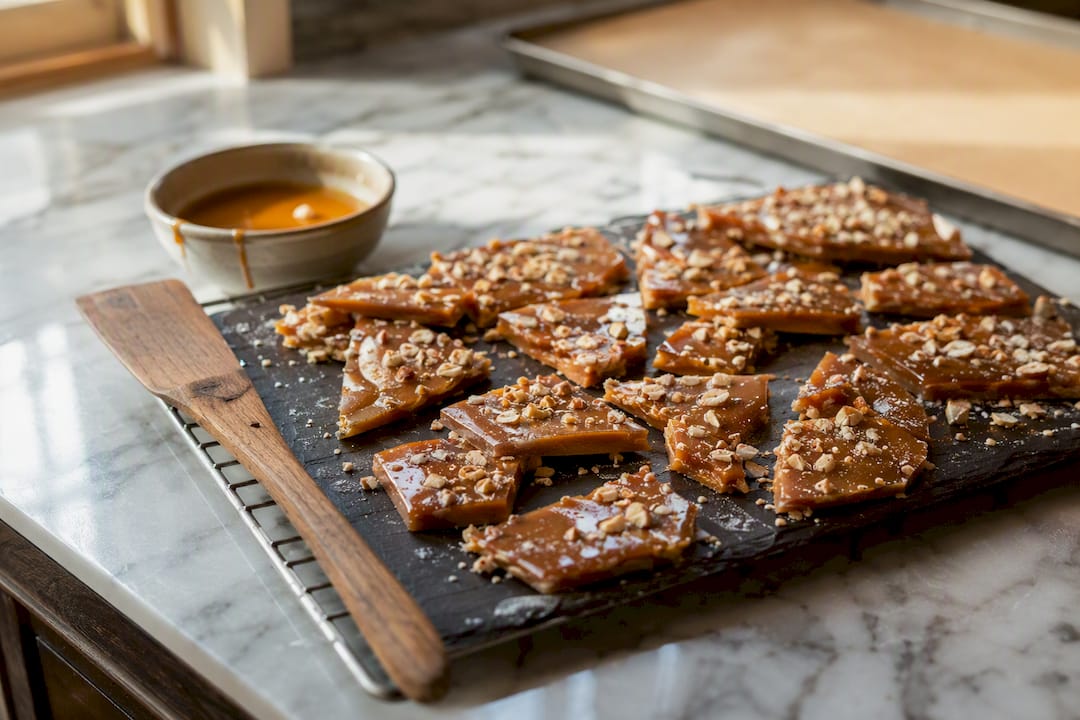
One caution worth repeating: plant-based fats often heat and cool at different rates than dairy butter, so keep a closer eye on your thermometer during the last two minutes of cooking. A minute of inattention with coconut oil can mean the difference between a clean set and a greasy separation.
Troubleshooting and the Equipment That Actually Matters
A candy thermometer isn’t optional if you want consistent results. Toffee needs to hit the hard-crack stage, roughly 290°F to 300°F, and guessing by color or smell leads to burnt batches more often than not. Pair the thermometer with a heavy-bottomed saucepan, since thin pans heat unevenly and scorch sugar right where it touches the metal, according to classic toffee technique from New York Times Cooking.
Common problems have straightforward fixes:
- Separation (the butter pools away from the sugar) usually means the heat climbed too fast. Lower it and stir more consistently next time.
- Graininess happens when sugar crystals form early. A splash of water at the start and steady, gentle stirring helps prevent it.
- Burnt or bitter batches almost always trace back to a thin pan or a stove running hotter than the dial suggests.
Pro Tip: Store finished toffee in an airtight container with a piece of parchment between layers. Humidity is toffee’s real enemy, not time, so a tightly sealed container keeps that crisp snap intact for weeks. For more on how storage and technique affect texture over time, this guide to toffee texture is worth a look.
What Dudley’s Toffee Offers Vegetarian Shoppers
Dudley’s Toffee is handcrafted in small batches in Indiana, and every recipe stays gluten-free with no high fructose corn syrup, which already puts it ahead of a lot of mass-produced candy aisles on the ingredient-transparency front. Because the base recipe uses real butter and no gelatin, isinglass, or shellac, it fits comfortably within a lacto-ovo vegetarian diet. It is not vegan, since both the toffee base and the chocolate coatings contain dairy.
Three options make it easy to buy with a specific purpose in mind:
- Dark Chocolate English Toffee (6oz) – Fundraiser bags, sized for individual sale at school and community fundraising events.
- Milk Chocolate English Toffee (6oz) – Fundraiser bags, the same format in Dudley’s milk chocolate variety.
- Dark Chocolate English Toffee, case of 24 six-ounce bags, built for corporate gifting, retail resale, or larger fundraising drives.
All three suit vegetarian gift-giving and group orders, though none are formulated for vegan diets.
— Dudley’s Toffee
Buying and Gifting Toffee for Vegetarian Guests
If you’re gifting toffee to a group, label it clearly whenever dietary restrictions are in play. A small note on the packaging, “contains dairy, vegetarian-friendly,” saves your recipient from having to hunt down an ingredient list at a party. When in doubt about a specific person’s needs, a certified or clearly labeled product removes the guesswork entirely.
Dark chocolate coatings generally carry less dairy than milk chocolate, though it’s still worth checking the label, since some dark chocolate is processed alongside milk products. For office gifts, holiday baskets, or fundraiser sales, buying in bulk from a producer that publishes its ingredient list upfront makes the whole process smoother. Dudley’s Toffee’s fundraiser bags and case packaging are built with exactly that kind of group buying in mind, whether you’re stocking a school sale table or building out client gift boxes for the holidays.
Get Dudley’s Vegetarian-Friendly Toffee Delivered
Dudley’s Toffee gives vegetarian gift buyers something rare in the candy aisle: a small-batch, gluten-free toffee with a published ingredient list and no high fructose corn syrup, so you know exactly what you’re handing to a friend, coworker, or fundraiser supporter.
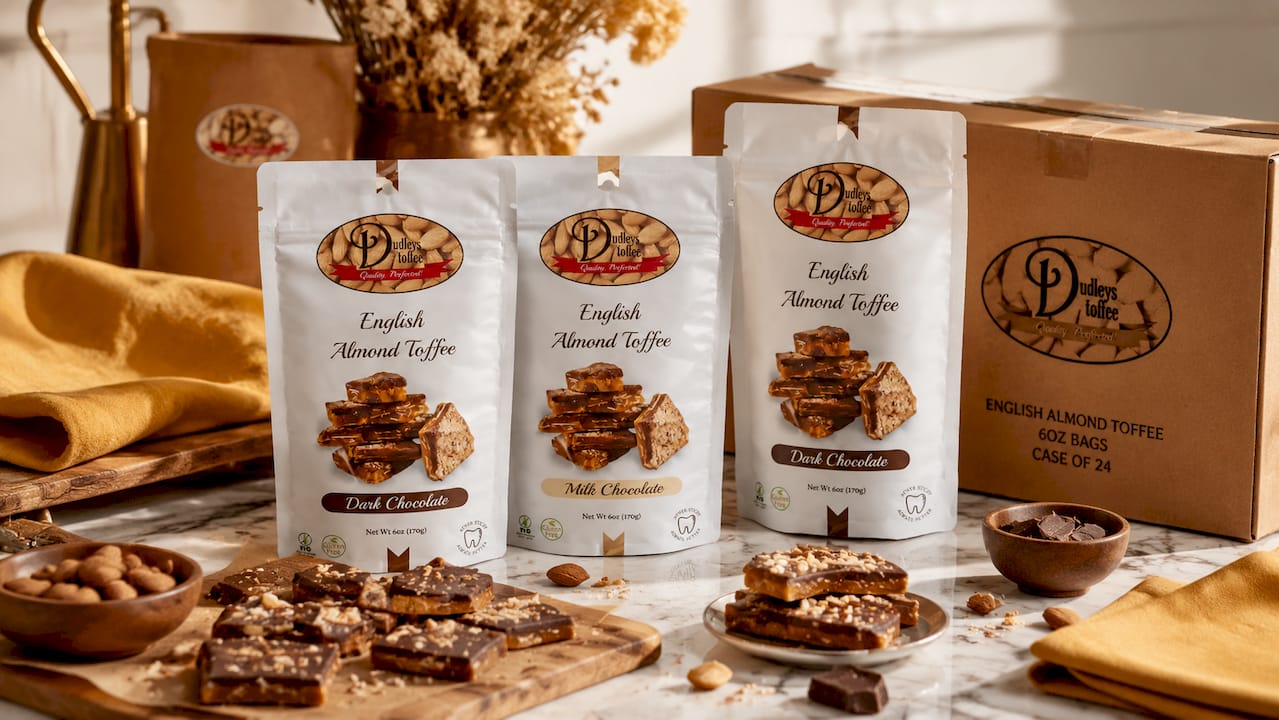
Each recipe is handcrafted in Indiana in small batches, with a softer, buttery bite that sets it apart from the harder, teeth-sticking toffee most people grew up with. If you’re stocking a fundraiser table, the Dark Chocolate English Toffee 6oz fundraiser bags and Milk Chocolate English Toffee 6oz fundraiser bags are sized and priced for individual resale. For office gifting or larger events, the case of 24 dark chocolate bags covers bigger crowds without a separate wholesale order. And if you’re comparing toffee against other snack categories for a mixed dietary crowd, it’s worth understanding how vegan and vegetarian ingredient rules differ across snack types before you finalize a gift order.
Browse the full lineup and place an order directly through Dudley’s Toffee to get handcrafted, gluten-free toffee shipped for your next gift, holiday spread, or fundraising event.
Sources
- How to Make Toffee (Kitchn)
- Toffee Recipe (New York Times Cooking)
- Toffee, Butter Crunch (Better Homes & Gardens)
- Vegan Toffee (Nora Cooks)
FAQ
Is toffee suitable for vegetarians?
Yes, traditional toffee made from sugar and butter is generally suitable for lacto-ovo vegetarians, since it contains no meat or animal-derived thickeners like gelatin. Always check packaged versions for additives like isinglass or shellac, which occasionally appear in commercial candy coatings.
Is all toffee vegan?
No. Traditional toffee contains butter, which is a dairy product, and many varieties are coated in milk chocolate, both of which rule out vegan status. Vegan toffee requires plant-based butter and dairy-free chocolate, which you can make at home or seek out on labels marked “vegan.”
What exactly is toffee made of?
Classic toffee is sugar and butter cooked together to the hard-crack stage, often with vanilla, salt, and sometimes nuts or a chocolate coating added. That butter content is what distinguishes toffee from brittle, which uses a higher sugar ratio and skips the dairy fat almost entirely.
What do Americans call toffee?
In the United States, “toffee” refers to the same buttery, caramelized candy known elsewhere, though Americans sometimes use “English toffee” specifically to describe the firmer, butter-forward version, like the almond toffee Dudley’s Toffee produces, as opposed to softer caramel candies.
Does toffee contain gelatin?
Traditional homemade toffee recipes don’t call for gelatin, since the candy sets through sugar caramelization rather than a gelling agent. Some commercial candies use gelatin in fillings or coatings, though, so checking the ingredient list on packaged toffee is still worth the extra ten seconds.
Recommended
Share