

Hit 300–310°F for Perfect Snap in Homemade Toffee
Toffee is made by cooking butter and sugar together to the hard-crack stage, roughly 300°F to 310°F, then pouring it out to cool and set. That single temperature window separates crunchy, snap-in-your-mouth toffee from a sticky, chewy mess. Below, you’ll find the exact ingredient list, equipment, step-by-step method, and the troubleshooting fixes we rely on for handcrafted, small-batch results.
TL;DR:
- Proper temperature control between 300°F and 310°F is essential for achieving the characteristic brittle snap of toffee.
- Variations in humidity, altitude, and thermometer calibration can disrupt the cooking process, requiring adjustments for consistent results.
- Adding corn syrup helps prevent sugar crystallization, especially when not using a thermometer or during humid conditions.
- Fully cooling the toffee at room temperature for several hours ensures it sets properly before breaking into pieces.
- Storing in an airtight container in a cool, dry place extends freshness for up to three months, with cold packs recommended for shipping in warm weather.
Table of Contents
- What Ingredients Do You Need for Toffee?
- How Do You Cook Toffee Step by Step?
- Why Does Temperature Matter So Much for Toffee?
- How Do You Finish and Flavor Toffee?
- What Goes Wrong With Toffee, and How Do You Fix It?
- How Should You Store and Ship Homemade Toffee?
- Who’s Behind This Recipe Guidance?
- A Note on Craft and Consistency
- Prefer Handcrafted Toffee Without the Thermometer Watch?
- Sources
- FAQ
What Ingredients Do You Need for Toffee?
Toffee starts with a short ingredient list, but proportions matter more than variety. Here’s what a standard batch calls for:
- 1 cup unsalted butter (real butter, not margarine, for proper separation and flavor)
- 1 cup granulated sugar, or a blend of granulated and brown sugar for a deeper, more caramelized flavor
- 1 to 2 tablespoons corn syrup (optional, but it helps prevent sugar crystals from forming, according to Better Homes & Gardens)
- 1/4 teaspoon salt
- 1 teaspoon vanilla extract
- 1 to 2 cups chocolate chips or melting wafers for finishing
- 1 cup chopped almonds or pecans, toasted
For equipment, you’ll need a heavy-bottomed saucepan (thin pans scorch sugar unevenly), a clip-on candy thermometer, and a rimmed baking sheet lined with foil or a silicone baking mat. Toast your nuts and line your pan before you start cooking. Once the sugar hits temperature, you won’t have time to prep anything else.
How Do You Cook Toffee Step by Step?
Cooking toffee is a fast, hands-on process once the mixture starts climbing in temperature. Here’s the method broken into stages, following the approach outlined by Simply Recipes for classic English toffee.
- Melt the butter in your heavy-bottomed pan over medium heat, then stir in the sugar, corn syrup, and salt.
- Clip the candy thermometer to the side of the pan so the tip sits in the liquid, not touching the pan’s bottom.
- Bring the mixture to a boil, stirring constantly at first to help the sugar dissolve evenly.
- Stop stirring once it boils steadily. Constant stirring after this point can actually encourage sugar crystals to form along the sides of the pan.
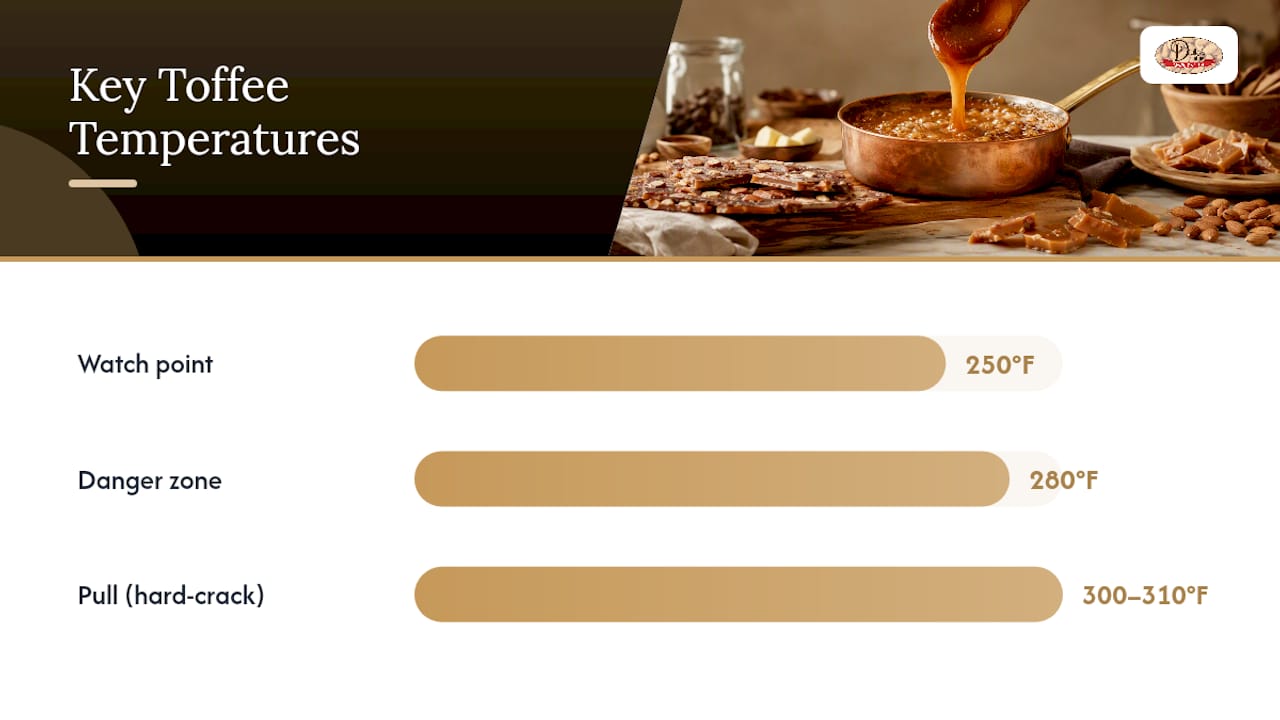
- Watch the thermometer closely as the mixture climbs past 250°F. The last 30 to 40 degrees happen fast, sometimes in under two minutes.
- Pull the pan off the heat at 300°F to 310°F, the hard-crack stage. Food Network notes that precise temperature control is what separates good toffee from a grainy or greasy batch.
- Pour immediately onto your prepared baking sheet. Don’t scrape the pan. Let gravity and a quick tilt spread it evenly.
- Wait two to four minutes, then sprinkle chocolate chips over the surface while the toffee is still warm enough to melt them.
- Spread the melted chocolate with an offset spatula once it softens, then press on chopped nuts.
- Let it cool undisturbed at room temperature for several hours until fully set before breaking into pieces, a timeline BBC Good Food also recommends for a clean set.
If you don’t own a thermometer yet, you can test doneness with the cold water method: drop a small amount of the hot mixture into ice water. If it hardens instantly and snaps cleanly, you’ve hit hard-crack. This works in a pinch, but it’s far less reliable than a thermometer, and one overcooked batch will convince you to buy one.
Pro Tip: Keep a bowl of ice water and heatproof gloves nearby before you start cooking. Molten sugar burns are serious, and toffee moves from “almost ready” to “overcooked” in under a minute once it passes 280°F.
Keep pets and kids out of the kitchen during the cook. A dropped pan of 300°F sugar is not a mess you want to clean up twice.
Why Does Temperature Matter So Much for Toffee?
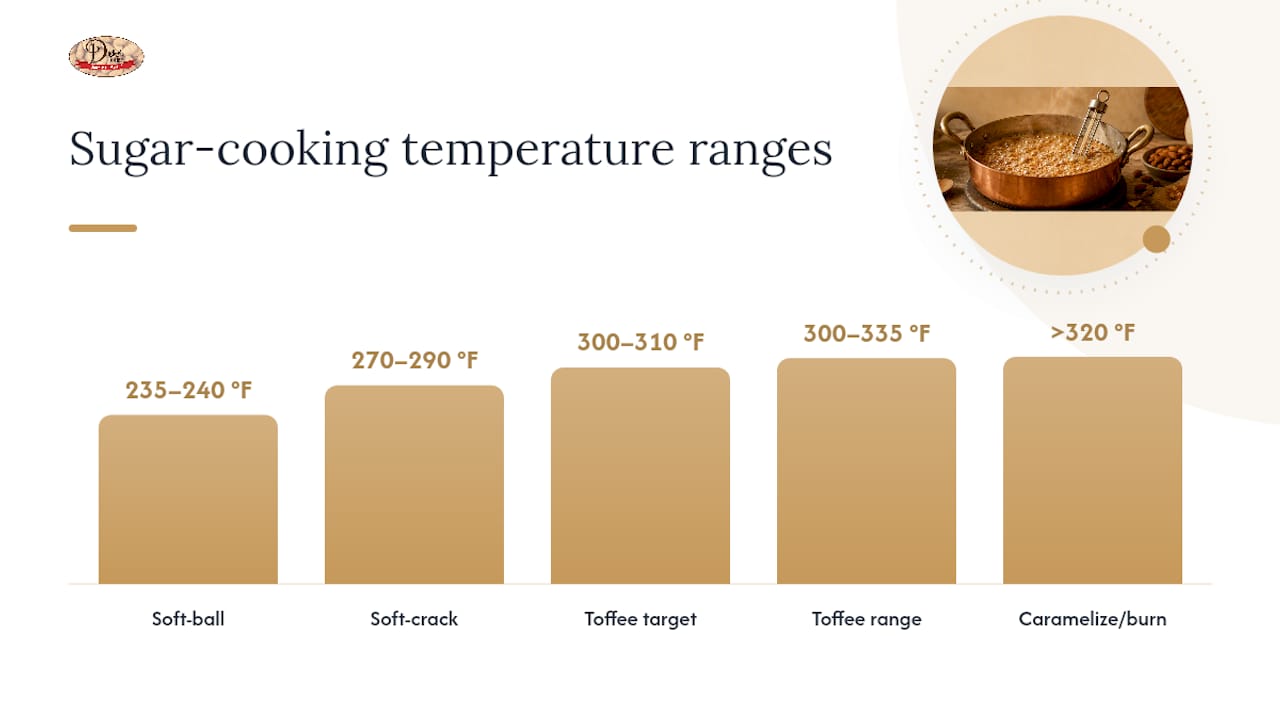
Hard-crack stage sits at the top of the sugar-cooking temperature scale, and it’s what gives toffee its signature snap. Soft-ball stage (235°F to 240°F) makes fudge. Soft-crack (270°F to 290°F) makes taffy. Push past hard-crack toward 320°F and beyond, and sugar starts to caramelize into brittle or, if you’re not careful, burnt candy. Serious Eats reports that toffee typically cooks in the 300°F to 335°F range, and that higher temperatures within that band deepen the flavor into something nuttier and more complex, while also making the final texture more brittle.
Butter is doing more than adding richness here. Its milk solids brown slightly as the mixture cooks, contributing to toffee’s characteristic caramel color and flavor. Brown sugar amplifies that effect further, adding molasses notes that granulated sugar alone can’t produce.
A few practical factors affect your results:
- Humidity can slow evaporation and throw off timing, so cook toffee on a dry day if you can choose.
- Altitude lowers the boiling point of water, which means high-altitude cooks may need to adjust target temperatures slightly downward.
- Thermometer accuracy varies between units, so test yours in boiling water first.
Boiling water sits at 212°F at sea level. If your thermometer reads 208°F or 216°F in a rolling boil, adjust your target temperature by that same margin, a calibration tip Better Homes & Gardens also recommends before you start a batch. Even a five-degree error can mean the difference between a clean snap and a scorched, bitter finish.
How Do You Finish and Flavor Toffee?
The finishing window is short, so timing your chocolate and nuts matters as much as the cook itself. A workflow shared by Allrecipes confirms the standard approach: pour, wait a few minutes, then sprinkle chocolate while the toffee is still warm enough to melt it on contact.
- Sprinkle chocolate two to four minutes after pouring, then spread it with an offset spatula once it softens.
- Toast nuts beforehand at 350°F for 8 to 10 minutes for deeper flavor before pressing them into the melted chocolate.
- Try brown-butter toffee by browning the butter slightly before adding sugar for a toastier, nuttier profile.
- Skip the corn syrup entirely if you prefer, though you’ll need to watch your stirring technique more carefully to avoid crystallization.
- Dark chocolate pairs well with toasted pecans for a deeper flavor; milk chocolate leans sweeter and pairs nicely with almonds.
For gifting, break cooled toffee into rustic, irregular pieces rather than uniform squares. It reads as handmade, which it is, and it packs neatly into cellophane bags or tins for holiday and corporate gift lists.
What Goes Wrong With Toffee, and How Do You Fix It?
Most toffee failures trace back to one of three culprits: sugar crystals, temperature, or moisture. Here’s how to diagnose and recover.
- Grainy toffee usually means sugar crystallized early. Brushing down the sides of the pan with a wet pastry brush during cooking, or adding a bit of corn syrup, helps prevent this.
- Soft, chewy toffee means it never reached hard-crack. If it’s still warm, you can sometimes return it to the pan and recook it to temperature.
- Burnt, bitter toffee past 340°F usually can’t be saved. Toss it and start a fresh batch rather than trying to mask the flavor.
- Chocolate that won’t stick to the toffee base often means you waited too long to sprinkle it. Reheat gently and try again sooner next time.
Pro Tip: If your toffee seizes into a grainy, sandy texture mid-cook, add a tablespoon of hot water and a splash of corn syrup, then keep cooking. It won’t fully fix already-formed crystals, but it can rescue the batch from getting worse. For a deeper look at troubleshooting sticky or grainy results, see this guide to non-sticky toffee.
How Should You Store and Ship Homemade Toffee?
Let toffee set at room temperature for two to three hours before handling; refrigerating it can speed up setting but sometimes introduces condensation that softens the chocolate layer.
- Store in an airtight container, layered with parchment paper to prevent pieces from sticking together.
- Keep it in a cool, dry spot, away from humidity, which is toffee’s biggest enemy in storage.
- Expect good quality for up to three months when stored airtight and cool, according to Simply Recipes.
- For warm-weather shipping, a cold pack helps prevent the chocolate coating from melting or blooming in transit. Full storage and packaging tips live in this guide to keeping toffee fresh.
Who’s Behind This Recipe Guidance?
Dudley’s Toffee is a family-owned business in Indiana, and we’ve built our reputation on small-batch English almond toffee cooked the traditional way. Every batch is handcrafted, gluten-free, and made without high fructose corn syrup, in both milk and dark chocolate.
- Small-batch production means tighter temperature control than mass manufacturing allows.
- Gluten-free and no HFCS matter to gift buyers who read labels closely.
- Milk and dark chocolate options cover both classic and richer flavor preferences.
For more on how texture varies between toffee styles, read our breakdown of toffee texture differences.
A Note on Craft and Consistency
Toffee rewards patience more than talent. The recipe hasn’t changed much in generations, but the discipline of watching a thermometer, resisting the urge to stir too much, and trusting the process is what separates a good batch from a great one. Calibrate your thermometer, follow your temperatures closely, and the results will be consistent every time.
— Dudley’s Toffee
Prefer Handcrafted Toffee Without the Thermometer Watch?
Dudley’s Toffee is the alternative for anyone who loves the idea of hard-crack toffee but would rather skip the ice-water test and the risk of a scorched pan. The toffee is handcrafted in small quantities, using real butter and no high fructose corn syrup, so the texture stays soft and buttery instead of sticking to your teeth.
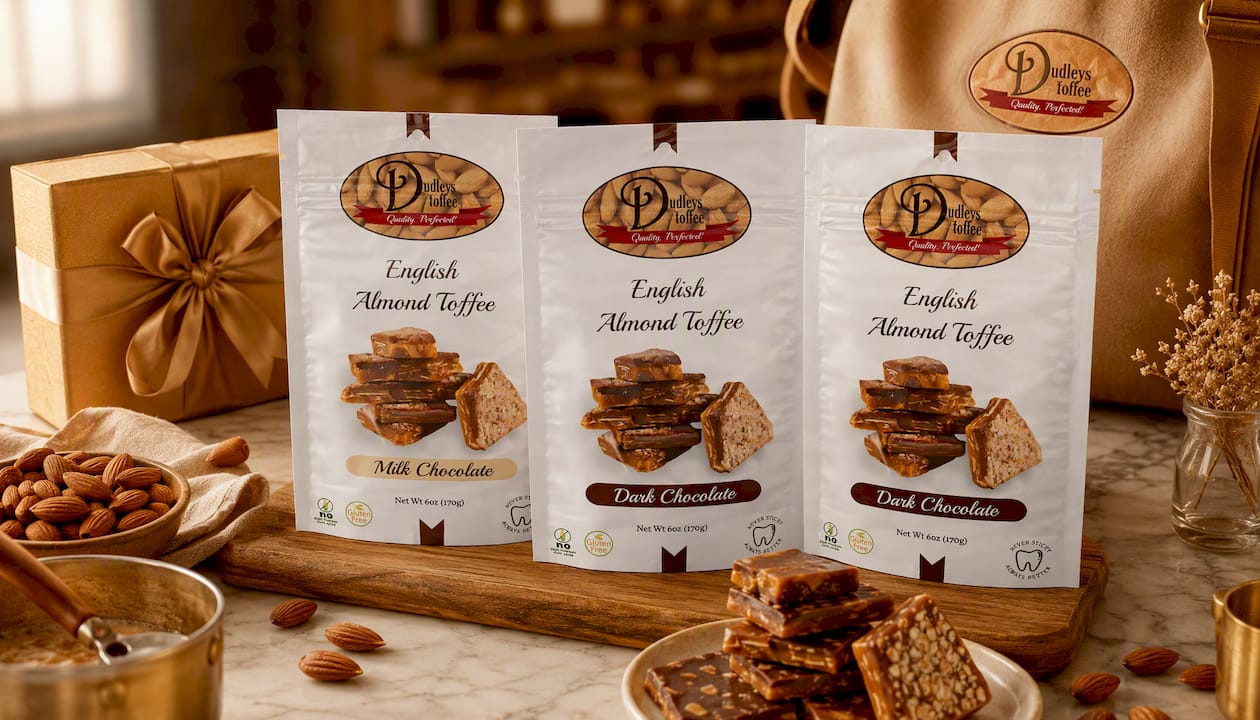
If you’re buying for a fundraiser, the Milk Chocolate English Toffee (6oz) Fundraiser and Dark Chocolate English Toffee (6oz) Fundraiser are both built for group sales and gifting at scale. For an individual treat or a smaller gift, the Dark Chocolate English Toffee (6oz) delivers the same small-batch quality in a standard retail size. All of it is gluten-free, and if you’re shipping anywhere warm, add the Optional Cold Pack for $2.99 to keep your toffee from softening in transit. Browse the full lineup at Dudley’s English Almond Toffee and find the size that fits your next gift list.
Sources
- How to make toffee | BBC Good Food
- What Is Toffee? | Food Network
- I Asked 3 Experts Why Caramel, Butterscotch, and Toffee Taste So Different | Serious Eats
- Classic English Toffee Recipe | Simply Recipes
- Toffee (butter crunch) | Better Homes & Gardens
FAQ
Is Toffee Basically Caramel?
No. Toffee and caramel are both cooked sugar confections, but toffee is cooked to a much higher temperature, hard-crack at roughly 300°F to 310°F, while caramel cooks to softer stages at lower temperatures. That higher temperature is what gives toffee its brittle snap instead of caramel’s chewy stretch.
What Exactly Is Toffee Made Of?
Toffee is made from butter and sugar, cooked together until the mixture reaches hard-crack stage, then poured out to cool and harden. Most recipes also include a small amount of corn syrup for stability, plus salt and vanilla for flavor, and many are finished with a layer of chocolate and chopped nuts.
What Is the Difference Between English Toffee and Regular Toffee?
English toffee usually refers to a specific style: a thin, brittle butter toffee base finished with a layer of chocolate and often almonds or pecans pressed into the top. “Regular” toffee can be softer or chewier depending on the recipe and how far it’s cooked, but classic English toffee is defined by that hard-crack snap and chocolate finish, a style Simply Recipes documents closely.
Is Toffee Unhealthy?
Toffee is a sugar-and-butter candy, so it’s an indulgence rather than an everyday food, but that doesn’t mean every version is created equal. Dudley’s Toffee is gluten-free and made without high fructose corn syrup, using real butter and small-batch methods, which makes it a cleaner option for readers who watch ingredient labels while still treating themselves.
How Much Does Dudley’s Toffee Cost?
Dudley’s English Almond Toffee is priced at $11.99 on the Dudley’s Toffee storefront. Shoppers in warmer climates can add the optional cold pack for $2.99 to protect their order during shipping.
Recommended
Share