
Match Wine Sweetness to Chocolate: Pairing with Toffee for Hosts
The cardinal rule of chocolate and wine pairing is simple: the wine must be equal to or sweeter than the chocolate, or its acidity and tannins will taste harsh against the cocoa. Start with milk chocolate and Pinot Noir or an off-dry Riesling, dark chocolate above 70% cacao with Ruby Port or Banyuls, and white chocolate with Moscato or a late-harvest Riesling. The sections below break down the full chart, the sensory science behind it, and how to run a tasting from start to finish.
TL;DR:
- Wines with residual sugar or higher sweetness levels are essential for pairing with high-cacao dark chocolates to avoid harsh flavors.
- Port, Banyuls, and late-harvest reds are ideal choices for dark chocolates above 70 percent cacao, as their residual sugar balances the bitterness.
- Chocolate texture plays a crucial role, with softer, buttery confections like toffee pairing better with oxidative wines such as Tawny Port and Sherry.
- Pairing by cacao percentage alone is insufficient; consider the chocolate’s ingredients and texture for a successful match.
- Fortified wines are safe options when in doubt, especially with rich, complex chocolates like toffee or high-cacao dark varieties.
Table of Contents
- Quick Chocolate and Wine Pairing Chart by Type
- Why Pairings Work: Sweetness, Tannins, and Texture
- Detailed Pairings by Chocolate Category
- How to Host a Chocolate and Wine Tasting
- Matching the Pairing to the Occasion
- What Most Pairing Guides Get Backwards
- Where to Find Tasting-Ready Toffee
- Sources
- FAQ
Quick Chocolate and Wine Pairing Chart by Type
Once you know the sweetness rule, matching by chocolate type becomes a matter of checking intensity and shared flavor notes. Here’s a fast reference for planning a flight or shopping for a tasting.
- White chocolate: Moscato d’Asti or late-harvest Riesling. High sugar and cocoa butter need a wine with matching sweetness and no bitterness to fight.
- Milk chocolate: Pinot Noir, Merlot, or off-dry Riesling. Higher fat and sugar make milk chocolate the most forgiving pairing category, softening tannins from lighter reds.
- Medium-dark (50–70%): Zinfandel, Grenache, or Malbec. These wines carry enough fruit weight to match the chocolate’s intensity without overwhelming it.
- Dark chocolate (70%+): Ruby or Tawny Port, Banyuls, late-harvest reds. Fortified and dessert wines work because their residual sugar meets or exceeds the chocolate’s bitterness.
- Fruit-flavored chocolate: Brachetto d’Acqui or demi-sec sparkling rosé. The berry notes in the wine echo the fruit inclusions.
- Nutty chocolate: Oloroso Sherry or aged Tawny Port. Nutty, oxidative wine flavors mirror roasted almond or hazelnut.
- Spicy chocolate (chili, cinnamon): Off-dry Gewürztraminer. Its aromatic sweetness tames heat instead of amplifying it.
- Toffee and caramel chocolate: Tawny Port or aged Sherry. Caramelized sugar in the toffee calls for a wine with its own oxidative, toasty depth.
Pro Tip: When in doubt about a high-cacao dark chocolate, reach for a fortified wine. Fortified and dessert wines are almost always a safe landing spot because their sweetness and alcohol both work in the chocolate’s favor rather than against it.
Why Pairings Work: Sweetness, Tannins, and Texture
Wine and chocolate both go through fermentation, and that shared process is not a coincidence when it comes to flavor. Both undergo fermentation and develop overlapping aroma compounds, which is why a Zinfandel’s dark fruit and a 65% dark chocolate bar can taste like they were made for each other. That aromatic bridge is the first thing to look for beyond sweetness.
Tannins are the second variable, and they’re less forgiving. High-cacao chocolate and young, tannic red wines both carry polyphenols that bind to proteins in saliva, producing a dry, almost metallic sensation on the tongue. Softening that effect means choosing wines with ripe, rounded tannins, or bypassing dry reds altogether in favor of something sweet or fortified.
Texture closes the loop. A melt-in-the-mouth ganache clears the palate in seconds; a chewy, buttery English toffee does not.
Sparkling wines with residual sugar act as palate scrubs. Their carbonation lifts the cocoa-butter film from the mouth and keeps the wine tasting vibrant across multiple bites, which matters most with rich, chewy candy.
Skip bone-dry, high-acid sparklers like brut Champagne here. Without sweetness to match the chocolate, the bubbles just expose the wine’s sharp edges.
Detailed Pairings by Chocolate Category
Matching intensity, not just sweetness, is what separates a good pairing from a forgettable one. Delicate chocolates get overwhelmed by bold, tannic wines just as easily as intense dark chocolate can flatten a light white. Here’s how that plays out by category.
- Milk chocolate. Its fat and sugar content soften tannins, which is why it works as a gateway pairing for people new to chocolate flights. Pinot Noir and Merlot both have soft enough structure to avoid clashing, while an off-dry Riesling or a glass of Brachetto d’Acqui brings sweetness and light fizz to the table.
- Medium-dark chocolate (50–70% cacao). This range needs a wine with real fruit concentration. Zinfandel’s jammy berry character, Grenache’s spice, and Malbec’s dark plum notes all have the weight to stand up to moderate bitterness without tannins turning astringent.
- Dark chocolate (70%+ cacao). Reach for port-style wines, Banyuls, or a late-harvest red. Very dry, tannic reds are the classic mismatch here. Two sources of tannin stacking on top of each other, one from the wine and one from the cocoa, creates that drying, chalky sensation wine drinkers dread.
- White chocolate and delicate confections. Moscato d’Asti, Auslese Riesling, or a demi-sec sparkling wine bring matching sweetness without introducing bitterness the chocolate has none of to balance.
- Flavored chocolates. Match the dominant flavor, not just the cocoa base. Orange-infused dark chocolate leans toward a spiced Zinfandel; mint chocolate does well with a fruit-forward Merlot; raspberry or cherry inclusions pull naturally toward Banyuls or a fruity Grenache.
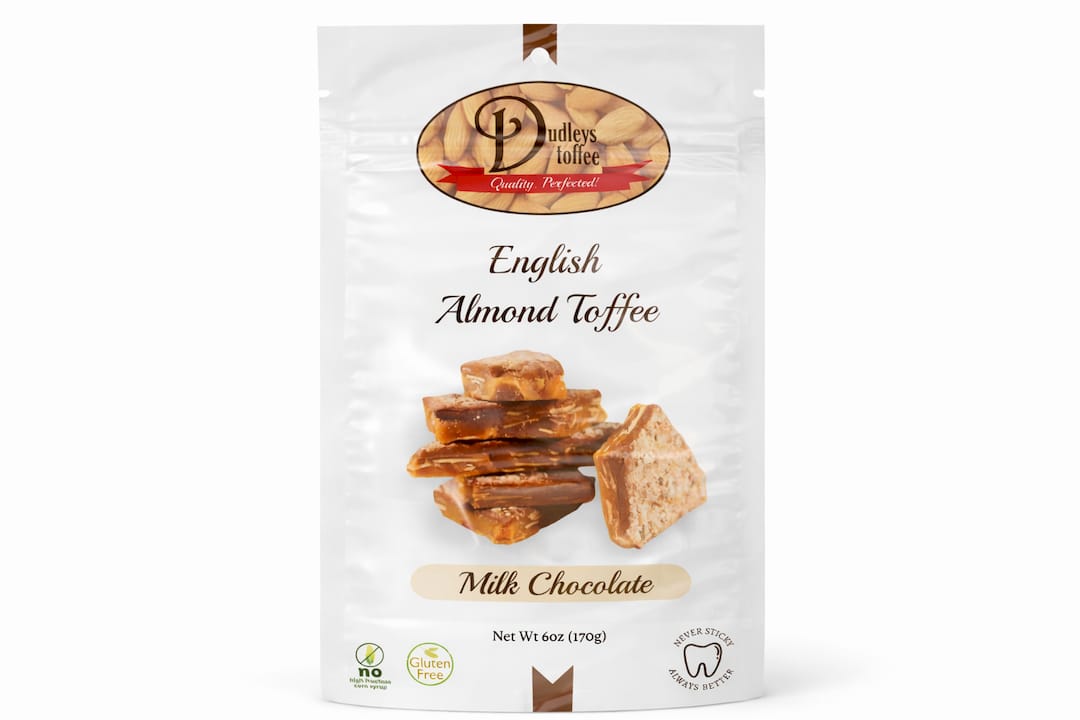
- Toffee and toffee-covered chocolate. This is where Dudley’s Toffee comes in. Our handcrafted English almond toffee is coated in milk or dark chocolate and has a soft, buttery chew that lingers on the palate far longer than a thin chocolate square does. Tawny Port and aged Sherry both bring oxidative caramel and nutty notes that echo the toffee itself, while their sweetness stands up to the sustained richness of the butter and sugar. Watch the chew: a wine that’s too light gets buried before the bite is even finished.
How to Host a Chocolate and Wine Tasting
Running a tasting is mostly about sequencing and portion control, not fancy glassware. Get the order right and even a casual living-room flight feels considered.
- Order light to heavy. Start with milk chocolate, move through medium-dark and dark, and finish with toffee or caramel pieces, which linger longest on the palate.
- Portion deliberately. Plan on roughly 1 ounce of chocolate per taster for standard bars and truffles; bump toffee up to 1 to 2 ounces since its chew slows down tasting pace.
- Pour smart. A 2 to 3 ounce pour per wine style is plenty when guests are tasting four or five pairings in one sitting.
- Cleanse between rounds. Plain water crackers or sparkling water reset the palate better than anything flavored.
- Serve at the right temperature. Reds around 60 to 65°F, whites and sparklers chilled, and chocolate slightly below room temperature so it doesn’t turn greasy in hand.
- Hand out simple scorecards. A one-to-five scale for sweetness match and overall balance keeps guests engaged without turning the evening into homework.
One more note if you’re serving Dudley’s Toffee: it’s gluten-free, so it’s an easy inclusion on a mixed dessert board without singling out guests who need to check labels. Our Serve Toffee Right guide covers exact portioning if you want to plan a flight ahead of time.
Matching the Pairing to the Occasion
A backyard gathering and a formal tasting event call for different levels of structure, even though the underlying pairing logic doesn’t change. For a casual get-together, keep it to three or four pairings maximum: one milk chocolate, one dark, and maybe a toffee or caramel option alongside two or three open bottles guests can pour themselves. Skip the scorecards and let the conversation drive the pace.
A formal tasting, whether it’s for a corporate event, a private party, or a fundraiser preview night, benefits from more structure. Pre-portion each chocolate on labeled plates, pour wines in advance rather than passing bottles around, and walk the group through each pairing with a short note on why the match works. This is also where a chocolate dessert board earns its place. Arranging chocolates by intensity on a single board gives guests a visual roadmap before they even taste anything.
Corporate gifting events and fundraisers have their own logic. When toffee is part of a fundraiser table or client appreciation event, bulk packaging matters as much as the pairing itself. Buyers in that setting are usually thinking about presentation and volume first, flavor notes second, so simplify the wine list to two dependable options, something dry-ish and something sweet, rather than a full flight. Save the six-wine pairing chart for the smaller, dedicated tasting nights where guests came specifically to learn.
What Most Pairing Guides Get Backwards
Most pairing advice treats chocolate like it’s a single ingredient with one sweetness level, when in practice the texture of the chocolate matters almost as much as its cocoa percentage. That’s the gap in a lot of generic pairing charts, and it’s exactly where a family-owned Indiana maker of handcrafted English almond toffee has something specific to add.
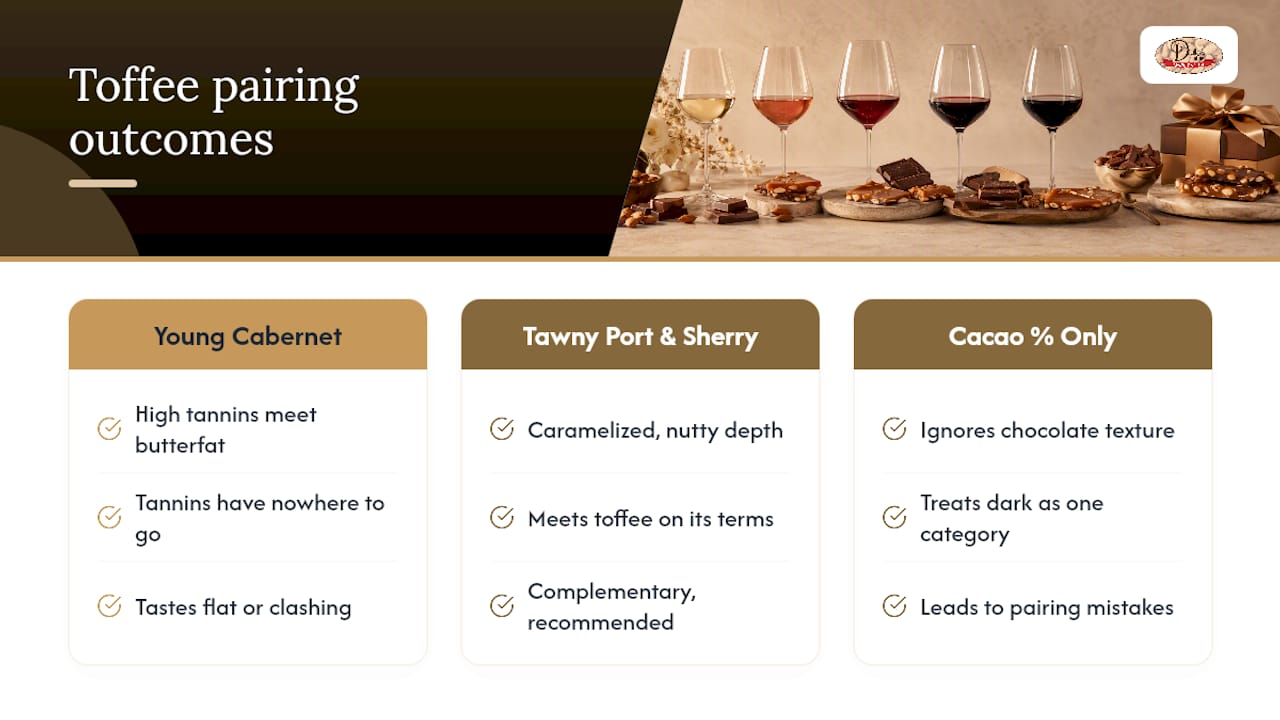
Our toffee is made in small batches using a time-honored recipe that produces a softer, buttery chew rather than a hard, tooth-sticking candy. Both our milk and dark chocolate varieties are gluten-free and contain no high fructose corn syrup, which matters when you’re building a tasting menu for guests with dietary restrictions. That buttery, sustained texture is exactly why a bright, dry red falls flat next to it: the tannins in a young Cabernet just don’t have anywhere to go once they meet all that butterfat and sugar. Tawny Port and aged Sherry, on the other hand, bring their own caramelized, nutty depth that meets the toffee on its own terms instead of fighting it.
The broader mistake we see in pairing culture is treating “dark chocolate” as one category deserving one wine. A 60% dark bar and a 85% dark bar behave completely differently at the table, and toffee coated in dark chocolate behaves differently still because of the confection underneath it. Pairing by cacao percentage alone, without accounting for what’s holding that chocolate together, is how good tastings go wrong.
— Dudley’s Toffee
Where to Find Tasting-Ready Toffee
Dudley’s Toffee makes stocking a tasting table straightforward, with sizes built for both intimate flights and larger gatherings. The Dark Chocolate English Toffee 6oz bag is sized for sampling four to six guests without waste, and it pairs naturally with the Ruby Port or Banyuls recommendations covered above.
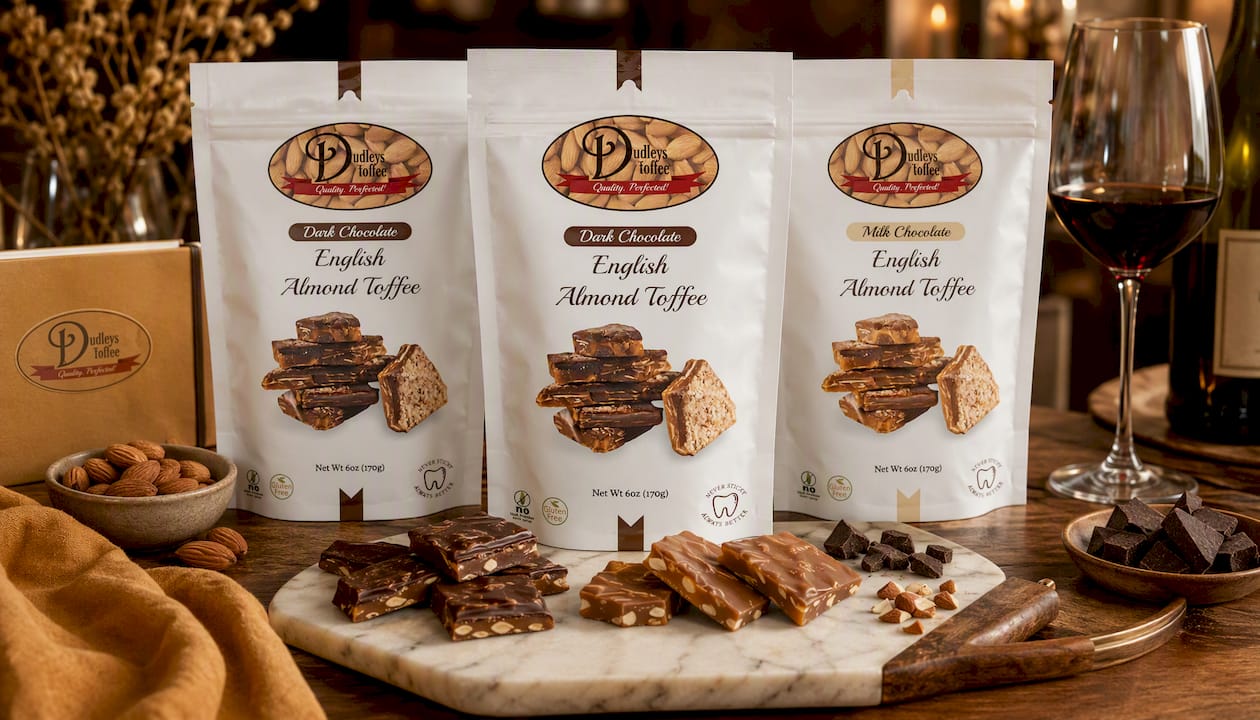
For fundraisers, corporate gifting, or larger events, our Dark Chocolate English Toffee 6oz Fundraiser pack and Milk Chocolate English Toffee 6oz Fundraiser pack are built for exactly that kind of volume, both handcrafted in the same small batches as our retail bags, gluten-free, and free of high fructose corn syrup. If you’re planning a mixed tasting with both varieties on the table, the 12-pack variety case covers milk and dark chocolate side by side. This is the easiest way to let guests compare a Pinot Noir pairing against a Tawny Port pairing in the same sitting. Order a few days ahead of warm-weather events, since toffee travels best with a bit of planning around shipping and storage. Head to the Dudley’s Toffee product pages to pick the right size for your next tasting or gifting order.
Sources
For deeper technical background on chocolate and wine chemistry, WineWiki’s pairing guide and Food & Wine’s pairing breakdown both cover variant pairings not detailed above. For toffee-specific serving guidance, see the Serve Toffee Right portioning guide and, for sweetness-matching fundamentals from a wine education perspective, this primer on pairing wine with chocolate.
- Chocolate & Wine pairing | WineWiki
- How to Pair Wine With Chocolate — Food & Wine
- How to pair chocolate with wine: Expert guide to pairing — CocoTerra
- How to pair wine with chocolate this Valentine’s Day — Coravin
FAQ
Does wine actually pair well with chocolate?
Yes, when the sweetness rule is respected. Wines that are as sweet or sweeter than the chocolate, particularly fortified and dessert styles, consistently outperform dry table wines in pairing evaluations.
What chocolate is best for a wine tasting?
Milk chocolate is generally the easiest starting point because its higher fat and sugar content soften wine tannins and widen the range of wines that work. Toffee and dark chocolate are better suited to later rounds once the palate is warmed up.
What are good wine and chocolate pairing gifts?
A variety pack like Dudley’s Toffee’s 12-pack of milk and dark chocolate English almond toffee works well as a gift alongside a bottle of Port or Riesling, since it covers both light and intense pairing options in one box. Our gifting guide has more presentation ideas.
Which alcohol pairs best with chocolate overall?
Port and other fortified wines are the most consistently reliable choice across chocolate types, especially dark chocolate and toffee, because their sweetness and oxidative character balance bitterness and stand up to chewy textures.