
A Chocolate Dessert Board That Comes Together in 30 Minutes
Here’s a starter build you can copy tonight: dark chocolate shards, milk chocolate truffles, fresh strawberries, salted almonds, and a bowl of warm chocolate ganache for dipping. That combination assembles in about 30 minutes and comfortably feeds six to eight people at a dinner party or small gathering.
The reason it works isn’t luck. Dark chocolate brings bitterness, truffles bring richness, strawberries bring acid, and almonds bring salt and crunch. Every bite lands differently.
- Dark chocolate bar, broken into shards (4 to 6 oz)
- Milk chocolate truffles (12 to 16 pieces)
- Fresh strawberries, halved (1 pint)
- Salted almonds (1 cup)
- Warm chocolate ganache in a small bowl for dipping
A few pieces of handcrafted English almond toffee tucked into the gaps adds a buttery, crunchy anchor point that most boards are missing. More on that later. For now, let’s build out the full playbook.
Key Takeaways
A balanced chocolate dessert board needs five roles: a chocolate anchor, baked bites, fresh fruit, salty crunch, and a dip, assembled in about 20 to 30 minutes.
| Point | Details |
|---|---|
| Build by role | Include a chocolate anchor, baked bites, fresh fruit, salty crunch, and a dip so no bite feels repetitive. |
| Keep fruit around one-third | Fresh fruit at roughly a third of the board prevents sugar fatigue and adds acid contrast. |
| Assemble bowls first | Place dip bowls before large anchors, then fill in medium items and gaps with small pieces last. |
| Respect the two-hour rule | Cut fruit and cream-based dips should not sit out longer than two hours for food safety. |
| Add toffee as a textural anchor | Dudley’s Toffee’s handcrafted, gluten-free milk and dark chocolate pieces tuck into gaps and double as take-home favors. |
Table of Contents
- Dessert Board Ideas Chocolate Lovers Actually Want to Eat
- How Do You Assemble a Chocolate Dessert Board?
- What Chocolate Pairs Best With What Toppings?
- How Do You Style a Dessert Board to Look Professional?
- Can You Make a Dessert Board Ahead of Time?
- Why Toffee Belongs on Your Chocolate Dessert Board
- Which Dudley’s Toffee Bag Fits Your Board?
- Sources
- FAQ
Dessert Board Ideas Chocolate Lovers Actually Want to Eat
The best chocolate dessert boards aren’t random piles of candy. They’re built the way a chef builds a plate: by role. Every board needs a chocolate anchor, something baked, something fresh, something salty, and something to dip into. Skip a role and the board feels flat. Nail all five and it feels like you hired someone.
This is the same logic behind a chocolate charcuterie board, which borrows its structure from savory charcuterie spreads. Meat and cheese boards balance salt, fat, and acid. Chocolate boards balance sweet, salt, acid, and texture instead.
Chocolate anchor (the centerpiece, roughly 2 to 3 oz per person):
- Dark chocolate bars, broken by hand or with a knife
- Milk chocolate truffles or bark
- White chocolate bark studded with freeze-dried fruit
- Chocolate-covered pretzels
- Small chocolate cups or shells for filling
Baked bites (1 to 2 pieces per person):
- Mini brownies or brownie bites
- Shortbread cookies
- Biscotti, broken into halves
- Macarons
- Chocolate chip cookies, mini-sized
Fresh fruit (about one-third of the total spread, per the role-based framework that keeps boards from tasting like a sugar bomb):
- Strawberries, halved or whole
- Raspberries
- Orange segments
- Sliced apples or pears (brushed with lemon juice to slow browning)
- Grapes, left on small stems for visual height
Salty crunch (a small handful per person, no more):
- Salted almonds or pistachios
- Pretzel twists
- Potato chips (yes, really. Salt and chocolate are a proven pair)
- Toffee pieces or pecan toffee
Dips and fillers: warm ganache, salted caramel sauce, marshmallows, and small ramekins of sprinkles or crushed nuts to fill visual gaps.
Statistic Callout: Guides on sweet grazing boards consistently recommend keeping fresh fruit at roughly one-third of total volume. That ratio is what keeps a rich, chocolate-heavy board from tasting one-note by the fifth bite.
If you need gluten-free options, swap standard cookies for gluten-free toffee pieces or flourless chocolate bites. Most fruit, nuts, and pure chocolate are naturally gluten-free anyway, which makes chocolate boards one of the easier dessert spreads to adapt for guests with dietary restrictions.
How Do You Assemble a Chocolate Dessert Board?
Assembly order matters more than most hosts realize. Do it in the wrong sequence and you’ll spend twenty minutes shuffling items around trying to make gaps disappear.
- Place your bowls first. Set down ramekins for ganache, caramel, or loose items like sprinkles before anything else touches the board. This gives you fixed points to build around, a tip echoed in advice on sweet grazing board construction.
- Add your large anchors. Lay down the biggest chocolate pieces and baked goods first, spacing them in a loose triangle or diagonal line across the board.
- Fill in medium items. Truffles, cookies, and larger fruit pieces go next, clustered near their related anchor rather than scattered evenly.
- Build your rivers and clusters. Group berries into a loose “river” that flows across one section. Cluster nuts in threes or fives. Odd numbers read as intentional; even numbers read as leftover.
- Tuck in the small stuff. Use toffee shards, chocolate chips, or mini marshmallows to fill every remaining gap. A board with visible empty board space looks unfinished no matter how good the food is.
Freezing a chocolate bar for about 20 minutes before grating makes it flake cleanly into curls instead of crumbling, a trick worth using if you want that bakery-style shaved chocolate topping.
Avoid pairing anything wet directly against anything crisp. Cut strawberries sitting against shortbread will turn that cookie soggy within twenty minutes. Keep a small gap or a bowl edge between moisture and crunch.
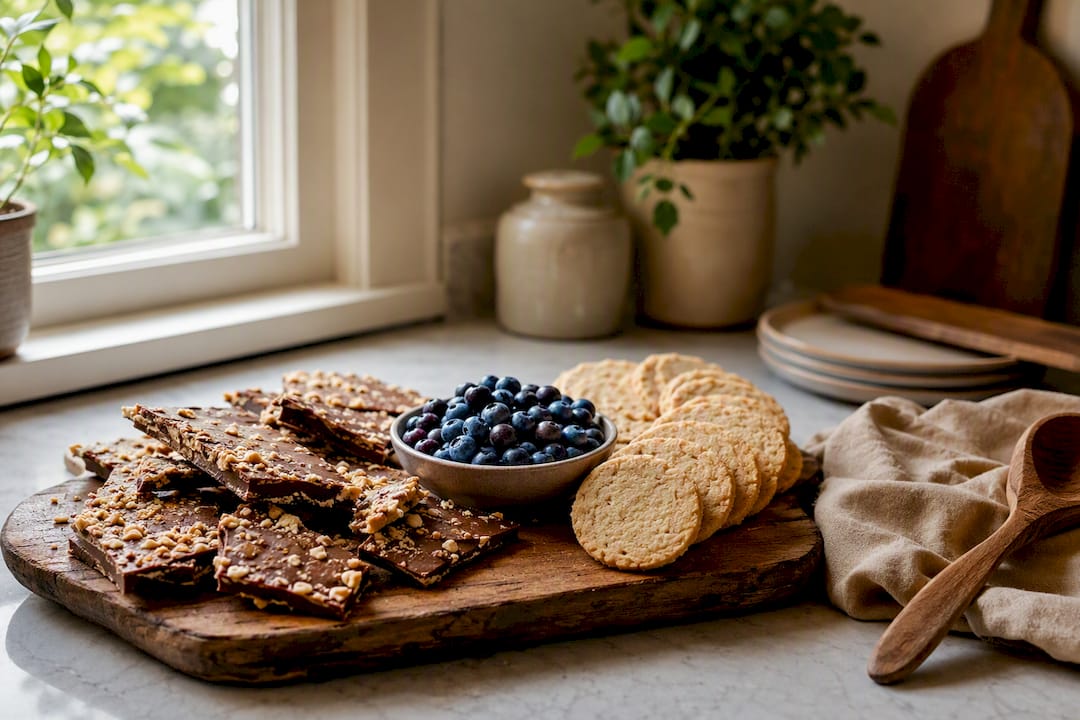
Pro Tip: Buy pre-bagged nut clusters and pre-sliced fruit from the grocery store if you’re short on time. Nobody will know the difference once it’s arranged, and you’ll cut your prep time roughly in half.
Most hosts can go from empty board to finished spread in 20 to 30 minutes, assuming ingredients are pre-washed and pre-portioned before you start.
What Chocolate Pairs Best With What Toppings?
Not every topping works with every chocolate. Dark chocolate wants contrast. Milk chocolate wants comfort. White chocolate wants brightness.
Dark chocolate’s bitterness sharpens against tart fruit like raspberries and against salty nuts like almonds or pistachios. Milk chocolate is already sweet and creamy, so it pairs best with caramel, softer cookies, and toasted pecans rather than more sugar on top of sugar. White chocolate is the mildest of the three, and it comes alive next to tropical fruit, citrus zest, or freeze-dried mango.
Here are three combinations that require zero decision-making at the store:
- Dark and tart: Dark chocolate shards, raspberries, salted pistachios, orange segments
- Milk and cozy: Milk chocolate truffles, shortbread, toffee pieces, caramel dip
- White and bright: White chocolate bark, dried mango, macarons, lime zest sprinkle
| Dip | Ratio | Best Paired With |
|---|---|---|
| Chocolate ganache | 1 part heavy cream to 1 part chopped chocolate, warmed | Fruit, pretzels, shortbread |
| Salted caramel | Store-bought or homemade, warmed with a pinch of flaky salt | Apple slices, pecans, cookies |
| Honey cream cheese | 1 cup cream cheese, softened, whipped with 2 tablespoons honey | Graham crackers, berries, biscotti |
Including something salty and something tart isn’t optional if you want the board to still taste good by the last handful. That salt-and-acid balance is what keeps guests coming back for more instead of hitting a wall of sweetness after three bites.
How Do You Style a Dessert Board to Look Professional?
A board can have perfect ingredients and still photograph like a mess if the styling is off. Three rules fix most of that: separate colors, build height, and leave breathing room.
- Never place two same-colored items next to each other. Two piles of brown chocolate side by side disappear into each other visually. Break them up with red berries, white marshmallows, or green mint leaves.
- Build height in at least two spots. A stack of cookies, a small glass of pretzel sticks, or a mound of grapes on their stem gives the eye somewhere to land besides a flat plane of food.
- Group in odd numbers. Three truffles look styled. Four look accidental. This applies to almost every item on the board, from fruit clusters to cookie stacks.
- Use small bowls as anchors. Ramekins of dip or loose toppings break up large flat sections and give the layout visual structure.
- Choose a board with contrast. A dark wood board makes light-colored fruit and white chocolate pop. A white marble or ceramic board does the opposite for dark chocolate.
Odd-number groupings and color separation are two of the most repeated tips across chocolate charcuterie guides, and for good reason: they’re the fastest fixes for a board that looks “fine” instead of “wow.” A chocolate charcuterie board built with these habits looks intentional even when it took twenty minutes to throw together.
Pro Tip: Shoot your finished board from a low angle in natural light near a window, not overhead under a kitchen light. Overhead shots flatten texture; a slight angle shows the height and layering you worked to build.
Can You Make a Dessert Board Ahead of Time?
Some of it, yes. Shelf-stable items like chocolate bars, nuts, cookies, and pretzels can be portioned and even arranged a full day ahead if kept covered at room temperature. What you should not do is add fresh fruit or dips until close to serving time.
- Prep and store chocolate, nuts, and baked goods up to 24 hours ahead in airtight containers.
- Slice fruit no more than a few hours before guests arrive, and toss apples or pears in lemon juice to slow browning.
- Warm dips like ganache or caramel right before serving rather than leaving them out for hours.
- Refresh the board mid-event by swapping in new fruit or wiping away crumbs from the emptied sections.
Food safety matters here more than most hosts think about. Perishable items like cream-based dips and cut fruit should not sit out for more than two hours at room temperature, a standard consistent with FoodSafety.gov guidance. At a party with a lot of foot traffic near the food, that window can close faster than expected.
Statistic Callout: Freeze grated or shaved chocolate in an airtight container and it holds its texture for up to three months, making it one of the few board components you can genuinely prep in advance.
If chocolate develops a chalky white film (called bloom, caused by temperature swings), it’s still safe to eat. It just looks less appealing on camera, so store bars somewhere cool and stable until the day of the event.
Why Toffee Belongs on Your Chocolate Dessert Board
Most dessert boards are missing a textural anchor that isn’t just “more chocolate.” That’s where toffee earns its spot. Dudley’s Toffee is handcrafted in small batches in Indiana, using a recipe built for a softer, buttery bite that melts rather than sticking to your teeth. It’s gluten-free, made without high fructose corn syrup, and comes in both milk and dark chocolate.
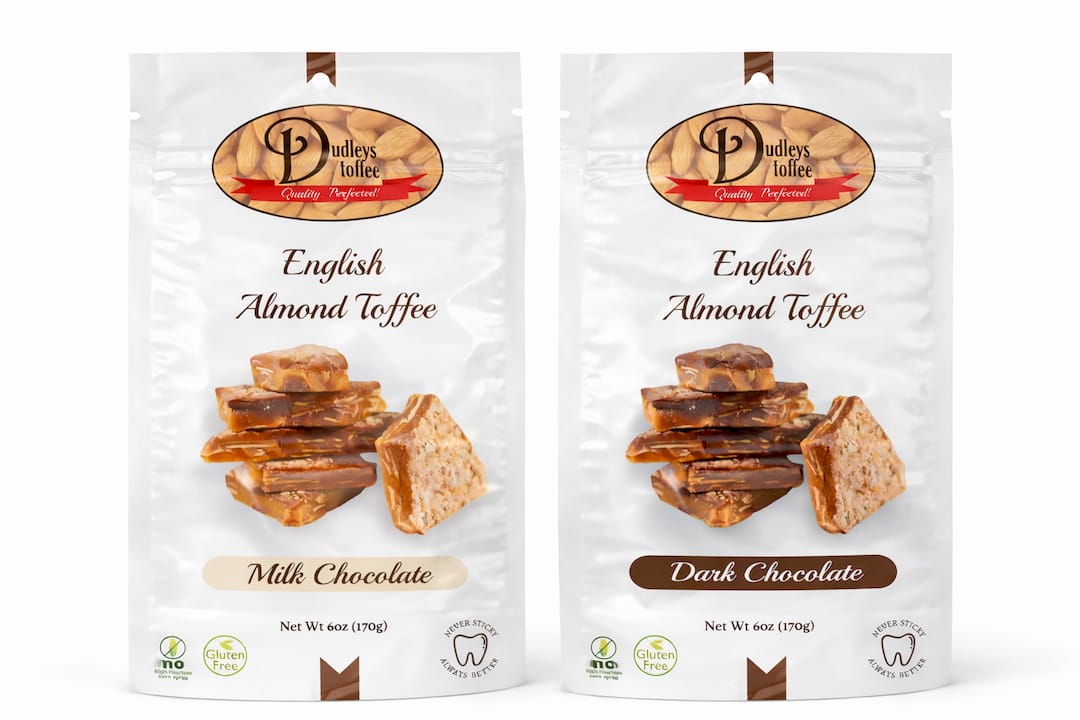
Placement is simple. Break toffee into shards and tuck the pieces into gaps between larger anchors. Cluster whole pieces near the chocolate section for a cohesive look, or scatter smaller bits near the salty crunch category since toffee straddles both roles.
Two quick ideas worth trying:
- Toffee-studded bark: Melt chocolate, stir in broken toffee pieces, spread thin on parchment, and chill until set.
- Toffee cluster favors: Portion toffee pieces into small cellophane bags and set them at each place setting as a takeaway from the board.
A note on hosting with toffee
Every holiday, my family sets out a small dish of toffee next to the dessert spread, and it disappears faster than anything else on the table. There’s something about that snap and melt that stops conversation for a second. If you’re building a board for guests, don’t treat toffee as an afterthought. A little goes a long way, and it gives people something to remember the spread by.
Which Dudley’s Toffee Bag Fits Your Board?
Dudley’s Toffee makes three SKUs that map directly onto the kind of hosting this article covers, and picking the right one comes down to headcount, not preference.
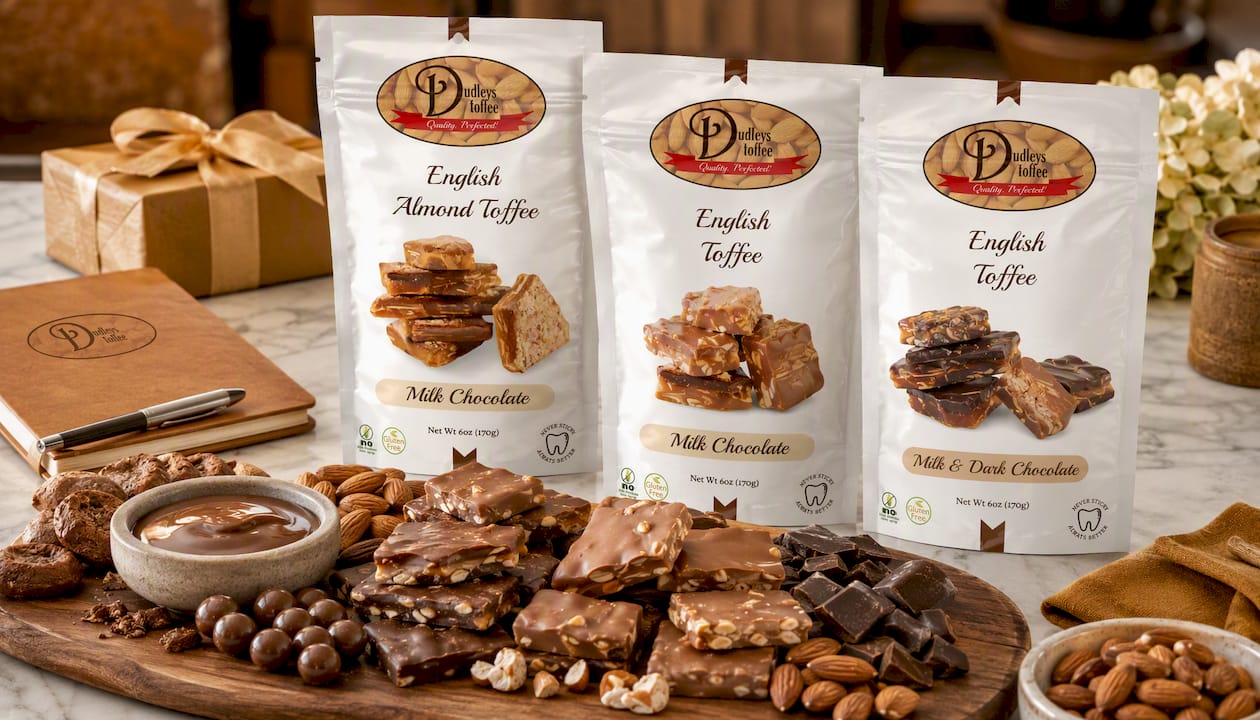
For a single small board feeding six to eight people, the Milk Chocolate English Almond Toffee (6oz) bag is the right size. Break it into shards for the anchor role or scatter whole pieces near the salty crunch section. If you’re hosting a school event, church gathering, or team fundraiser where the board is really a backdrop for a sales table, the Fundraiser bag lets you sell alongside serving samples, turning dessert into a small revenue source for the cause. For larger parties, weddings, or corporate events where you’re building multiple boards or sending guests home with favors, the Mixed Case of 12 milk and 12 dark bags covers both chocolate preferences without a second order.
All three ship in protective packaging, and Dudley’s Toffee handles orders nationwide directly from its Indiana kitchen. If you’re planning a bigger spread for a wedding or corporate event, our wedding dessert table guide and corporate event dessert ideas walk through scaling a board like this for a larger guest list. Order your bag or case today and give your next board the crunch it’s been missing.
Sources
- The best sweet grazing board - Waitrose
- Dessert Charcuterie Board: Balanced, Not a Sugar Bomb | The Kind Host
- Romantic Chocolate Dessert: 30 Min - Taste Dessert
FAQ
What are some creative ideas for a dessert board?
Build around a theme like “dark and tart” (dark chocolate, raspberries, pistachios) or “milk and cozy” (milk chocolate, toffee, caramel dip) rather than mixing every sweet you own without a plan.
What is the rule of thirds for a chocolate dessert board?
A common version splits the spread into roughly one-third fresh fruit, one-third chocolate and baked items, and one-third salty crunch and dips, keeping any single flavor from dominating.
What are some good chocolate dessert ideas beyond a board?
Toffee-studded bark, chocolate-dipped pretzels, and truffle clusters all use the same ingredients as a board but work as individually wrapped favors or fundraiser items.
What should you avoid on a chocolate dessert board?
Avoid placing wet items like cut fruit directly against crisp cookies, skipping a salty element, leaving visible gaps, using only one shade of chocolate, and letting dips sit out longer than two hours.