

5 Whiskey Styles That Match Dudley's Soft Chew Toffee for Your Home Bar
The most reliable toffee whiskey pairing rules are simple: bourbon complements buttery milk chocolate toffee, sherry-matured or Speyside whisky harmonizes with dark chocolate toffee, and rye or a gently peated scotch offers contrast when a dessert feels too sweet on its own. Milk versus dark toffee should steer your bottle choice more than any label on the shelf. Below, you’ll find the flavor logic, a whiskey style shortlist, and specific pairings using Dudley’s Toffee’s own lineup.
TL;DR:
- Soft, buttery English toffee pairs best with lower-proof bourbons or sherry-influenced whiskies, which won’t overpower its delicate, quick flavor release.
- Dark chocolate toffee with dried fruit notes aligns well with sherry-matured whiskies or rich malts that can handle its intensity and complement the bitterness.
- Nutty toffee, containing almonds or pecans, benefits from oak-forward bourbons or nutty single malts that mirror the nuttiness from the candy’s ingredients.
- Spicy ryes and lightly peated scotches are ideal contrast pairings, especially with richer, sweeter toffee, but heavily peated whiskies may overwhelm softer styles.
- Tasting should progress from light to heavy, with water and small pieces to prevent palate fatigue and enhance flavor recognition.
Table of Contents
- Toffee Whiskey Pairing Principles That Actually Work
- Which Whiskey Styles Pair Best With Toffee
- Matching Toffee Type to the Right Whiskey
- How to Taste Toffee and Whiskey Together the Right Way
- Example Toffee Whiskey Pairings to Try Tonight
- What Not to Pair With Toffee Whiskey
- Pairing Toffee Whiskey With Snacks Beyond the Candy Dish
- Seasonal Twists on Toffee Whiskey Pairings
- Why Dudley’s Toffee Perspective on Whiskey Pairing
- Bring the Pairing Home With Dudley’s Toffee
- Sources
- FAQ
Toffee Whiskey Pairing Principles That Actually Work
Getting a toffee whiskey pairing right comes down to matching intensity first, then deciding whether you want the flavors to agree with each other or push against each other. A delicate, soft-chew toffee gets lost next to a high-proof, heavily peated scotch. A rich, dark chocolate toffee can shrug off a bold pour without blinking. Start by asking how much flavor punch the toffee actually has, then find a whiskey that matches it rather than overwhelms it.
From there, you’re choosing between two strategies: complement or contrast. Complement means finding a whiskey that shares flavor DNA with the toffee, like a bourbon’s vanilla and caramel notes meeting milk chocolate toffee’s buttery sweetness. Contrast means picking a whiskey that pushes back against the sugar, like a spicy rye cutting through a rich, dark chocolate almond toffee. Both work. Neither is more “correct,” and a lot of the fun in pairing toffee flavors with whiskey is trying both approaches on the same piece of candy.
Certain flavor notes act as bridges between the glass and the confection. Look for these when you’re evaluating any bottle:
- Caramel and toffee notes, common in bourbon and many blended whiskies
- Vanilla, which comes from oak barrel aging and mirrors the vanilla undertones in toffee’s butter base
- Toasted or charred oak, which echoes the slight caramelization in cooked sugar
- Dried fruit and sherry richness, found in sherry-cask-finished whiskies, which pairs beautifully with dark chocolate
- Nuttiness, useful when the toffee itself contains almonds or pecans
Proof and finish length matter too. A whiskey bottled above 100 proof can numb the palate fast, making it harder to taste the toffee’s subtler notes. A long, warm finish gives you time to notice how the whiskey and confection interact after you swallow, which is often where the best pairings reveal themselves.
Pro Tip: Taste the whiskey alone first, note two or three flavors you pick up, then taste the toffee alone and do the same. If any words overlap between your two lists, you’ve found your bridge, and that pairing will almost always work.
Which Whiskey Styles Pair Best With Toffee
You don’t need a cabinet full of rare bottles to get good results. A handful of whiskey styles cover almost every toffee scenario you’ll encounter.
- Bourbon. Vanilla, caramel, and toasted oak make bourbon the most dependable partner for milk chocolate and buttery toffee. Its natural sweetness meets the candy halfway instead of fighting it, which is why bourbon shows up so often in dessert pairing guides as the safe, versatile choice for sweet treats.
- Sherry-matured or Speyside whisky. Whiskies finished in sherry casks pick up dried fruit, raisin, and toffee notes that harmonize directly with dark chocolate toffee’s cocoa bitterness. This combination is one of the most consistently recommended dessert pairings among whisky enthusiasts, since the fruit and toffee notes in sherry-cask whiskies echo what’s already happening in the candy.
- Rye. Rye’s peppery spice acts as a palate cleanser between bites of rich toffee. If you want contrast rather than agreement, rye is your go-to, especially with nutty or heavily chocolate-covered pieces.
- Gentle peated scotch. A light-to-medium peat level introduces smoke that plays against very sweet toffee without overwhelming it. Save the heavily peated, high-proof bottles for another occasion. They tend to bulldoze delicate soft-chew toffee entirely.
- Toffee-flavored whiskey liqueurs. Some producers make dessert-style whiskies infused with chocolate and toffee flavoring, positioned specifically to be sipped alongside sweets or poured over ice. Ballotin’s Chocolate Toffee Whiskey is a well-known example of this category, and it’s a good entry point if you’re new to pairing and want something that can’t really go wrong.
Each style earns its place for a different reason, so think about what you’re serving before you reach for a bottle.
Matching Toffee Type to the Right Whiskey
Not all toffee behaves the same way in a glass-and-bite pairing, and the coating, mix-ins, and texture all change what you should pour.
Milk chocolate toffee calls for a mellow bourbon or a milk-chocolate-leaning spirit with soft vanilla notes. The milder cocoa in milk chocolate needs a whiskey that won’t compete for attention, so reach for something rounded rather than sharp or smoky.
Dark chocolate toffee can handle more intensity. Sherry-matured whisky or a rich single malt stands up to dark cocoa’s bitterness, and the dried fruit character in sherry casks often makes this the single best toffee whiskey pairing in this entire guide. It’s the combination worth trying first if you only test one thing tonight.
Nutty toffee, made with almonds or pecans, pairs naturally with oak-forward or nutty whiskies. The toasted, roasted quality in the nuts mirrors the toasted oak character that develops during barrel aging, so look for bourbons or scotches with a pronounced oak presence.
Soft, buttery English toffee, the style Dudley’s Toffee is built around, deserves a gentler touch. Because a soft-chew toffee releases its buttery, sweet notes faster than a hard, brittle-style toffee, it pairs better with whiskies that have smoother, rounded sweetness rather than an aggressive, smoky punch. A lower-proof bourbon or a sherry-influenced whisky lets that quick flavor release shine instead of getting buried under peat or high alcohol heat.
Here’s a quick reference for matching toffee style to whiskey approach:
- Milk chocolate toffee: mellow bourbon, milk-chocolate-forward spirits
- Dark chocolate toffee: sherry-matured whisky, rich single malts
- Nutty toffee (almond, pecan): oak-forward bourbons or nutty single malts
- Soft, buttery English toffee: lower-proof bourbon or sherry-influenced whisky
If you’re unsure which category your candy falls into, comparing toffee to brittle first can help you identify texture and density before you pick a bottle.
How to Taste Toffee and Whiskey Together the Right Way
Sequence matters as much as the pairing itself. Follow these steps to get consistent results at home:
- Start light, move heavy. Taste your lightest whiskey and mildest toffee first, then work toward bolder pairings. Starting with a heavily peated pour will numb your palate for everything that follows.
- Decide sip-then-bite or bite-then-sip. Sipping first lets the whiskey’s aromatics set the stage; biting first lets the toffee’s sweetness reveal how the whiskey changes on the way down. Try both and see which you prefer.
- Add a drop of water when the whiskey feels closed off. A single drop can open up caramel and toffee notes hiding beneath the alcohol, making higher-proof whiskies easier to pair.
- Serve toffee at room temperature. Cold toffee mutes its buttery notes, while room temperature lets the full flavor come through, especially with a soft-chew style. Keep pieces small, around one ounce, so you’re tasting rather than snacking.
- Pace yourself with water between pours. A neutral water rinse between different whiskey styles keeps your palate accurate through a longer tasting session.
Standard rocks glasses work fine for casual tastings, but a tulip-shaped glass concentrates aromatics if you want a more serious sensory read.
Pro Tip: Limit any single tasting session to two contrasting whiskey styles, like a bourbon and a rye, or a sherry-matured malt and a lightly peated scotch. Comparing more than two at once makes it hard to tell which flavors came from the whiskey and which came from palate fatigue.
Example Toffee Whiskey Pairings to Try Tonight
These combinations put the principles above into practice using Dudley’s Toffee’s own lineup, so you can shop with a specific pairing in mind rather than guessing.
- Bourbon with Milk Chocolate English Toffee. The bourbon’s vanilla and caramel meet the toffee’s buttery milk chocolate coating almost seamlessly. Serve at room temperature in small pieces so the soft-chew texture releases its sweetness gradually.
- Sherry-matured whisky with dark chocolate toffee. The dried fruit character in a sherry cask finish plays directly against dark cocoa’s bitterness, echoing the toffee’s own caramelized sugar. This is the pairing to lead with if you’re hosting a small tasting.
- Rye with the Mixed Milk & Dark Chocolate Case. Alternate between milk and dark pieces while sipping rye, and notice how the pepper spice resets your palate differently depending on which toffee you just ate.
- Backup option: if all you have on hand is a standard blended whiskey, don’t worry. Its typical caramel and vanilla notes still work reasonably well with milk chocolate toffee, even if it lacks the complexity of a bourbon or sherry-finished malt.
For anyone hosting a comparison tasting, the variety case option makes it easy to test both toffee styles side by side without buying two separate bags.
What Not to Pair With Toffee Whiskey
A few combinations reliably disappoint, and knowing them upfront saves you a wasted tasting.
- Don’t pair delicate milk chocolate toffee with high-proof or heavily peated whiskey. The smoke and alcohol heat will bury the toffee’s buttery notes entirely, leaving you with two flavors that never meet.
- Don’t stack extreme sweetness on extreme sweetness. A very sweet, sugary whiskey liqueur next to an already-sweet toffee can feel cloying fast, with nothing to break up the sugar.
- Don’t ignore texture. A hard, brittle-style toffee needs more time in the mouth to soften, which changes how long the whiskey’s finish lingers alongside it compared to a soft-chew toffee.
If a pairing feels off, the fix is usually quick: swap toward rye or a lower-proof bourbon to rebalance sweetness, or move toward a sherried whisky if the combination felt flat rather than harsh. Even readers who typically skip very sweet desserts can find an entry point here by leaning on rye or a lightly peated scotch to offset the sugar rather than avoiding toffee pairings altogether.
Pairing Toffee Whiskey With Snacks Beyond the Candy Dish
A toffee whiskey pairing doesn’t have to stop at toffee itself. Building out a small spread around your tasting can round out the flavors and give your palate a break between bites.
Sharp, aged cheeses like a good cheddar or gouda work well alongside bourbon and toffee, since the saltiness cuts through the sweetness on both sides. Roasted, salted nuts, particularly almonds and pecans, echo the nutty notes already present in many toffee varieties and give you a neutral bite to reset between pairings. Dark chocolate on its own, without the toffee, makes a natural bridge food if you’re transitioning from a milk chocolate pairing to a dark chocolate one, since it primes your palate for the bitterness ahead.
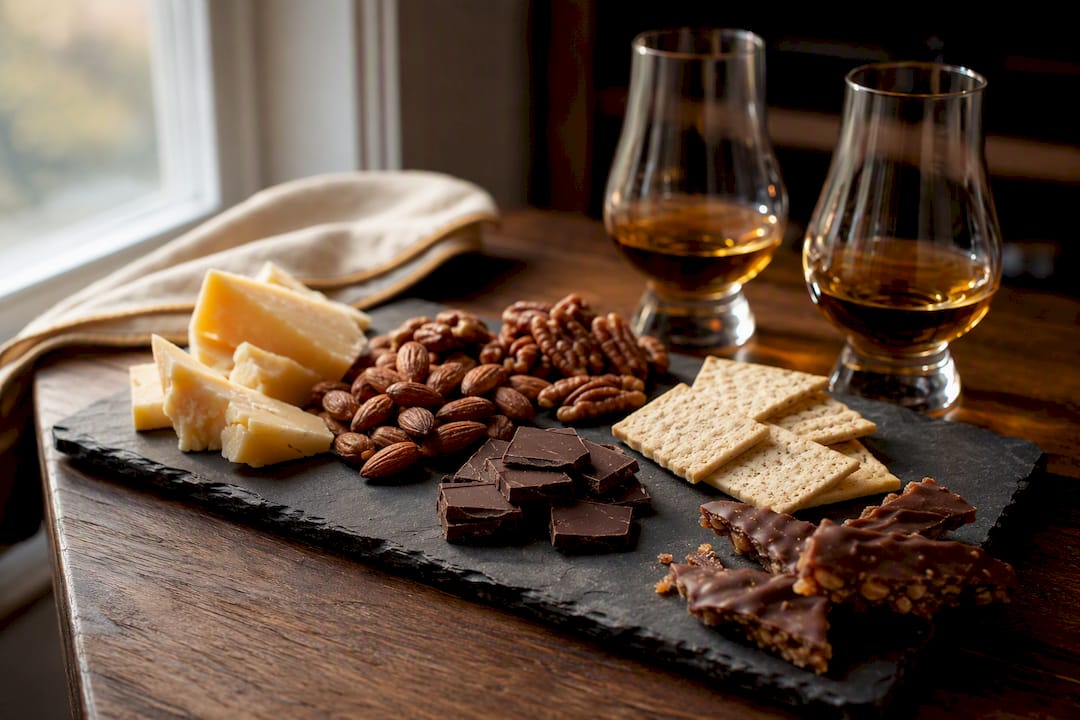
For something beyond food entirely, a small square of good bread or a plain cracker functions as a palate cleanser much like water does, absorbing lingering sweetness without introducing competing flavors. If you’re building a broader tasting board for guests, thinking in terms of complementary textures and intensities, the same logic that governs strong food and drink pairings generally, applies just as well here.
Coffee is worth a mention too, though not as a substitute for whiskey. A short espresso alongside toffee whiskey can extend a tasting session into dessert territory, since the bitterness in coffee interacts with chocolate in ways similar to how whiskey does. If whiskey isn’t part of your evening, toffee also pairs well with tea and even certain beers. A malty brown ale can hit some of the same caramel notes bourbon does, and a robust black tea offers a similar contrast to what rye provides.
Seasonal Twists on Toffee Whiskey Pairings
Toffee whiskey pairings shift naturally with the calendar, and leaning into that can make a tasting feel timely rather than generic.
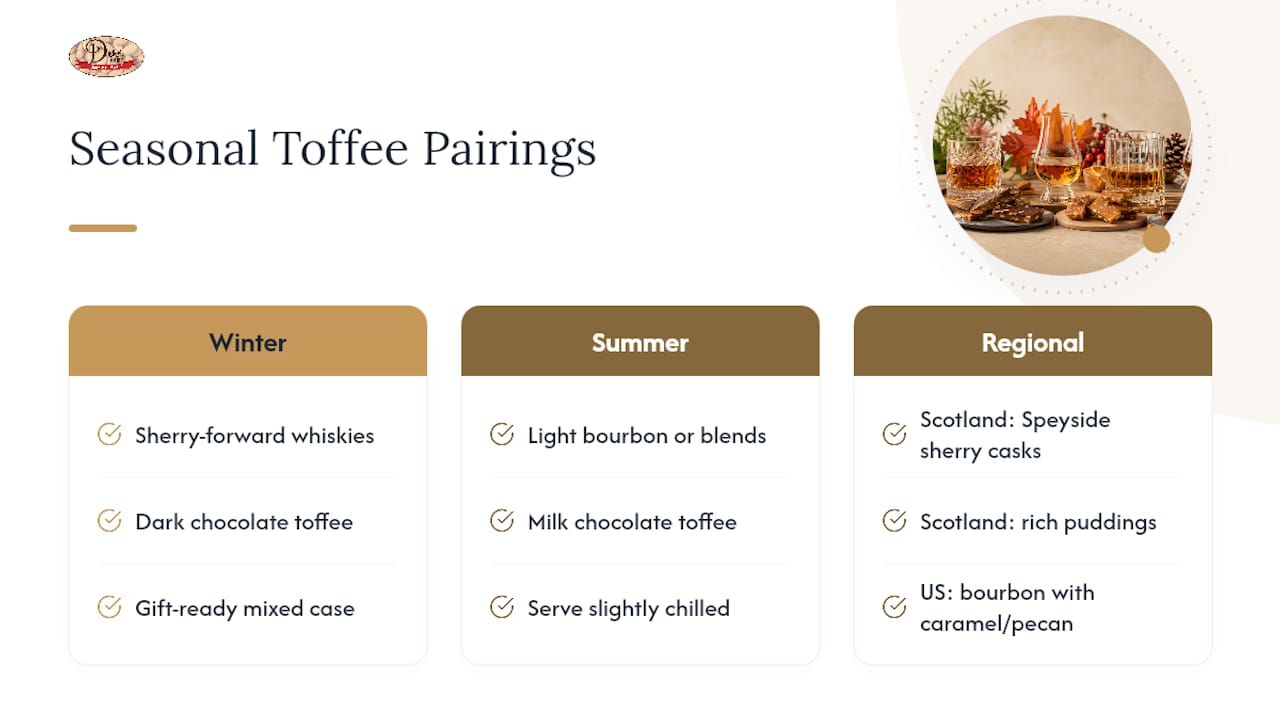
Around the winter holidays, richer, sherry-forward whiskies feel especially at home next to dark chocolate toffee, since the dried fruit notes echo the season’s spiced, warming flavors. This is also when gift-giving spikes, and a mixed case of milk and dark toffee makes an easy, ready-to-wrap option for anyone building a small at-home tasting kit for a friend or family member.
In warmer months, lighter bourbons or blended whiskies served slightly chilled or over a single large ice cube tend to feel more appropriate than a heavy, high-proof pour. Milk chocolate toffee also holds up better at warmer room temperatures than dark chocolate, which can turn slightly soft in summer heat, so it’s worth keeping bags in a cool spot before serving.
Regionally, the tradition of pairing whisky with dessert runs deep in Scotland, where sherry-cask Speyside malts and rich puddings have shared the table for generations. American bourbon culture, by contrast, grew up alongside caramel, pecan, and buttery desserts native to the South, which is part of why bourbon and toffee feel like such a natural match here. Neither tradition is more correct. Both point back to the same underlying principle: match what’s already in the glass to what’s already in the candy, and let the season decide which direction you lean.
Why Dudley’s Toffee Perspective on Whiskey Pairing
Toffee flavor is only as interesting as the toffee itself, and that’s where a lot of pairing advice falls short. It treats candy as a uniform ingredient rather than a product with real texture and craftsmanship behind it. Dudley’s Toffee is handcrafted in small batches in Indiana, using a family recipe that produces a softer, buttery texture rather than the hard, tooth-sticking bite found in mass-produced brands. That softer chew releases flavor faster, which is exactly why gentler, rounded whiskies tend to outperform aggressive, smoky pours alongside it. Every batch is gluten-free, made without high fructose corn syrup, and available in both milk and dark chocolate, giving you two genuinely different pairing directions from one trusted source.
— Dudley’s Toffee
Bring the Pairing Home With Dudley’s Toffee
You now know the principles. Putting them into practice just means having the right toffee on hand when you pour. Dudley’s Toffee ships its small-batch, gluten-free English almond toffee directly to your door, so you can build a tasting around bottles you already own instead of hunting for a specialty confection at the last minute.
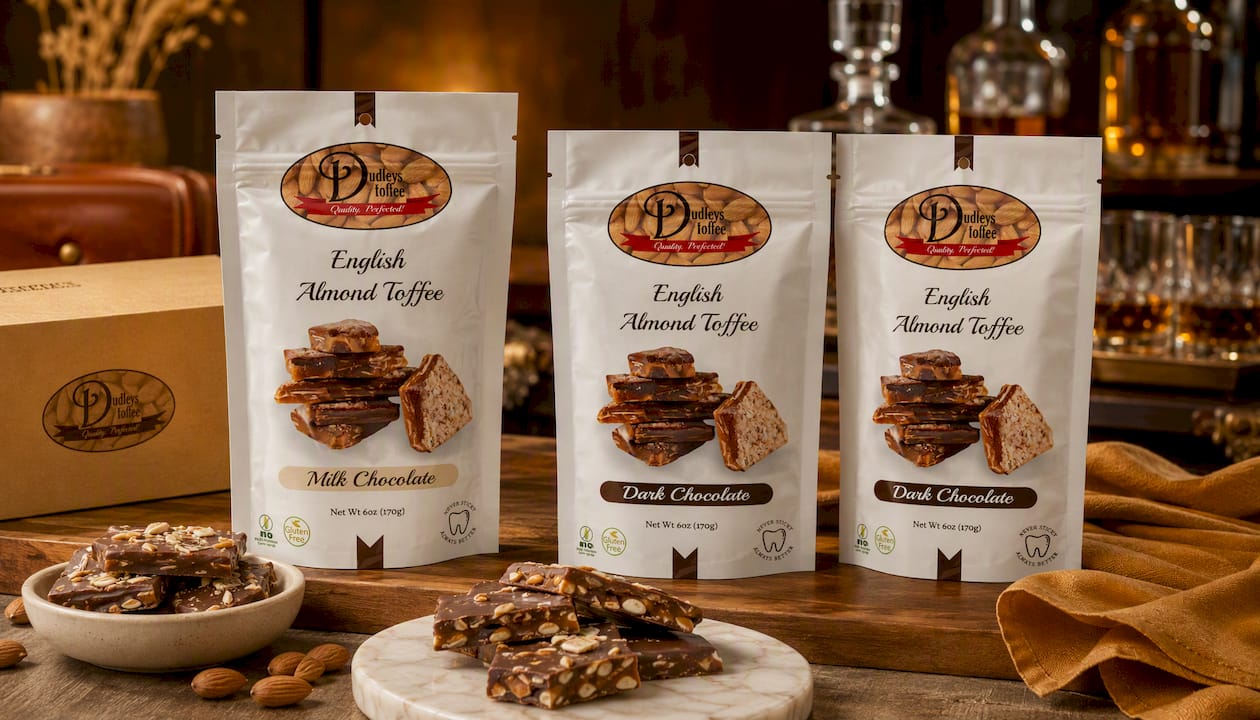
Start with the Milk Chocolate English Toffee case if bourbon is your go-to pour, its buttery sweetness was practically made for vanilla and caramel notes. If you want to compare milk and dark side by side, the mixed case of milk and dark toffee gives you both in one order, ideal for a sherry-versus-bourbon tasting night. Hosting a group or putting together gifts for the holidays? The variety case option covers bulk orders and gifting without extra hassle, and bulk and wholesale inquiries are welcome for corporate gifting or fundraising events. Place your order today and taste the difference a soft-chew, small-batch toffee makes next to your favorite whiskey.
Sources
FAQ
What’s a good pairing with whiskey?
Caramel and vanilla-forward desserts like toffee, pecan pie, or dark chocolate tend to pair best with whiskey, since those flavors already echo what develops during barrel aging. Bourbon works especially well with buttery, caramel-based sweets.
Do chocolate and whiskey go together?
Yes, chocolate and whiskey pair naturally, especially dark chocolate with sherry-matured whiskies, since the dried fruit and toffee notes in the whisky harmonize with dark cocoa’s bitterness. Milk chocolate tends to pair better with milder, vanilla-forward bourbons.
What snacks complement whiskey well?
Salted nuts, aged cheese, dark chocolate, and toffee all complement whiskey by either echoing its flavor notes or cutting through its sweetness with salt or bitterness. Buttery English toffee in particular bridges caramel and vanilla notes common in bourbon.
How do I pick a toffee whiskey pairing if I don’t drink very sweet whiskey?
Lean toward contrast instead of complement: a spicy rye or a gently peated scotch cuts through toffee’s sweetness rather than matching it, giving you a balanced pairing without needing a dessert-style spirit.
Does the type of toffee change which whiskey I should choose?
Yes. Milk chocolate toffee pairs best with mellow bourbon, while dark chocolate toffee stands up to sherry-matured whisky or richer single malts, since its cocoa bitterness needs a bolder counterpart.
Recommended
Share