

2–3 Weeks or 6–12 Months: Small Batch vs Commercial Toffee Shelf Life
Homemade toffee stays at its best for 2 to 3 weeks at room temperature in an airtight container, while unopened commercial toffee can hold for 6 to 12 months. The single rule that governs everything else: keep it airtight, cool, and dry, and freeze it if you want to stretch that window even further. Refrigeration works in a pinch, but it can soften the snap and invite condensation if you’re not careful with the wrap.
TL;DR:
- Homemade toffee without nuts or dairy lasts about 2 to 3 weeks at room temperature, but freezing it properly can extend freshness for several months.
- Commercial toffee remains good for 6 to 12 months unopened, but once opened, it should be consumed within 3 to 4 weeks for optimal quality.
- Storing toffee in a cool, dry, airtight container at room temperature is best for short-term, while freezing provides the longest shelf life, especially for gift purposes.
- Higher butter and dairy content, nuts, and packaging quality influence the toffee’s shelf life, with additive-free batches lasting notably less than store-bought versions.
- Signs of spoilage include off odors, rancid tastes, mold, discoloration, or changes in texture, indicating it is time to discard the toffee.
Table of Contents
- Toffee Shelf Life by Type and Packaging
- What’s the Best Way to Store Toffee?
- Why Some Toffee Lasts Longer Than Others
- How Can You Tell If Toffee Has Gone Bad?
- Freezing and Thawing Toffee the Right Way
- Quick Storage Checklist for Toffee
- How Dudley’s Toffee Stores Best
- Preservatives in Commercial Toffee: What They Actually Do
- Ready to Stock Up on Toffee That’s Made to Share?
- A Note on Timing Your Toffee Gift
- Sources
- FAQ
Toffee Shelf Life by Type and Packaging
Not all toffee ages the same way, and the differences come down to ingredients and how the piece is sealed. A plain homemade batch, a nut-studded one, and a factory-sealed bag of commercial toffee each follow a different timeline.
- Homemade plain toffee: about 2 to 3 weeks at room temperature in an airtight container. Refrigerating stretches that to roughly a month, and freezing preserves it for months when wrapped properly.
- Homemade toffee with nuts or extra dairy: closer to 1 to 2 weeks at room temperature. Nut oils and higher dairy content raise the risk of the toffee turning rancid sooner than a plain slab would.
- Commercial sealed toffee: unopened boxes can last 6 to 12 months depending on the packaging, but once you break the seal, plan to finish it within 3 to 4 weeks.
- Chocolate-coated toffee: tends to outlast bare slab pieces, since the chocolate layer seals the exposed edges and slows the oxidation that dulls flavor and texture over time.
The takeaway for anyone weighing homemade toffee longevity against a store-bought bag: preservative-free, small-batch toffee simply won’t last as long as a shelf-stable commercial product, and that’s by design, not a flaw.
What’s the Best Way to Store Toffee?
Where you keep your toffee matters almost as much as how you wrap it. Each storage environment suits a different goal, whether that’s eating it this week, gifting it next month, or tucking some away for the holidays.
- Room temperature. Store pieces in an airtight container, layering parchment or wax paper between them so they don’t stick together. Keep the container between 60 and 70°F, away from direct sunlight, ovens, or anywhere humidity swings.
- Refrigeration. Reserve this for very butter-rich batches or toffee made during hot, humid stretches. Wrap pieces tightly before chilling; loose wrapping invites condensation that turns crisp toffee sticky the moment it warms back up.
- Freezer. This is your longest-lasting option. Wrap each piece, seal it in a rigid container, and expect several months of good quality before flavor starts to fade.
Pick room temperature if you’re eating the batch within a couple of weeks, the fridge if your kitchen runs warm, and the freezer if you’re storing toffee for a gift date or holiday months away.
Pro Tip: Never stack unwrapped toffee pieces directly on top of each other in a container. Even a thin sheet of parchment between layers stops them from fusing into one sticky block.
Why Some Toffee Lasts Longer Than Others
Shelf life isn’t random. A few ingredient and packaging choices explain why one batch outlasts another by weeks.
- Butter and dairy content: richer recipes oxidize faster, which is why manufacturers often recommend refrigeration for very butter-heavy toffee.
- Nuts: the natural oils in almonds and pecans can turn rancid before the sugar base itself spoils, shortening the practical window for nut toffee.
- Exposed edges vs. enrobing: pieces broken from a slab have fracture edges that oxidize faster than candies fully coated in chocolate.
- Packaging quality: vacuum-sealed bags and true manufacturer packaging block air far better than a folded bag on the counter, which is a big part of why commercial toffee outlasts homemade.
How Can You Tell If Toffee Has Gone Bad?
Trust your senses before you trust the calendar. A sour or off smell, or a bitter, rancid taste, is the clearest sign the fats have turned. Texture problems matter too: toffee that’s gone soggy or sticky picked up moisture, while a crumbly, dry piece has simply gone stale rather than unsafe. Visible mold or unusual discoloration means it’s time to toss it, no exceptions, since that’s a safety issue rather than a quality dip you can ignore.
Freezing and Thawing Toffee the Right Way
Freezing is the most dependable way to hold on to a batch for months, but sloppy wrapping is what ruins texture, not the freezer itself.
- Wrap each piece individually in parchment or wax paper first, then wrap it tightly again in plastic wrap.
- Pack the wrapped pieces into a rigid airtight container, or a heavy-duty freezer bag with as much air pressed out as possible.
- Thaw slowly in the refrigerator before bringing it to room temperature. This staged thaw is what keeps condensation from soaking into the surface and turning it sticky.
Expect a slightly softer bite after freezing. That’s a fair trade if the toffee is headed into a baking recipe or a gift box where a few weeks of lead time matter more than a perfect snap.
Pro Tip: Label each frozen batch with the date before it goes in the freezer. Toffee doesn’t announce its age the way bread does, so a written date saves you from guessing months later.
Quick Storage Checklist for Toffee
Once a batch cools completely, wrap it, label it with the date, and pick a storage method based on how soon you’ll eat it.
- Cool the toffee fully before wrapping. Warm toffee sealed too soon traps moisture inside the container.
- Choose airtight storage over a loosely folded bag every time.
- Freeze anything you won’t finish within a month, and give away or gift what you won’t eat soon.
| Storage method | Typical shelf life | Best for |
|---|---|---|
| Room temperature, airtight container | 2 to 3 weeks (homemade) | Short-term eating and display |
| Refrigerator, tightly wrapped | Up to 1 month | Butter-rich batches, warm climates |
| Freezer, double-wrapped | Several months | Long-term storage, advance gifting |
| Commercial sealed packaging, unopened | 6 to 12 months | Gifting, pantry stock, fundraising orders |
How Dudley’s Toffee Stores Best
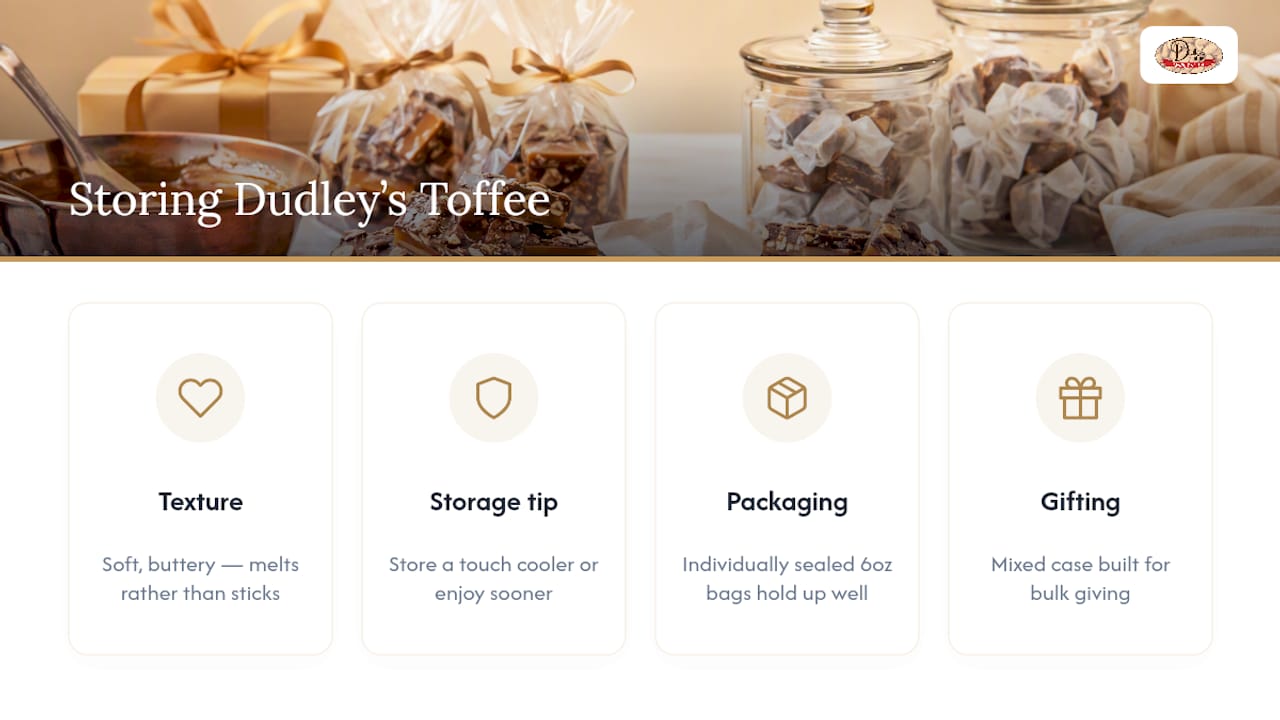
Dudley’s Toffee is handcrafted in small batches in Indiana, and that softer, buttery bite you notice is intentional. It melts rather than sticks to your teeth, but that same texture means we recommend storing it a touch cooler, or simply enjoying it sooner, compared with a harder English toffee. Our storage guide walks through the specifics for our recipe.
Every batch is gluten free and made without high fructose corn syrup, in milk and dark chocolate. For gifting or long-term stashing, the individually sealed 6oz bags hold up well, and our mixed case of milk and dark is built for exactly that kind of bulk giving.
Preservatives in Commercial Toffee: What They Actually Do
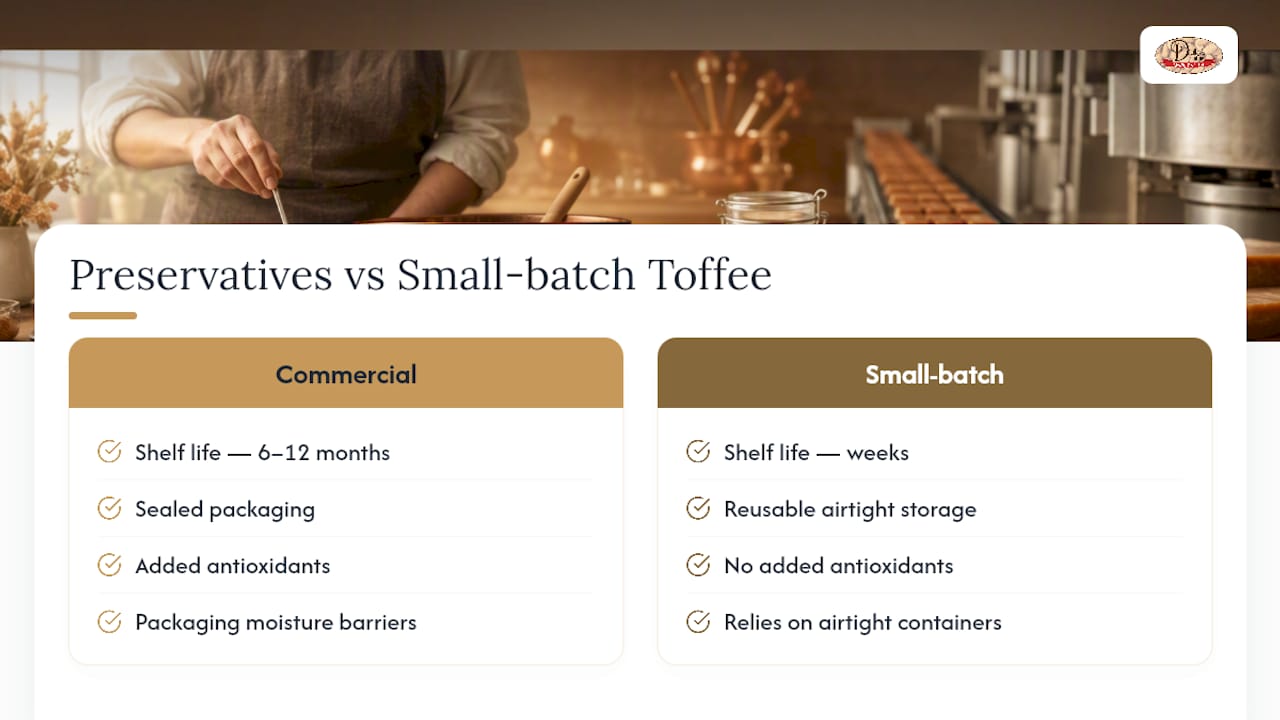
Commercial toffee makers lean on sealed packaging and, in many cases, added preservatives to hit that 6 to 12 month unopened shelf life. Antioxidant compounds slow the fat oxidation that turns butter and nut oils rancid, and moisture barriers in the packaging keep humidity from softening the sugar structure. That’s a real trade-off worth understanding: the same shelf stability that lets a bag of toffee sit on a store shelf for months is usually achieved through additives you won’t find in a small-batch kitchen.
Preservative-free, handcrafted toffee like Dudley’s trades some of that shelf-stable convenience for a shorter, simpler ingredient list. It’s a fair exchange for a lot of buyers, and one reason homemade toffee typically lasts weeks rather than months once it leaves an airtight container. Reusable, airtight storage habits (the kind used to keep fresh produce from spoiling early) apply just as well to candy as they do to berries. Keep air and moisture out, and preservative-free toffee holds up far better than most people expect.
Ready to Stock Up on Toffee That’s Made to Share?
Every batch of Dudley’s Toffee ships in packaging built to keep it fresh from our Indiana kitchen to your door, so you’re not stuck guessing how to store it once it arrives.
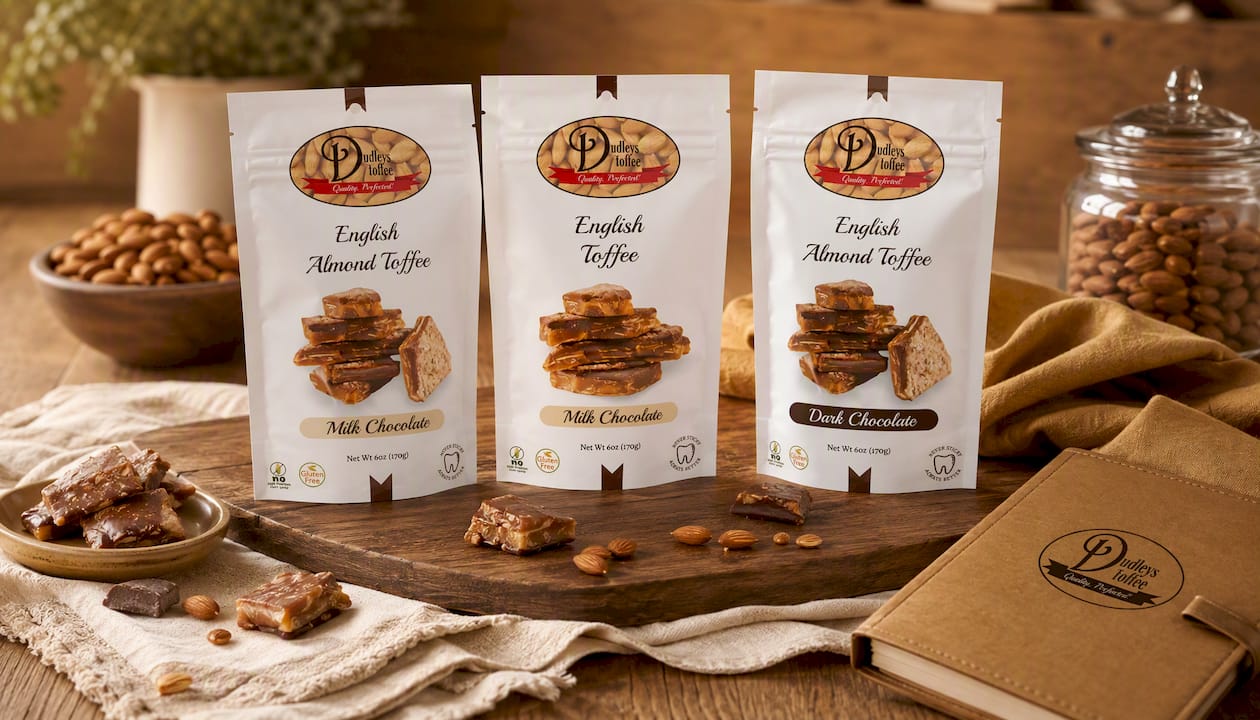
If you’re gifting, our Milk Chocolate English Almond Toffee (6oz) and Dark Chocolate English Toffee (6oz) bags seal in freshness for weeks after they land on your counter. Planning a school fundraiser or office gift drive? The Milk Chocolate Fundraiser bags and Case of 24 are built for exactly that kind of bulk order, and our wholesale program covers retailers and specialty shops looking to stock small-batch toffee. Order today from our product page and taste the difference small-batch, gluten-free, Indiana-made toffee makes.
A Note on Timing Your Toffee Gift
Order early for the holidays. Toffee arrives freshest when it’s shipped a week or two before you need it, not weeks ahead of time sitting in a warm hallway. In summer, ask about cold-pack shipping to protect that soft, buttery texture in transit. And if you end up with extra, freeze it or share it. Toffee was always meant to be passed around the table.
— Dudley’s Toffee
Sources
- The Nibble — How to store toffee
- EatHealthy365 — What Is the Shelf Life of Toffee?
- Appliance Update — Does Toffee Need to be Refrigerated?
FAQ
Does Toffee Ever Go Bad?
Yes. Toffee can turn rancid from oxidized butter or nut oils, pick up moisture and become sticky, or develop mold if it’s stored somewhere warm and damp for too long.
Which Candy Has the Longest Shelf Life?
Hard, low-moisture candies with sealed commercial packaging tend to last the longest, often many months to a year unopened. Toffee falls into that category too when it’s vacuum-sealed, though homemade batches without preservatives have a much shorter window of 2 to 3 weeks at room temperature.
Do You Refrigerate Toffee?
Refrigeration isn’t required, but it helps for very butter-rich recipes or hot, humid kitchens. Wrap it tightly first, since loose wrapping in the fridge invites condensation that makes toffee sticky once it warms back up.
Is Toffee Just Overcooked Caramel?
Not exactly. Both start from sugar and butter cooked together, but toffee is cooked to a higher temperature than caramel, which drives out more moisture and gives it that firmer, snappier bite rather than caramel’s chew.
Recommended
Share