
Soft Toffee Candy: A Complete Guide for Gift Shoppers
Soft toffee candy is a chewy, buttery confection cooked precisely to the soft-crack or soft-ball stage, between 245–250°F, producing a pliable, melt-in-your-mouth texture that sets it apart from brittle hard toffee. The industry term for this style is “soft-crack toffee,” though candy lovers commonly call it soft chewy toffee or soft chew toffee. The key ingredients are unsalted butter, granulated sugar, and heavy cream or milk. Temperature and ingredient balance together determine whether you get a yielding, buttery chew or an accidental jawbreaker. Dudley’s Toffee, a family-owned Indiana company, has built its entire reputation on getting that balance exactly right, crafting small-batch English almond toffee that melts cleanly without sticking to your teeth.
What is soft toffee candy and how does it differ from hard toffee?
Soft toffee and hard toffee share the same base ingredients, but cooking temperature separates them completely. Soft toffee cooks to 245–250°F, while hard toffee reaches 300–310°F (149–154°C). That extra heat drives off more moisture, turning the candy rigid and brittle instead of chewy and yielding.
The texture difference also comes from how milk solids behave during cooking. Soft toffee’s creamy chew results mainly from the reduction of milk solids rather than crystallized sugar alone. This is what separates a well-made soft toffee from a caramel, which relies more heavily on dairy and less on sugar concentration.
Soft caramel candy and soft toffee are close cousins, but toffee contains more butter and cooks slightly hotter. The result is a richer, more complex flavor with a firmer bite that still yields pleasantly. Gift shoppers often find soft toffee chews more crowd-pleasing than caramels because the butter-forward flavor reads as more indulgent and less one-dimensional.
Understanding this distinction matters when you are shopping for quality. A candy labeled “toffee” that dissolves instantly like a caramel has likely been undercooked. A piece that cracks and splinters has been overcooked. The ideal soft toffee texture is firm enough to hold its shape yet yielding and chewy, achieved through precise temperature control and careful ingredient ratios.
How is soft toffee candy made, and how do cooking techniques affect texture?
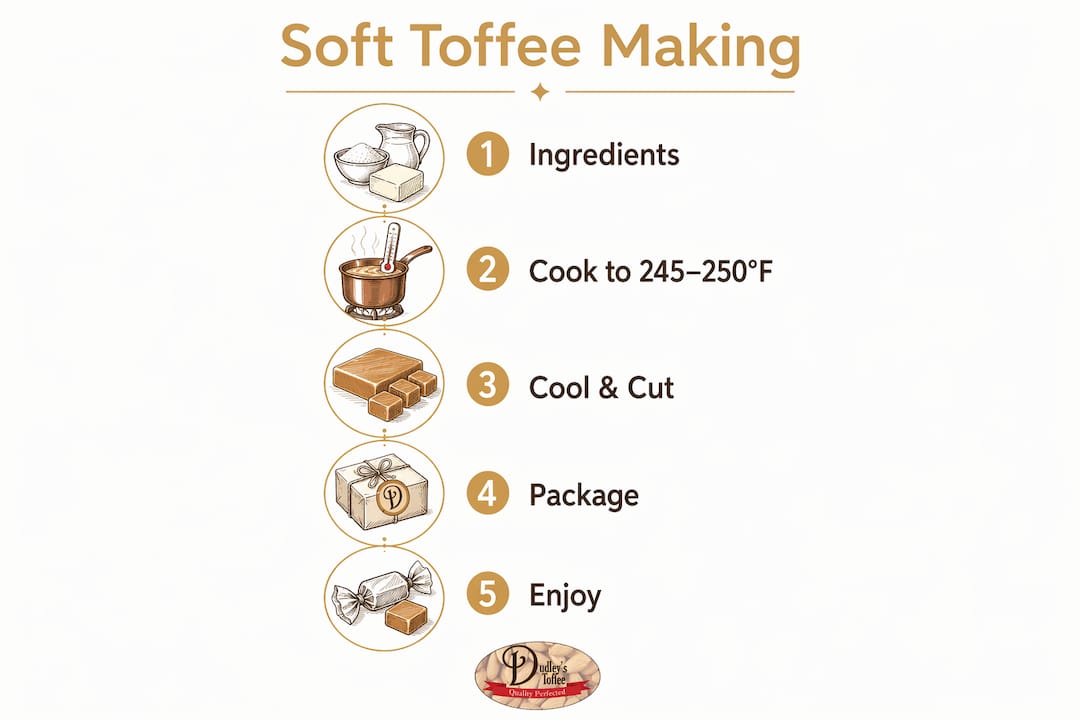
The cooking process for soft chewy toffee follows a clear sequence, and each step carries real consequences for the final texture.
- Combine butter, sugar, and cream. Use high-quality unsalted butter for smooth emulsification with heavy cream or milk. Low-quality butter introduces water content that disrupts the emulsion and leaves a waxy or oily feel.
- Cook over medium heat while stirring. Constant stirring prevents hot spots that cause scorching. Scorched sugar produces bitter off-flavors that no amount of chocolate coating can hide.
- Monitor temperature with a candy thermometer. Clip the thermometer to the side of the pan so the tip sits in the candy, not touching the bottom. Read at eye level for accuracy.
- Verify with the cold water test. Drop a small amount of candy into cold water. The cold water test confirms the soft-crack stage when the candy forms a pliable, firm ball you can bend without it snapping. Experienced candy makers often trust this tactile check over the thermometer alone, since thermometer calibration can drift.
- Add glucose or corn syrup if the recipe calls for it. Glucose syrup prevents sugar crystallization, ensuring a smooth, elastic texture. Without it, the candy can turn grainy as sugar molecules recrystallize during cooling.
- Pour into a prepared pan and cool completely before cutting or wrapping.
The two most common mistakes are overcooking, which produces a hard, brittle piece, and undercooking, which leaves the candy too soft to hold its shape. Both errors come from inattention during the final 10–15 degrees of cooking, when temperature rises fastest.
Pro Tip: If you do not own a candy thermometer, use the cold water test as your primary check. Drop a small spoonful into a glass of cold water and feel the result. A pliable ball that bends without snapping tells you the candy is ready. A ball that snaps means you have gone too far.
What varieties and flavor profiles of soft toffee candy are popular?
Soft toffee chews come in a wide range of flavor profiles, and the best versions layer texture with taste rather than relying on sweetness alone.
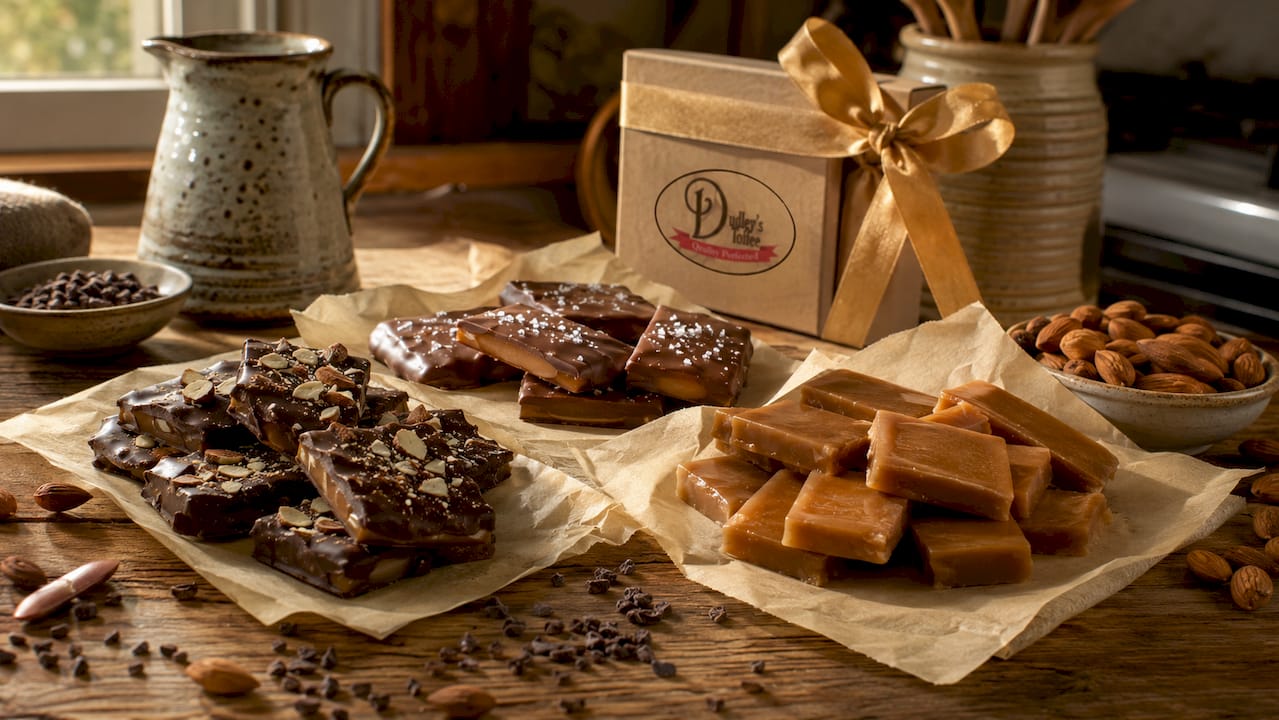
- Nut inclusions. Roasted almonds, pecans, and walnuts are the most popular additions. Roasting deepens their flavor and adds a satisfying crunch that contrasts beautifully with the chewy toffee base. Almonds are the classic choice for English-style toffee, as seen in Dudley’s Toffee’s signature recipe.
- Chocolate coatings. Milk chocolate delivers a sweeter, creamier finish. Dark chocolate adds bitterness that cuts through the richness of the butter and sugar, creating a more complex bite. Dudley’s Toffee offers both milk and dark chocolate varieties, giving shoppers a choice based on personal preference or gifting occasion.
- Milk-toffee variations. Some recipes use caramelized milk solids as a primary flavor driver, producing a creamy sweetness reminiscent of dulce de leche. These versions tend to be softer and more fudge-like than butter-forward English toffee.
- Salted toffee. A light sprinkle of flake salt on the chocolate coating sharpens every other flavor in the piece. Salt suppresses bitterness, amplifies sweetness, and makes the buttery notes more pronounced. This is one of the most effective flavor contrasts in confectionery.
- Soft chocolate toffee bars. These combine a chewy toffee base with embedded chocolate pieces or a full chocolate enrobe, creating a candy that reads more like a premium chocolate bar than a standalone toffee piece.
Knowing these categories helps gift shoppers choose with confidence. A dark chocolate English almond toffee suits coffee lovers and those who prefer less sweetness. Milk chocolate toffee works well for broader audiences, including children and those who prefer a gentler flavor. You can read more about chocolate and toffee pairings to sharpen your selection before buying.
How should soft toffee candy be stored to maintain freshness?
Proper storage keeps soft chewy toffee at its best and prevents the two most common problems: sticking and drying out.
- Use airtight containers at room temperature. Airtight storage preserves toffee’s texture for up to two weeks. Exposure to air causes the surface to become tacky or, in dry climates, to harden unevenly.
- Wrap pieces individually. Individual wrapping prevents sticking between pieces and maintains freshness, which is why premium retailers and gift makers wrap each piece before packaging. This also makes gifting and sharing far more convenient.
- Avoid refrigeration. Cold temperatures introduce condensation when the candy returns to room temperature. That moisture softens the chocolate coating and can make the toffee itself sticky or gummy.
- Freeze for long-term storage. If you need to store toffee beyond two weeks, freeze it in an airtight container or zip-lock bag with the air pressed out. Thaw at room temperature without opening the container, allowing the candy to warm gradually and avoid condensation.
- Keep away from strong odors. Toffee absorbs surrounding smells easily. Store it away from onions, garlic, or strongly scented candles.
Pro Tip: Place a small piece of parchment paper between layers of toffee in a storage tin. This prevents pieces from fusing together even when individually wrapped, and it makes a beautiful presentation when you open the tin as a gift.
Where can you buy high-quality soft toffee candy?
The best soft toffee candy comes from makers who control every variable: ingredient sourcing, cooking temperature, batch size, and packaging. Here is what to look for and where to find it.
What makes a soft toffee worth buying?
High-quality soft toffee is handcrafted in small batches, uses real butter and cream, contains no high fructose corn syrup, and is free from artificial preservatives. Gluten-free certification matters for shoppers buying gifts for mixed groups, since dietary restrictions are common at corporate events, holiday parties, and fundraisers.
Retail pack sizes for premium toffee typically run between 135g and 170g for individual gifting. Bulk options reach up to 13 lb boxes for events, fundraisers, or wholesale buyers. Individually wrapped pieces within those bulk boxes are the standard for any candy intended for retail or gifting, since unwrapped bulk toffee loses freshness and sticks together quickly.
Dudley’s Toffee: handcrafted in Indiana
Dudley’s Toffee produces English almond toffee in small batches at its Indiana facility. The toffee is gluten-free, contains no high fructose corn syrup, and is available in both milk and dark chocolate. Each piece is coated in chocolate and made with premium unsalted butter, which is why the texture stays buttery and clean rather than waxy.
| Format | Best for | Chocolate option | Notes |
|---|---|---|---|
| 6 oz retail bag | Personal gifts, sampling | Milk or dark | Individually wrapped pieces |
| Case of 24 bags | Corporate gifting, events | Milk chocolate | Consistent presentation across recipients |
| Fundraiser packs | School and nonprofit fundraising | Milk or dark | Priced for resale margin |
| Wholesale bulk | Retailers, gift shops | Milk or dark | Contact Dudley’s Toffee directly |
Dudley’s Toffee ships nationwide through its online store, making it easy to send handcrafted Indiana-made toffee to recipients across the country. For shoppers buying for events or retail resale, the wholesale program offers bulk pricing with the same small-batch quality. You can also explore the full range of toffee flavors and varieties to find the right match for your occasion.
Key Takeaways
The most effective way to choose and enjoy soft toffee candy is to understand how cooking temperature, ingredient quality, and proper storage work together to produce a chewy, buttery texture worth savoring.
| Point | Details |
|---|---|
| Temperature defines texture | Soft toffee cooked to 245–250°F stays chewy; higher heat produces brittle hard toffee. |
| Butter quality matters | Unsalted, high-quality butter prevents a waxy feel and ensures smooth emulsification. |
| Glucose syrup prevents graininess | Adding glucose or corn syrup stops sugar recrystallization and keeps texture elastic. |
| Store airtight at room temperature | Airtight containers preserve freshness for up to two weeks; refrigeration harms texture. |
| Individual wrapping is the gold standard | Wrapped pieces stay fresh longer and make gifting clean, convenient, and presentable. |
What we have learned from years of making soft toffee
People often assume soft toffee and caramel are interchangeable. They are not. Caramel leans on dairy for its flavor and texture. Toffee leans on butter and precise heat. That distinction changes everything about how a piece feels in your mouth and how it pairs with chocolate or nuts.
The most common mistake shoppers make is equating softness with quality. A toffee that dissolves instantly has been undercooked or loaded with additives to mimic chewiness. True soft toffee holds its shape, yields with a gentle bite, and finishes clean. At Dudley’s Toffee, we cook every batch to the exact temperature that produces that balance, and we check it by feel as well as by thermometer.
Small-batch production is not a marketing phrase for us. It is a practical necessity. Larger batches cook unevenly, making it harder to hit the soft-crack stage consistently across the whole pot. Smaller batches give us control, and control gives you a better piece of candy every time.
For gifting, the wrapping matters as much as the candy itself. A beautifully packaged toffee communicates care before the recipient even takes a bite. We wrap every piece individually for exactly that reason. Whether you are sending a thank-you gift or stocking a fundraiser table, the presentation reflects the quality inside.
— Dudley’s Toffee
Handcrafted toffee worth giving and keeping
Dudley’s Toffee brings together premium ingredients, small-batch craftsmanship, and genuine Indiana pride in every piece it produces.
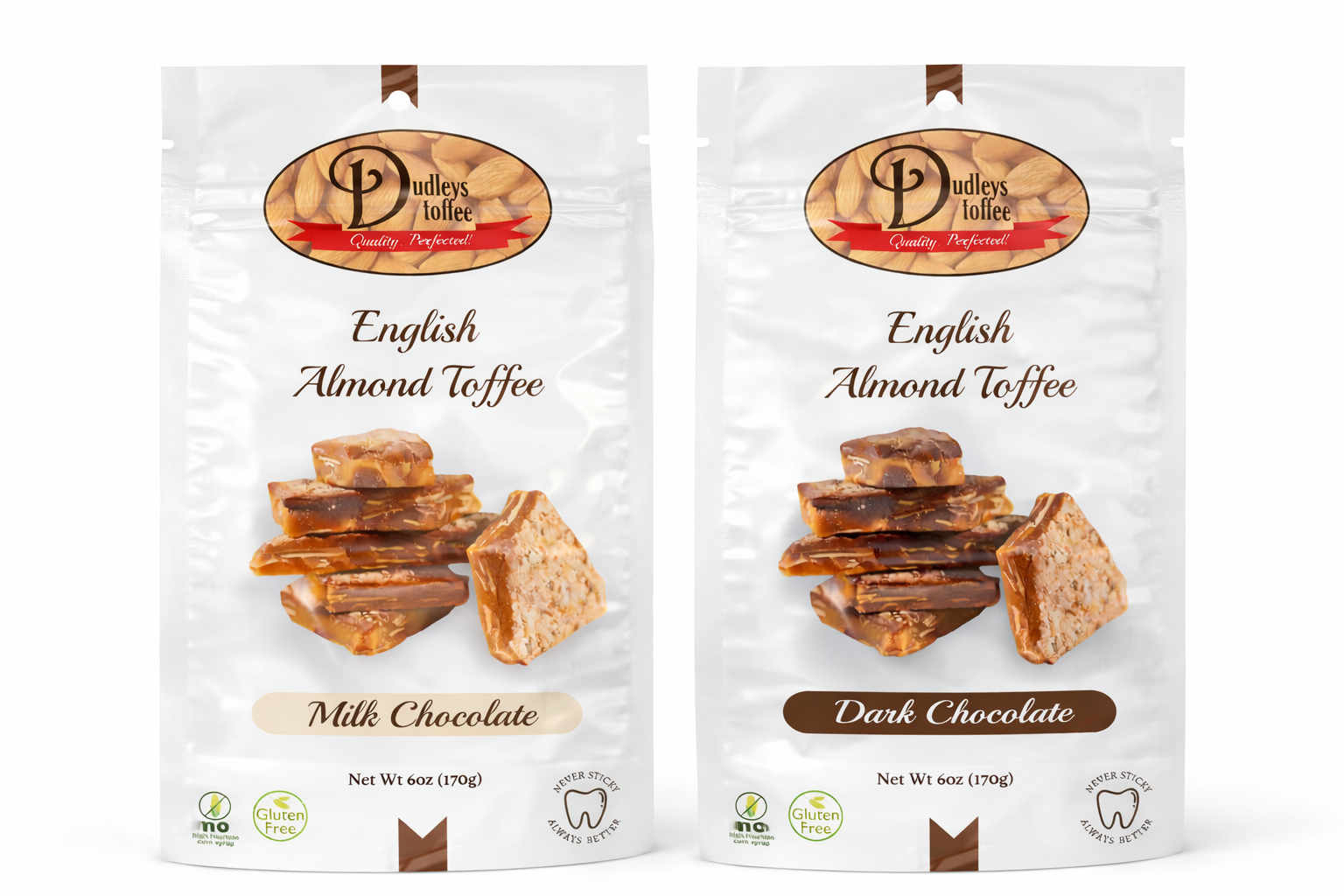
The toffee is gluten-free, made without high fructose corn syrup, and available in milk chocolate English almond toffee and dark chocolate English almond toffee varieties. Both ship nationwide in 6 oz bags, cases of 24, and fundraiser packs sized for groups. Whether you are shopping for a holiday gift, a corporate thank-you, or a fundraiser that needs to impress, Dudley’s Toffee delivers a product that speaks for itself. Visit the online store to find the right format for your occasion and taste.
FAQ
What is the difference between soft toffee and caramel?
Soft toffee contains more butter and cooks to a higher temperature than caramel, producing a firmer, richer chew. Caramel relies more heavily on dairy and cooks at a lower temperature, resulting in a softer, creamier texture.
How long does soft toffee candy stay fresh?
Stored in an airtight container at room temperature, soft toffee stays fresh for up to two weeks. Individually wrapped pieces last longer and resist sticking better than unwrapped candy.
Can you freeze soft toffee candy?
Yes. Place toffee in an airtight container, press out excess air, and freeze. Thaw at room temperature without opening the container to prevent condensation from softening the chocolate coating.
What nuts work best in soft chewy toffee?
Roasted almonds, pecans, and walnuts all pair well with soft toffee. Roasting deepens their flavor and adds a crunch that contrasts with the chewy base. Almonds are the traditional choice for English-style toffee.
Is Dudley’s Toffee gluten-free?
Yes. Dudley’s Toffee is gluten-free and contains no high fructose corn syrup, making it a suitable gift for guests with common dietary restrictions.
Recommended
Share