

Avoid Delivery Damage: Gift Box vs Basket for Shipped Gifts
Choose a box when the gift will travel, needs to feel curated, or is going to one person; choose a basket when you’re hand-delivering something abundant to a group. The decision comes down to three factors: shipping distance, who’s receiving it, and whether you want a slow reveal or an instant display. Dudley’s Toffee, shipped nationwide in individual gift bags, is a good example of a product that performs better boxed than basketed.
TL;DR:
- Shipping a gift favors a sturdy box over a basket to prevent contents from shifting or getting damaged during transit.
- Gift boxes create a more controlled unboxing experience with layered reveals and can be customized for consistency and branding.
- For group gifts or in-person handovers, baskets provide immediate visual warmth, but for shipping, minimize loose filler and secure items snugly inside.
- Well-chosen and thoughtfully packaged items, such as three to four quality products, outperform numerous cheap fillers in perceived value and generosity.
- When ordering or shipping, verify that the gift includes protective outer packaging, cold packing for perishables, and clear photos to avoid damage and vague protection claims.
Table of Contents
- Gift Box vs Basket: Presentation and the Unboxing Experience
- Shipping, Durability, and Practical Packing Considerations
- Which Occasions and Recipients Suit Each Format?
- Cost, Perceived Value, and How Item Count Affects Impressions
- How to Choose: Decision Checklist, Vendor Questions, and Red Flags
- Dudley’s Toffee: Product-Aware Guidance on Packaging and Shipping Gourmet Confections
- Customization and Personalization Options for Boxes and Baskets
- Our Take: What Actually Matters When You’re Choosing a Format
- Ready to Send a Gift That Travels Well?
- Sources
- FAQ
Gift Box vs Basket: Presentation and the Unboxing Experience
A box and a basket tell two different emotional stories. Open a box, and you get a sequence: lid off, tissue paper parted, contents revealed one layer at a time. Set a basket on a counter, and everything is visible at once, an immediate wall of color and abundance.
That difference matters more than it sounds. Structured boxes have grown in popularity for luxury gifting partly because unboxing has become its own cultural moment, and a box supports that pacing in a way an open basket simply cannot.
What makes a box feel expensive isn’t the cardboard. It’s the details inside:
- Tissue paper or crinkle fill that creates a moment of discovery
- Compartments that keep items from touching and looking jumbled
- A recipe card, info card, or short note that adds context
- Branded ribbon, stickers, or a wrap that signals intention
Baskets can earn keepsake value too, especially if the container itself is reusable. But build quality, not format, is what separates a gift that gets saved from one that gets tossed with the wrapping paper.
Shipping, Durability, and Practical Packing Considerations
If a gift is getting mailed, that changes everything. A box generally protects contents better in transit because it stacks cleanly on a delivery truck and keeps items from shifting. A basket, by contrast, is open on top and its contents can slide, tip, or crush against each other every time the package gets jostled.
Here’s how to pack a shipped gift so it arrives the way it left:
- Use a sturdy outer shipping box, even if the gift itself is presented in a decorative inner box or basket.
- Fill every gap with crinkle paper or air pillows so nothing moves during transit.
- Add insulated liners or cold packs for anything perishable, especially chocolate or butter-based confections.
- Seal loose items in cellophane and tape it closed before boxing, so spills stay contained.
Pro Tip: Order hand-packed gifts at least a few days before you need them. Testing on gift shipments shows that damage risk climbs the longer a package sits in transit without adequate outer protection, so building in buffer time protects both the gift and your gifting deadline.
Which Occasions and Recipients Suit Each Format?
Match the format to who’s receiving the gift and how, not just to what looks nicer on a shelf.
Boxes tend to work best for:
- Corporate and client gifts, where consistency across dozens of recipients matters
- A single recipient who will appreciate a personal, curated selection
- Anything shipped, since boxes travel with far less risk of damage
- Premium or gourmet treats where packaging signals quality
Baskets tend to work best for:
- Shared office treats meant to be picked over by a group
- Get-well or sympathy gifts delivered in person, where visual warmth matters immediately
- Housewarming or hostess gifts handed off at the door
- Group celebrations like a team win or a retirement send-off
If you’re set on a basket but it’s heading somewhere by mail, you can borrow a trick from box gifting: minimize loose filler, anchor items so they don’t roll, and wrap the whole thing in cellophane before it goes into a shipping carton.
Cost, Perceived Value, and How Item Count Affects Impressions
More items don’t automatically mean a better gift. What reviewer testing on gift boxes actually found is that three or four well-chosen items in thoughtful packaging outperform a basket stuffed with a dozen cheap fillers.
A few rules of thumb:
- Aim for a minimum of three meaningful items, not a pile of small extras.
- Spend your budget on one or two standout items rather than spreading it thin across many.
- Add a card, note, or short description; it raises perceived value at almost no cost.
- Boxes with fewer quality items often appear more generous than baskets overloaded with lower-value fillers at the same price point.
Packaging quality closes the gap fast. A single premium item, wrapped well, can outshine a basket that looks impressive from a distance but feels hollow up close.
How to Choose: Decision Checklist, Vendor Questions, and Red Flags
Run through this before you buy or ship anything:
- Will it ship or travel by hand? If it’s shipping, lean box. If you’re delivering it yourself, either format works.
- Is anything perishable? Chocolate, baked goods, and dairy need cold-pack protection regardless of container.
- Who is the recipient? One person, a curated box; a group, a basket or a larger boxed assortment.
- How many people will share it? More recipients favor abundance and visibility; fewer favor curation.
- What’s the budget? Fewer quality items in good packaging beat more items in flimsy wrap.
Before ordering from any seller, ask a few direct questions: Does the gift ship inside a protective outer shipping box? Are perishable items cold-packed with insulation or dry ice? Can you see photos of how past orders were packed?
Editorial testing at Forbes found that boxed or well-protected options consistently outperform open baskets for corporate and bulk gifting, where a single damaged arrival can undercut an entire order.
Watch for these red flags: no packing photos anywhere on the site, excessive cheap filler padding out the item count, and vague or missing language about how shipping protection actually works.
Dudley’s Toffee: Product-Aware Guidance on Packaging and Shipping Gourmet Confections
Dudley’s Toffee is handcrafted in small batches in Indiana, using a softer, buttery English almond toffee recipe that’s gluten-free and made without high fructose corn syrup, in both milk and dark chocolate. Confections like this are sensitive to heat, humidity, and rough handling, which shapes how they should be packed for gifting.
A few things matter most:
- Keep toffee in its sealed inner bag until the moment of gifting, so moisture and oils don’t migrate into other items.
- Use insulated liners or cold packs for warm-weather shipping to protect texture.
- Choose a compartmentalized box rather than an open basket if toffee is traveling alongside other treats.
- For groups or fundraisers, individually bagged 6oz portions distribute more cleanly than one shared container.
That’s part of why Dudley’s Toffee offers gift-ready 6oz bags alongside case-quantity options for larger events and fundraising drives.
Customization and Personalization Options for Boxes and Baskets
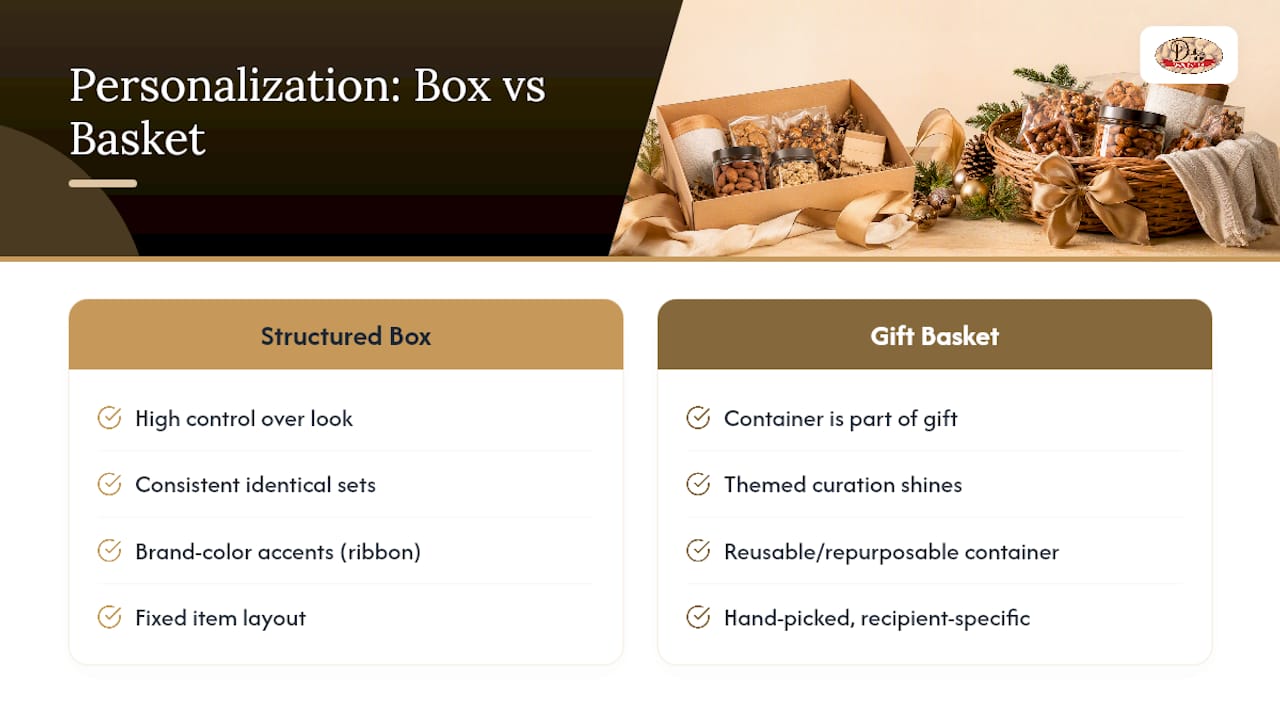
Boxes generally offer more control over personalization. You can line the interior with a themed color, tuck in a printed note, add a wax seal or ribbon in a company’s brand colors, and arrange items in a fixed layout that always looks intentional no matter who assembles it. That consistency is a big reason structured boxes have taken over corporate gifting: a hundred boxes can look identical, which matters when a client or employee list is long.
Baskets personalize differently. They shine when the container itself becomes part of the gift, a wine crate for a host, a garden trug for someone who loves flowers, a mixing bowl for a home baker. Themed curation and reusable containers turn a basket from generic to specific, and that extra layer of thought is what keeps it from reading as padded filler.
If personalization matters most to you, ask which format lets you say something specific about the recipient, not just something generic about the occasion. A monogrammed ribbon on a box and a hand-picked theme in a basket accomplish the same goal through different means.
Our Take: What Actually Matters When You’re Choosing a Format
Most gift advice treats this like an aesthetic debate, box versus basket, minimalist versus abundant. That framing misses the point. The real question is logistical: is this gift traveling, and who’s on the other end?
We think the industry undersells how much shipping risk should drive the decision. A gorgeous basket that arrives with a toppled candle and a cracked jar isn’t a gorgeous basket anymore, it’s a cleanup problem. Testing consistently shows that packaging quality, not item count, drives both arrival condition and perceived value. That’s the detail most casual gift guides skip past on their way to prettier photos.
Our advice: default to a box for anything shipped or corporate, and reserve baskets for gifts you’re placing directly into someone’s hands. Spend your money on fewer, better items and solid packing materials before you spend it on filler. A well-packed box of real substance beats an overstuffed basket every time it has to survive a delivery truck.
— Dudley’s Toffee
Ready to Send a Gift That Travels Well?
If you’re leaning toward a box after weighing shipping risk, Dudley’s Toffee gives you a straightforward option: handcrafted English almond toffee, packed and shipped in protective outer boxes designed to hold up during transit, not just look nice on a table.
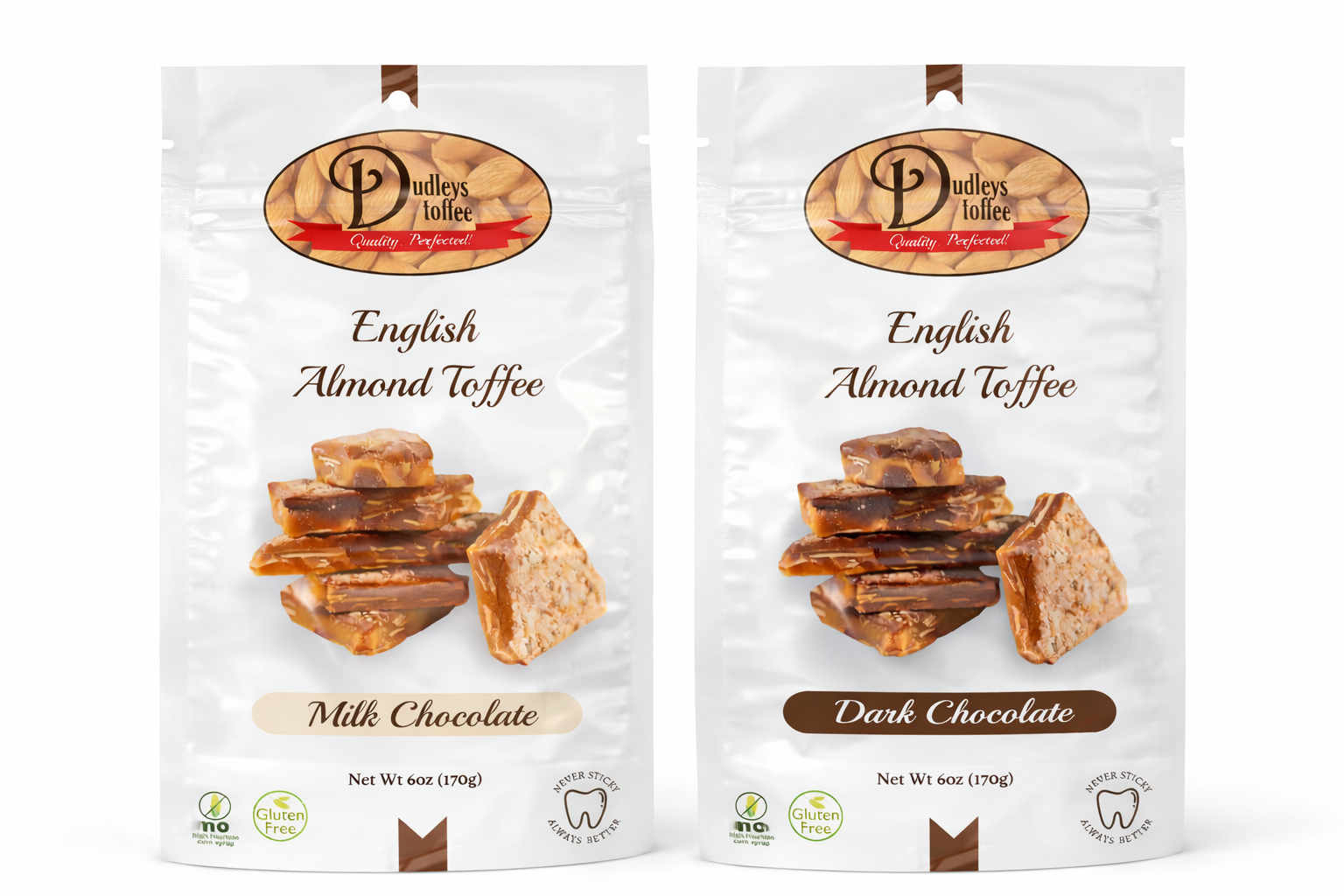
Every batch is made small in Indiana, gluten-free, free of high fructose corn syrup, and available in milk or dark chocolate, so you’re not guessing at ingredients when you send it to a client, coworker, or family member. For a single recipient, the Dudley’s English Almond Toffee 6oz fits neatly into a curated box alongside a card or a couple of complementary treats. For offices, fundraisers, or larger gifting lists, the case of 24 in milk chocolate or dark chocolate keeps things consistent without the packing guesswork a basket demands. Place your order today and let the packaging do the heavy lifting.
Sources
- The Best Gift Baskets and Food Gifts, Tested
- Gift Box vs Gift Basket: Which One Actually Lands Better
- Gift Boxes vs. Gift Baskets: How Luxury Gifting Has Changed
- Best gift basket
FAQ
What Is a Gift Basket Called?
A gift basket is sometimes called a hamper, especially in British English, or a curated gift assortment when the container isn’t a traditional woven basket.
What Do You Call a Gift Box?
A gift box is often called a curated box, a gift crate, or a presentation box, terms that describe a structured container built for a staged reveal rather than open display.
What’s Better Than a Gift Basket?
For shipped, corporate, or premium gifts, a curated gift box usually outperforms a basket because it protects contents better in transit and creates a more deliberate unboxing experience.
Is a Gift Box or Basket Better for Fundraising Events?
For fundraisers involving many recipients, individually packaged items like Dudley’s Toffee’s 6oz fundraiser bags tend to distribute and ship more reliably than a shared basket.
What Is Another Name for a Gift Basket?
Beyond “hamper,” gift baskets are sometimes called gift towers, gift crates, or themed gift sets, depending on the container and how the items are arranged.
Recommended
Share