

Plain Toffee Has 0 mg of Caffeine: Read the Coating, Not the Candy
Plain toffee contains no caffeine. Traditional English toffee, made from butter, sugar, cream, and nuts, has nothing in its recipe that would introduce a stimulant. Caffeine only shows up when a maker adds chocolate, coffee, espresso, or instant coffee to the mix. A chocolate coating contributes trace amounts, while a coffee-infused toffee can carry a measurable dose, so the real question isn’t “does toffee have caffeine” in general, but which toffee you’re holding.
TL;DR:
- Plain English toffee made from butter, sugar, cream, and nuts contains no caffeine, as verified by nutrition data showing zero milligrams per serving.
- Chocolate coatings, especially dark chocolate, contribute trace amounts of caffeine due to cocoa solids, with darker coatings containing more than milk chocolate.
- Coffee-infused toffee deliberately incorporates brewed espresso or instant coffee, resulting in higher caffeine levels depending on the recipe’s coffee content.
- A typical chocolate-coated toffee like a Heath bar contains roughly 6 mg of caffeine, which is minimal compared to a standard cup of coffee.
- For caffeine-sensitive individuals, choosing plain toffee or verifying ingredient lists for chocolate or coffee additives is the safest approach.
Table of Contents
- Which Types of Toffee Can Contain Caffeine?
- How Much Caffeine Is Really in a Piece?
- How to Check Whether Your Toffee Has Caffeine
- Who Should Watch Their Caffeine Intake From Toffee?
- Dudley’s Toffee: Where Our Products Stand on Caffeine
- Our Take: Read the Coating, Not the Candy
- Ready to Shop Toffee You Can Trust
- Sources
- FAQ
Which Types of Toffee Can Contain Caffeine?
Classic English toffee is built from four ingredients: butter, sugar, cream, and nuts, usually almonds. None of those contain caffeine, and that’s confirmed by nutrition data on plain toffee recipes, which lists 0 mg of caffeine per serving. If you’re eating traditional toffee straight, you’re eating a caffeine-free candy, full stop, at least until something else gets added to it.
Chocolate coatings change the equation. Cocoa solids naturally contain both caffeine and theobromine, a related stimulant compound. Dark chocolate carries more of both per gram than milk chocolate, since it uses a higher percentage of cocoa solids, which is why a dark-chocolate-dipped toffee will generally register a bit more caffeine than the same piece dipped in milk chocolate.
Coffee-infused toffee is a different animal entirely. Some confectioners intentionally build coffee flavor into the toffee itself, using brewed espresso or instant coffee powder folded into the caramelized sugar base before it sets. That’s a deliberate caffeine addition, not a byproduct of chocolate.
Here’s how to spot which category a toffee falls into just from its name or description:
- Plain or “original” toffee: butter, sugar, cream, nuts. No caffeine.
- Chocolate-dipped or chocolate-covered toffee: trace caffeine from the coating only.
- “Coffee toffee” or “mocha toffee”: caffeine is baked directly into the candy.
- Chocolate-and-coffee combination toffees: caffeine from both sources, so amounts run higher.
Reading the product name is a good first clue. Reading the ingredient list is the only way to be sure.
How Much Caffeine Is Really in a Piece?
The amounts are small, but they’re not zero once chocolate or coffee enters the picture. Chocolate-coated toffee typically contains trace caffeine per piece, and coffee-infused toffee can carry higher amounts depending on the recipe’s coffee content.
Chocolate-only reference point: A 1.4 oz Heath bar, a chocolate-coated toffee candy familiar to most American shoppers, is estimated to contain roughly 6 mg of caffeine, all of it coming from the chocolate coating rather than the toffee center.
That 6 mg figure is a useful benchmark. Compare it to an 8-ounce cup of drip coffee, which typically runs somewhere around 95 to 100 mg, and you can see that a chocolate-coated toffee piece is a rounding error by comparison. What moves the number:
- Percent cocoa in the coating: higher cocoa content means more caffeine per gram.
- Milk vs. dark chocolate: dark chocolate coatings tend to carry more stimulant content than milk chocolate.
- Thickness of the chocolate layer: a thin drizzle contributes less than a full dip.
- Amount of coffee used in coffee-infused recipes: brewed espresso concentrate adds more than a light dusting of instant coffee powder.
None of these figures are exact science from one candy maker to the next. Recipe explainers on coffee-infused toffee note that caffeine content scales with how much coffee goes into the batch, which means two “coffee toffee” products can differ meaningfully in strength. When you need a precise number rather than a general range, the manufacturer’s own nutrition panel or a direct answer from their kitchen is the most reliable source you’ll find.
How to Check Whether Your Toffee Has Caffeine
You don’t need a lab to figure out whether a bag of toffee is going to keep you up at night. You just need to know where to look.
- Scan the ingredient list first. Look for “chocolate,” “cocoa,” “cacao,” “theobromine,” “coffee,” “espresso,” “instant coffee,” or “coffee extract.” Any of these means caffeine is present.
- Check the nutrition facts panel. Some brands voluntarily list caffeine content in milligrams, especially on coffee-flavored products.
- Watch for vague flavor language. Terms like “chocolate flavor” or “natural flavor” without a listed cocoa ingredient can obscure what’s actually in the candy.
- Contact the maker directly if the label doesn’t answer your question, particularly for small-batch or artisanal toffee sold without a full nutrition panel. Most confectioners are happy to confirm ingredients, and many can point you toward a non-chocolate option if you’re avoiding caffeine entirely.
Our guide on reading allergen and ingredient statements covers the same label-reading habits that apply here, since caffeine sources and allergens both hide in the fine print.
Pro Tip: If a label says “chocolate flavor” but doesn’t list cocoa solids or cocoa butter anywhere in the ingredients, don’t assume it’s caffeine-free. Assume there’s a trace amount until the manufacturer confirms otherwise.
Who Should Watch Their Caffeine Intake From Toffee?
A few groups have good reason to pay attention here: children, pregnant and breastfeeding people, anyone with a stimulant sensitivity, and people managing certain heart or anxiety conditions. For these readers, the source of caffeine matters less than the total amount added to the day.
Put it in perspective: a chocolate-coated toffee piece with roughly 6 mg of caffeine sits close to a cup of decaf coffee, which typically carries 2 to 5 mg. A regular cup of coffee, by contrast, delivers roughly 95 mg or more. Coffee-infused toffee sits somewhere between those two points, closer to the coffee end depending on the recipe.
Simple rules that hold up in practice:
- Choose plain, non-chocolate toffee when you want a genuinely caffeine-free treat.
- Limit chocolate- or coffee-toffee servings to a piece or two if you’re sensitive to stimulants.
- Add up estimated milligrams across everything you eat in a day, not just your coffee cup.
- Remember that plain toffee, while caffeine-free, is still a sugar- and calorie-dense candy, so portion sense applies either way.
Dudley’s Toffee: Where Our Products Stand on Caffeine
Dudley’s Toffee builds every batch from the same traditional base: butter, sugar, cream, and almonds, handcrafted in small batches right here in Indiana. That base contains no added caffeine, full stop.
Our chocolate-dipped varieties are a different story, though a predictable one. Any trace caffeine in these products comes from the chocolate coating itself, not the toffee center underneath. That means our Milk Chocolate English Toffee (6oz) - FUNDRAISER, our Milk Chocolate English Almond Toffee (6oz), and our Dark Chocolate English Toffee (6oz) - FUNDRAISER each carry the same trace caffeine profile you’d expect from any milk or dark chocolate coating, and nothing more. All three are gluten-free and made without high fructose corn syrup. If you need ingredient confirmation for a dietary restriction or want to discuss a custom order without chocolate, our team is glad to help. Just reach out through our website before you order.
Our Take: Read the Coating, Not the Candy
Most explainers treat “does toffee have caffeine” as a single yes-or-no question, and that’s where they go wrong. The honest answer splits into two separate facts that rarely get separated cleanly: the toffee center is inert, and the coating or flavoring is where all the action happens.
We’d argue the conventional advice undersells how much the coating matters. A dark chocolate dip and a milk chocolate dip aren’t interchangeable from a caffeine standpoint, even though most shoppers treat “chocolate-covered toffee” as one category. If caffeine sensitivity is a real concern for you or someone you’re buying for, the smartest move is to skip the guessing game and go straight to the ingredient list, or better yet, ask the maker directly. That single habit solves more confusion than any milligram chart ever will.
— Dudley’s Toffee
Ready to Shop Toffee You Can Trust
If you want the reassurance of knowing exactly what’s in your candy, some handcrafted toffee brands provide that clarity without the guesswork other gourmet brands leave you to sort out on your own.
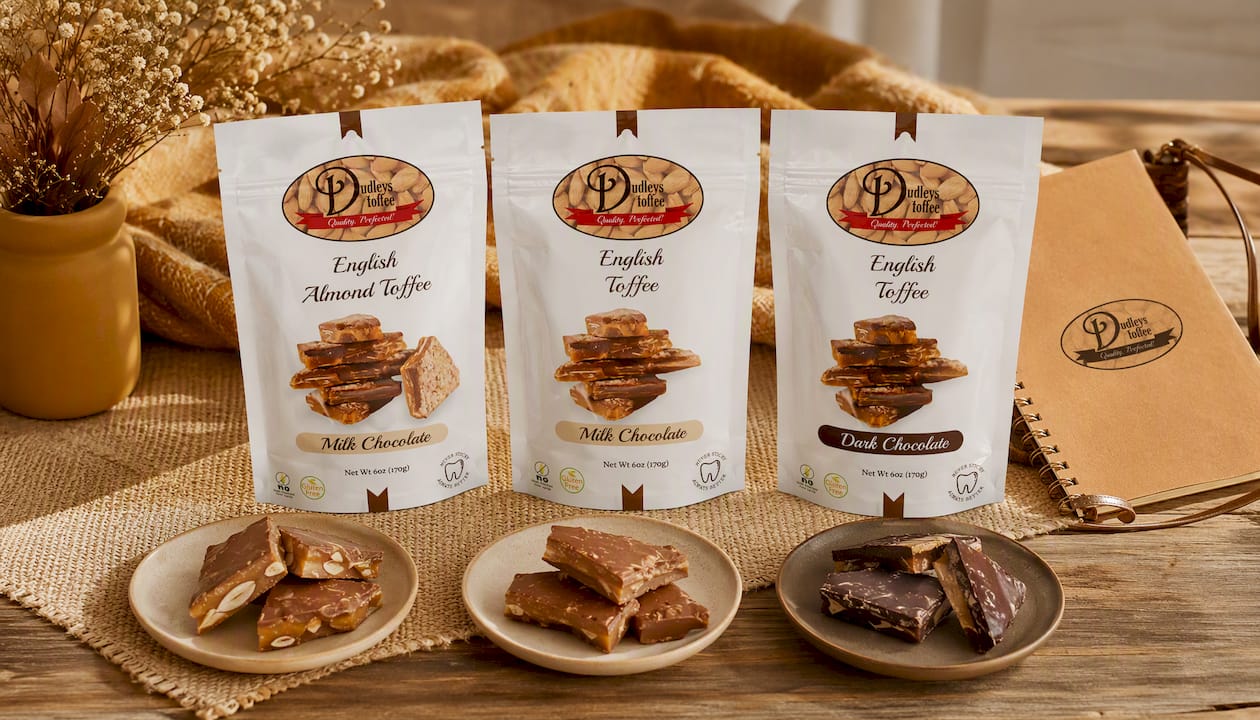
If caffeine-free is your priority, our Milk Chocolate English Almond Toffee (6oz) keeps things simple with a coating so light on cocoa that trace caffeine stays minimal, and the toffee center itself is entirely caffeine-free. Prefer a richer chocolate experience and don’t mind the trace caffeine that comes with it? Our Dark Chocolate English Toffee (6oz) - FUNDRAISER and Milk Chocolate English Toffee (6oz) - FUNDRAISER pages make great options for schools, teams, and community groups running a fundraising drive, with full ingredient details listed on each product page.
Shipping somewhere warm this season? Add the optional cold pack for warm weather shipping at checkout for $2.99 so your toffee arrives in the same handcrafted condition it left our Indiana kitchen. Browse the full lineup at Dudley’s English Almond Toffee and place your order today.
Sources
- Unwrapping the Mystery: Does English Toffee Have Caffeine? - TheFlexKitchen
- Coffee Toffee - SpiceCandies
- Nowjournal
- Toffee Nutrition Facts - EatThisMuch
FAQ
Does Toffee Have Coffee In It?
Not by default. Traditional toffee never includes coffee, but recipes and products labeled “coffee toffee” or “mocha toffee” deliberately add brewed espresso or instant coffee to the candy for flavor and caffeine.
Is There Caffeine in English Toffee?
Plain English toffee, made from butter, sugar, cream, and almonds, has no caffeine. Chocolate-dipped English toffee picks up trace caffeine from the coating, while coffee-infused versions add caffeine directly.
What Does Toffee Contain?
Traditional toffee contains just butter, sugar, cream, and often nuts like almonds, cooked together until the sugar caramelizes. Flavored versions may add chocolate, cocoa, coffee, or espresso, which is what introduces caffeine.
What Candy Has the Most Caffeine?
Coffee- or espresso-flavored candies and dark chocolate confections tend to carry the most caffeine among mainstream sweets, since both cocoa solids and added coffee are direct caffeine sources. A chocolate-coated toffee piece, by comparison, stays in the single-digit milligram range, similar to the roughly 6 mg found in a Heath bar.
How Much Does Dudley’s Toffee Cost?
Dudley’s English Almond Toffee is priced at $11.99 per bag. Current pricing for all sizes and fundraiser options is available directly on our website.