

National Toffee Day: Celebrate January 8 with English Toffee
National English Toffee Day falls on January 8 every year, and it’s one of the sweetest food observances on the American calendar. The day honors English-style almond toffee: a buttery, hard-crack confection typically coated in chocolate and finished with toasted almonds. Quick ways to mark the occasion:
- Eat a piece of premium handcrafted toffee
- Bake toffee into a favorite dessert
- Gift a bag to someone who deserves a treat
Table of Contents
- What is National English Toffee Day?
- A brief history of toffee day and its English roots
- How do you celebrate National English Toffee Day?
- Creative culinary uses for English toffee
- Key Takeaways
- Why January 8 deserves more attention than it gets
- Celebrate January 8 with Dudley’s Toffee
- Useful sources
- FAQ
What is National English Toffee Day?
National Day Calendar records January 8 as the official observance, dedicated specifically to the American interpretation of English-style toffee. That distinction matters because “English toffee” in the U.S. means something specific: butter and sugar cooked to the hard-crack stage, enrobed in chocolate, and topped with almonds. British toffee, by contrast, is often made with brown sugar and skips the nuts and chocolate coating entirely.
American English toffee is defined by four core elements:
- Butter and granulated sugar caramelized together to the hard-crack stage
- Chocolate coating, typically milk or dark
- Toasted almonds for crunch and depth
- Firm but not tooth-shattering texture when made well
The almond toffee candy tradition is deeply rooted in American confectionery culture, even though the “English” label is a nod to historical origins rather than a strict geographic claim.
A brief history of toffee day and its English roots
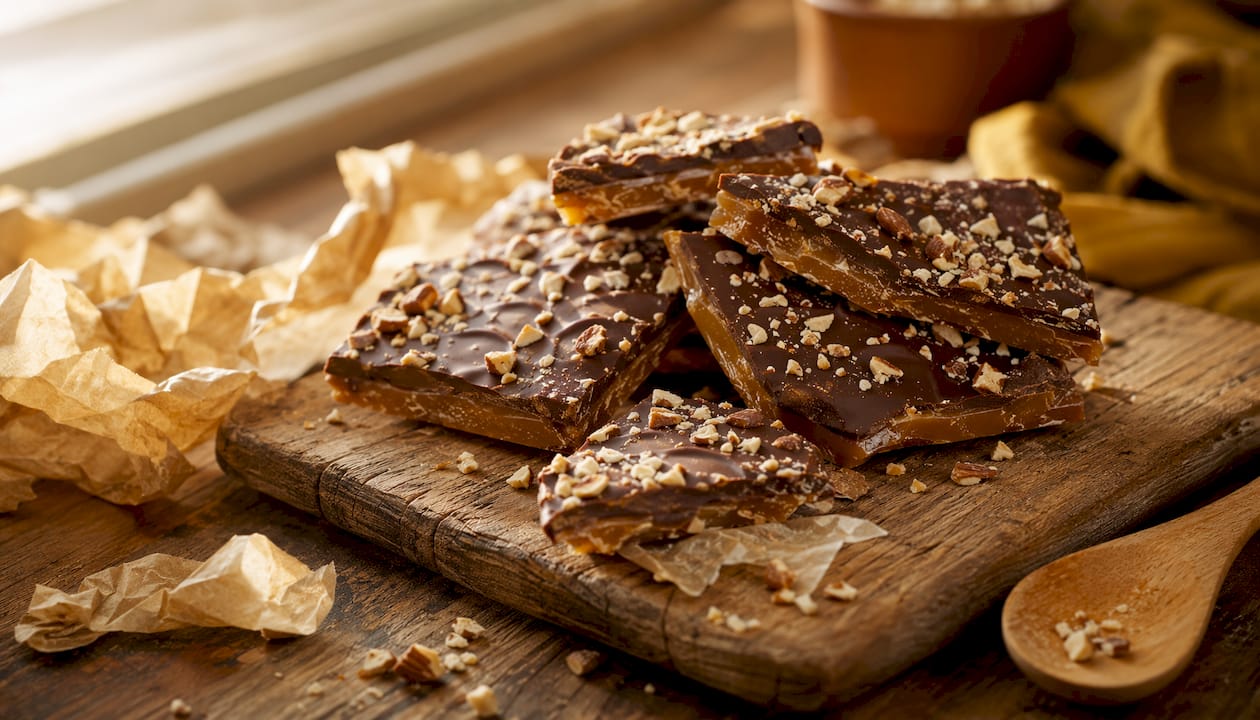
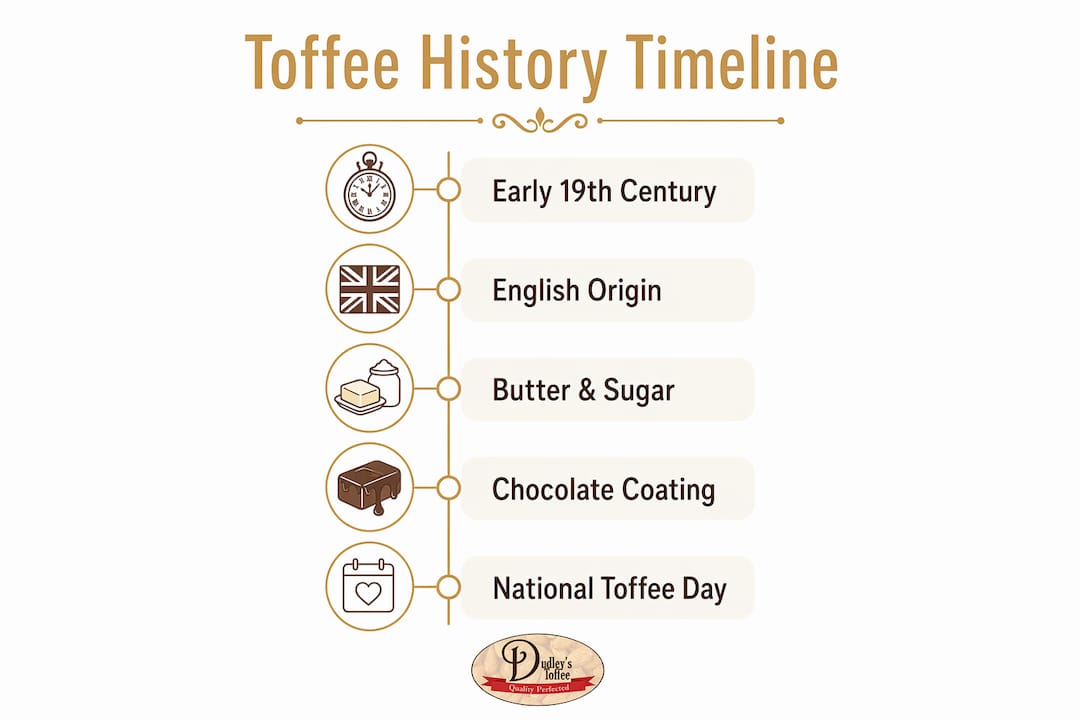
Toffee’s story begins in early 19th-century England. Wikipedia’s toffee entry traces the confection’s roots to that era, when sugar and butter were first combined and cooked to produce a hard, shelf-stable candy. The “English” designation traveled to America with the recipe and eventually became shorthand for the chocolate-and-almond version that U.S. candy makers refined over generations.
The January 8 observance is catalogued by food-holiday tracking sites, including National Today and CooksInfo, both of which note the day and its connection to the American candy tradition.
| Milestone | Details |
|---|---|
| early 19th-century | Toffee emerges in England; butter-and-sugar candy gains popularity |
| — | American confectioners add chocolate coating and almonds |
| — | “English toffee” becomes a recognized U.S. candy category |
| January 8 | National English Toffee Day observed annually in the U.S. |
How do you celebrate National English Toffee Day?
The simplest answer: eat great toffee, make some at home, or share a batch with people you care about. Here are a few ways to observe the day with real intention.
Make a batch from scratch. A classic homemade toffee comes together with just a few pantry staples. The Allrecipes toffee recipe and New York Times toffee recipe both confirm the same method:
- Toast raw almonds in a 350°F oven for a short time, then chop finely.
- Melt butter and granulated sugar together in a heavy saucepan over medium heat.
- Attach a candy thermometer and cook, stirring occasionally, until the mixture reaches the hard-crack stage and turns a light caramel color.
- Pour immediately onto a parchment-lined baking sheet and let bubbles subside.
- Sprinkle chocolate chips over the hot toffee, let them melt, then spread evenly.
- Press chopped almonds into the chocolate and let cool completely.
- Break into pieces and store in an airtight container at room temperature.
Pro Tip: A candy thermometer is non-negotiable for toffee. Pulling the mixture even 10°F short of 295°F leaves you with a sticky, chewy result instead of a clean snap. The Kitchn’s toffee guide recommends rinsing your stirring spoon after each stir to prevent sugar crystals from seeding the batch.
Beyond baking, celebrating toffee day can look like:
- Hosting a small tasting with milk and dark chocolate varieties side by side
- Tucking a bag of toffee into a gift basket for a friend or colleague
- Supporting a school or community group fundraiser that features toffee as the product
Creative culinary uses for English toffee
Toffee’s greatest culinary gift is texture contrast. Folded into soft desserts, it adds a satisfying crunch that transforms a good recipe into a memorable one. The Culinary Cellar highlights several tested applications worth trying:
- Ice cream topping or mix-in: Crush toffee into coarse shards and fold into vanilla or coffee ice cream before freezing, or scatter over a scoop as a finishing garnish.
- Blondie and brownie add-in: Stir chopped toffee into blondie batter just before baking. The pieces melt slightly at the edges and create pockets of caramel flavor throughout.
- Trifle layer: Alternate toffee pieces with whipped cream and sponge cake for a quick, impressive layered dessert.
- Crunchy tiramisu accent: Swap the traditional ladyfinger crumble for crushed toffee between mascarpone layers.
For pairing, dark chocolate toffee holds up beautifully against a bold evening roast coffee or a strong black tea. Milk chocolate toffee pairs naturally with a sweeter, nuttier roast like chocolate hazelnut coffee. A pinch of flaky sea salt over either variety sharpens the caramel notes considerably.
Readers looking for more baking inspiration can explore toffee bits for baking as a practical guide to using toffee as a baking ingredient year-round. Dudley’s Toffee is gluten-free and made without high fructose corn syrup, which makes it a reliable choice for bakers with dietary considerations.
Key Takeaways
National English Toffee Day on January 8 celebrates a distinctly American take on a British confection: butter-and-sugar toffee cooked to hard-crack, coated in chocolate, and finished with almonds.
| Point | Details |
|---|---|
| Celebration date | January 8 is National English Toffee Day, observed annually in the United States. |
| What English toffee is | Butter and sugar cooked to 295°F–300°F, coated in chocolate, and topped with toasted almonds. |
| Easy ways to observe | Make a batch at home, host a tasting, or gift a bag to someone you appreciate. |
| Culinary uses | Crushed toffee adds crunch to ice cream, blondies, trifles, and layered desserts. |
| Dudley’s Toffee | Handcrafted small-batch Indiana toffee in milk and dark chocolate, gluten-free, no high fructose corn syrup. |
Why January 8 deserves more attention than it gets
Most food holidays come and go without much fanfare, but National English Toffee Day has something the others lack: a genuinely misunderstood subject at its center. Most people think of toffee as a single thing. It isn’t. The gap between a mass-produced toffee and a small-batch, handcrafted version made with real butter and premium chocolate is as wide as the gap between a grocery-store croissant and one from a serious bakery. The ingredients are technically the same. The result is not.
What gets lost in most toffee conversations is texture. The hard-crack stage is not a suggestion; it’s the whole point. Toffee cooked even slightly short of 295°F turns sticky and chewy in ways that frustrate rather than satisfy. Toffee cooked with care, using quality butter and the right ratio of sugar, produces a clean snap and a slow, rich melt. That’s the version worth celebrating on January 8, and it’s the version Dudley’s Toffee has been making in Indiana, in small batches, with real ingredients, since the beginning.
Celebrate January 8 with Dudley’s Toffee
Handcrafted in small batches in Indiana, Dudley’s Toffee brings the same time-honored recipe to every bag: real butter, premium chocolate, toasted almonds, no high fructose corn syrup, and a gluten-free formulation you can feel good about sharing.
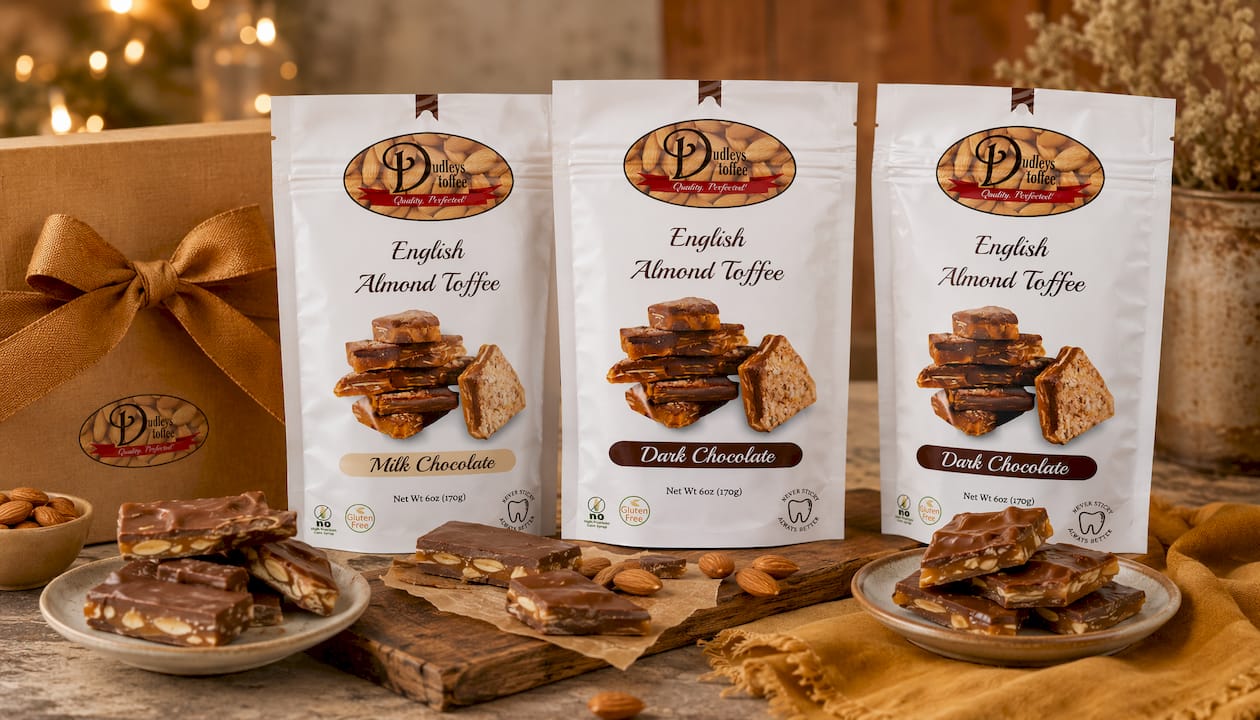
Whether you’re marking the holiday for yourself or looking for a meaningful gift, Dudley’s offers both milk and dark chocolate options ready to ship nationwide. The milk chocolate fundraiser edition and dark chocolate fundraiser edition are especially popular for groups, school programs, and community organizations looking to raise funds with a product people genuinely love. For a single-bag gift or personal treat, the dark chocolate English toffee is a perennial favorite. Visit Dudley’s Toffee to shop all varieties and find the right option for your January 8 celebration.
Useful sources
- National Today — National English Toffee Day: Calendar listing with history notes and upcoming dates.
- National Day Calendar — January 8: Observance details and toffee variety descriptions.
- CooksInfo — English Toffee Day: Short history and flavor variation notes.
- The Kitchn — Best Homemade Toffee Recipe: Step-by-step recipe with technique guidance and storage tips.
- Allrecipes — Best Toffee Ever: Classic four-ingredient toffee recipe with reader reviews.
- The Culinary Cellar — National English Toffee Day: Culinary application ideas and dessert inspiration.
FAQ
What is National English Toffee Day?
National English Toffee Day is an American food observance celebrated on January 8 each year. It honors English-style almond toffee: a buttery, hard-crack candy coated in chocolate and topped with toasted almonds.
What is toffee called in America?
In the U.S., the term “English toffee” refers specifically to the chocolate-and-almond-coated variety. Plain “toffee” can describe a broader range of butter-and-sugar candies, but the English toffee label signals the premium, nut-and-chocolate version most American candy makers produce.
What day is National Candy Day?
National Candy Day is observed on November 4. It celebrates candy broadly, while National English Toffee Day on January 8 focuses specifically on English-style toffee.
What country is famous for toffee?
England is historically associated with toffee’s origins, with references tracing back to the early 19th century. The American version, with its chocolate coating and almonds, evolved into its own distinct category and is what National English Toffee Day celebrates.
Recommended
Share