
Candy Fundraiser Ideas That Actually Raise Money
The best candy fundraiser ideas fall into four formats: prepackaged direct sales, candy grams, catalog or mail-order campaigns, and gift-pack style boxes, like toffee tins. For most school and nonprofit coordinators, a timed prepackaged direct sale, run over a two-week window with preorders and cashless checkout, beats the rest on a simple measure: profit raised per volunteer hour.
That format wins because it keeps inventory predictable, gives sellers a hard deadline that drives urgency, and layers onto payment tools your supporters already use. Preorders reduce waste and simplify volunteer coordination, and cashless payments through QR codes, Venmo, or PayPal remove the friction that stalls cash-only drives. Campaigns that run about two weeks, paired with visible progress tracking, tend to capture a meaningful share of sales in the final days as sellers race to hit their goal.
- Prepackaged direct sales: lowest effort, fastest cash, works for any age group
- Candy grams: great for Valentine’s Day or homecoming, minimal inventory risk
- Catalog/mail-order: best for spread-out supporter networks
- Gift packs and toffee tins: highest price point, best for corporate and holiday audiences
Key Takeaways
Prepackaged candy sales with preorders and cashless payment win on profit per volunteer hour, while premium options like toffee cut the number of units needed to hit the same goal.
| Point | Details |
|---|---|
| Pick format by capacity | Match quick cash, high profit, low volunteers, or recurring income to the right candy format before choosing a product. |
| Run a two-week window | Short campaigns with visible progress tracking sustain seller momentum and capture late sales. |
| Go cashless | QR codes and apps like Venmo or PayPal remove friction and consistently outperform cash-only drives. |
| Price with the formula | Profit per unit equals sale price minus cost, and units needed equals your goal divided by that profit figure. |
| Consider premium options | Dudley’s Toffee’s handcrafted, gluten-free toffee supports a higher price point, meaning fewer units to reach the same dollar goal. |
Table of Contents
- How to Choose a Candy Fundraiser by Goal and Capacity
- 12 Candy Fundraiser Ideas Worth Running
- What Belongs on Your Logistics and Compliance Checklist
- How Do You Price a Candy Fundraiser for Profit?
- The Playbook Most Fundraising Guides Get Wrong
- Ready to Order Toffee for Your Fundraiser?
- Sources
- FAQ
How to Choose a Candy Fundraiser by Goal and Capacity
Not every group needs the same format. A PTA raising quick cash for a field trip has different constraints than a nonprofit trying to build a recurring donor base, and matching format to goal is what separates a fundraiser that limps along from one that hits its number early.
Format success depends less on the product and more on matching it to your actual constraints: volunteer count, timeline, budget, and who’s buying. A youth soccer league selling candy bars to parents at practice has a captive audience and near-zero setup cost. A hospital foundation selling toffee gift packs to corporate donors needs longer lead time but earns far more per unit.
- Need cash fast (under a week): direct candy sales at pickup points, office sales, or a single restaurant-night tie-in
- Want maximum profit per sale: gift packs, tins, or premium toffee bundles sold to adult buyers
- Have almost no volunteers: preorder catalog sales or a virtual/mail-order campaign
- Want repeatable, recurring income: seasonal popups tied to holidays, run the same way every quarter
Audience matters as much as format. Kids respond to candy grams and buffet tables at events; adult workplace buyers respond better to bundled gift boxes and higher price points. Seasonality compounds this: demand spikes ahead of Christmas, Valentine’s Day, and Easter, and late August works as a secondary window tied to back-to-school energy.
Pro Tip: If you’re short on volunteers, skip the buffet-table events entirely. A preorder catalog with online checkout runs itself after the first week.
12 Candy Fundraiser Ideas Worth Running
Each idea below includes why it sells, how fast you can set it up, and roughly how many volunteers it needs.
- Prepackaged direct sales (catalog or box). Parents and coworkers buy on sight because there’s no waiting for delivery. Setup: pick a product, print order sheets, set a two-week deadline. Timeline: 1 to 2 weeks. Volunteers: low. Profit note: typically the highest margin per hour invested since there’s almost no overhead.
- Candy bars or boxed bars. Impulse-friendly at $1 to $2 per bar, ideal for tabling outside events. Setup: order cases, assign sellers a box each, track sales on a sheet. Timeline: 3 days to 2 weeks. Volunteers: low to medium.
- Toffee gift bags. Individually wrapped bags work well for classroom-to-classroom sales or staff room drop-offs. Setup: order in bulk, distribute to sellers, set a sale window. Timeline: 1 week. Volunteers: low.
- Tins and gift packs. Higher price point, sold to adults as holiday or hostess gifts rather than kids’ pocket change. Setup: choose a premium product, market to parent networks and offices, take preorders. Timeline: 2 to 3 weeks. Volunteers: medium.
- Freeze-dried or novelty candy bundles. Trend-driven and photogenic for social promotion, appeals to a younger buyer base. Setup: source product, bundle into small packs, promote on social channels. Timeline: 1 to 2 weeks. Volunteers: low.
- Candy grams or valentine boxes. Sold by the piece around Valentine’s Day or homecoming, almost pure profit since the unit cost is small. Setup: design order form, collect names and messages, deliver on the event day. Timeline: 1 week. Volunteers: medium (delivery day needs hands).
- Candy buffets at events. Guests pay a flat fee or donation to fill a bag from a self-serve table. Setup: source bulk candy, set up scoops and bags, price per bag or by weight. Timeline: 1 day event, days of prep. Volunteers: medium.
- Candy tables at games or performances. Captive audience with nowhere else to spend concession money. Setup: get venue approval, staff a table, stock $1 to $3 items. Timeline: ongoing per event. Volunteers: low per shift.
- Preorder mail-order or curbside pickup. Removes the need for door-to-door selling entirely. Setup: build an order form, set a pickup date, batch-pack orders. Timeline: 2 to 3 weeks. Volunteers: low.
- Virtual or hybrid campaign. Combines an online storefront with local pickup, expanding your reach beyond people you can physically reach. Hybrid campaigns that blend online and in-person selling tend to extend reach beyond a school’s immediate community. Timeline: 2 to 3 weeks. Volunteers: low.
- Seasonal popup (holiday-themed boxes). Ties a gift-pack product to a specific holiday for urgency and higher perceived value. Setup: choose a seasonal product, market two weeks out, take preorders with a firm cutoff. Timeline: 2 weeks. Volunteers: low to medium.
Pro Tip: Workplace sales convert better when you pair a candy bar with a small bundle deal, like three for the price of two, and every order sheet should carry a QR code straight to a payment link. Cash-only tables lose sales to people who simply don’t carry bills anymore.
What Belongs on Your Logistics and Compliance Checklist
Most candy fundraisers stumble on operations, not product choice. Before you launch, confirm the basics:
- Venue works for both selling and storage (candy melts fast in a hot car or a sunlit hallway)
- Packaging lists ingredients and allergens clearly, and gluten-free claims are accurate, not assumed
- You’ve checked whether the school or venue requires a vendor permit or advance approval
- You know the school’s nutrition policy before ordering; some districts restrict candy sales entirely during school hours
- You have a plan for leftover inventory: return, donate, or roll into the next event
Preorders and cashless payment options like Venmo, PayPal, Zelle, or a simple QR code cut inventory risk and remove a major friction point for buyers. Build volunteer shifts around peak selling windows, give sellers a one-paragraph script, and track sales per seller with a simple spreadsheet or a visible progress thermometer.
Food allergies deserve real attention here: millions of children manage food allergies, and offering a certified gluten-free option widens your buyer pool rather than shrinking it. If candy sales aren’t allowed on campus at all, pivot to staff-only gift-pack sales or a fully virtual mail-order campaign.
Pro Tip: Keep a packaging checklist on hand: ingredient list, allergen statement, net weight, and clear pickup or sell-by instructions. One missing allergen line can shut down an entire sale at some schools.
How Do You Price a Candy Fundraiser for Profit?
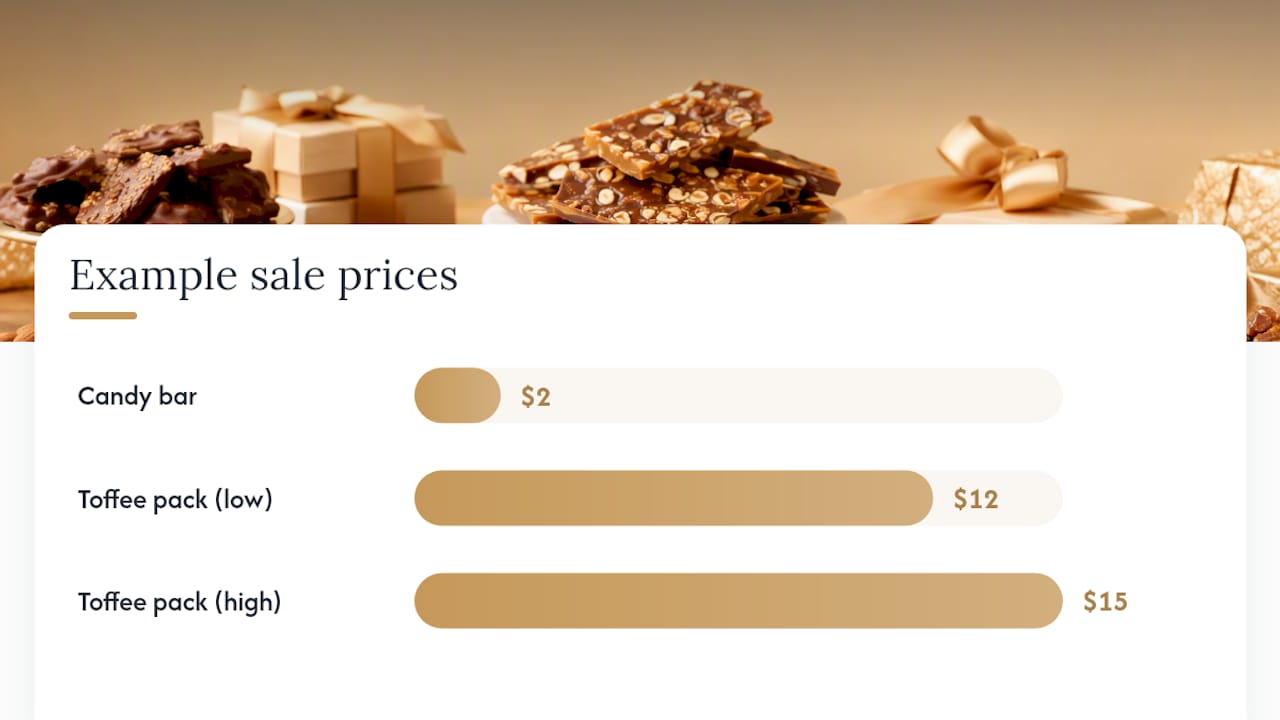
Pricing runs on one formula: profit per unit = sale price minus cost per unit, and units needed = fundraising goal divided by profit per unit.
Here’s how that plays out with realistic numbers:
- Set your sale price based on what similar items sell for in your community, not just markup math.
- Subtract your true cost per unit, including shipping, to get real profit per unit.
- Divide your goal by that profit figure to know exactly how many units you need to move.
Direct candy sales typically run a 15% to 35% margin, though specialty or novelty items can support higher price points and repeat purchases precisely because buyers see them as gifts, not snacks. A handcrafted toffee gift pack sold at $12 to $15 needs far fewer units to hit the same dollar goal as a $2 candy bar, which matters if your volunteer pool is small.
The Playbook Most Fundraising Guides Get Wrong
Most fundraising advice treats every candy option as interchangeable, as if a $1 candy bar and a $14 gift tin are the same decision wearing different price tags. They aren’t. The real choice is between volume and value, and coordinators who pick volume by default are often working harder for the same dollar goal.
Here’s the overlooked math: a school needing $1,200 can hit that goal with 1,000 candy bars sold at a $1.20 profit each, or with roughly 100 premium gift packs sold at $12 profit each. The second path needs a tenth of the transactions, a tenth of the volunteer hours, and a tenth of the inventory to store and track. Conventional advice leans on candy bars because they’re familiar and cheap to source, not because they’re the better fit for a small volunteer team.
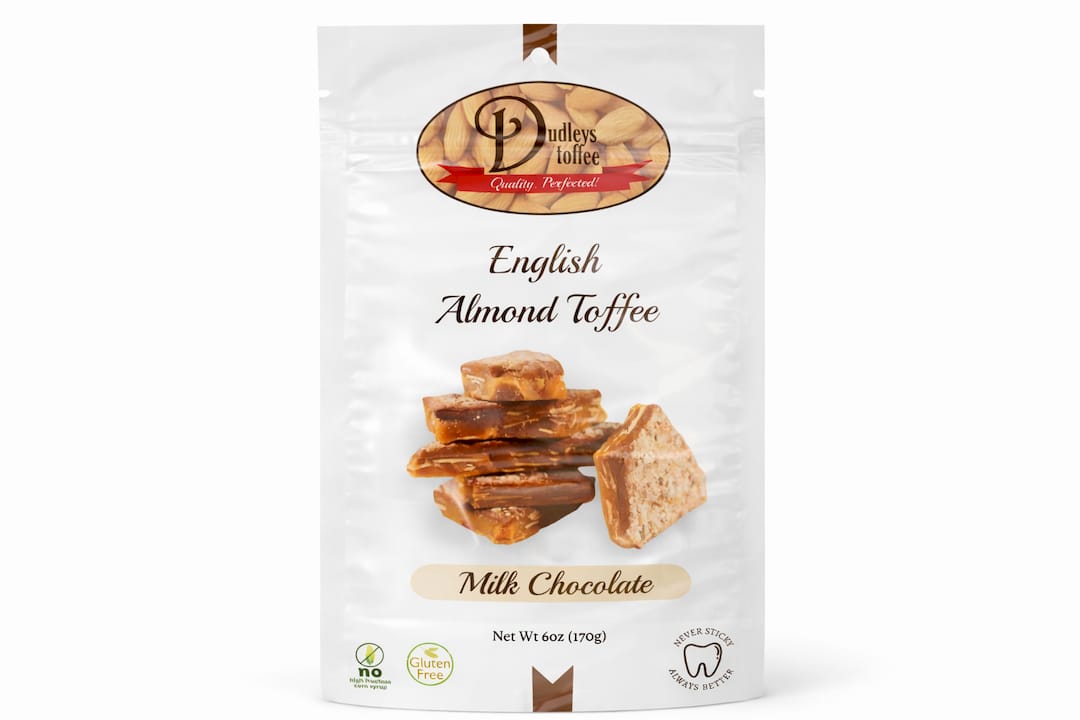
What should coordinators prioritize first? Match your product to your labor supply before you match it to what’s trendy. A gluten-free, handcrafted option like toffee earns its higher price point honestly, and that changes the entire math in your favor.
Ready to Order Toffee for Your Fundraiser?
Dudley’s Toffee is handcrafted in small batches in Indiana, using a family recipe with no high fructose corn syrup and a gluten-free formula that welcomes buyers other candy fundraisers turn away. For a fundraiser needing a premium option that sells itself on quality rather than sugar-rush impulse, that combination gives sellers an easy pitch: a treat people actually want to buy again next year.
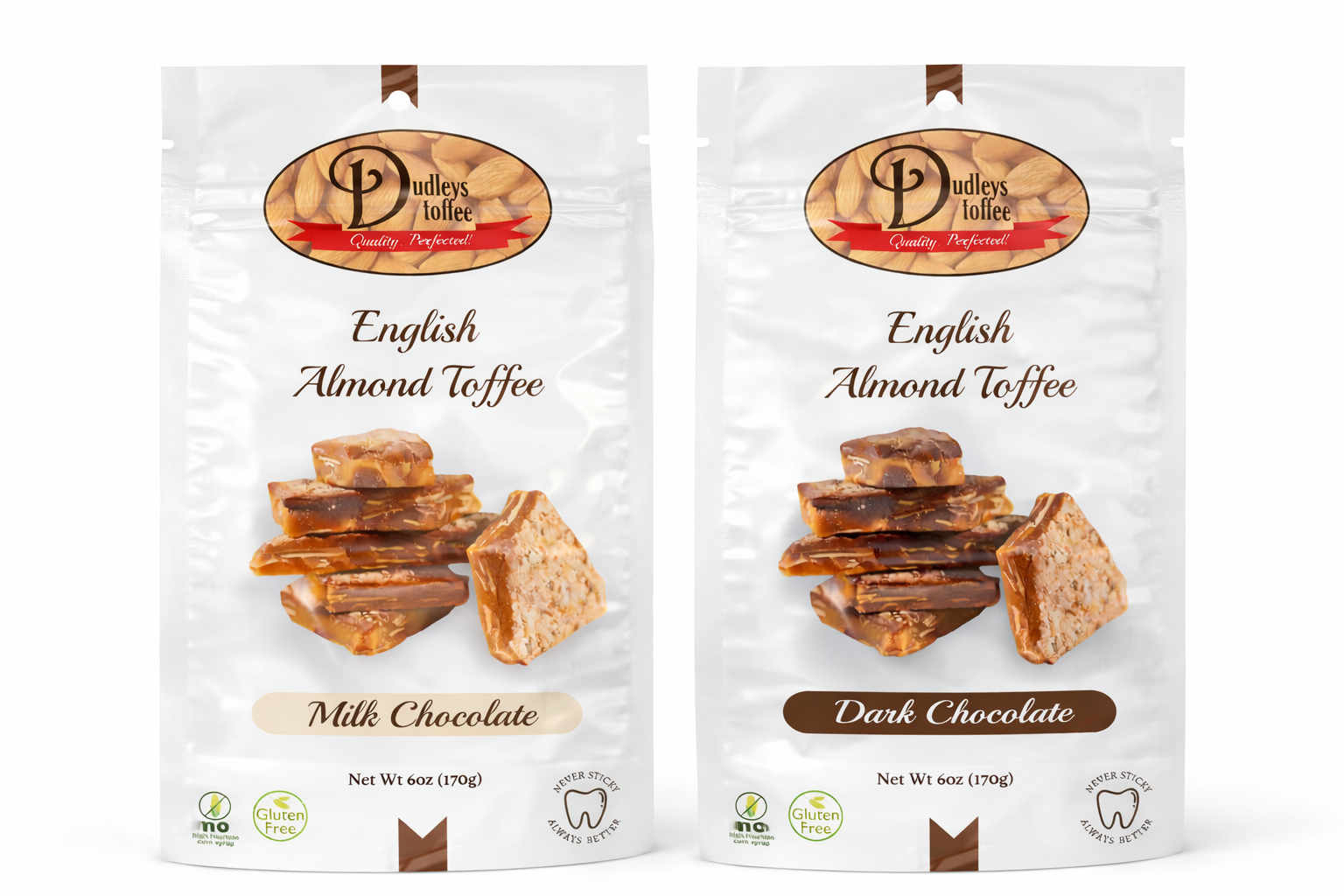
Fundraiser-ready options include the Milk Chocolate English Toffee (6oz) - FUNDRAISER, the Dark Chocolate English Toffee (6oz) - FUNDRAISER, and standard retail bags of Milk Chocolate English Almond Toffee and Dark Chocolate English Toffee. Groups wanting variety can order the Milk & Dark Chocolate Mixed Case with 12 milk and 12 dark bags, or go larger with a Dark Chocolate Case of 24 for bigger campaigns.
Groups can also review wholesale case pricing for bulk discounts and cold-pack shipping options that keep toffee fresh in transit. Since toffee sells at a premium price point, fewer units are needed to hit the same dollar goal compared to standard candy bars, which trims the volunteer hours required to reach your target. Browse the full lineup at Dudley’s Toffee and place your fundraiser order today.
Sources
- Food fundraising ideas — Join It
- 16 food fundraiser ideas and how to run them — RallyUp
- How to run a profitable candy-bar fundraiser — Spotfund
FAQ
What is the easiest candy fundraiser to run?
Prepackaged direct sales with preorders and a two-week deadline require the least setup and volunteer time of any format.
How much profit can a candy fundraiser make?
Direct candy sales typically run a 15% to 35% margin, though premium or specialty products like handcrafted toffee can support higher price points with fewer units sold.
Should schools accept cashless payments for fundraisers?
Yes. QR codes and apps like Venmo or PayPal reduce lost sales from buyers who don’t carry cash and speed up the checkout process.
Are gluten-free candy options worth offering?
Yes, since food allergies and dietary restrictions limit buyer pools, and options like Dudley’s Toffee’s gluten-free toffee widen who can participate without changing your setup.
How long should a candy fundraiser campaign run?
About two weeks works best for most schools and nonprofits, giving sellers enough time to reach their network while keeping urgency high near the deadline.
Recommended
Share