
Premium Candy Ingredients Explained for Food Enthusiasts
Premium candy ingredients are defined as natural, carefully sourced components that determine the flavor, texture, and quality of gourmet confections from the ground up. Understanding candy ingredients separates a forgettable sweet from one that lingers in memory. The difference between mass-market candy and a handcrafted piece comes down to what goes inside: real dairy, pure sugars, natural extracts, and ethically sourced cacao. Dudley’s Toffee, a family-owned Indiana company, builds every batch on exactly these principles, using no high fructose corn syrup and no artificial additives.
What key ingredients separate premium candy from mass-market candy?
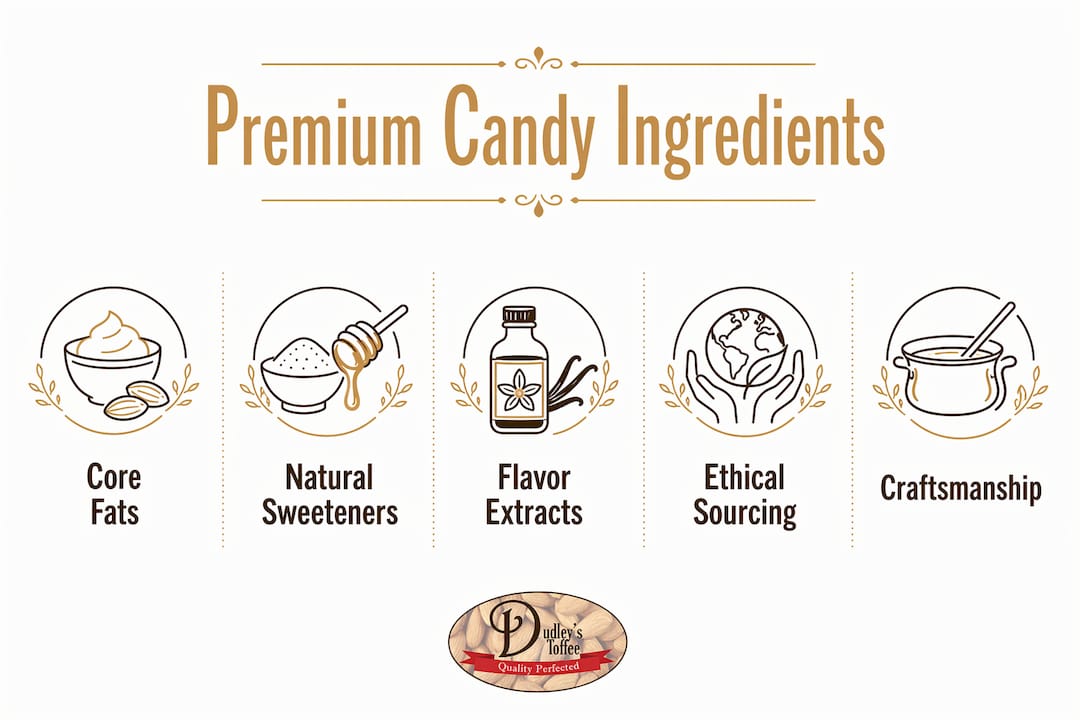
Premium candy uses all-natural ingredients like antibiotic-free dairy, pure cane sugar, and natural flavor extracts, avoiding the artificial flavors, colors, preservatives, and hydrogenated oils common in mass-market products. That distinction is not just philosophical. It shows up directly in how the candy tastes and feels.
Real dairy fats, such as antibiotic-free butter and fresh cream, create a smooth mouthfeel and rich flavor complexity. High-quality fats in premium candy produce a clean finish, while hydrogenated oils leave a waxy, coating sensation that lingers unpleasantly. The difference is immediate and unmistakable once you know what to look for.
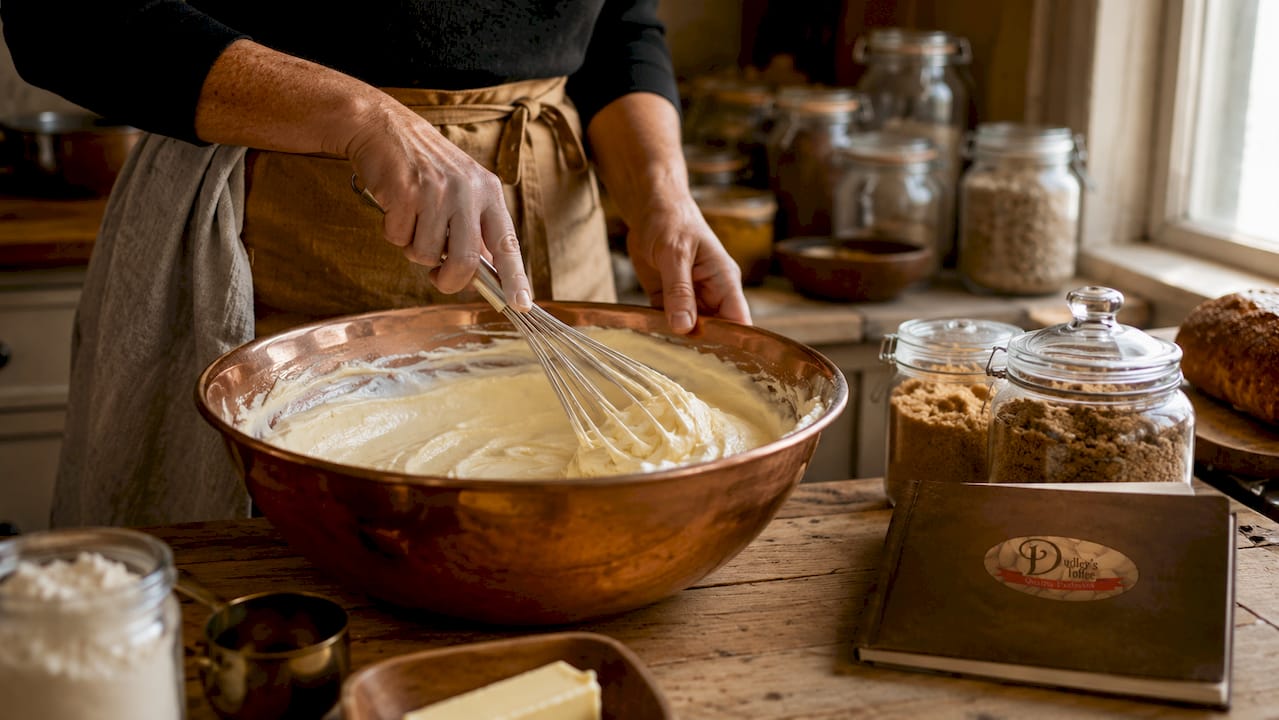
Natural sweeteners also play a central role. Pure cane sugar and tapioca syrup deliver clean sweetness without the chemical aftertaste associated with high fructose corn syrup. Natural sweeteners and minimal preservatives result in richer flavor but reduced shelf stability. That trade-off is a feature, not a flaw. It signals that the maker prioritized taste over warehouse longevity.
Hallmark premium candy ingredients and their roles include:
- Pure cane sugar: Provides clean sweetness and supports proper sugar staging during cooking
- Antibiotic-free butter: Delivers rich dairy flavor and a smooth, non-greasy texture
- Tapioca syrup: Acts as a natural alternative to corn syrup, preventing crystallization
- Natural vanilla extract: Adds depth and warmth without synthetic aftertaste
- Whole almonds: Contribute crunch, protein, and a toasted, nutty complexity
- Real cocoa butter: Creates the characteristic snap and melt of genuine chocolate coatings
Pro Tip: When reading a candy label, look for butter listed before oil. If any hydrogenated or partially hydrogenated oil appears, the product is using a cheaper fat substitute that compromises both flavor and mouthfeel.
How is premium chocolate defined by ingredient quality and regulatory standards?
Chocolate quality is governed by both ingredient choices and legal standards in the United States. US regulatory standards set minimum dairy and cocoa butter percentages for true chocolate classification. White chocolate, for example, must contain at least 20% cocoa butter and 14% milk solids to carry that label legally. Products that swap cocoa butter for vegetable fat are classified as compound chocolate, a lower-quality category that no premium maker should use.
Cocoa butter is the defining fat in real chocolate. It melts at body temperature, which produces the characteristic clean melt on the tongue. Vegetable fat substitutes melt differently, leaving a greasy or waxy sensation. That single ingredient choice separates a premium chocolate coating from an imitation.
| Chocolate type | Cocoa butter required | Key quality marker |
|---|---|---|
| Dark chocolate | Yes | High cacao percentage, minimal sugar |
| Milk chocolate | Yes | Real milk solids, no vegetable fat |
| White chocolate | Yes (min. 20%) | Min. 14% milk solids, no artificial flavor |
| Compound chocolate | No | Vegetable fat substitute, lower cost |
Ingredient list length also signals quality. Premium chocolate labels list cacao, cocoa butter, sugar, and milk solids. Mass-market chocolate labels often include soy lecithin in large quantities, artificial vanillin, and multiple stabilizers. Shorter lists with recognizable components are the clearest sign of genuine quality.
Pro Tip: Vanillin is a synthetic vanilla substitute common in mass-market chocolate. Real vanilla extract or vanilla bean appears on premium labels. The two taste noticeably different, especially in milk chocolate where vanilla is a dominant flavor note.
What role do ingredient sourcing and craftsmanship play in premium candy quality?
Sourcing is where premium candy quality begins, long before any cooking starts. Transparent cacao sourcing that reflects terroir is a defining marker of authentic premium chocolate. Terroir refers to how soil composition, altitude, rainfall, and farming practices shape the flavor of cacao beans. A bean from Madagascar tastes fruity and bright. One from Ecuador carries earthy, floral notes. Origin matters as much in cacao as it does in wine or coffee.
Ethical sourcing standards, including fair-trade certification and direct trade relationships, also signal premium intent. These practices support farming communities and incentivize careful harvesting, which directly affects bean quality. No marketing claim can compensate for inferior base ingredients, and the best makers know this.
Small-batch, hand-crafted production requires skilled oversight and longer production times, enabling flavor and texture consistency that factory-scale operations cannot match. Dudley’s Toffee produces its English almond toffee in small batches precisely for this reason. Every batch receives hands-on attention through each stage of cooking.
Craftsmanship techniques that define premium candy quality include:
- Sugar staging: Cooking sugar to specific temperature stages (soft ball, hard crack) controls final texture precisely
- Temperature monitoring: Precise heat management during cooking prevents burning and ensures even caramelization
- Hand-coating: Applying chocolate by hand or in small enrobers creates even, consistent coverage
- Controlled cooling: Gradual cooling prevents sugar crystallization and preserves smooth texture
The Maillard reaction, which occurs when sugar and protein interact under heat, creates the deep, complex flavor notes in well-made toffee and caramel. Baking soda in toffee-making creates alkaline conditions that support this reaction, while also forming tiny carbon dioxide bubbles that lighten the candy’s density. That chemistry is only controllable when a skilled maker monitors the process closely.
How do ingredient lists reveal the true quality of a candy product?
Premium candy labels feature short, recognizable ingredient lists, avoiding the multiple stabilizers, artificial flavorings, and synthetic colorants that indicate mass-market production. A clean label communicates that the maker chose quality over cost-cutting. It also signals respect for the consumer.
A mass-market candy bar might list 20 or more ingredients, including partially hydrogenated palm kernel oil, artificial flavor, TBHQ (a petroleum-derived preservative), and Red 40. A premium toffee lists butter, sugar, almonds, chocolate, and vanilla. Both are candy. Only one is honest about what it contains.
Certifications like organic or fair-trade are helpful signals, but they are not sufficient alone. Ingredient list clarity, natural fats, and avoidance of fillers are more reliable premium markers than certification labels. A product can carry a certification and still use artificial flavors or excessive emulsifiers.
| Label type | What it looks like | What it signals |
|---|---|---|
| Premium candy label | Butter, sugar, almonds, chocolate, vanilla | Natural ingredients, minimal processing |
| Mass-market label | HFCS, artificial flavor, TBHQ, Red 40, soy lecithin | Cost-driven formulation, extended shelf life |
| Misleading “natural” label | Natural flavors, cane sugar, but also palm oil | Partial transparency, mixed quality |
Glucose and invert sugars appear on some premium labels as functional ingredients. Used precisely, these sugars block sucrose crystallization, preventing the gritty texture common in mass-produced candy. Their presence in small quantities on a short ingredient list is a sign of technical skill, not a red flag.
Key Takeaways
Premium candy quality is determined by natural ingredients, transparent sourcing, and skilled small-batch craftsmanship working together at every stage of production.
| Point | Details |
|---|---|
| Natural ingredients define quality | Real dairy, pure cane sugar, and natural extracts produce richer flavor than artificial substitutes. |
| Chocolate classification matters | True chocolate requires cocoa butter; compound chocolate uses vegetable fat and is a lower-quality substitute. |
| Sourcing shapes flavor | Cacao terroir and ethical sourcing standards directly influence the taste and integrity of premium chocolate. |
| Short labels signal transparency | Premium candy lists fewer, recognizable ingredients; long additive lists indicate mass-market formulation. |
| Craftsmanship controls texture | Small-batch production with precise temperature control and sugar staging creates mouthfeel that factory lines cannot replicate. |
What ingredient transparency actually taught us about candy
After years of making toffee in small batches, the clearest lesson is this: ingredients do not lie. You can dress up a candy with beautiful packaging and clever marketing, but the moment someone takes a bite, the truth is in the texture and the finish. Waxy aftertaste means cheap fat. Gritty texture means poor sugar control. A clean, buttery melt means someone used real butter and cooked it right.
The food industry has trained consumers to accept long ingredient lists as normal. They are not normal. They are a symptom of prioritizing shelf life and margin over flavor and integrity. When Dudley’s Toffee lists its ingredients, the list is short because the recipe does not need anything else. Pure cane sugar, real butter, whole almonds, and quality chocolate do the work.
Certifications are worth noting, but they should not be the primary filter. Read the ingredient list first. If you recognize every item and the list fits on two lines, you are holding something made with care. If you need a chemistry background to decode it, put it back.
The other thing worth saying plainly: premium candy costs more because it should. Real dairy, ethically sourced cacao, and skilled labor are not cheap. The price reflects the ingredient bill and the time invested. Consumers who understand that connection stop asking why premium candy costs more and start asking why mass-market candy costs so little.
— Dudley’s Toffee
Taste the difference that premium ingredients make
Dudley’s Toffee puts every principle in this article into practice with each small batch made in Indiana. The recipe uses real butter, pure cane sugar, whole almonds, and quality chocolate with no high fructose corn syrup and no artificial additives. The result is a softer, buttery toffee that melts cleanly instead of sticking to your teeth.
You can try the dark chocolate English toffee or the milk chocolate variety to taste the ingredient difference firsthand. Retailers and gift shops interested in carrying Dudley’s Toffee can learn more on the wholesale page. Every bag ships nationwide, making it easy to share a genuinely handcrafted confection with anyone who appreciates what goes into it.
FAQ
What makes candy “premium” versus regular candy?
Premium candy uses natural, recognizable ingredients like real dairy, pure cane sugar, and natural extracts, while avoiding artificial flavors, colors, and hydrogenated oils. The ingredient list is short, the sourcing is transparent, and production is typically small-batch.
Is compound chocolate the same as real chocolate?
Compound chocolate is not real chocolate. It replaces cocoa butter with vegetable fat, which changes the melt, texture, and flavor. US standards require cocoa butter for a product to be legally labeled as chocolate.
Why does premium candy have a shorter shelf life?
Premium candy avoids synthetic preservatives and uses fresh dairy ingredients, which reduces shelf stability compared to mass-market candy. That shorter shelf life is a direct result of choosing flavor and quality over longevity.
How do I spot high fructose corn syrup on a candy label?
High fructose corn syrup appears by name on ingredient labels and is listed near the top when present in large quantities. Premium candy makers replace it with pure cane sugar or natural syrups like tapioca syrup.
Does fair-trade certification guarantee premium candy quality?
Fair-trade certification signals ethical sourcing practices but does not guarantee ingredient quality on its own. Reading the full ingredient list for natural fats, real dairy, and the absence of artificial additives is a more reliable quality check.