
Best Presents for Employees: A Manager's 2026 Guide
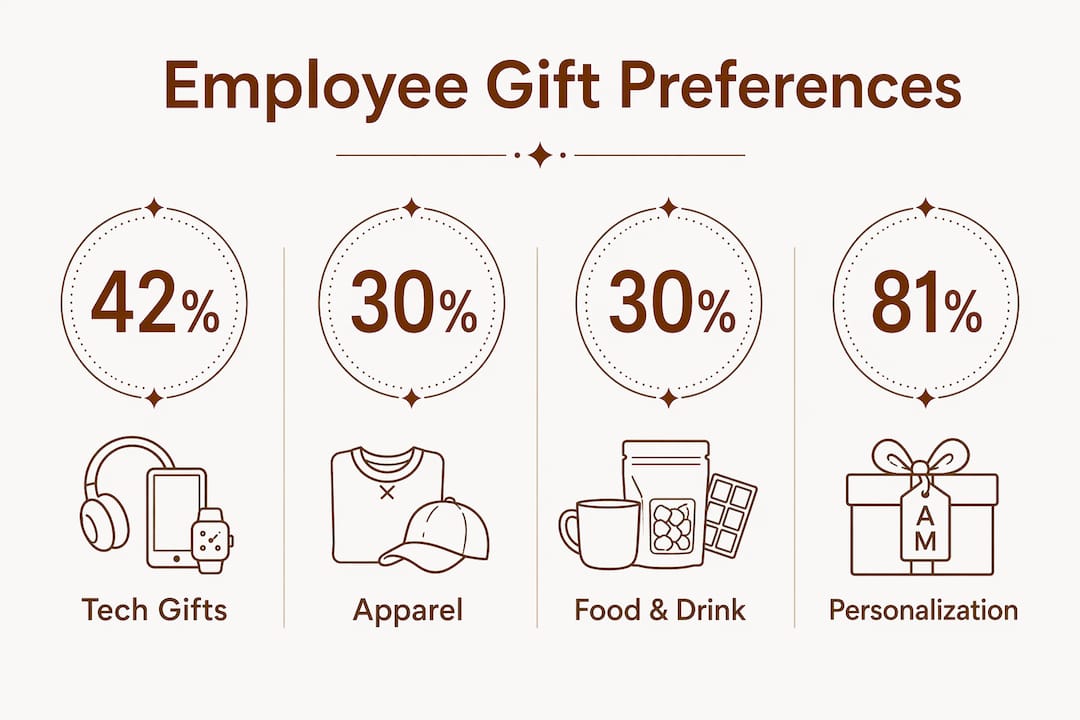
The best presents for employees are personalized, practical items paired with sincere recognition. Generic swag sits in desk drawers. Thoughtful gifts tied to real acknowledgment build loyalty, boost morale, and signal that leadership pays attention. Employee gift surveys show that 81% of employees value a gift significantly more when it includes a personal element like a name or handwritten message. That single data point reframes the entire gifting decision: the question is not what to spend, but how to make the gift feel like it was chosen for a person, not a headcount.
What are the best presents for employees in 2026?
The most effective employee gift ideas fall into four categories: tech accessories, apparel, food and drink, and gift cards. Each category earns its place for a different reason, and understanding why helps you pick the right fit for your team.

Tech gifts lead the pack. 42% of employees prefer tech gifts, making this the single most popular category. Wireless chargers, quality earbuds, and portable power banks work across job roles and personal lifestyles. They are used daily, which means the employee thinks of the gift repeatedly.
Apparel and food and drink each earn 30% preference. That near-tie matters. It tells you that roughly a third of your team would rather receive a well-made hoodie or a premium food item than any piece of tech. Apparel works best when it is high quality and not plastered with a company logo. Food gifts work because they are consumable, shareable, and carry no long-term obligation.
Gift cards remain a reliable fallback, but they carry a risk. A gift card without a written note reads as an afterthought. Pair it with a genuine message and it becomes a meaningful gesture.
Here is a quick breakdown of what drives each category’s appeal:
-
Tech: Daily utility, visible quality, works across roles
-
Apparel: Wearable comfort, personal style, longevity
-
Food and drink: Immediate enjoyment, shareable, no clutter
-
Gift cards: Freedom of choice, zero waste, universally accepted
Pro Tip: Opt for “desk-to-home” gifts. Items like gourmet food boxes, quality blankets, or premium stationery travel between work and home, extending the emotional reach of your recognition beyond office hours.
The rule that cuts across all categories: gifts most employees use naturally without prompting are the ones that land. Overly specific items create friction. A niche gadget that only half your team understands is not a gift. It is a puzzle.
How does personalization increase the impact of staff gifts?
Personalization is the single biggest lever in corporate gifting. 81% of employees report higher perceived value when a gift includes a personal element. That is not a marginal improvement. It means a $20 item with a name on it can outperform a $60 generic product.
Personalization goes well beyond slapping a logo on a tote bag. The most effective approaches include:
-
Embroidered names on apparel or accessories
-
Handwritten or printed notes from direct managers or senior leadership
-
Milestone-specific messaging that references the employee’s actual contribution
-
Flavor or style choices that reflect known preferences
“A gift accompanied by a sincere, personalized note from leadership delivers far more recognition impact than the physical gift alone. The note is not an accessory to the gift. It is the gift.”
That insight reshapes how HR teams should allocate their time. Writing a genuine, specific note takes five minutes. It multiplies the value of whatever sits in the box.
Hyper-personalized milestone gifts, such as embroidered items with an employee’s name and work anniversary year, significantly increase both retention and daily use of the gift. A generic company-logo item gets used at work because it has to be. A named, milestone-specific item gets used because the employee wants to.
The practical takeaway: build a short profile for each employee before ordering. Note their role, tenure, any known preferences, and one specific achievement from the past year. Use that to write the note and, where possible, to select the gift variant. This process takes less time than most managers expect and produces a measurably different result.
How do you handle fairness and preferences across a large team?
Gifting a team of 50 or 100 people fairly is harder than it looks. The core tension is this: personalization requires individual attention, but scale demands consistency. Varying the spend per person, even slightly, creates perceived favoritism. That perception damages morale faster than a generic gift ever would.
The most practical solution is a single high-quality base gift with minor swaps for dietary or religious needs. Purchasing one universally appealing item and managing preference variations through small substitutions handles large teams without creating a two-tier system. Everyone receives the same quality and the same level of care. The swap is invisible to the recipient.
-
Choose a universally appealing base gift. Food, quality drinkware, and premium apparel all work. Avoid items that require specific tech compatibility or personal taste in design.
-
Identify dietary and religious restrictions in advance. A short anonymous survey sent two weeks before the gifting occasion covers most edge cases.
-
Prepare two or three swap variants. For food gifts, this might mean a nut-free option or a non-chocolate alternative. For apparel, it means offering size and color options.
-
Keep the presentation identical. Same packaging, same note, same delivery method. The swap should never signal that someone received a lesser version.
Choice-based gifting programs are an effective alternative for teams where preferences vary widely. These programs let employees select from a curated set of options within a fixed budget. Satisfaction increases because employees receive something they actually want. The trade-off is slightly more administrative work upfront.
Pro Tip: Never vary the dollar amount spent per employee based on seniority or performance unless your company has a clearly communicated tiered recognition program. Unexplained spending differences create resentment, not motivation.
What budget and timing produce the best gifting results?
Budget and timing are the two most misunderstood variables in employee gifting. Most HR teams default to a $50 per employee budget, which is a reasonable baseline. But a $15 thoughtful gift chosen with care and paired with a genuine note regularly outperforms a $50 generic item delivered without context. Spend matters less than intent.
Frequent, consistent gifting with moderate budgets builds morale more reliably than occasional high-value gifts. A quarterly food gift or a small milestone acknowledgment lands better than one annual gift at the holiday party. Employees notice the pattern of recognition, not just the individual moment.
The occasions that deliver the highest impact are:
| Occasion | Suggested budget | Impact level |
|---|---|---|
| Employee Appreciation Day (March) | $25–$50 | High |
| Work anniversary (1, 3, 5 years) | $50–$100 | Very high |
| Holiday season (December) | $30–$75 | High |
| Project completion or team win | $15–$30 | High |
| Onboarding welcome gift | $20–$40 | Medium |
Work anniversaries are the most underused gifting occasion. A personalized note paired with a quality gift at the one-year mark tells a new employee that their contribution was noticed. That message is worth more than the gift itself.
The gourmet food category earns a special mention here. Well-chosen food gifts combine broad appeal with an enjoyable unboxing experience, reinforcing positive sentiment at the moment of receipt. They also work at nearly every budget level, from a single premium item to a curated box. For managers looking to hit multiple occasions without building a complex gifting program, a rotating food gift strategy is one of the most practical options available.
Key Takeaways
The most effective employee gifts combine personalization, universal appeal, and a sincere written note from leadership to maximize morale and perceived value.
| Point | Details |
|---|---|
| Personalization multiplies value | 81% of employees rate personalized gifts higher; a name or note outperforms a bigger price tag. |
| Top gift categories | Tech (42%), apparel (30%), and food/drink (30%) lead employee preferences across roles. |
| Fairness at scale | Use one high-quality base gift with minor swaps; never vary spend per person without a clear program. |
| Budget vs. intent | A $15 thoughtful gift with a genuine note regularly outperforms a $50 generic item. |
| Timing drives impact | Work anniversaries and Employee Appreciation Day deliver the highest recognition return. |
Why gifting culture matters more than the gift itself
Employee gifting is one of those HR practices where the execution tells employees more than the policy ever will. I have seen well-funded gifting programs fall flat because the gifts arrived in plain brown boxes with no note. I have also seen a $12 bag of handcrafted toffee generate genuine gratitude because a manager took two minutes to write something real on the card.
The mistake most organizations make is treating gifting as a logistics problem. They focus on vendor selection, shipping timelines, and budget approvals. Those things matter, but they are not what the employee remembers. What the employee remembers is whether someone thought about them specifically.
My honest recommendation: before you finalize any gift order, write the note first. If you cannot write a specific, genuine sentence about why this person deserves recognition, you are not ready to send the gift. The note forces you to do the thinking that makes the gift meaningful.
Avoid over-branding. A gift covered in your company logo is a marketing item, not a personal gesture. Employees know the difference. The best appreciation gifts for employees feel like they came from a person, not a procurement department.
Build gifting into your recognition calendar the same way you build in performance reviews. Consistency signals that recognition is a value, not an afterthought. Teams that receive regular, thoughtful acknowledgment show up differently than teams that get one gift at the holiday party and nothing else for 12 months.
— Dudley’s Toffee
Dudley’s Toffee: a premium food gift for your whole team
When you need a thoughtful gift that works for a team of five or fifty, handcrafted food is one of the most reliable choices available. Dudley’s Toffee makes small-batch English almond toffee in Indiana, available in milk and dark chocolate varieties. Every batch is gluten-free, free of high fructose corn syrup, and built for a clean, melt-in-your-mouth finish that does not stick to teeth.
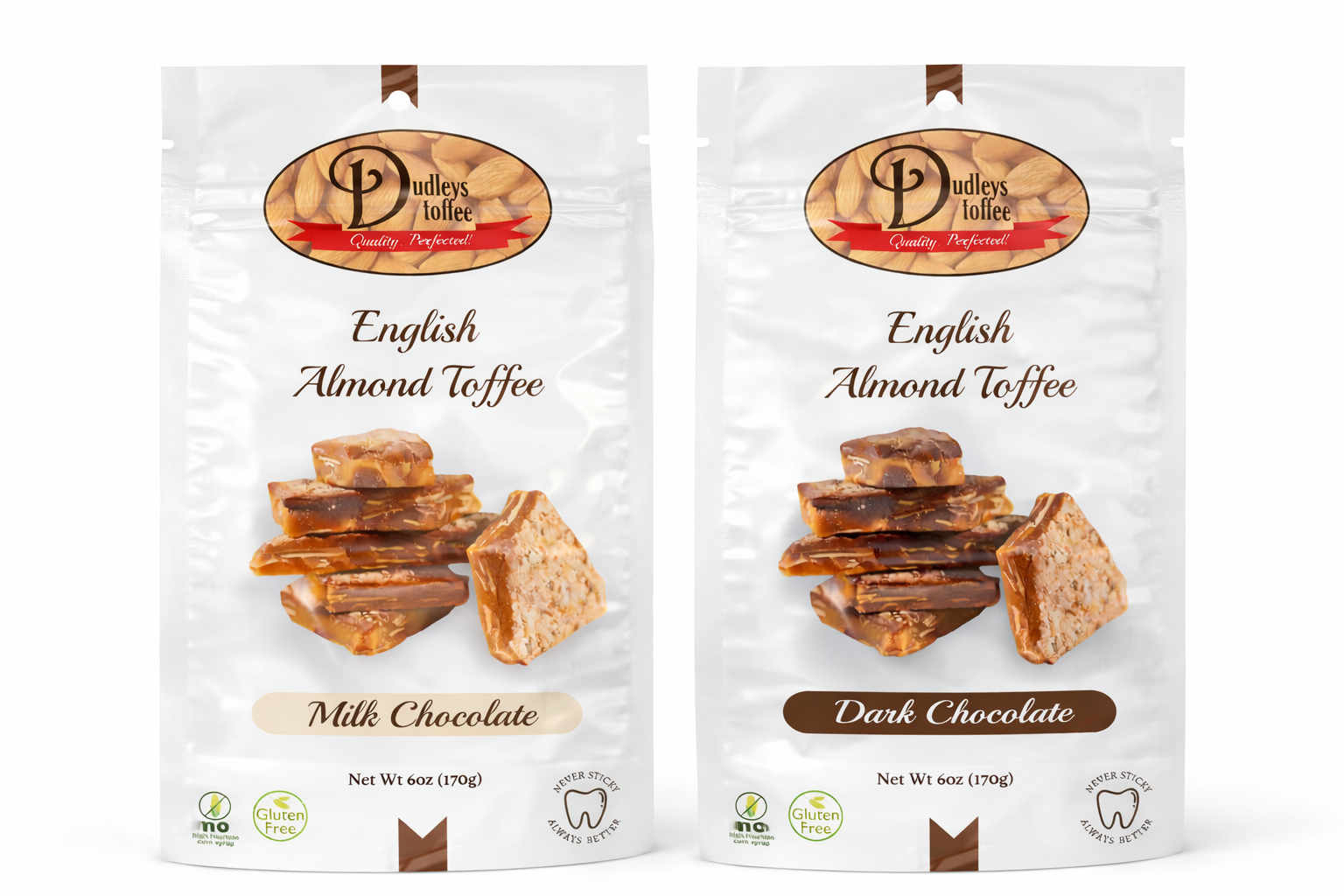
For managers and HR teams buying at scale, the wholesale program offers bulk pricing on cases of 24 bags, making it straightforward to gift an entire department without breaking the budget. The Big Batch Box is a ready-made option for team-wide gifting, combining quality presentation with consistent value per unit. Pair any order with a personal note and you have a gift that checks every box: universally appealing, premium quality, and genuinely memorable.
FAQ
What makes a gift the best present for employees?
The best employee gifts are personalized, practical, and accompanied by a sincere written note. Research shows 81% of employees value gifts more when a personal element is included.
How much should companies spend per employee on gifts?
Most companies budget around $50 per employee, but a $15 thoughtful gift paired with a genuine message often delivers higher morale impact than a generic expensive item.
What are the most popular employee gift categories?
Tech gifts lead at 42% preference, followed by apparel and food/drink at 30% each. Practical, daily-use items consistently outperform novelty gifts.
How do you gift fairly across a large team?
Choose one high-quality base gift and manage dietary or personal preference variations through small, invisible swaps. Avoid varying the spend per person without a clearly communicated recognition program.
When is the best time to give employee appreciation gifts?
Work anniversaries and Employee Appreciation Day in march deliver the highest recognition impact. Frequent, moderate-budget gifts throughout the year build morale more effectively than a single annual gift.