
How Gourmet Food Trends Affect Buying Decisions
Gourmet food trends are defined as shifts in consumer preference toward premium quality, ethical sourcing, and experiential value in food purchases. Understanding how gourmet food trends affect buying is the first step toward making purchases you actually feel good about. The global gourmet food market is projected to reach $728.9 billion by 2033, growing at a 6.1% CAGR. That number tells you this is not a passing fad. Premiumization, ethical sourcing, and ingredient integrity are reshaping what ends up in your cart, and why.
How gourmet food trends affect buying behavior
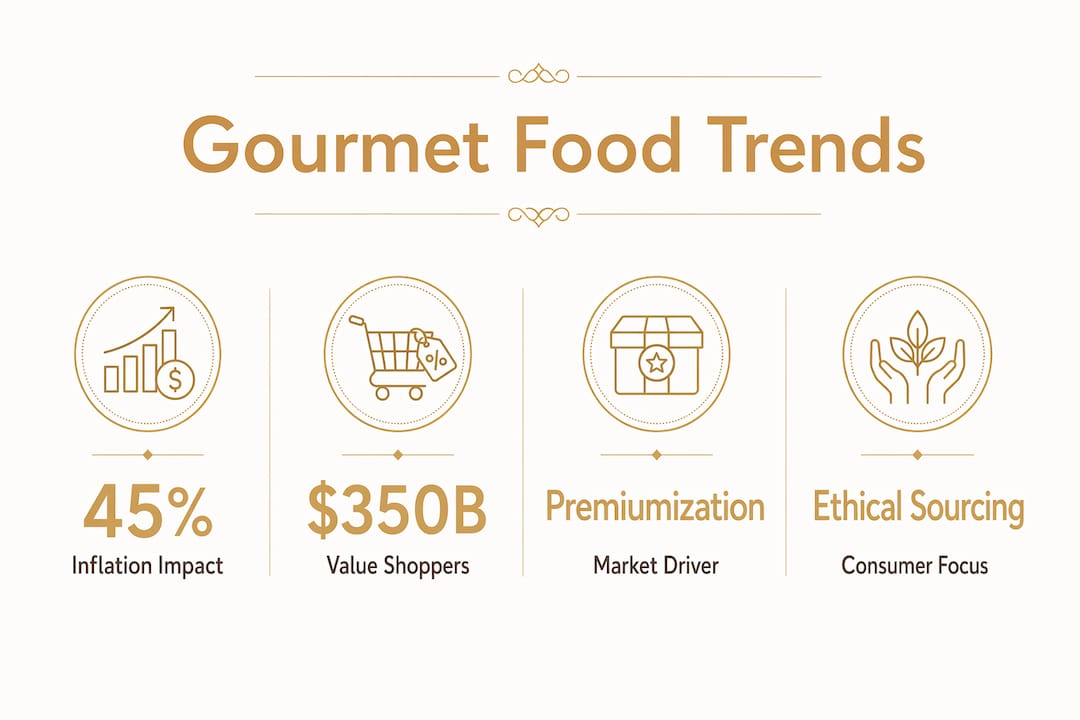
Consumer purchasing behavior in the gourmet food category is no longer driven by taste alone. Food affordability now rivals taste as the top purchase driver, with nearly 50% of American consumers changing their grocery and restaurant habits due to inflation. That shift has not killed the appetite for quality. It has made consumers more deliberate about where they spend on premium products.
The industry term for this shift is premiumization: the movement of consumer spending toward higher-quality, more meaningful food experiences. Premiumization does not mean spending more on everything. It means spending more on the things that matter most, whether that is a handcrafted toffee, a small-batch olive oil, or a locally sourced cheese. Gourmet food purchasing behavior has become a form of self-expression, with each purchase reflecting personal values around health, sustainability, and craftsmanship.
Values-oriented shoppers drive $350 billion in annual U.S. sales, increasing purchases of health-focused and sustainable products even under economic pressure. That figure shows the market is not shrinking. It is reorganizing around what people genuinely care about.
What gourmet food trends are shaping purchases right now?
Four major trends are actively reshaping gourmet food sales trends and consumer spending patterns.
-
Sustainability and local sourcing. Consumers increasingly favor products with transparent supply chains, regional provenance, and minimal environmental impact. Farmers market growth, “farm-to-table” labeling, and certified organic claims all reflect this demand. Buying local is no longer a niche preference. It is a mainstream quality signal.
-
Premiumization and ethical sourcing. Luxury in food is now defined by authenticity, craftsmanship, and sustainability storytelling rather than material excess. A $12 bar of single-origin chocolate communicates values. A mass-produced equivalent does not, regardless of price.
-
Functional foods and health-focused demand. Consumers want food that does something beyond tasting good. Products with clean ingredient lists, no high fructose corn syrup, gluten-free certification, or added nutritional benefits command premium prices and strong loyalty.
-
Convenience with premium standards. Ready-to-eat and easy-to-gift gourmet products have grown sharply. Consumers want the quality of a specialty food shop without the effort of preparation. Artisan confections, curated gift boxes, and small-batch snacks fill this gap perfectly.
Pro Tip: When evaluating a gourmet product, check for three quality markers: a named ingredient source, a clean label with no artificial additives, and a production method like “small-batch” or “handcrafted.” These signals consistently predict genuine quality.
How do price and affordability intersect with gourmet purchasing?
Rising food prices have not pushed consumers away from gourmet products. They have changed how consumers allocate their spending. The result is a pattern called the bifurcated basket strategy.
-
Trade down on staples. Consumers switch to store brands, buy in bulk, or reduce frequency on everyday items like cooking oil, pasta, and canned goods. This frees up budget without sacrificing household function.
-
Trade up on indulgences. The same shopper who switched to a store-brand cereal will spend confidently on a premium chocolate toffee, an artisan jam, or a specialty coffee. These purchases carry emotional and social weight that staples do not.
-
Hunt for promotions on premium items. Values-oriented shoppers report that 57% actively seek promotions on health-focused and sustainable products. They are not abandoning quality. They are finding it at better prices.
-
Prioritize ingredient integrity over brand recognition. Shoppers increasingly read labels before choosing brands. A lesser-known artisan product with a clean ingredient list often wins over a recognized name with additives.
Consumers adopting the bifurcated basket trade down on routine items while unapologetically trading up on premium or experiential gourmet products. This behavior explains why gourmet food sales trends remain strong even as overall grocery spending tightens. The indulgence category is protected because it carries meaning that a box of generic crackers simply cannot.
Gourmet food also functions as an accessible status symbol, with consumers spending on daily smaller indulgences that reflect lifestyle and values rather than large luxury goods. A $15 bag of handcrafted toffee is a very different emotional transaction than a $15 bottle of generic soda.
How do social media and storytelling drive gourmet food purchases?
Digital discovery has fundamentally changed how consumers find and trust gourmet products. The mechanism is not advertising. It is parasocial intimacy, the sense of personal connection a consumer feels with a creator or brand through repeated digital exposure.
-
Influencer-driven purchase intent. A study of 420 social media users found that parasocial intimacy and perceived authenticity fully mediate the relationship between social factors and actual buying behavior for premium food products. Scarcity cues, like “limited batch” or “seasonal only,” amplify this effect significantly.
-
Storytelling around provenance and memory. A product that tells the story of its origin, its maker’s family, or its cultural roots creates emotional value that price cannot replicate. Consumers pay for the story as much as the product itself.
-
The social-to-shelf effect. Social media demand primes consumers and retailers by linking functional food claims in trending content to retail buy-in. A flavor or ingredient that goes viral on social platforms often appears on specialty store shelves within months.
-
Packaging as a trust signal. Premium packaging functions as a key trust mechanism that lowers the barrier to purchase for unfamiliar gourmet products. Clean design, clear ingredient information, and quality materials communicate that the product inside is worth the price.
Pro Tip: Before buying a gourmet product you discovered through social media, check whether the brand shares its production process, ingredient sourcing, or maker’s story. Brands with nothing to hide tend to share everything.
How to navigate gourmet food trends as a buyer
Knowing the trends is useful. Knowing how to apply that knowledge to your own purchases is what actually saves you money and improves your food experience.
| Buying Situation | Recommended Approach |
|---|---|
| Everyday staples (flour, oil, canned goods) | Trade down to store brands or bulk options to free up budget |
| Gifts and special occasions | Invest in handcrafted, small-batch products with clear provenance |
| Health-focused purchases | Prioritize clean labels: no artificial additives, no high fructose corn syrup |
| New or unfamiliar gourmet brands | Evaluate packaging quality and ingredient transparency before buying |
| Trend-driven social media finds | Verify the brand’s production story before committing to a purchase |
Evaluating product claims requires a simple framework. Look for named ingredient sources rather than vague terms like “natural flavors.” Check for certifications such as gluten-free or non-GMO where relevant. Favor brands that describe their production method in specific terms, whether that is small-batch, handcrafted, or stone-ground.
Balancing indulgence with budget works best when you treat gourmet purchases as intentional decisions rather than impulse buys. Identify the two or three categories where quality genuinely matters to you, and spend confidently there. Cut back on categories where the premium version delivers no meaningful difference in your experience.
Trustworthy channels for gourmet food include specialty food stores, direct-to-consumer brand websites, and curated gift retailers. These sources typically carry products with verified ingredient integrity and clear brand stories, which reduces the risk of paying a premium price for a mediocre product.
Key Takeaways
Gourmet food trends reshape consumer purchasing by directing spending toward quality, ethics, and experiential value, making deliberate buying the defining skill of the modern food enthusiast.
| Point | Details |
|---|---|
| Premiumization drives the market | The gourmet food market is projected to reach $728.9 billion by 2033, fueled by demand for quality and ethical sourcing. |
| Bifurcated basket strategy | Trade down on staples and trade up on meaningful indulgences to balance budget with quality. |
| Values shape spending | Values-oriented shoppers drive $350 billion in U.S. sales, prioritizing ingredient integrity even under economic pressure. |
| Social proof builds purchase intent | Parasocial intimacy and authentic storytelling are the primary drivers of premium food purchase decisions online. |
| Packaging signals trust | Clean, premium packaging lowers the barrier to purchase for unfamiliar gourmet products. |
What I’ve learned watching gourmet food trends evolve
The trend toward premiumization is real, and it is not going away. What I find most interesting is how it has changed the definition of value. Consumers are not simply paying more for food. They are paying for certainty: certainty about ingredients, about the people who made the product, and about what the purchase says about them.
The challenge I see most often is that trend-driven buying can lead to premium prices for products that do not actually deliver premium quality. The packaging looks beautiful, the social media content is compelling, and the story sounds authentic. But the ingredient list tells a different story. The discipline of reading labels carefully, asking where something was made, and understanding what “handcrafted” actually means in practice separates informed buyers from enthusiastic ones.
The brands I trust most are the ones that share their process without being asked. A family-owned operation that makes toffee in small batches using real butter and premium almonds does not need to hide behind vague marketing language. The product speaks clearly, and so does the label. That transparency is the most reliable quality signal available to any gourmet food buyer.
— Dudley's Toffee
Dudley’s Toffee: handcrafted toffee built for this moment
Dudley’s Toffee is a family-owned Indiana company that embodies the gourmet food values this article describes: small-batch production, premium ingredients, clean labels with no high fructose corn syrup, and gluten-free recipes made with genuine care. Every piece of Dudley’s Toffee’s signature English almond toffee is handcrafted to melt in your mouth, not stick to your teeth.
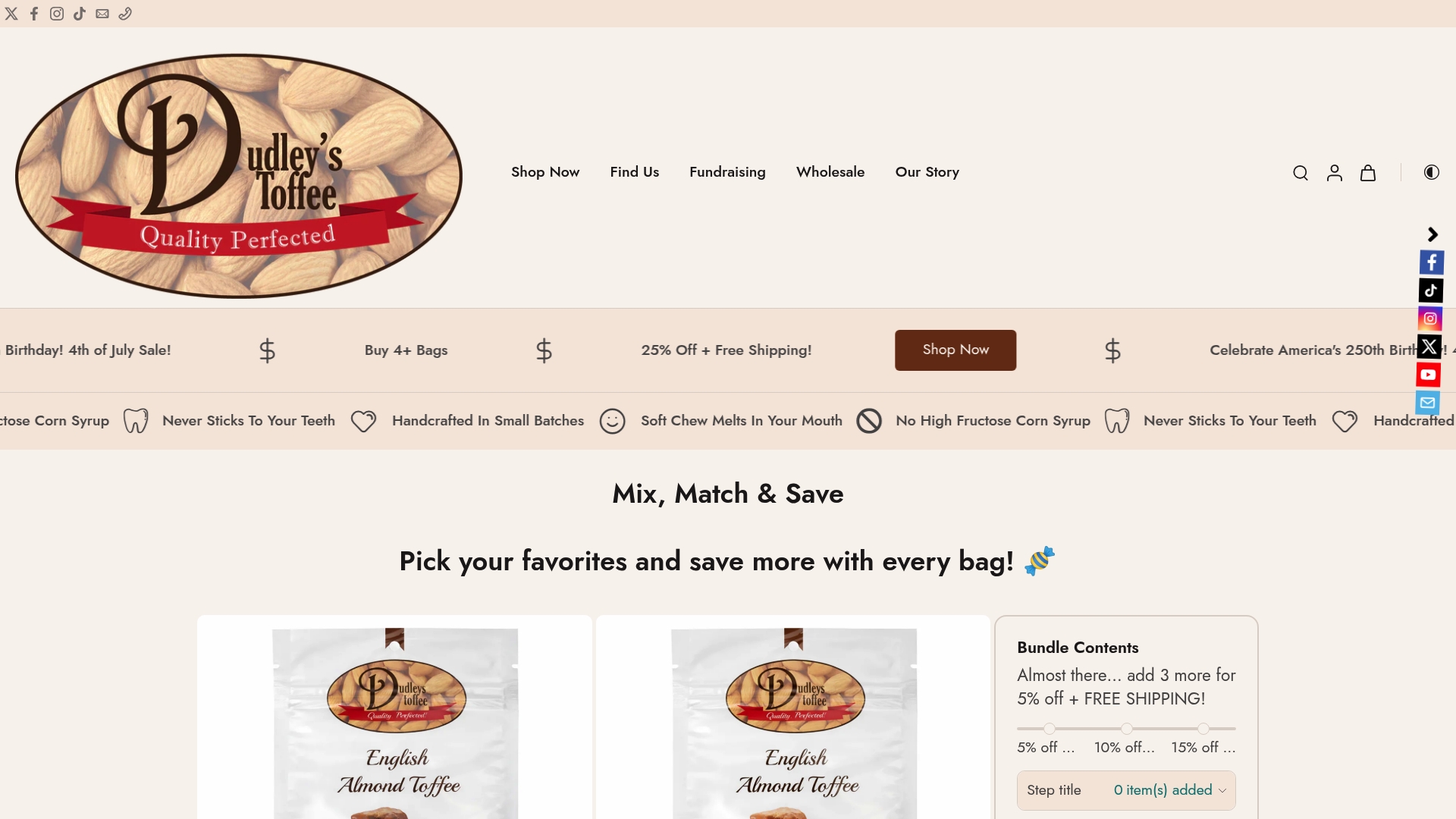
Whether you are looking for a meaningful gift, a premium everyday indulgence, or a product that reflects your values around quality and craftsmanship, Dudley’s Toffee delivers. Explore the milk chocolate English toffee and dark chocolate English toffee varieties, or read the full brand story to understand the family tradition behind every batch.
FAQ
What is premiumization in gourmet food buying?
Premiumization is the shift in consumer spending toward higher-quality, more meaningful food products rather than simply more expensive ones. It reflects a preference for ingredient integrity, ethical sourcing, and authentic craftsmanship over brand recognition alone.
How do gourmet food trends affect consumer spending habits?
Nearly 50% of American consumers have changed their buying habits due to inflation, but gourmet indulgences remain protected through the bifurcated basket strategy of trading down on staples and trading up on premium items.
Why does packaging matter when buying gourmet food?
Premium packaging functions as a trust signal, communicating quality and safety before a consumer has tasted the product. Clean design and transparent ingredient information directly increase willingness to purchase unfamiliar gourmet brands.
How does social media influence gourmet food purchases?
Parasocial intimacy and perceived authenticity from creators fully mediate premium food purchase intent, meaning the sense of personal connection a consumer feels with a brand or influencer drives actual buying decisions more than traditional advertising.
What makes a gourmet food product worth the premium price?
A named ingredient source, a clean label free of artificial additives, and a specific production method such as small-batch or handcrafted are the three most reliable indicators that a premium price reflects genuine quality.