
Skor vs Heath: The Real Differences Between These Toffee Bars
Both Skor and Heath are American toffee candy bars made by The Hershey Company, coated in milk chocolate, and built on a base of butter, sugar, and salt. The single biggest difference between them is almonds: Heath contains roasted almond pieces, while Skor is completely nut-free. Beyond that, Skor’s toffee is thinner and more brittle, delivering a sharp, clean snap and a pronounced buttery flavor. Heath’s toffee is thicker and denser, with a chewier bite and the added complexity of almond crunch. If you want a pure, simple butter toffee experience, Skor is your bar. If you prefer a nuttier, richer profile with more texture, Heath wins.
Here is a quick side-by-side of the core differences:
- Nut content: Heath has almonds; Skor has none
- Toffee thickness: Skor is thinner and crisper; Heath is thicker and chewier
- Flavor profile: Skor leans buttery and clean; Heath is nuttier with caramel-like depth
- Chocolate: Skor’s coating is slightly more cocoa-forward; Heath’s is sweeter and creamier
- Allergy considerations: Skor is the nut-free option, though always check the label
- Ownership: Both bars are owned and produced by Hershey as of 2026
How Skor and Heath got their start
The Heath bar has the longer history by far. It was introduced in 1928 by the Heath family in Robinson, Illinois, and built a loyal following over decades as a classic American candy. Skor came much later, launched by Hershey in 1981 specifically to compete with Heath in the butter toffee category. The name “Skor” is thought to derive from the Swedish word for “crust,” a nod to the bar’s crispy toffee center.
For most of their histories, the two bars were rivals from different companies. That changed in 1996 when Hershey acquired the Heath brand, which had passed through the Leaf Candy Company after leaving the Heath family. From that point forward, Hershey owned both, which created the unusual situation of a single company marketing two nearly identical competing products.
Here is a timeline of key milestones for each bar:
- 1928: Heath bar introduced in Robinson, Illinois
- 1981: Skor launched by Hershey as a direct Heath competitor
- 1983: Skor begins distribution in Canada
- 1996: Hershey acquires the Heath brand, now owning both bars
- 2026: Both bars remain active in the Hershey portfolio
A few things shaped how each bar was positioned over the years:
- Heath built its identity around tradition, family heritage, and the classic American candy store
- Skor leaned into a more modern, European-influenced image, with early taglines referencing “the taste of Sweden”
- Heath’s almond inclusion was always central to its identity; Skor’s nut-free profile was a deliberate point of differentiation
- Regional familiarity played a role early on, with Heath stronger in the Midwest and Skor gaining ground as Hershey expanded distribution
What actually goes into each bar
The ingredient lists for Skor and Heath are strikingly similar. Both bars use milk chocolate, sugar, butter, vegetable oil, and salt as their foundation. The decisive difference is that Heath adds roasted almonds, while Skor’s recipe stops there.
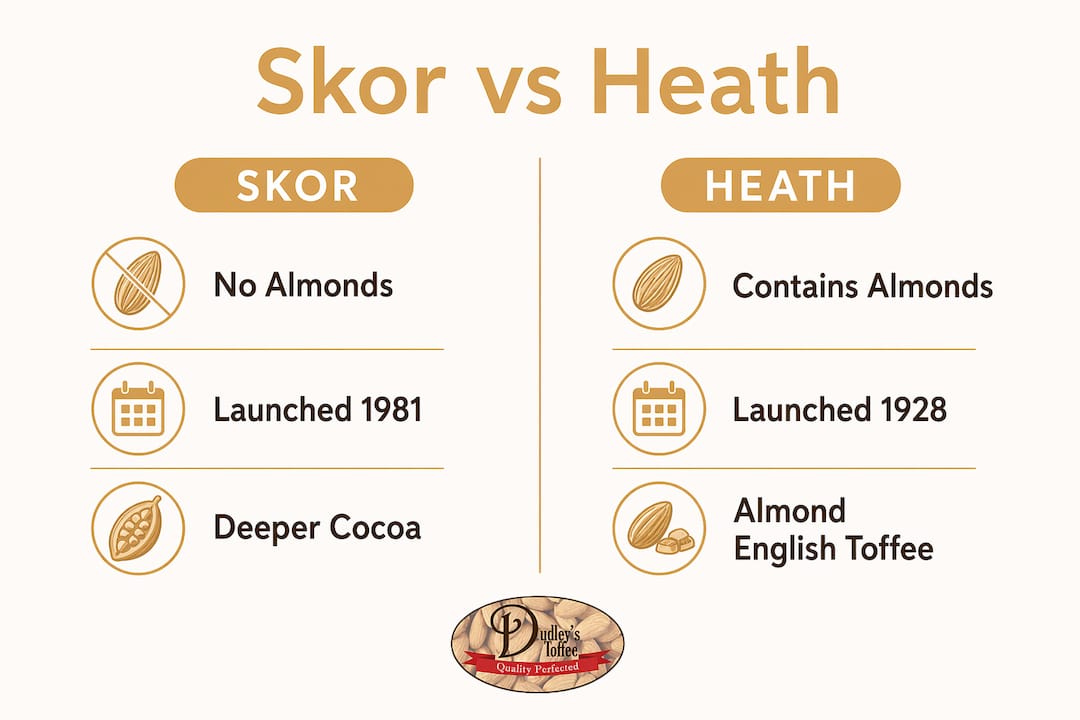
| Feature | Skor | Heath |
|---|---|---|
| Launch year | 1981 | 1928 |
| Manufacturer | The Hershey Company | The Hershey Company |
| Toffee type | Butter toffee | English toffee |
| Nut content | None | Roasted almonds |
| Toffee thickness | Thinner, more brittle | Thicker, denser |
| Chocolate style | More cocoa-forward | Sweeter, creamier |
| Packaging (standard) | 1.4 oz (39g) single bar | 1.4 oz single bar |
Despite the labels “butter toffee” for Skor and “English toffee” for Heath, the base recipes are quite close. The real variation comes from ingredient proportions and manufacturing processes rather than fundamentally different formulas. Heath’s toffee is cooked to a slightly different consistency, which produces the denser, chewier result. Skor’s toffee is pulled thinner during production, which is what gives it that characteristic brittle snap.
The chocolate coatings differ in a meaningful way too. Skor’s milk chocolate has a slightly deeper cocoa character, which balances the richness of the butter toffee underneath. Heath’s chocolate is formulated to be sweeter and lighter, complementing the almond-flavored toffee rather than competing with it. Neither bar contains high-fructose corn syrup as a primary sweetener, though both use refined sugar.
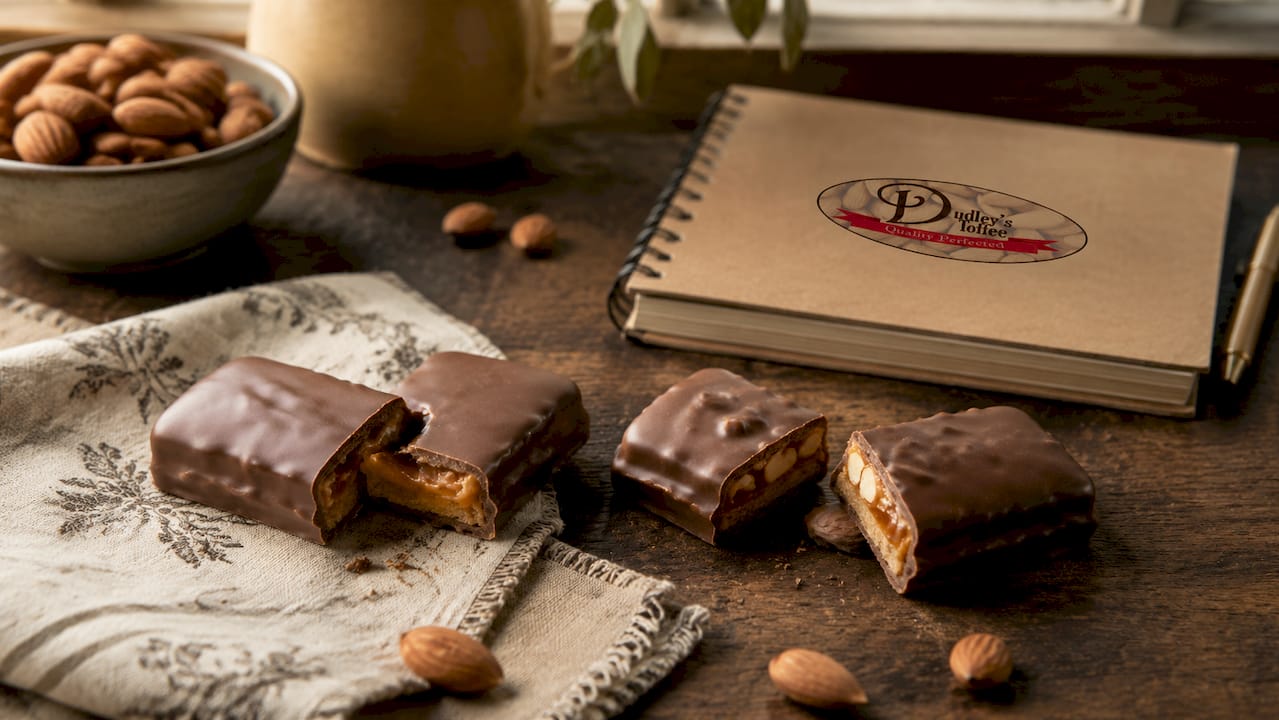
Pro Tip: If you use these bars for baking, the toffee texture differences matter as much as the flavor. Skor’s nut-free, brittle toffee melts more evenly into batters, while Heath’s almond pieces add a pleasant crunch to cookies and brownies.
How Skor and Heath actually taste and feel
Bite into a Skor bar and the first thing you notice is the snap. Skor’s toffee is brittle with a shattering quality and a pronounced buttery flavor that comes through immediately. The milk chocolate coating adds sweetness without overwhelming the toffee, and the overall experience is clean and direct. There are no competing flavors pulling your attention.
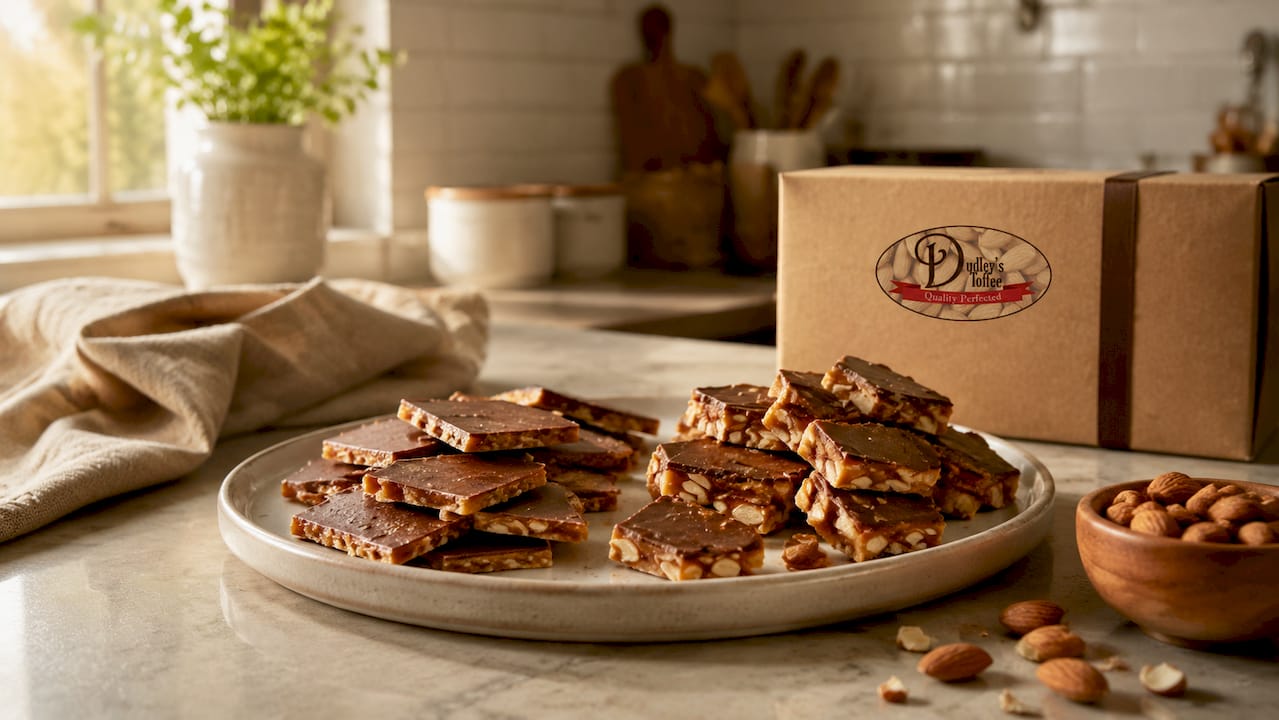
Heath delivers something more layered. Heath’s toffee is denser with a nutty almond crunch and a sweeter chocolate surface. The almonds are embedded throughout the toffee, so every bite brings a slightly different texture. The flavor builds rather than hits all at once, with buttery notes followed by the nuttiness of the almonds and then the sweetness of the chocolate coating.
Here is how the two bars compare across specific sensory dimensions:
- Snap and crunch: Skor shatters cleanly; Heath gives a denser, chewier resistance
- Butter flavor: Skor is more intense and upfront; Heath’s butter notes are softened by the almonds
- Sweetness level: Heath reads sweeter overall due to its lighter chocolate and almond sugars
- Aftertaste: Skor finishes with a clean, buttery note; Heath lingers with a mild nuttiness
- Mouthfeel: Skor dissolves relatively quickly; Heath takes longer to chew through
- Chocolate character: Skor’s coating has more cocoa depth; Heath’s is milkier and softer
Some people find Skor slightly harder on the teeth because of how cleanly the toffee fractures. Heath, despite being thicker, can feel slightly more forgiving because the almonds distribute the bite differently. Neither bar is soft in the traditional sense. Both require a confident bite.
What consumers tend to prefer and why
The Skor vs Heath debate runs deep for toffee fans, and preference usually comes down to one of two things: whether you want almonds, and how sweet you like your chocolate. Those who favor a nutty, caramel-rich experience almost always land on Heath. Fans of a cleaner, more straightforward butter toffee tend to reach for Skor.
Brand loyalty also shapes the choice in ways that go beyond flavor. Heath has been around since 1928, and for many candy lovers, it carries a sense of nostalgia tied to childhood memories and family traditions. Skor, being the newer bar, tends to attract people who discovered it independently rather than through family habit.
A few common preference patterns worth knowing:
- Bakers often split by use case: Skor bits work well in creamy desserts like ice cream toppings, while Heath bits are a go-to for cookies and brownies where almond texture adds contrast
- Nut-free households default to Skor without much deliberation
- Fans of European-style confections sometimes gravitate toward Skor’s cleaner, less sweet profile
- Traditional American candy lovers often feel a stronger pull toward Heath’s heritage and complexity
- Regional familiarity still plays a role, with Heath having deeper roots in Midwestern candy culture
Neither bar objectively wins the taste test. The choice is genuinely personal, shaped by texture preference, nut tolerance, and how much sweetness you want from your chocolate coating.
Nut content and allergy considerations
Heath is not nut-free. Almonds are a core ingredient, not an add-on, and they appear throughout the toffee layer. Anyone with a tree nut allergy should avoid Heath entirely.
Skor has no nuts in its recipe, making it the safer choice for nut-conscious consumers. That said, Skor is produced in facilities that also handle other Hershey products, some of which contain nuts. Cross-contamination is a real consideration, and Hershey’s labeling reflects this with advisory statements on packaging.
Key points for allergy-aware shoppers:
- Heath: Contains almonds. Not suitable for tree nut allergies under any circumstances.
- Skor: No nuts in the ingredient list, but check current packaging for cross-contamination advisories.
- Label reading: Hershey updates allergen statements periodically; always read the current label before purchasing.
- Severity matters: For mild sensitivities, Skor may be fine. For severe or anaphylactic tree nut allergies, consult a physician before consuming any product made in a shared facility.
- Baking use: When using toffee bits in recipes for groups, confirm the nut status of the specific product format (bits vs. whole bars may carry different advisories).
For those seeking a genuinely gluten-free toffee option with transparent ingredient sourcing, artisan producers often offer more clarity on allergen controls than large-scale manufacturers.
When handcrafted toffee is worth considering
Mass-produced bars like Skor and Heath are convenient and consistent, but they represent one end of the toffee spectrum. At the other end sits small-batch, handcrafted English almond toffee made with care and premium ingredients.
Dudley’s Toffee, a family-owned company based in Indiana, makes exactly that kind of toffee. Each batch is crafted by hand in small quantities, using real butter and no high-fructose corn syrup, and the result is a softer, meltier toffee that behaves differently from the brittle snap of a Skor or the dense chew of a Heath. Dudley’s offers both milk and dark chocolate varieties, and the toffee is certified gluten-free, which matters for shoppers who need that assurance. You can read more about the full range of artisan toffee options if you are curious how handcrafted production changes the eating experience.
Pro Tip: Handcrafted toffee makes a genuinely memorable gift. Unlike a candy bar grabbed at checkout, a small-batch toffee from a family producer carries a story and a level of care that recipients notice. It works especially well for corporate gifting, holiday boxes, and fundraising programs where quality reflects on the giver.
Packaging differences and available sizes
Skor and Heath are packaged similarly at the standard retail level. Both come in a single-serve bar format at 1.4 oz (39g), wrapped in foil with a paper label, and both are available in king-size formats for larger portions. The visual branding differs: Skor uses a bold red and gold color scheme, while Heath leans on a brown and gold palette that reflects its longer heritage.
Beyond the standard bar, both products are sold in “bits” formats designed for baking. Skor Bits and Heath Bits o’ Brickle are the respective baking versions, available in bags at most grocery stores. These are smaller toffee pieces without the full chocolate coating, intended to be mixed into doughs and batters. Heath Bits include almond pieces; Skor Bits do not.
Multipack options exist for both bars, typically in 6-count or 18-count formats sold at warehouse retailers and club stores. Seasonal and gift-oriented packaging is less common for both bars compared to other Hershey products, since neither has been heavily marketed as a gifting item in recent years.
Where you can find Skor and Heath bars
Heath is the easier bar to find. Its longer history and stronger brand recognition mean it appears reliably in most grocery stores, drugstores, and mass-market retailers across the United States. Walmart, Target, Kroger, and similar chains typically carry Heath in both single-bar and multipack formats year-round.
Skor has a spottier retail presence. It tends to appear more consistently in larger retailers and specialty candy shops, but smaller grocery stores and convenience stores sometimes skip it entirely. Availability can vary noticeably by region, with some markets carrying Skor regularly and others stocking it only occasionally. Online purchasing through Hershey’s own channels or major e-commerce platforms is often the most reliable way to find Skor in consistent supply.
Both bars are available in Canada, with Skor having been distributed there since 1983. Outside North America, neither bar has wide distribution, and they are generally considered American products with limited international reach.
Key Takeaways
Skor and Heath are both Hershey-owned butter toffee bars, but the presence of almonds in Heath and their absence in Skor creates meaningfully different flavor, texture, and allergy profiles that drive consumer preference.
| Point | Details |
|---|---|
| Nut content is the core difference | Heath contains roasted almonds; Skor has none, making it the nut-free option. |
| Texture diverges by design | Skor’s toffee is thinner and brittle; Heath’s is thicker, denser, and chewier due to its English toffee base. |
| Flavor profiles suit different palates | Skor delivers a clean, buttery taste; Heath offers a nuttier, more complex caramel and almond character. |
| Allergy shoppers should verify labels | Skor is nut-free by recipe, but cross-contamination advisories may apply; always read current packaging. |
| Dudley’s Toffee offers a handcrafted alternative | For a softer, small-batch English almond toffee that is gluten-free and made in Indiana, Dudley’s Toffee is worth exploring. |
The Skor vs Heath rivalry deserves more credit than it gets
Most candy comparisons treat Skor and Heath as interchangeable, which misses the point entirely. Yes, they share the same owner, the same basic ingredients, and the same chocolate shell. But the eating experience genuinely differs, and that difference matters to the people who care about it.
What strikes me about this rivalry is how cleanly it maps to two distinct philosophies of what toffee should be. Skor represents the purist view: butter, sugar, chocolate, nothing else. The flavor is unambiguous and the texture is decisive. Heath represents the traditionalist view: toffee as a vehicle for complexity, where almonds and a sweeter chocolate create something that takes a little longer to appreciate.
The fact that Hershey has kept both bars in production for decades, despite the obvious overlap, tells you something real about consumer loyalty. Neither bar has cannibalized the other. People who love Heath are not switching to Skor, and vice versa. That kind of stubborn brand attachment is rare in the candy category, where most products live or die by novelty.
For anyone who has not tried both side by side, that is genuinely the best way to settle the question for yourself. Buy one of each, eat them back to back, and pay attention to what you reach for second. Your answer will be clear.
Toffee worth tasting beyond the candy aisle
If the Skor vs Heath comparison has you thinking about what great toffee can actually be, Dudley’s Toffee offers a genuinely different experience. Made by hand in small batches in Indiana, Dudley’s milk chocolate English almond toffee uses real butter, no high-fructose corn syrup, and no shortcuts. The result is a softer, meltier toffee that stands apart from the brittle snap of mass-produced bars.
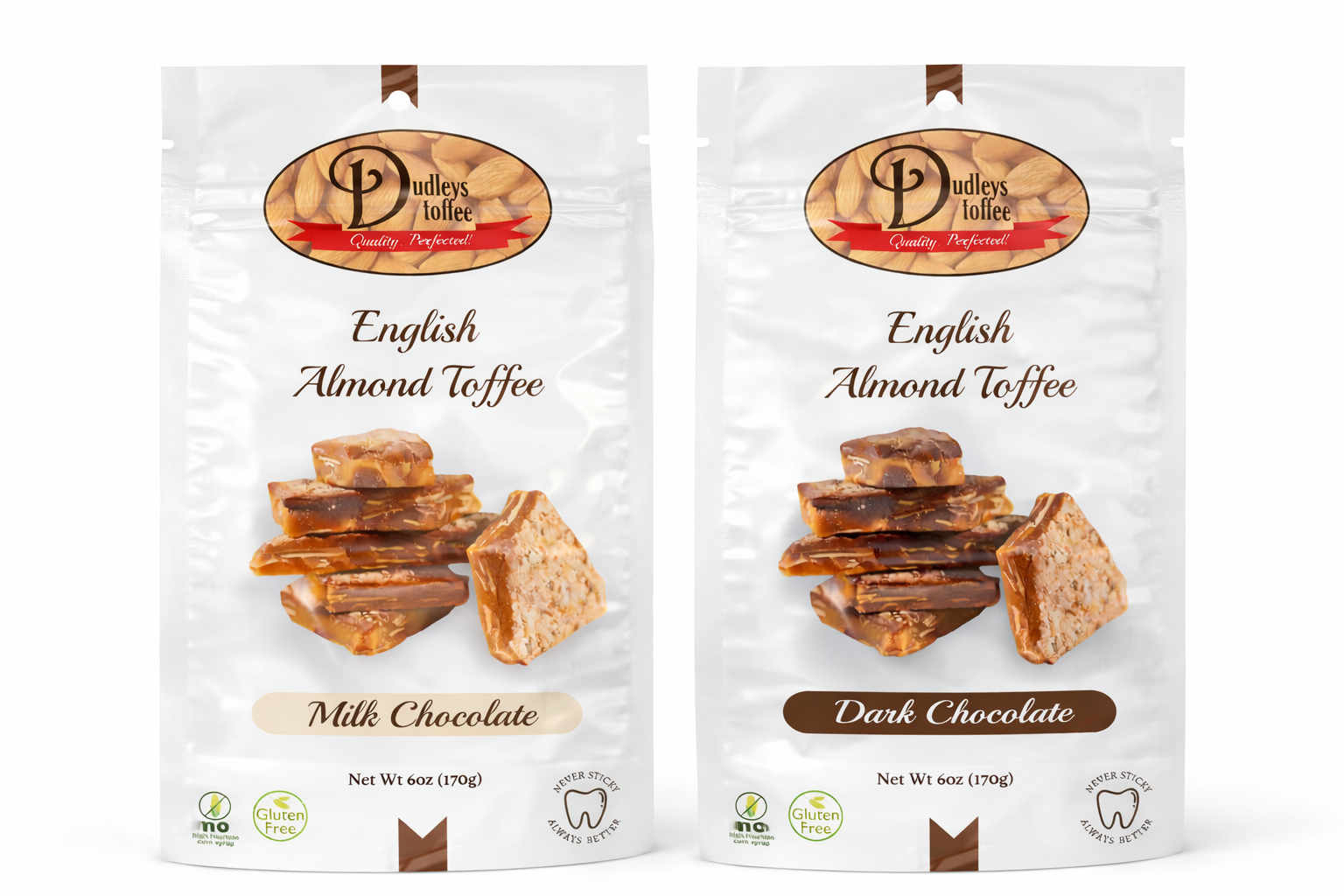
Available in both milk and dark chocolate, and certified gluten-free, Dudley’s toffee works beautifully as a gift, a corporate treat, or simply a reward for your own sweet tooth. The dark chocolate variety is especially popular with those who found Heath’s chocolate too sweet and want something with more depth. Orders ship nationwide, and bulk options are available for events, fundraisers, and wholesale buyers. Visit Dudley’s Toffee to find the right option for you.
FAQ
Which is better, Heath or Skor?
Neither bar is objectively better. Heath suits those who prefer a nuttier, chewier toffee with almond complexity, while Skor is the better choice for fans of clean, buttery, nut-free toffee with a crisper snap.
What is the American version of the Skor bar?
Skor is itself an American product, introduced by Hershey in 1981 and produced in the United States. There is no separate American version; both Skor and Heath are American candy bars owned by Hershey.
Did Heath replace Skor?
No. Hershey acquired the Heath brand in 1996 and has continued producing both bars. They coexist in the Hershey portfolio as distinct products targeting slightly different consumer preferences.
Why does Hershey make both Heath and Skor?
Hershey ended up with both bars through acquisition. Skor was created in 1981 to compete with Heath, and Hershey later purchased the Heath brand in 1996. Rather than discontinue either, Hershey kept both because each has a loyal consumer base that does not fully overlap.
Is Skor or Heath better for baking?
Skor’s nut-free, brittle toffee melts more evenly into creamy desserts and ice cream toppings, while Heath’s almond pieces add satisfying texture contrast to cookies and brownies. The right choice depends on what your recipe needs.
Recommended
Share