
Get Well Food Gifts That Actually Help Someone Heal
The best get well food gifts are low-prep, nourishing, and easy on a tired body: think heat-and-serve soup, shelf-stable comfort treats, and small bundles that don’t demand anything from the recipient. If you only have time to grab one thing, pair a ready-to-eat meal with a small, sweet extra like a 6oz bag of handcrafted toffee. That combination covers both practical need and emotional comfort without asking the person you’re caring for to lift a finger.
Here’s why that pairing works better than a bouquet or a generic gift basket:
- Low effort, high comfort. Ready-to-eat or heat-and-serve items reduce stress for someone who’s exhausted, in pain, or just doesn’t feel like cooking, and industry reviewers consistently rate these formats highest for recovery gifting.
- Nourishment plus a small joy. A bowl of soup handles the practical side; a piece of soft, buttery toffee handles the “someone is thinking of me” side.
- Shelf-stable options travel well. Unlike flowers, which wilt, or frozen meals, which need a freezer slot, a sealed bag of toffee sits on a counter for weeks and doesn’t compete for fridge space in a house already full of casseroles.
A get well gift doesn’t need to be elaborate to work. It needs to ask nothing of the person receiving it. That’s the whole test.
For the small comfort-treat half of that pairing, Dudley’s Toffee’s 6oz Milk Chocolate English Almond Toffee or Dark Chocolate English Toffee bags fit naturally into a care package. Both are gluten-free, handcrafted in small batches in Indiana, and shelf-stable, so they arrive ready to enjoy whenever the recipient has the appetite for a treat.
Table of Contents
- What Types of Get Well Food Gifts Work Best?
- How Do You Choose the Right Get Well Food Gift?
- Delivery, Shelf Life, and Timing: What to Check First
- Packaging, Personalization, and What to Include
- Budget-Friendly and Quick Get Well Food Gifts
- Dietary Restrictions, Hospital Rules, and Safe Swaps
- Why Dudley’s Toffee Makes a Thoughtful Get Well Food Gift
- Author’s Note: A Few Things I’ve Learned About Sending Food Gifts
- How to Send Dudley’s Toffee as a Get Well Treat
- Final Checklist: Choose Quickly With This Short List
- Sources
- FAQ
What Types of Get Well Food Gifts Work Best?
Not every recovery looks the same, so the right food gift depends heavily on the recipient’s situation. Someone recovering from outpatient surgery has different needs than someone facing a multi-week illness at home or a hospital stay with visitor restrictions.
Ready-to-heat meals and soups are the gold standard for anyone with low energy or a limited appetite. A single bowl of warm soup, heated in five minutes, does more for a recovering person than an elaborate gift basket they have to unpack and figure out. Reviewers who’ve tested these packages point out that the low barrier to eating is exactly what makes them valuable, especially in the first few days after surgery or a hospital discharge.
Prepared meal bundles go a step further, offering multiple meals at once so a caregiver or the recipient doesn’t need to think about food for several days. Deli-style packages are a strong example: Katz’s Delicatessen’s Get Well package includes two quarts of chicken noodle soup, matzoh ball soup, a pound of turkey, bagels, knishes, and rye bread, enough to feed one person for two to three days or a small family for one sitting.
Snack and treat boxes work well for recipients who are mobile and simply craving comfort, not full meals. Fruit and tea bundles suit anyone easing back into eating or dealing with a sensitive stomach. And single-serve treats like candies, chocolates, and toffee are the easiest category of all: no prep, no refrigeration, no expiration pressure.
Local deli-style care packages deserve a mention too. They’re heartier and more filling than a typical snack box, which makes them a good match for a longer recovery window where the recipient needs several days of real meals, not just comfort bites.
Pro Tip: If you’re not sure how much energy the recipient has for eating, default to insulated or frozen meals over fresh perishables. Frozen items give the recipient control over timing, so they can heat a portion only when they’re actually hungry instead of feeling obligated to eat something before it spoils.
How Do You Choose the Right Get Well Food Gift?
Start with the recipient’s actual situation, not the gift that looks the nicest online. Ask yourself where they are and what their body can handle right now.
- Is the recipient at home, in a hospital, or in a care facility with delivery restrictions?
- How much energy do they have for unwrapping, heating, or assembling anything?
- Are there known dietary restrictions, swallowing issues, or food aversions from treatment?
- Does the gift need to arrive same-day, or is there a few days of lead time?
- Who’s going to store and prep the gift: the recipient, or a caregiver?
Once you’ve answered those, weigh the practical selection criteria: prep effort, portion size, dietary labeling, shelf life, packaging quality, delivery speed, and price. A $30 shelf-stable bundle that arrives on time beats a $75 gourmet basket that shows up a week late or requires a freezer the recipient doesn’t have room for.
Watch for these red flags before you check out:
- No visible ingredient or allergen list on the product page.
- Vague or missing shipping details, especially for anything frozen or perishable.
- Long production lead times with no rush option. Some handcrafted sellers need up to five business days to prepare custom orders, which can mean your gift arrives well after the recovery window that mattered most.
- No clear return or replacement policy if the package arrives damaged or late.
Delivery, Shelf Life, and Timing: What to Check First
Timing makes or breaks a food gift. A beautiful care package that shows up ten days after surgery has missed the moment it was supposed to help.
Different formats have very different shelf lives and handling needs:
- Frozen meals typically ship in insulated packaging with dry ice, and most providers deliver them within one to three business days to keep them food-safe in transit.
- Shelf-stable items, like candy, toffee, tea, and honey, need no special handling and can sit unrefrigerated for weeks, making them the least risky option for timing.
- Heat-and-serve refrigerated meals fall in between: they need to be eaten within days of arrival and generally aren’t meant to be frozen after the fact.
Before you order anything perishable, confirm the shipping method, whether dry ice is used, and the expected transit window. Shipping guidance for perishable foods consistently recommends insulated packaging and dry ice for any transit longer than a day, and you should be able to find that information clearly stated on the product page, not buried in fine print.
One in three days is the realistic window for most cold-pack food gifts. That’s the standard transit time cited across prepared-meal and perishable shipping guidance, and it should shape your ordering timeline: if the recipient’s surgery is tomorrow, a frozen meal ordered today probably won’t make it in time. Shelf-stable gifts, on the other hand, can be ordered further in advance and simply held until you’re ready to send them, which makes them the safer choice when you’re not sure exactly when help is needed most.
Avoid ordering anything with a long production lead time right before a peak recovery day, like the first 48 hours home from the hospital. If you’re not certain the timeline works, lean toward a shelf-stable option that doesn’t carry that risk at all.
Packaging, Personalization, and What to Include
How a food gift is packaged says almost as much as what’s inside it. A care package that arrives in a reusable container with clear labeling feels considered. One that arrives in a plain box with no instructions feels like an afterthought, even if the food itself is good.
A few things make a real difference:
- Reusable containers give the gift a second life after the food is gone, and they signal quality without you having to say a word.
- Clear labeling matters more than people expect. Include reheating instructions, storage guidance, and a printed ingredient or allergen list so a tired caregiver isn’t guessing.
- A short handwritten note turns a food delivery into a gift. It doesn’t need to be long.
- A small keepsake adds staying power. Some curated packages pair soup and baked goods with a keepsake ladle, and that kind of small functional extra tends to elevate a care package well beyond what the food alone would do.
- Comforting extras, like herbal tea, honey, or a single-serve bag of toffee, round out the package without adding weight or complexity.
If you’re sending toffee alongside a meal or tea bundle, our gourmet candy gift checklist walks through how to pair confections with other care package items so nothing feels randomly thrown together. And if presentation matters to you, our guide to gifting chocolates thoughtfully covers wrapping and pairing ideas that translate directly to a get well package.
Budget-Friendly and Quick Get Well Food Gifts
Sometimes you need something today, or you’re working with a tight budget. Neither is a problem when you know where to look.
- Single-serve soup cups ($5 to $10) offer instant comfort with zero prep beyond a microwave.
- Tea and honey sachets ($8 to $15) are gentle, shelf-stable, and appropriate for nearly any dietary restriction.
- Small candy or toffee bags, 6oz size ($10 to $15) deliver a genuine treat without demanding refrigeration or a specific eating window.
- Fruit and snack packs ($15 to $25) work well for recipients easing back into regular eating.
- Jarred cookies ($12 to $20) hold up in shipping and don’t need to be eaten immediately.
For same-day needs, local florists and specialty shops often carry pre-made candy jars and small snack packages with same-day delivery in their service area, which some flower shops offer as an alternative to a traditional bouquet. For anything shelf-stable, standard postal shipping works fine since there’s no cold-chain risk to manage.
Dietary Restrictions, Hospital Rules, and Safe Swaps
A thoughtful gift that the recipient can’t eat isn’t much of a gift. Before you order, check for the dietary tags that matter most: gluten-free, vegan, low-sodium, and nut-free. Reputable sellers list ingredients and allergens directly on the product page, so if you can’t find that information easily, treat it as a warning sign rather than assuming it’s fine.
Hospitals and care facilities often restrict fresh flowers, homemade food, and certain fresh produce, particularly in oncology or immunocompromised units, but shelf-stable, commercially packaged items are typically allowed. That’s one more reason sealed, individually wrapped treats travel better into a hospital setting than a loose fruit basket or a home-baked dish.
A few dos and don’ts worth keeping in mind:
- Do check ingredient labels for common allergens like nuts, dairy, and gluten before ordering anything for someone with known restrictions.
- Do size portions with caregivers in mind. A single-person soup delivery often gets shared, so a bit of extra volume goes a long way.
- Don’t assume “natural” or “homemade” means allergen-free. Always look for an explicit label.
- Don’t send anything requiring specific reheating equipment (like a particular oven setting) without written instructions included.
If you’re buying for a workplace recovery or sending on behalf of a team, our guide on choosing appropriate presents for employees covers dietary considerations in more depth, since group gifting often means accommodating multiple restrictions at once.
Why Dudley’s Toffee Makes a Thoughtful Get Well Food Gift
Toffee earns its place in a get well package because it asks nothing of the recipient. There’s no reheating, no expiration clock ticking, and no risk of it going to waste if someone isn’t hungry the day it arrives.
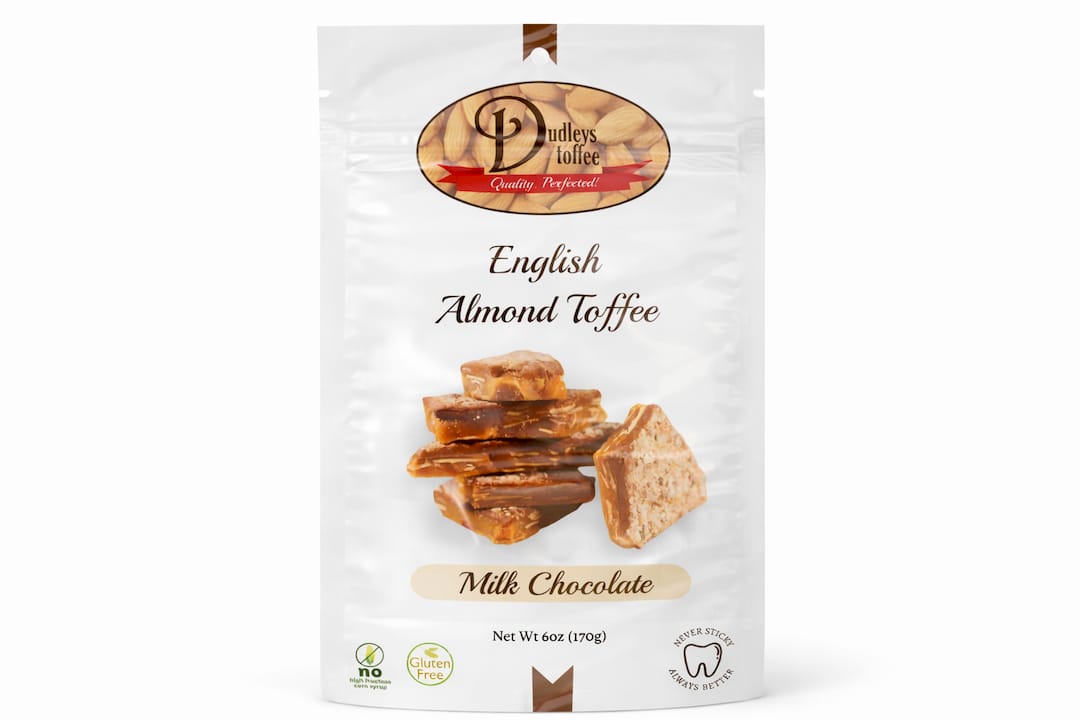
Dudley’s Toffee is handcrafted in small batches in Indiana using a family recipe built around a softer, buttery texture that melts rather than sticks to your teeth, which matters if the recipient has any dental sensitivity after treatment or surgery. Every bag is gluten-free and made with no high-fructose corn syrup, in both milk and dark chocolate.
For a get well package, a few options fit particularly well:
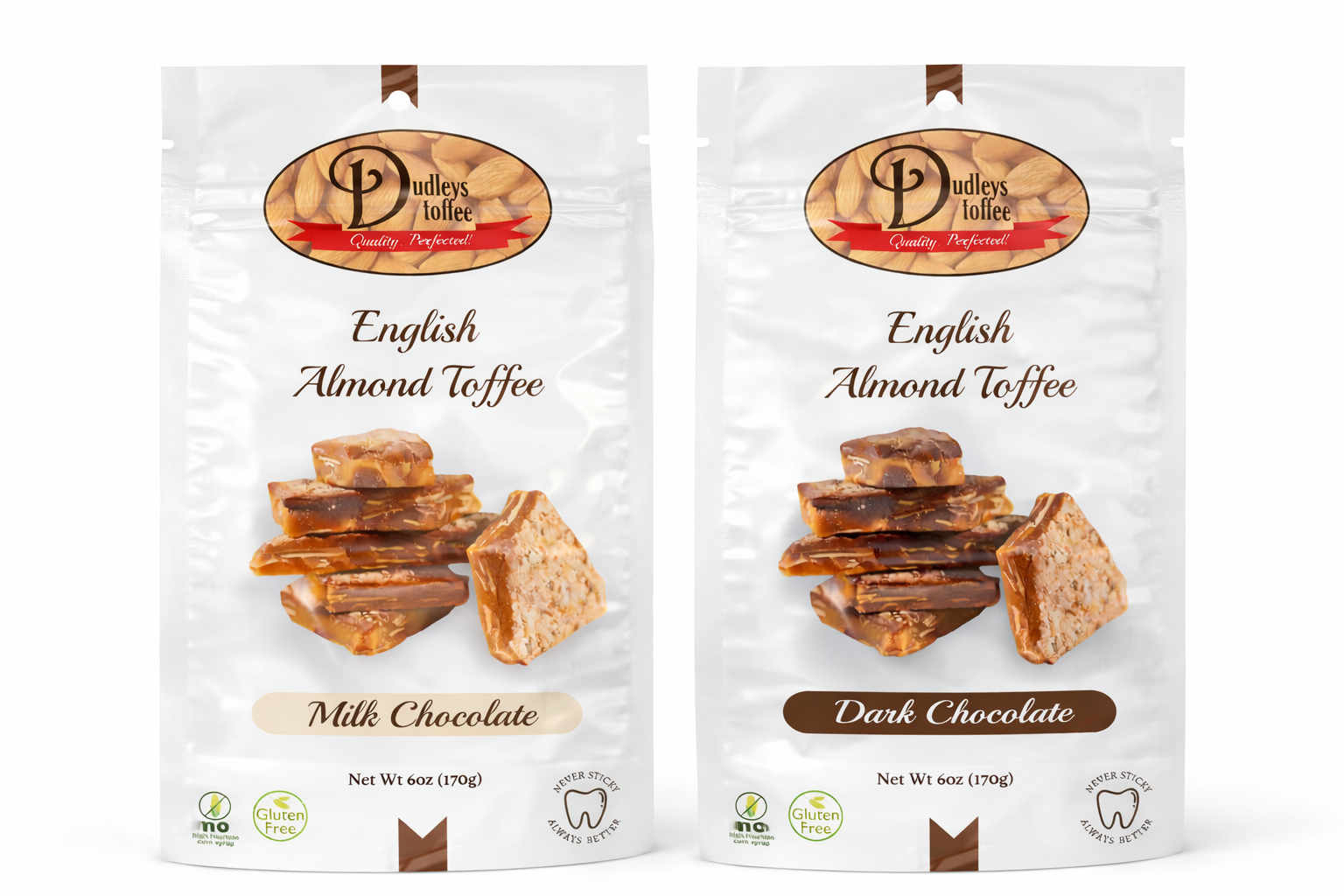
- Dark Chocolate English Toffee (6oz) for recipients who prefer a richer, less sweet chocolate.
- Milk Chocolate English Almond Toffee (6oz) for a classic, crowd-pleasing option.
- Dudley’s English Almond Toffee 6oz, which lists full ingredient and allergen details directly on the product page.
- The Fundraiser SKUs and the case of 24 bags, useful if you’re coordinating a group care package from a workplace or a circle of friends.
A single 6oz bag doesn’t need to carry the whole gift. It works best as the small, comforting counterpoint to something more practical, like a soup cup or a tea sachet.
Pairing a bag of toffee with a single-serve soup cup or a small tea packet gives you both halves of a good get well gift: something nourishing and something sweet. Because toffee is shelf-stable, it also solves the timing problem entirely. It doesn’t matter if the recipient isn’t hungry for it the day it arrives; it’ll still be perfect a week later. Always check the specific product page for current ingredient and allergen listings before ordering, especially if the recipient has a nut allergy or another specific restriction.
Author’s Note: A Few Things I’ve Learned About Sending Food Gifts
Balance matters more than abundance. I’d rather send one good soup and one small treat than a giant basket stuffed with things nobody asked for. A nourishing meal covers the practical need; a small confection covers the emotional one. That pairing does more work than an oversized gift ever does.
Delivery windows are the part people underestimate. If you’re not sure exactly when someone’s coming home or when they’ll have an appetite, lean toward something shelf-stable that doesn’t have a clock running on it. And if a delivery misses the mark on timing, a quick text a few days later, something like “did the package make it, and is there anything else you need?”, does more relationship repair than most people realize.
Don’t skip the note. A care package without a name attached to it, or without reheating instructions for whoever’s helping out, puts extra work on someone who’s already stretched thin. A few written lines make the difference between a gift that helps and one that just adds another task to the pile.
How to Send Dudley’s Toffee as a Get Well Treat
If you already know a bag of toffee is the right small comfort to include, the ordering side is simple. The Dark Chocolate English Toffee (6oz) and Milk Chocolate English Almond Toffee (6oz) are both sized perfectly as a standalone treat or a pairing alongside a soup cup or tea bundle.
If you’re gifting on behalf of a group, whether that’s coworkers chipping in for a colleague’s recovery or a fundraising drive, the Fundraiser SKUs and the case of 24 bags make it easy to split a larger order across several people without anyone managing separate shipments. Larger organizations coordinating multiple care packages at once can also look into wholesale ordering for better per-unit pricing. For extra peace of mind on delivery timing, order protection covers you if something goes wrong in transit.
For packaging inspiration, our guide to toffee gift packaging ideas shows how to bundle a bag with tea, a note, or a small keepsake so it reads as a complete gift rather than a single item tossed in a box. When you’re ready, browse the full toffee lineup and pick the bag, or the bundle, that fits the person you’re sending it to.
Final Checklist: Choose Quickly With This Short List
The most reliable get well food gift pairs a low-prep, nourishing item with a small shelf-stable treat, confirmed for dietary fit and realistic delivery timing before you check out.
| Point | Details |
|---|---|
| Prioritize low effort | Choose heat-and-serve or shelf-stable items so the recipient doesn’t have to do any work to enjoy the gift. |
| Confirm dietary fit | Check gluten-free, vegan, low-sodium, or nut-free labeling directly on the product page before ordering. |
| Verify shipping window | Frozen or perishable gifts typically need 1 to 3 business days in insulated packaging with dry ice. |
| Add a personal touch | Include a note, reheating instructions, or a small keepsake so the gift feels complete, not just functional. |
| Pair with Dudley’s Toffee | A 6oz gluten-free bag of Dudley’s Toffee adds a shelf-stable, no-prep comfort treat to any soup or tea bundle. |
Sources
Before you order anything perishable or handcrafted, it’s worth confirming shipping specifics and reviewing a couple of well-documented examples of how care packages are built.
- Spoonful of Comfort review: are the cozy meal care packages worth the price? — CNET
- Get Well Soon Care Package — What a Crock Meals
- Can you ship perishable food by mail? — Irish Carbonic
- Get Well Soon Package — Katz’s Delicatessen
- Get Well Soon Gift Package — Spoonful of Comfort
Always double-check ingredient lists, allergen details, and shipping estimates on the specific product page before you place an order, since these details can change by SKU and by season.
FAQ
What Is an Appropriate Get Well Gift?
An appropriate get well gift is something the recipient can enjoy with little to no effort, like a heat-and-serve soup, a shelf-stable treat, or tea and honey. Avoid anything requiring assembly, refrigeration space they may not have, or foods that conflict with dietary restrictions.
What’s a Good Gift for Someone in Recovery?
A combination of a nourishing, low-prep meal and a small comforting extra, like a 6oz bag of toffee, tends to work better than a single large item. It covers both the practical need for food and the emotional lift of a small treat.
What Should You Send for Get Well Instead of Flowers?
Food gifts are a strong flower alternative because they’re often useful in hospitals or care facilities where fresh flowers may be restricted. Shelf-stable options like candy, tea, and packaged snacks are typically allowed even where fresh flowers are not.
What’s a Good Small Gift for a Sick Person?
Small, shelf-stable treats work best: single-serve soup cups, tea and honey sachets, or a small bag of handcrafted toffee. These require no prep, don’t spoil quickly, and can be enjoyed whenever the recipient has an appetite.
How Long Do Frozen Get Well Meals Stay Fresh in Shipping?
Most frozen meal deliveries use insulated packaging with dry ice and arrive within one to three business days, which keeps them food-safe during transit. Shelf-stable gifts like toffee or tea avoid this timing pressure entirely since they don’t require cold storage.
Recommended
Share