
Stop Wasting Free Candy: Tiered Giveaways and 6oz Toffee for Exhibitors
For most trade shows, compact, individually packaged snacks like mints and candy drive booth traffic, while a premium item such as 6oz branded English toffee works best as a reward for qualified leads. The right approach mixes both: high-volume treats to pull people in and a smaller stock of premium confections, including options like Dudley’s Toffee, to close conversations that actually matter.
TL;DR:
- High-volume treats like mints and gum are essential for attracting foot traffic and should be plentiful enough to distribute to everyone passing by.
- Premium items such as 6oz bags of handcrafted toffee are best reserved for engaged visitors or qualified leads, with only 5% to 10% receiving these during the event.
- Proper packaging, including tins and resealable pouches, significantly influences the perceived value of giveaways and should match the item’s tier and intended impression.
- Ordering deadlines, artwork proofs, shelf life, and temperature considerations are critical factors that influence the success and quality of trade show food giveaways.
- Dudley’s Toffee offers a gluten-free, small-batch, premium confection that maintains texture in warm exhibitor halls and can be tailored for various giveaway tiers.
Table of Contents
- What Are the Best Trade Show Food Giveaways?
- How Do You Match Giveaways to Booth Goals?
- What Should You Check Before Ordering Trade Show Snacks?
- How Much Should You Budget for Food Giveaways?
- How Do You Distribute Food Giveaways at Your Booth?
- What Are the Food Safety Rules for Trade Show Snacks?
- Dudley’s Toffee: A Premium Option Built for Trade Show Tiers
- What We’ve Learned From Planning Trade Show Giveaways
- Ready to Order Premium Toffee for Your Next Trade Show?
- Useful Links for Planning Your Trade Show Giveaways
- Sources
- FAQ
What Are the Best Trade Show Food Giveaways?
The strongest booths don’t hand out one giveaway. They run a tiered system, matching the cost and perceived value of a food item to how much attention that visitor has already given the brand.
Compact, high-volume items are the workhorses of any booth. Mints, gum, and hard candy are easy to stock in bulk, cheap enough to hand out to everyone who walks by, and light enough that attendees will actually carry them home instead of ditching them in the nearest trash can. These items also tend to have long shelf stability, so leftover inventory isn’t wasted if a show runs light on foot traffic.
Grab-and-go snacks fill a different need. Granola bars, trail mix packs, and pretzel bags work well at longer events, especially afternoon sessions when attendees are hungry and tired of walking the floor. They also fit naturally into wellness-themed booths or health, fitness, and outdoor industry shows where a mint feels like an afterthought.
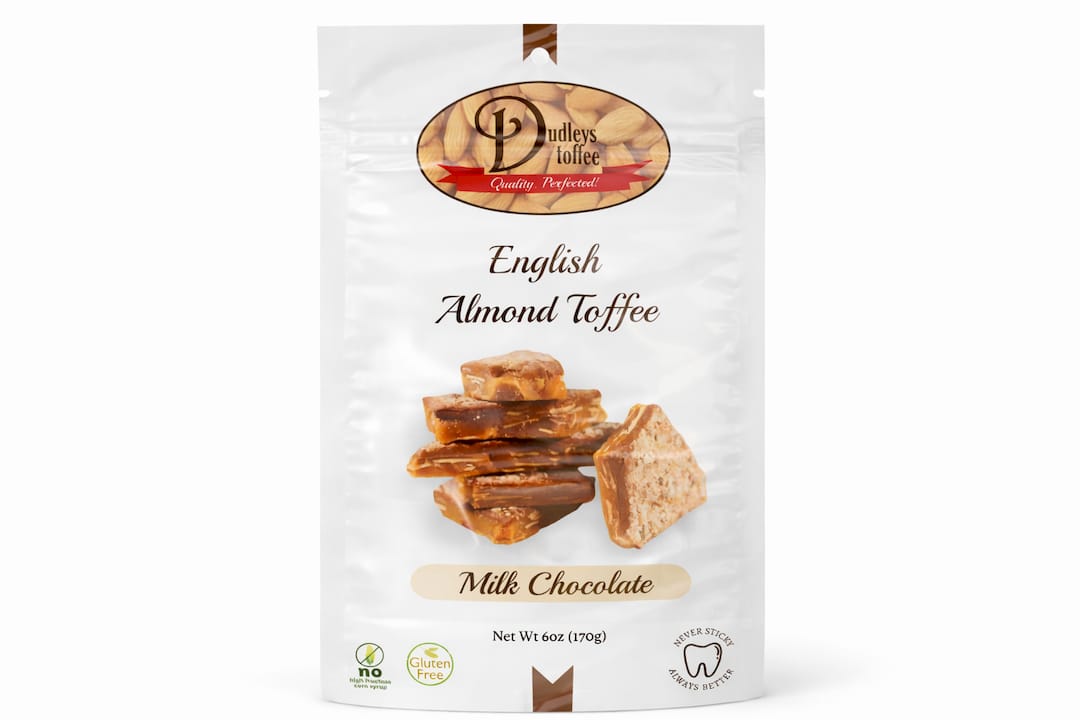
Premium, non-melting items belong in a smaller, more deliberate tier. Individually wrapped toffee and sealed chocolate tins hold up better in warm exhibit halls than bar chocolate or truffles, and they read as a genuine gift rather than a table scrap. This is where a soft-set, small-batch confection like Dudley’s Toffee earns its place. It’s handcrafted in Indiana, gluten free, made without high fructose corn syrup, and available in milk, either milk or dark chocolate, which gives you a way to match the giveaway to your brand palette without compromising on ingredient quality.
Beverage-adjunct items round out the mix. Branded bottled water, single-serve instant coffee packets, and novelty snack packs (flavored popcorn, specialty crackers) give exhibitors something to offer at booths where food service rules limit what’s allowed on the floor.
Packaging shapes how each of these feels in someone’s hand. Consider:
- Tins and decorative boxes for premium items meant to signal VIP treatment
- Sachets or resealable pouches for grab-and-go snacks that need to survive a tote bag
- Label-only wrappers for high-volume candy, where the branding lives on a sticker rather than a custom-printed wrapper
The packaging decision matters more than most exhibitors expect. A snack presented in a decorated tin reads as premium compared to the identical product handed out in a plain poly bag, even when the unit cost difference is small.
How Do You Match Giveaways to Booth Goals?
Not every visitor deserves the same giveaway, and treating them all the same wastes your best inventory on people who were never going to buy. A three-tier framework keeps giveaways aligned with how much interaction a visitor has actually given your team.
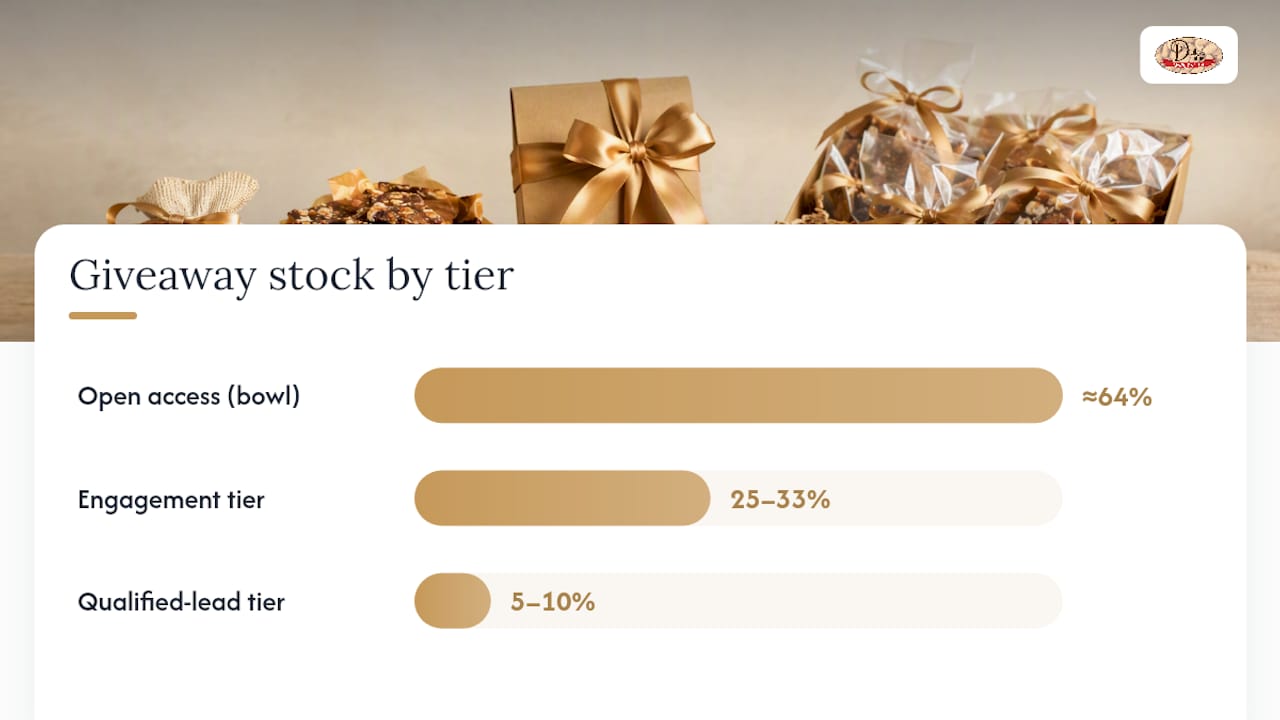
- Open access. Anyone walking past gets a compact item, mints, gum, or wrapped hard candy, placed at the edge of the booth or in a bowl staff can refill without breaking conversation. Budget for one unit per expected attendee, plus some contingency.
- Engagement tier. Visitors who stop for a demo, watch a pitch, or ask a real question get a slightly better snack, a granola bar, a small branded coffee packet, or a single-serve toffee bag. Stock this tier at roughly a quarter to a third of total foot traffic.
- Qualified-lead tier. Attendees who scan a badge, book a meeting, or fill out a form get the premium item, a full 6oz toffee bag or a gift-boxed assortment. Reserve this tier for maybe 5% to 10% of booth visitors, since the goal is a memorable handoff, not mass distribution.
The trigger points matter as much as the tiers themselves. A badge scan, a scheduled follow-up call, or a completed demo are all legitimate reasons to upgrade someone from tier two to tier three. What doesn’t count: someone simply lingering near the table or asking where the restroom is. Staff need a clear, simple rule so premium stock doesn’t disappear in the first two hours of day one.
Keeping tiers separate physically, one bowl up front, one box behind the counter, prevents the common failure mode where your qualified-lead giveaway runs out by lunch because nobody enforced the distinction.
What Should You Check Before Ordering Trade Show Snacks?
Ordering edible giveaways involves more moving parts than ordering pens or tote bags, mostly because food has shelf life, temperature sensitivity, and labeling requirements that generic promo items don’t.
Before you commit to an order, walk through this checklist with your supplier:
- Artwork proof. Ask for a digital proof before production, and get a physical sample if the order exceeds a few thousand units.
- Imprint area. Confirm exactly how much space you have for logo and copy, since branding usually applies to packaging rather than the food itself, and imprint constraints affect how detailed your design can be.
- Minimum order quantities. These vary widely by supplier and product; case-pack items (like a 24-bag case) often carry a lower minimum than fully custom-printed wrappers.
- Lead time. Standard production runs typically need several weeks; ask specifically about rush options if your show date is inside that window.
- Packaging dimensions. Verify that cases fit your booth’s storage, whether that’s a closet, a pedestal table, or a shipped crate.
- Best-by dates. Confirm shelf life against your event date, plus any post-show inventory you plan to keep for follow-up mailers.
Shelf-stable snacks generally hold six to twelve months, which gives you room to order early and store product before the show. Chocolate items need a separate conversation about temperature, particularly if you’re shipping in summer or storing product in a warm exhibit hall overnight.
Pro Tip: Order your artwork proof at least two weeks before your production deadline. A rushed proof is where mismatched colors, cut-off logos, and misspelled show dates slip through.
How Much Should You Budget for Food Giveaways?
Quantity planning starts with a simple ratio: order one unit per expected attendee for your open-access tier, then layer engagement and qualified-lead tiers on top at smaller percentages.
Several factors drive per-unit cost beyond the food itself:
- Packaging complexity. A custom tin costs more to source and print than a sealed poly bag.
- Customization level. Full-color, multi-side printing costs more per unit than a single-color logo on a label sticker.
- Ingredient licensing or specialty formulations. Gluten-free, allergen-free, or specialty ingredient lines often carry a premium over standard commodity snacks.
- Rush fees. Compressing a normal production schedule into two weeks instead of six can add meaningfully to your invoice.
To control cost without cutting corners on quality, limit full-color printing to your qualified-lead tier and use simpler label-only branding on high-volume items. Buying in case packs, rather than requesting fully custom units across your entire order, also keeps your per-unit price down while reserving the premium spend for the tier where it actually influences a buying decision.
How Do You Distribute Food Giveaways at Your Booth?
Placement determines whether a giveaway pulls foot traffic or just becomes a mess for your staff to manage. Edge-of-booth bowls or baskets work for open-access items, since attendees can grab and go without interrupting a conversation your team is having with someone else. Staff-controlled distribution, handing a snack directly to someone after a demo, works better for engagement and qualified-lead tiers because it turns the giveaway into a moment rather than a self-serve transaction.
A few hygiene basics protect both your brand and your booth:
- Use tongs or gloves for any item that isn’t individually wrapped.
- Keep premium items in a closed container, not an open bowl, to control both hygiene and inventory.
- Wipe down tables and bowls midday, since trade show floors get dusty and hands touch everything.
Pair the handoff with a short script your staff can repeat without sounding scripted: “This is our qualified-lead toffee, we only give it to folks who book a follow-up. Want me to grab you a meeting slot?” That single line does double duty, it explains the premium item’s scarcity and prompts the next step, whether that’s a badge scan, a business card drop, or a calendar booking.
Pro Tip: Assign one team member to “giveaway duty” during peak hours. When everyone is responsible for handing out snacks, nobody enforces the tier system, and your premium stock disappears by noon.
What Are the Food Safety Rules for Trade Show Snacks?
Food safety at a trade show is mostly about labeling and packaging discipline, not complicated regulation. Label common allergens, tree nuts, dairy, gluten, soy, clearly on packaging, and keep an ingredient list on hand at the booth for anyone who asks. This matters even more for items like almond toffee, where a nut allergy is a real concern for some attendees.
Avoid loose, unwrapped samples unless your venue explicitly permits open food service; most convention centers restrict unpackaged food distribution for exactly this reason. Sealed, individually wrapped servings simplify both hygiene and allergen transparency, which is why most experienced exhibitors default to prepackaged units even for their open-access tier.
Temperature is the other real risk, particularly for chocolate. Shelf-stable snacks often run six to twelve months before expiration, but chocolate melts easily if exposed to typical exhibit hall heat or direct sunlight during transport. Plan cold-pack shipping for summer shows, or choose a soft-set toffee formulated to hold its texture without needing refrigeration.
Dudley’s Toffee: A Premium Option Built for Trade Show Tiers
Dudley’s Toffee is a family-owned Indiana business that makes handcrafted English almond toffee in small batches, using a recipe that produces a softer, buttery bite instead of the teeth-sticking hardness common in mass-market toffee. Every batch is gluten free and made without high fructose corn syrup, which matters if your show draws health-conscious attendees or corporate buyers vetting ingredient lists.
For the giveaway tiers above, the 6oz bags map cleanly onto qualified-lead and engagement distribution: single milk chocolate or dark chocolate bags work well as one-on-one handoffs, while a case of 24 covers a full day of qualified-lead traffic without running short. For organizations running a nonprofit or fundraising angle alongside their booth presence, Dudley’s Toffee also offers dedicated fundraiser SKUs. Bulk buyers should check the wholesale page early, since lead times for large custom orders benefit from a few weeks of runway before a show date.
What We’ve Learned From Planning Trade Show Giveaways
The most common mistake we see is exhibitors ordering one giveaway tier for the entire show, usually the cheap option, and running out of anything meaningful to hand a genuinely interested lead by hour three of day one. The second mistake is skipping the artwork proof step, which leads to logos cropped wrong on delivery day with no time to fix it. The third is ignoring temperature. Chocolate left in a hot van overnight doesn’t recover its shape once it melts.
A simple pre-show checklist helps avoid common mistakes: approve artwork proof early, confirm ship dates, check allergen labeling, and hold back premium units for key moments. We’ve watched a single well-timed toffee handoff, paired with a meeting booking, do more for a follow-up call rate than a table full of loose candy ever did.
— Dudley’s Toffee
Ready to Order Premium Toffee for Your Next Trade Show?
Compact candy pulls people to your booth, but a handcrafted toffee bag is what makes a qualified lead remember your brand a week later. Dudley’s Toffee gives exhibitors a gluten-free, small-batch option made in Indiana, with no high fructose corn syrup, and it holds its texture and flavor far better than a generic drugstore chocolate bar.
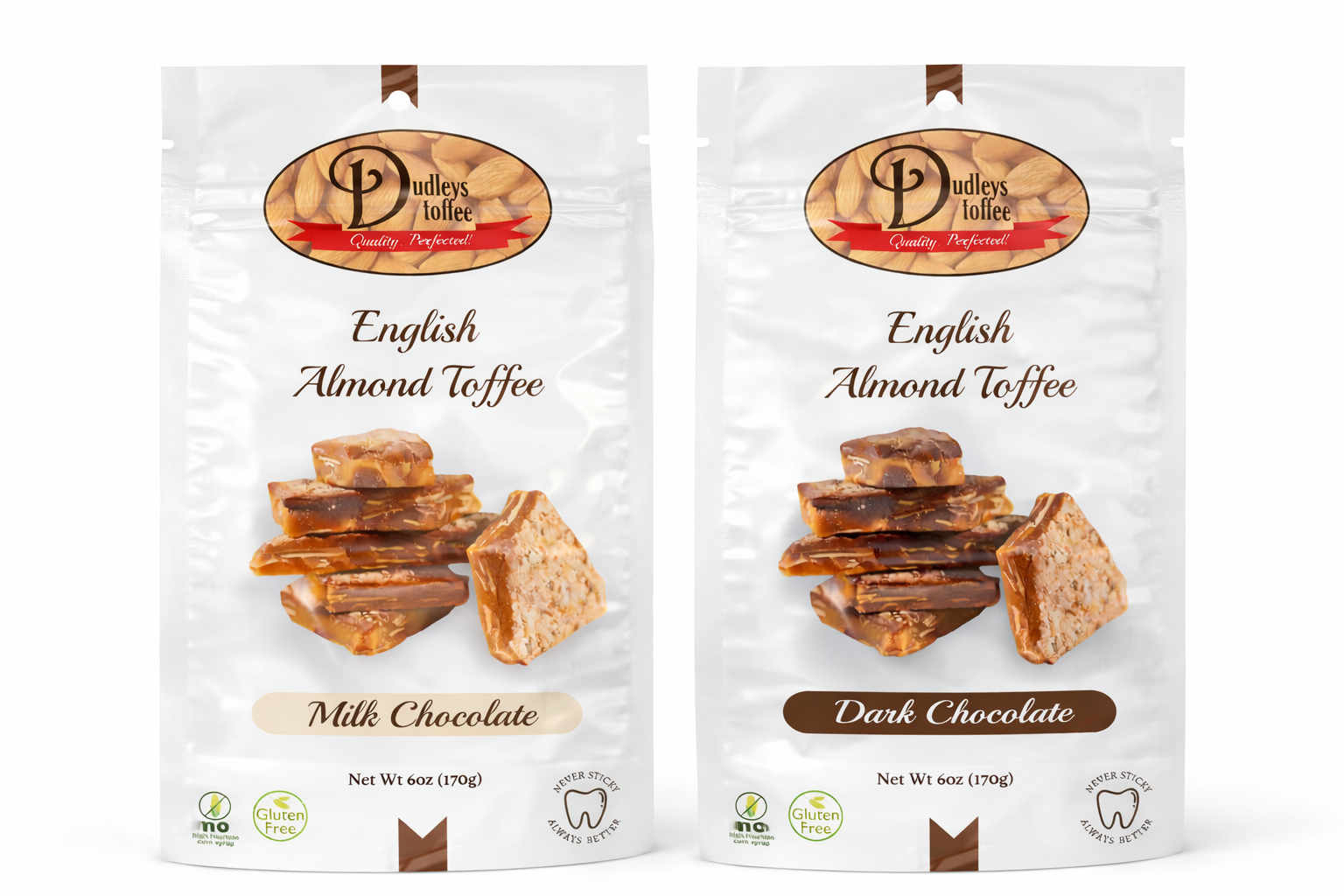
For qualified-lead giveaways, start with the Dudley’s English Almond Toffee 6oz in milk or dark chocolate, or scale up with a case of 24 for multi-day shows. Organizations running a fundraising component alongside their booth can look at the dedicated fundraiser SKU for a giveaway that also supports a cause.
Because production runs in small batches, place bulk orders at least three to four weeks ahead of your event date. Visit the wholesale page to request pricing on case quantities, ask about available lead times for your show date, and get your artwork proof started.
Useful Links for Planning Your Trade Show Giveaways
For imprint specs and packaging examples across common promotional food formats, see Garrett Specialties’ trade show snack catalog and 4imprint’s food and candy gift guide. For ordering support and event-specific product examples, browse Dudley’s Toffee’s wholesale page and read why toffee works as an event favor. Planners looking for broader post-event follow-up ideas can also check this festive meal offerings list for event planners.
Sources
FAQ
What Are Good Giveaways to Hand Out at Trade Shows?
Compact items like mints, gum, and hard candy work best for general foot traffic, while granola bars and trail mix suit longer events, and premium items like individually wrapped toffee work best reserved for engaged or qualified leads.
What Are Popular Trade Show Giveaways Right Now?
Individually packaged snacks remain the most common open-access giveaway, but more exhibitors are shifting premium budget toward gluten-free, small-batch confections like handcrafted toffee to stand out from generic branded candy.
What Makes a Food Giveaway Good for a Conference?
A good conference giveaway is portable, shelf-stable, clearly labeled for allergens, and matched to the interaction it rewards. A mint suits a passerby; a toffee bag suits someone who just booked a meeting.
How Should I Distribute Different Giveaway Tiers Without Confusing Staff?
Keep open-access, engagement, and qualified-lead items physically separate, one bowl up front and premium stock behind the counter, and give staff one clear rule for when to upgrade someone to the next tier.
Does Chocolate Work as a Trade Show Giveaway?
Chocolate works well as a premium giveaway if you plan around temperature, sealed packaging, and shelf life; soft-set formulations like Dudley’s Toffee are built to hold their texture without needing refrigeration in most indoor exhibit halls.